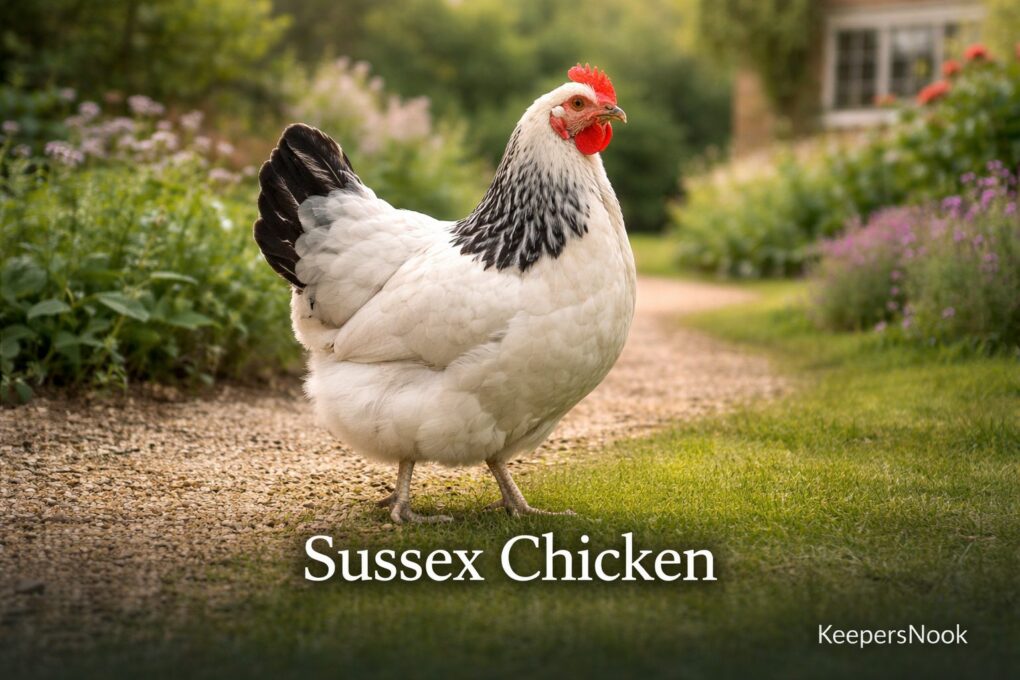
The Sussex earns its reputation the honest way: consistent laying, low drama, and a curiosity that keeps the flock interesting to manage.
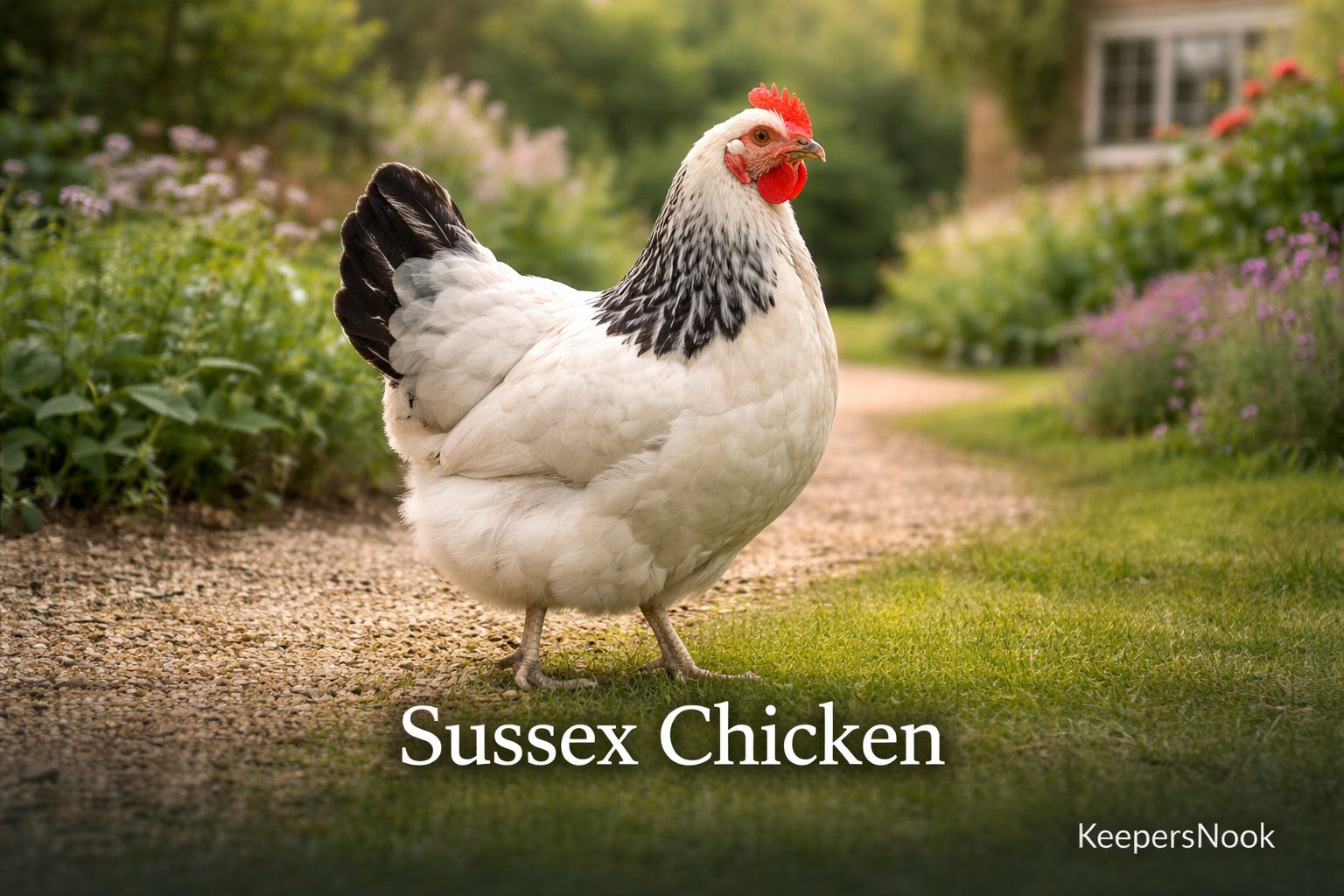
Nearly 200 years of selection for both egg output and temperament has produced a bird that is simultaneously a productive layer, a calm companion, and a genuine forager. That combination is rarer than it sounds.
Sussex Egg Production: 240-260 Tinted Eggs and Strong Winter Laying
A Sussex hen in her first two laying seasons produces 240-260 cream to light-tinted eggs per year. That's four to five eggs per week.
Remember it later
Planning to try this recipe soon? Save it for a quick find later!
The tint varies slightly across individuals and strains, but always lands in that warm, pale range rather than pure white or deep brown.
Shell quality is a consistent strength. Shells are firm, large to extra-large, and well-formed through the full laying season.
Winter laying performance is where the Sussex separates from most heritage breeds. These hens are less sensitive to short photoperiods than the average dual-purpose bird, which means output holds up through October and November without supplemental light.
Supplemental lighting helps, but it's optional rather than necessary.
Production stays useful beyond the first two years. Output declines gradually after year three, but Sussex hens remain worthwhile layers through years four and five, with a lifespan of 8+ years.
That longevity compounds the return on your initial investment in quality stock.
For a direct comparison across heritage breeds, check the top egg layers ranked guide. The Sussex sits between the Wyandotte at 200-240 and the Australorp at 250-300 in total annual output, while matching or beating both on temperament reliability.
Sussex Varieties: Speckled, Light, and Buff in Backyard Flocks
The American Poultry Association recognizes eight Sussex varieties. Three are realistically available in North America.
The rest exist mainly in exhibition circles and UK specialty breeders.
The Speckled Sussex is the dominant variety in US backyard flocks by a wide margin. Its three-color feather pattern sets it apart from every other common breed.
All eight varieties share the same temperament, production, and hardiness characteristics. The differences are cosmetic.
If visual variety matters to your flock, Speckled gives you the most dynamic plumage available in common backyard breeds. If sourcing simplicity matters, Speckled is also the obvious choice.
| Feature | Detail |
|---|---|
| Most common variety (US) | Speckled (mahogany, black bar, white tip) |
| APA-recognized varieties | Speckled, Light, Red, White, Buff, Silver, Brown, Coronation |
| Comb type | Single, upright, 5 points |
| Skin and leg color | White/flesh |
| Eye color | Red/orange |
| Hen weight | 7-8 lbs |
| Rooster weight | 9-10 lbs |
| Body type | Long, broad, flat back, well-muscled |
| APA recognition (Speckled) | Yes, 1914 |
| Meat quality | White skin, well-muscled breast, genuine table bird |
The Sussex body is long and broad with a flat back. This is a meat-type conformation that comes directly from its dual-purpose origins in the English table bird trade.
The breed was a staple of that trade before commercial broilers took over in the 1950s. That heritage means roosters are worth raising to weight rather than culling early.
Sussex Temperament: Curious Breed That Follows Keepers
The Sussex temperament is the breed's most consistent selling point across all eight varieties. These birds are calm, curious, and genuinely interested in keeper activity.
Many Sussex owners describe their hens following them around the yard without any training or conditioning.
That behavior comes from a natural curiosity that is baked into the breed character, not from food association alone.
The curiosity that makes Sussex hens personable is the same trait that drives their foraging. They cover more ground, investigate more ground features, and find more insects and greens than breeds that prefer to stand near the feeder.
On pasture, that foraging drive reduces feed costs meaningfully over a laying lifespan.
Sussex hens are genuinely good with children. They rarely peck aggressively, tolerate unpredictable handling from young keepers, and integrate into mixed flocks at middle pecking order without escalating conflicts.
If you are building your first flock and want a breed that makes the learning curve easier, see how the Sussex ranks alongside other gentle breeds in the top beginner picks guide.
Roosters are calm by large-breed standards. Individual variation exists in every breed, but Sussex roosters are less likely to challenge keepers than most production-focused males.
Handle cockerels frequently from the first weeks and maintain that handling through adolescence.
How the Sussex Compares to Other Dual-Purpose Heritage Breeds
The Sussex occupies a specific position in the heritage breed landscape: friendlier than the Rhode Island Red, more productive than the Orpington, more forgiving in cold than the Australorp, and calmer than the Plymouth Rock. No single breed wins every category, but the Sussex wins more of the categories that matter to backyard keepers than most.
The Buff Orpington is the closest temperament comparison. Both breeds are calm, both are good with children, and both originated in England.
The Orpington breed profile covers its key differences: heavier brooding tendency, greater cold hardiness from small comb, and softer plumage that requires more maintenance in wet conditions. If maximum temperament gentleness matters more than foraging ability, the Orpington edges the Sussex.
The barred marking option of the Plymouth Rock delivers similar dual-purpose production at 200-280 eggs per year with a slightly more assertive personality. It handles confinement better than the Sussex and tolerates tighter flock densities without increased stress behavior.
Rhode Island Reds produce more eggs at 250-300 per year but rank lower on temperament for family settings. The consistent production results of the RIR are well-documented: it outperforms the Sussex on raw egg count at the cost of a more assertive flock dynamic.
For pure egg production records, the record-setting Australorp leads all heritage breeds at 250-300 eggs per year. The tradeoff is heat sensitivity in black-feathered birds and a slightly less curious temperament than the Sussex.
The rose-comb Wyandotte provides the best single-comb frostbite protection of any common heritage breed, at 200-240 eggs per year with excellent cold hardiness. If your winters sustain temperatures below 0°F regularly, the Wyandotte's rose comb offers meaningful protection that the Sussex single comb cannot match.
Are Sussex Chickens Cold Hardy? Single Comb Risk and Dense Body Feathering
The Sussex earns its all-climate reputation through genuine body adaptability. Its dense feathering protects the core effectively in freezing temperatures, and its body mass provides thermal stability that lighter breeds lack.
The single comb is the one structural vulnerability in cold weather.
Heat tolerance is one of the Sussex's genuine strengths. Unlike the Australorp, where black feathers absorb solar radiation, the Speckled Sussex's mixed plumage reflects more heat.
Hens manage 90°F conditions well with shade and clean water access.
Above 100°F, all breeds need active cooling support regardless of variety.
The Sussex's heat adaptability connects directly to its foraging behavior. Active birds that range freely regulate body temperature more effectively than confined birds standing on hot ground.
Free-range management in summer is both a feed cost strategy and a passive heat management approach for this breed.
Sussex Coop Setup: 4 Sqft Minimum and Secure Fencing
The Sussex's foraging drive is an asset on pasture and a management consideration in confined setups. These birds are happiest with access to outdoor space.
Fully confined flocks need enrichment: scratch areas, hanging vegetable treats, dust bath access. That enrichment replaces the mental stimulation that foraging provides naturally.
For a complete setup plan, the chicken coop build guide covers space calculations, roost placement, ventilation design, and predator-proofing in detail.
Free-range management suits the Sussex exceptionally well. On open pasture, they cover significant ground and return to the coop reliably at dusk without herding.
Their foraging instinct reduces reliance on supplemental feed, a cost-efficiency benefit that compounds over five or more years of active production.
The one fencing note: Sussex hens are curious about fences and will test gaps actively. Five feet is the minimum.
Six feet removes the escape question entirely for most individuals.
Feeding Sussex Chickens: Layer Pellets, Oyster Shell, and Safe Treats
Sussex hens are efficient feed converters for their body size. A 7-8 lb hen producing 250 eggs per year uses feed at a rate competitive with smaller heritage breeds.
Layer pellets at 16-18% protein and 3.5-4% calcium form the nutritional foundation. Provide oyster shell free-choice in a separate dish rather than mixed into feed, so hens self-regulate calcium intake based on laying cycle demands.
Water availability is the other constant. One Sussex hen drinks roughly 500ml per day in moderate weather and more in summer.
Clean waterers daily and position them in the shade during hot months.
Treats work well for Sussex hens as long as total treat volume stays at or below 10% of daily intake. The best treat choices for this breed are lower in sugar and provide some nutritional return alongside behavioral enrichment.
- Leafy greens: kale, chard, spinach. High nutrition, low calories, zero preparation needed
- Berries: see the safe berry prep guide before offering strawberries or other soft fruits to confirm portion guidance
- Grapes: offer in halved pieces. The grape treat limits article covers portion control for this higher-sugar option
- Celery: chopped into short pieces. The celery prep for hens guide covers the fibrous string issue to watch for
- Mealworms: high protein, good for molt support. Limit to a tablespoon per hen per day during non-molt periods
Avoid any food you haven't confirmed as safe through a dedicated feeding guide. The safe and unsafe lists for chickens are longer than most new keepers expect, and some common foods are genuinely harmful.
Sussex Health: Long Lifespan and Heritage Genetic Strength
The Sussex is one of the longest-lived utility breeds in backyard poultry. An 8+ year lifespan is realistic with basic care.
Production stays useful through years five and six, and retired layers often continue contributing to flock social stability for years beyond their peak.
The breed carries no known conformation-linked health problems. Its deep chest provides good cardiac and respiratory capacity.
That structural soundness is a direct result of breeding for genuine utility rather than exhibition extremes.
External parasites: Mites and lice are the most common health issue in Sussex flocks. Monthly checks at skin level, especially around the vent and under the wings, catch infestations before they affect production.
Provide a dust bath area with sand and wood ash year-round. Dry dust bathing reduces external parasite load naturally and is the most cost-effective prevention available.
Comb frostbite: The single comb is the one structural vulnerability in cold climates. Apply petroleum jelly before hard freezes and keep coop humidity low through good ventilation.
Frostbitten comb tips appear pale, then black, and eventually dry and fall off. Prevention is far easier than treatment.
Bumblefoot: Appears in heavier breeds that land on rough ground or high roosts repeatedly. Keep roost height at 18-24 inches, maintain dry litter, and check foot pads monthly for early black scabs.
Internal laying and ovarian cysts: Long-lived heritage hens can develop reproductive issues in later years. This is not breed-specific to the Sussex but occurs with higher frequency in older hens of any dual-purpose breed.
No direct prevention exists. Monitor older hens for weight loss, lethargy, or reduced laying as age-related indicators.
Marek's disease: Vaccinate at hatch. This is standard practice for any backyard flock regardless of breed.
Quarantine all incoming birds for 30 days before introducing them to an established flock. Respiratory disease prevention through biosecurity is the most cost-effective health practice available to backyard keepers.
Parasite management matters more than most new keepers expect. Part feathers around the vent and under the wings monthly to check for lice, mites, or eggs attached to feather shafts near the skin.
Treat at the first sign of infestation. Poultry dust or permethrin spray works for established populations.
Prevention through clean litter and dust bath access reduces the frequency of infestations dramatically.
Is the Sussex Chicken Right for Your Flock?
The Sussex fits a specific keeper profile well: someone who values daily interaction with their flock, wants genuine dual-purpose production, and prefers a bird that manages itself in varied conditions without constant management adjustments.
It fits that profile better than almost any other heritage breed available from US hatcheries today.
The single comb is the one genuine trade-off in hard-freeze climates. Keepers in zones 3-4 with sustained sub-zero winters should weigh that against the Wyandotte's rose comb advantage.
For everyone else, the comb is manageable with basic winter care.
- You want a dual-purpose heritage breed that lays 240-260 eggs per year
- You have children or beginners in the flock who benefit from a calm, non-aggressive bird
- You want free-range foragers that reduce feed costs over a long productive lifespan
- You live in a climate with moderate winters (zones 5+) where single combs manage without daily intervention
- You want a breed whose plumage gets more visually interesting every year rather than less
If those criteria describe your situation, the Sussex earns its place at the top of the heritage breed shortlist. Few breeds deliver this combination of productivity, personality, and longevity in a single package.