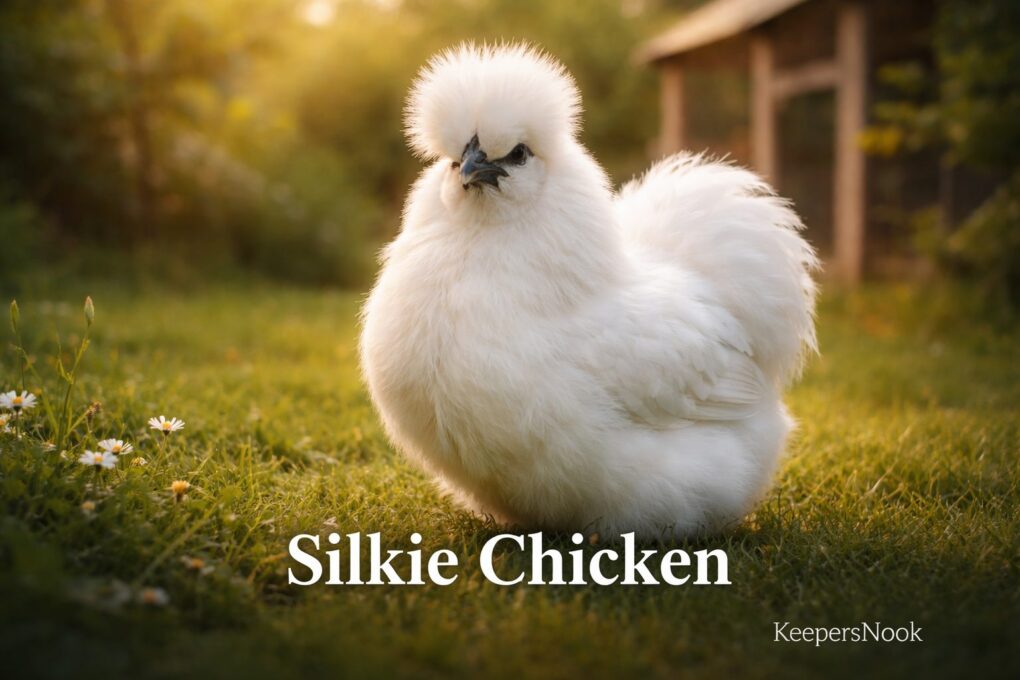
If you are new to raising hens, understanding what a Silkie is built for is the most important decision you will make before purchasing one. This is a specialty breed, not a general-purpose layer, and the keepers who thrive with Silkies are the ones who went in knowing exactly that.
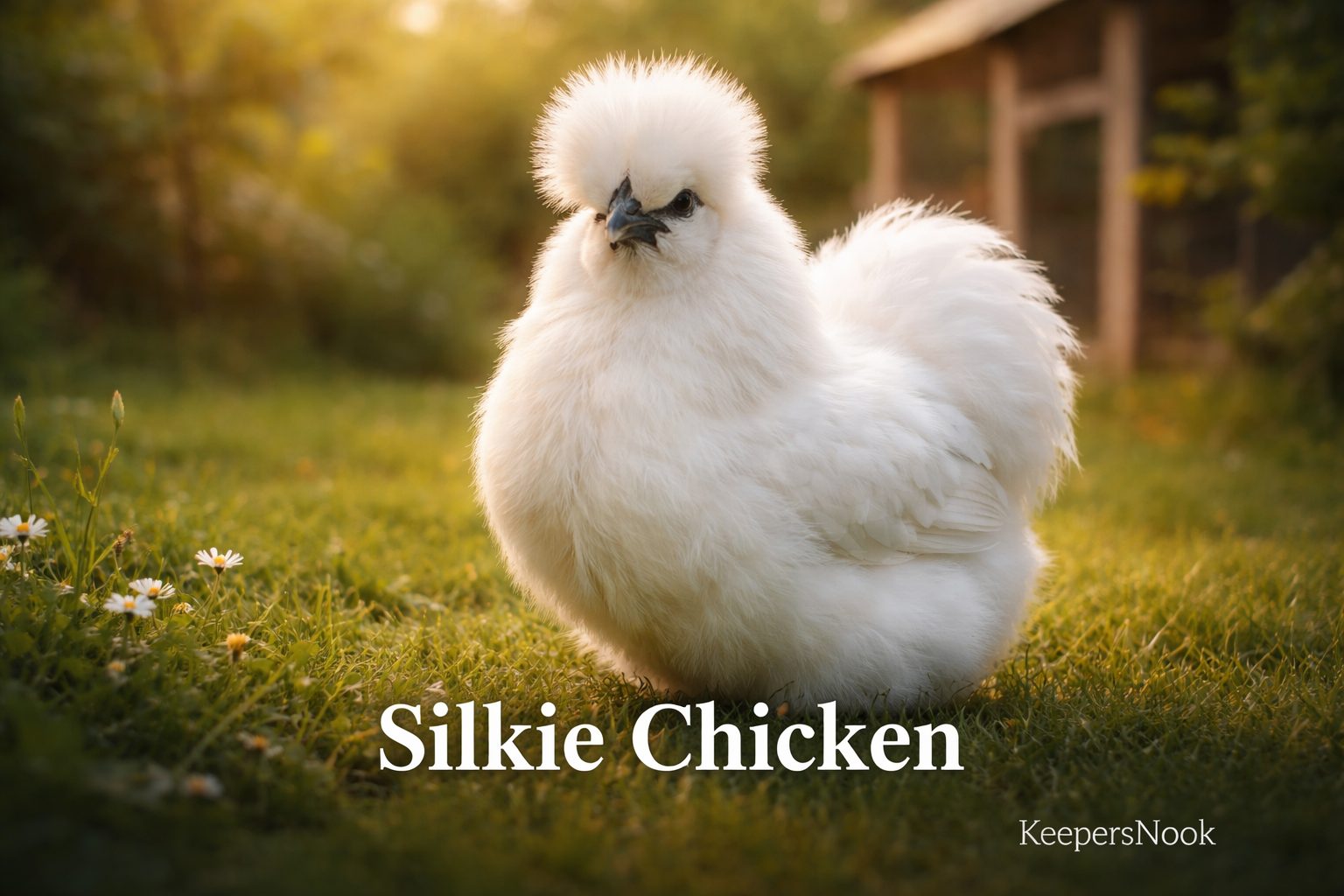
This guide covers the genetics behind the black skin and fur feathers, the exact housing and feeding adjustments this bantam body requires, and the specific health vulnerabilities that catch first-time Silkie owners off guard. We also cover broodiness in full practical detail: how to use a Silkie as a surrogate, how often she goes broody, and what to expect when she does.
Silkie Anatomy: Fur Feathers, 5 Toes, and Black Skin in One Bird
The Silkie's anatomy departs from standard poultry in nearly every visible feature. Marco Polo documented a "fur-covered, black-skinned bird" in his 1298 account of travels through Asia.
Remember it later
Planning to try this recipe soon? Save it for a quick find later!
The breed looks essentially the same today.
The fur-like texture comes from a single missing structure. Standard feathers have interlocking barbicels: tiny microscopic hooks that zip the feather fibers into a tight, waterproof sheet.
Silkie feathers lack barbicels entirely. The fibers stay loose and separate, producing the fluffy appearance.
This is also why rain soaks straight through to the skin within minutes of exposure.
| Feature | Silkie Detail | Standard Breed Comparison |
|---|---|---|
| Feather texture | Silk-like, no interlocking barbicels | Locked, waterproof barbicels |
| Skin color | Black to dark blue (fibromelanosis gene) | Yellow, white, or pink |
| Bone color | Dark gray to black | White to off-white |
| Toe count | 5 toes (polydactyly) | 4 toes in nearly all breeds |
| Comb type | Walnut comb (small, rounded, low frostbite risk) | Varies: single, rose, pea |
| Earlobe color | Turquoise-blue | Red or white |
| Leg feathering | Present on outer toes and shanks | Clean legs in most breeds |
| APA recognized colors | White, Black, Blue, Buff, Gray, Partridge, Splash | Varies widely by breed |
The black skin comes from fibromelanosis, a dominant genetic mutation that deposits melanin throughout skin, connective tissue, bones, and organs. It has zero effect on health, behavior, egg quality, or flavor.
The same gene appears in Ayam Cemani and Kadaknath breeds.
The fifth toe is a separate genetic trait, entirely independent of fibromelanosis. Both genes travel together in the Silkie breed standard, but they are not biologically linked.
A five-toed bird with standard feathers is a different breed. A black-skinned bird without a fifth toe is a different breed.
- Fur-like feathers: No barbicels on feather barbs, making feathers soft, loose, and incapable of shedding water
- 5 toes: Polydactyly trait expressed on both feet, the fifth toe curves upward and backward behind the outer toe
- Black skin and bones: Caused by fibromelanosis, a dominant gene with no health impact
- Walnut comb: Small, low-profile, and extremely resistant to frostbite compared to single combs
- Turquoise earlobes: Distinctive blue-green color visible on non-bearded varieties, partially hidden on bearded birds
- Leg feathering: Feathers extend down the outer shanks and onto the outer toes, collecting mud and bedding material
- Forward-hanging crest: Grows over the eyes, blocking overhead and frontal vision when left untrimmed
Silkie Egg Production: 100-120 Eggs Per Year With Frequent Broodiness
Silkies are not production birds. That distinction matters before you place an order.
At 100-120 eggs per year, a Silkie produces roughly one-third of what a dedicated layer delivers. Compare this to high-output brown egg layer and the gap is immediate.
Eggs are small and cream to lightly tinted. The laying schedule is irregular because broodiness interrupts production repeatedly through the season.
A broody Silkie pauses laying for three weeks on the nest, then spends one to two additional weeks recovering before her cycle restarts. A hen that goes broody three times in a season could realistically produce fewer than 80 eggs for the year.
If eggs are your primary goal, review what you can expect from a high-production layer before committing to Silkies.
First eggs arrive later than most breeds. Silkies begin laying at 7-9 months, sometimes as late as 10 months depending on season and hatch date.
They put energy into feather development before laying readiness.
If eggs are your primary goal, pair a Silkie with consistent layers in the same flock. If surrogate hatching, exhibition, or a calm pet-quality breed is the objective, the low egg count stops being a limitation and becomes irrelevant to the purpose the bird serves.
Silkie Temperament: Docile, Broody, and Child-Safe
Silkies are the gentlest recognized breed in domestic poultry. That is consistent across keepers, hatcheries, and breed associations worldwide, not a claim specific to any one source.
They actively seek human contact. Most Silkies walk toward you rather than away, and they tolerate handling from children without the wing-flapping panic you see in more skittish breeds.
A well-socialized Silkie will sit in a child's lap without struggling. This makes them a genuinely different experience than managing most other chicken breeds.
In a mixed flock, Silkies default to the bottom of the pecking order. They are non-aggressive, cannot see challenges approaching due to the crest, and cannot fly to escape confrontation.
A calm Buff Orpington makes a safe flock mate for Silkies. Large assertive breeds will bully them without interruption.
Silkie roosters are unusually gentle by rooster standards. They rarely charge humans and their instinct is to position themselves between hens and a perceived threat rather than directly attack.
If you need a non-aggressive rooster in a family flock, the Silkie rooster is one of the safest options available.
When choosing a first breed, our guide to a first chicken breed ranks the Silkie specifically for small yards, families with children, and keepers who need a surrogate mother without incubator equipment.
Wet Weather and the Silkie: Why Rain Is the Biggest Management Risk
Rain is the single greatest health threat Silkies face. Most first-time keepers underestimate how fast a soaked bird becomes a critical situation.
Standard chickens distribute preen gland oil across their feathers, creating a water-shedding barrier that holds during light rain. Silkies have the same preen gland, but the loose feather structure cannot hold that oil layer coherently.
Water goes straight through every time, regardless of how well-preened the bird is.
Cold alone is not the primary danger. Cold combined with wet is the lethal combination.
A dry Silkie in a well-bedded, draft-free coop handles temperatures down to around 40°F reasonably well. A wet Silkie at 55°F in any wind is a medical situation requiring immediate action.
Check your Silkies after every rain event. Run your hand under the crest and along the back down to the skin.
If the feathers are saturated and the skin feels cold, bring the bird indoors immediately. Use a hairdryer on a low, warm setting to dry thoroughly before returning the bird to the coop after dark.
Silkie Housing: 5 Covered Run Requirements and Low Roost Setup
Silkies cannot fly. Standard roost heights are unreachable without ramps, and even with ramps many Silkies prefer to sleep on the floor or in a nesting box.
Design housing around this from the start rather than adapting a standard coop afterward.
Bedding quality matters more for Silkies than for most breeds. Their feathers drag along the floor, collecting moisture and fecal material with every step.
Dirty, damp bedding leads to wet feather degradation, vent feather soiling, and elevated respiratory infection risk.
For a complete coop build, our chicken coop setup guide covers floor space, ventilation ratios, hardware cloth gauges, and predator-proofing in full detail. Apply the standard guide with two Silkie-specific changes: lower every roost bar and add complete overhead coverage to any outdoor run section.
- No wire floors: Silkie toes and feathered feet catch on wire mesh, causing injuries and broken feathers
- Covered run mandatory: Open-top runs allow rain exposure and provide no protection from aerial predators the bird cannot see
- Secure latches on every door: Raccoons work lever handles and push-button latches open with ease
- Ground-level nest boxes: Standard elevated boxes are difficult or impossible for a flightless bantam to access without injury
- No slippery surfaces: Plastic sheeting and smooth wood floors cause slip injuries in a bird that walks with feathered feet
Predator security deserves more attention for Silkies than for most breeds. They are slow-moving, nearly blind from the front, and cannot escape a threat by flying.
Foxes, raccoons, and hawks target them preferentially in a mixed flock. Lock the coop every night without exception.
Feeding Silkies: Crumble Over Pellets for Bantam Beaks
Silkies eat the same feed categories as standard chickens, but in smaller volumes and in a particle size their bantam beaks can actually manage efficiently.
A bantam Silkie needs roughly 2-3 oz of feed per day, about half the daily intake of a large dual-purpose breed. Provide free-choice oyster shell in a separate small container beside the feeder, never mixed into the feed directly.
Treats must be size-appropriate for a small bird. Fresh blueberries are a natural size fit for Silkie beaks with no prep required.
Watermelon in small cubes provides hydration on hot days without adjusting for beak size. Banana pieces for bantams should be torn into small soft chunks rather than offered as a full slice.
- Layer crumble (16% protein): Base diet for hens from point-of-lay through peak production
- Chick crumble (18-20% protein): Use during molt and for birds under 18 weeks
- Free-choice oyster shell: Separate dish beside the feeder, not mixed into feed
- Fresh water always available: Use a small-bowl or nipple drinker at bantam height to prevent crest feathers from soaking
- Grit for free-range birds: Silkies that forage need insoluble grit to grind food in the gizzard
- Limit treats to 10% of daily intake: A 2-3 oz daily ration leaves very little room for treat calories before nutritional balance suffers
During broodiness, sitting hens eat and drink far less than usual. Check that broody Silkies leave the nest to eat and drink at least once per day.
A broody hen that has not eaten or drunk for 24 hours needs to be lifted from the nest and walked to food and water manually.
Silkie Health: 4 Specific Vulnerabilities Standard Guides Miss
Silkies are not a sickly breed in general terms, but their unique anatomy creates specific vulnerabilities that standard chicken care guides do not address.
Wet feather syndrome is the most common issue. Saturated, matted feathers cause skin abrasions, bacterial infections, and fungal dermatitis.
Prevention through covered housing is the only realistic strategy. When a bird gets soaked, dry it actively with a hairdryer on a low, warm setting.
Crest-related vision impairment is the second concern. A full, untrimmed crest blocks frontal and overhead vision entirely.
Silkies with obscured vision miss food and water sources, startle into objects, and cannot detect aerial predators. Trim crest feathers around the eyes when vision is clearly compromised.
For crest trimming: use small, rounded-tip scissors. Wet the crest feathers first to see exactly where they fall relative to the eyes. Trim only the feathers that cross directly over the eye line. Cut parallel to the feather shaft rather than straight across to avoid a blunt, unnatural edge. Never trim the full crest flush to the skull. The crest provides thermal insulation and protects the skin underneath. Repeat every 6-8 weeks as growth returns.
For vent feather maintenance: check the fluffy feathers around the vent weekly in warm weather. The feathers collect fecal matter, especially during broody periods when hens leave the nest infrequently. Trim soiled or matted vent feathers with rounded scissors when buildup is visible. Matted vent feathers attract blowflies in summer and can physically block defecation if left unaddressed. Clean the area gently with warm water and a cloth before trimming in severe cases.
Marek's disease susceptibility is above average in Silkies compared to commercial breeds. Vaccinate all chicks at hatch.
Confirm Marek's vaccination status with any hatchery or breeder before purchase. Unvaccinated Silkies introduced to an established flock face high exposure risk from the virus, which spreads through shed dander and feather dust.
Vaulted skull fragility applies to a subset of Silkies carrying the genetic variant. These birds have a domed, soft cranial spot and cannot tolerate head impacts.
Identify vaulted-skull birds and house them separately from any bird large enough to cause a head injury. Ask your source directly before purchasing.
- Wet feather hypothermia: Feathers provide no waterproofing, a soaked bird in cool wind loses heat fast enough to become critical within an hour
- Crest vision obstruction: Untrimmed crests create full frontal and overhead blindness, increasing predator vulnerability and causing feed and water access problems
- Vaulted skull fragility: Soft cranial dome in some genetic lines means head impacts that would not injure other chickens can be fatal
- Vent feather soiling: Loose feathers around the vent accumulate fecal matter and attract blowflies in summer without weekly monitoring
- External parasite hiding: Dense plumage conceals mite and lice populations until they reach high numbers, part feathers around the vent and under the wings monthly
Expected lifespan is 7-9 years with attentive care. Hens remain useful as brooders well past peak laying, which typically declines around year 3-4.
A 5-year-old Silkie who no longer lays consistently is still a functional broody surrogate if her brooding instinct holds.
Silkie vs. Other Calm Breeds: Matching the Bird to Your Goals
The Silkie is often compared to other docile breeds when keepers are choosing between a pet-quality bird and a dual-purpose layer. The comparison breaks down quickly when you map goals to breed characteristics.
If you want a gentle bird that also lays well, a calm Orpington produces 200-280 eggs per year while maintaining approachable temperament. The trade-off is no ornamental distinction and no guarantee of the Silkie's level of broodiness.
If you want colored eggs alongside a friendly nature, consider an Easter Egger for blue and green egg production paired with a sociable personality. Easter Eggers are not bantams, so they eat more and require standard coop space, but they are a genuine option for a dual-purpose friendly breed.
For a breed with defined type standards and good temperament across cold climates, Wyandotte hens deliver consistent results. The rose comb has minimal frostbite risk, production sits at 200-240 eggs per year, and the breed handles winter far better than a Silkie ever will.
If you want a large, reliable layer with cold hardiness and a calm flock presence, Sussex hens offer 250-280 eggs per year with a gentle, curious personality that integrates well into mixed flocks without management complications.
Using a Silkie as a Surrogate Mother: Practical Brooding Setup
The Silkie's defining value is its brooding instinct. If you need to hatch chicks from breeds that never go broody naturally, a Silkie eliminates the need for an incubator and provides post-hatch mothering no machine can replicate.
A broody Silkie sits on 8-12 eggs depending on body size and egg size. She maintains nest temperature at approximately 99-100°F through body contact and turns eggs instinctively throughout the day.
Incubation period is standard: 21 days for chicken eggs, 28 days for duck eggs. She stays on the nest consistently, and that consistency is what separates her from every other broody breed.
Place the eggs you want hatched under her at night when she is most settled. Remove the Silkie's own eggs before placing the target clutch if you do not want her eggs to hatch alongside.
Mark all placed eggs with a pencil to distinguish them from any new eggs laid by other hens who may share the nest space.
After hatch, the Silkie broods chicks under her body for the first 2-3 weeks. She clucks to direct foraging, warns chicks of aerial threats, and physically shelters them in cold weather.
For small-scale keepers without a dedicated brooder setup, a broody Silkie with her chicks in a separated pen is a complete, self-contained system.
Is the Silkie the Right Breed for Your Flock?
The Silkie is a specialty breed for keepers who go in with clear expectations.
If consistent egg production is the goal, this is not your bird. If cold hardiness without active management is the goal, this is not your bird.
If you keep large assertive breeds and want to add Silkies to the same space without separation, the outcome will be predictable and bad.
For families with children, small urban or suburban flocks, exhibition keepers, and anyone who needs a reliable surrogate mother to hatch eggs from production breeds that never go broody: no bird performs this role better than a Silkie.