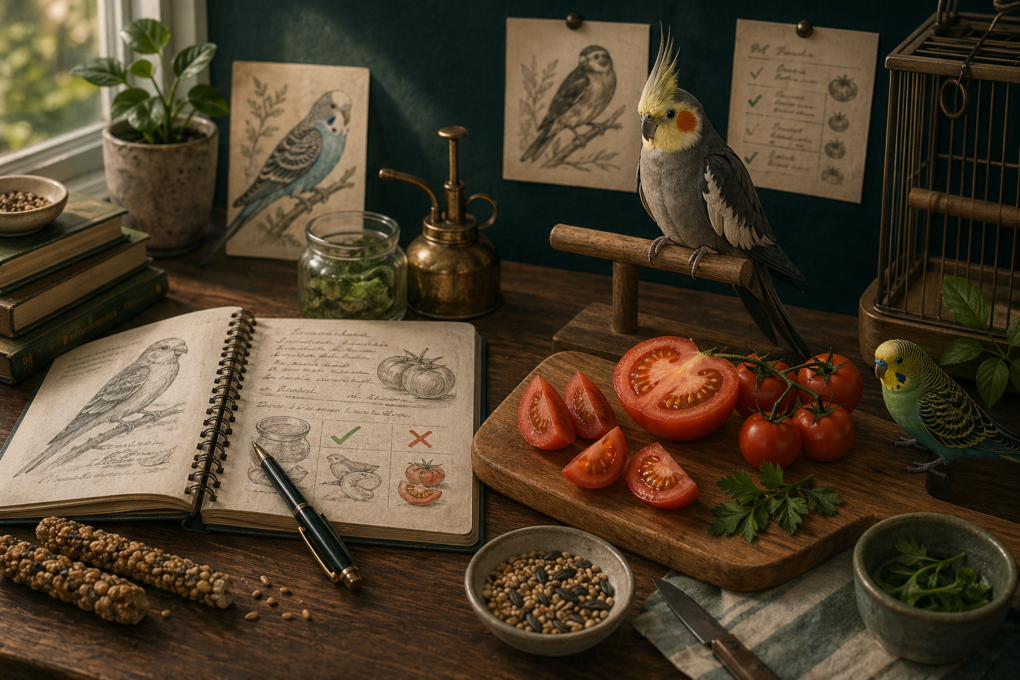
Tomatoes are a common kitchen item that bird keepers regularly ask about. Our pet bird care guides cover feeding safety across species, and tomatoes sit in a conditional category that requires simple prep to make safe.
The fruit itself is not the problem. The plant's solanine-bearing tissue is.
Understanding that distinction lets you feed tomatoes without risk.
Why Tomatoes Are Acidic: What That Means for Your Bird
Ripe tomatoes have a pH of 4.0 to 4.5, placing them among the more acidic common fruits. This acidity is the reason tomatoes appear on "caution" lists for birds rather than the fully-safe column alongside blueberries or mango.
Remember it later
Planning to try this recipe soon? Save it for a quick find later!
Acidity itself is not toxicity. Birds tolerate moderate acids through normal digestion.
The concern is cumulative: frequent tomato feeding over time can contribute to digestive irritation, particularly in smaller species like budgies and canaries whose gut volume is limited.
Tomato occasionally appears in budgie fresh food lists and our budgie care guide covers how to evaluate acidic vegetables against the rest of the fresh food rotation.
Grapes are sweeter and lower in acid than tomatoes and our grape safety for birds guide confirms they are safe for most common pet bird species.
Mango is a low-acid tropical fruit that makes a better daily fresh food than tomato and our mango preparation guide covers how to serve it for common parrot species.
- Parrots (medium to large): handle tomato acidity well in small portions 1–2x per week
- Budgies and small birds: limit to a few small pieces once per week due to smaller gut volume
- Finches and canaries: offer sparingly, 1–2 tiny pieces once per week maximum
- Softbills (lories, lorikeets): generally tolerate fruits well, but tomato should still be a minor component
The Solanine Problem: Which Tomato Parts Are Toxic to Birds
Tomatoes belong to the Solanaceae family. Every green part of the tomato plant carries solanine and tomatine, two glycoalkaloids that interfere with nerve and digestive function.
In birds, even small quantities relative to body weight can cause significant distress.
The green calyx (the star-shaped cap at the top of the fruit) is the part most commonly left on by accident. It looks like a small decorative piece, but it carries concentrated solanine.
Remove it completely every time.
Our cockatiel care guide covers the full fresh vegetable list for this species, including which acidic foods should be limited in the weekly rotation.
Strawberries are in a similar acidity range to tomatoes and our acidic soft fruits safety article covers how to incorporate them safely alongside tomato in the same rotation.
- Leaves: highest solanine concentration in the plant, never feed intentionally
- Stems: second highest concentration, always remove before handling the fruit
- Green calyx: must be snapped off completely at the fruit surface before serving
- Unripe green tomatoes: not safe, ripening breaks solanine down, unripe flesh has not completed that process
- Partially green tomatoes: cut away all green-tinged areas with a knife before serving
Nutritional Value: What Ripe Tomatoes Actually Provide
Ripe tomato flesh delivers modest but real nutritional value as an occasional treat. The primary benefit is hydration, tomatoes are 94% water by weight, which makes them useful during warm weather for birds that don't drink as much as they should.
Beyond water, the relevant nutrients in 100g of raw ripe tomato are: vitamin C at 14mg, vitamin A at 833 IU, potassium at 237mg, and lycopene at approximately 2.6mg. None of these are present in quantities that make tomato a dietary necessity, but they add real value as part of a varied fresh-food rotation.
Apple is a safer daily fresh food than tomato and our apple preparation steps article covers how to make it a reliable regular offering.
Not all produce is safe for birds and our toxic foods to avoid guide covers the most important fresh food to exclude from the bird room entirely.
- Vitamin C: 14mg per 100g, supports immune function and collagen synthesis
- Vitamin A: 833 IU per 100g, important for respiratory health and feather quality
- Potassium: 237mg per 100g, electrolyte support, useful during hot weather
- Water content: 94%, excellent hydration source in summer
- Calories: 18 kcal per 100g, negligible caloric load
Preparation Steps: How to Serve Tomatoes Safely
Safe tomato prep takes under a minute. The steps never change regardless of tomato size or variety.
Do not serve tomatoes in metal dishes. Tomato acid reacts with zinc and galvanized metal over time, leaching trace amounts of metal into the food.
Ceramic or stainless steel dishes are the appropriate choice for acidic fruits.
Banana is a low-acid soft fruit that pairs naturally with occasional tomato in a varied diet and our low-acid fruit options guide covers appropriate serving sizes.
Watermelon is a hydrating low-acid fruit that rotates well alongside tomato and our hydration benefits of watermelon guide confirms it is safe for most species.
How Tomatoes Compare to Other Acidic Fruits for Birds
Tomatoes are more acidic than most fruits birds commonly eat. Understanding where they fit in the acidity spectrum helps with building a balanced fresh-food rotation.
| Fruit | pH Range | Safety Status | Frequency |
|---|---|---|---|
| Mango | 3.9–4.6 | Safe | 3–4x per week |
| Tomato (ripe) | 4.0–4.5 | Caution (prep required) | 1–2x per week |
| Blueberry | 3.1–3.3 | Safe | 3–4x per week |
| Apple | 3.3–4.0 | Safe (no seeds) | 3–4x per week |
| Citrus (orange) | 3.0–4.0 | Caution, occasional only | Once per week max |
Blueberries and mango are safer frequent choices for birds that enjoy fruit variety. Tomatoes fill a different role: they add variety and hydration without displacing the safer options from the weekly rotation.
Plain cooked tomatoes without added salt, oil, or seasoning are safe for birds in the same small portions as fresh. Cooking does not eliminate solanine from green parts, so prep rules still apply.
Sun-dried tomatoes are a different matter: they concentrate sugar and sodium to levels inappropriate for birds. Commercial sun-dried tomato products often contain added salt and preservatives.
Avoid them. Fresh or plain cooked ripe tomato only.
Blueberries are a lower-acid berry option than tomato and our blueberry feeding frequency guide confirms they are a better choice for daily fresh food use.
New keepers building a safe vegetable list alongside their species choice will find our best birds for beginners guide a useful companion read.