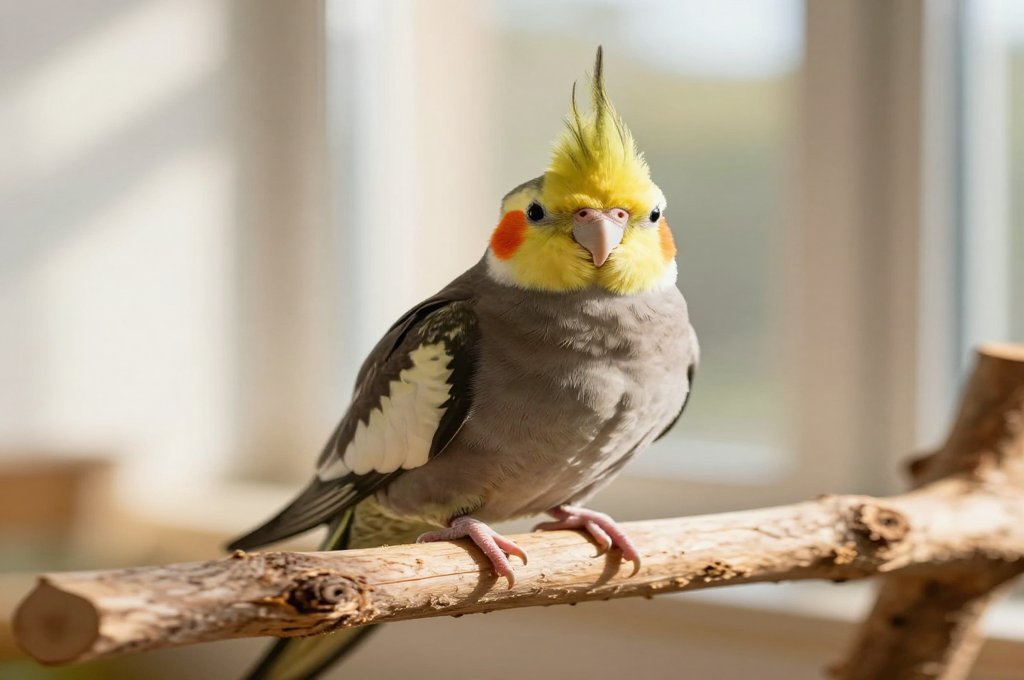
Noise is the most common reason pet birds get rehomed. Our pet bird care guides cover the full range from silent doves to 105-decibel macaws, and this comparison focuses specifically on birds that work in noise-restricted environments.
Decibel ratings matter, but frequency and pitch matter just as much. A cockatiel's contact whistle at 65 dB carries through walls differently than a budgie's chattering at the same level.
We've accounted for both factors in these rankings.
| Species | Peak dB | Noise Type | Apt. Suitable | Interactive | Cost |
|---|---|---|---|---|---|
| Ringneck Dove | 50–55 dB | Soft coo | Yes | Moderate | $25–$75 |
| Zebra Finch | 55–60 dB | Soft chattering | Yes | Hands-off | $10–$30 |
| Canary | 60–65 dB | Song (males) | Yes | Hands-off | $25–$150 |
| Budgerigar | 65–68 dB | Chatter/mimicry | Yes (most) | High | $20–$60 |
| Cockatiel | 65–70 dB | Whistles/contact calls | Usually yes | High | $100–$250 |
| Pionus Parrot | 70–75 dB | Moderate calls | Borderline | High | $200–$400 |
| Parrotlet | 65–70 dB | Chatter | Yes | High | $150–$300 |
| Green-cheeked Conure | 75–80 dB | Contact calls | Borderline | High | $250–$400 |
Ringneck Dove, Quietest Pet Bird Overall
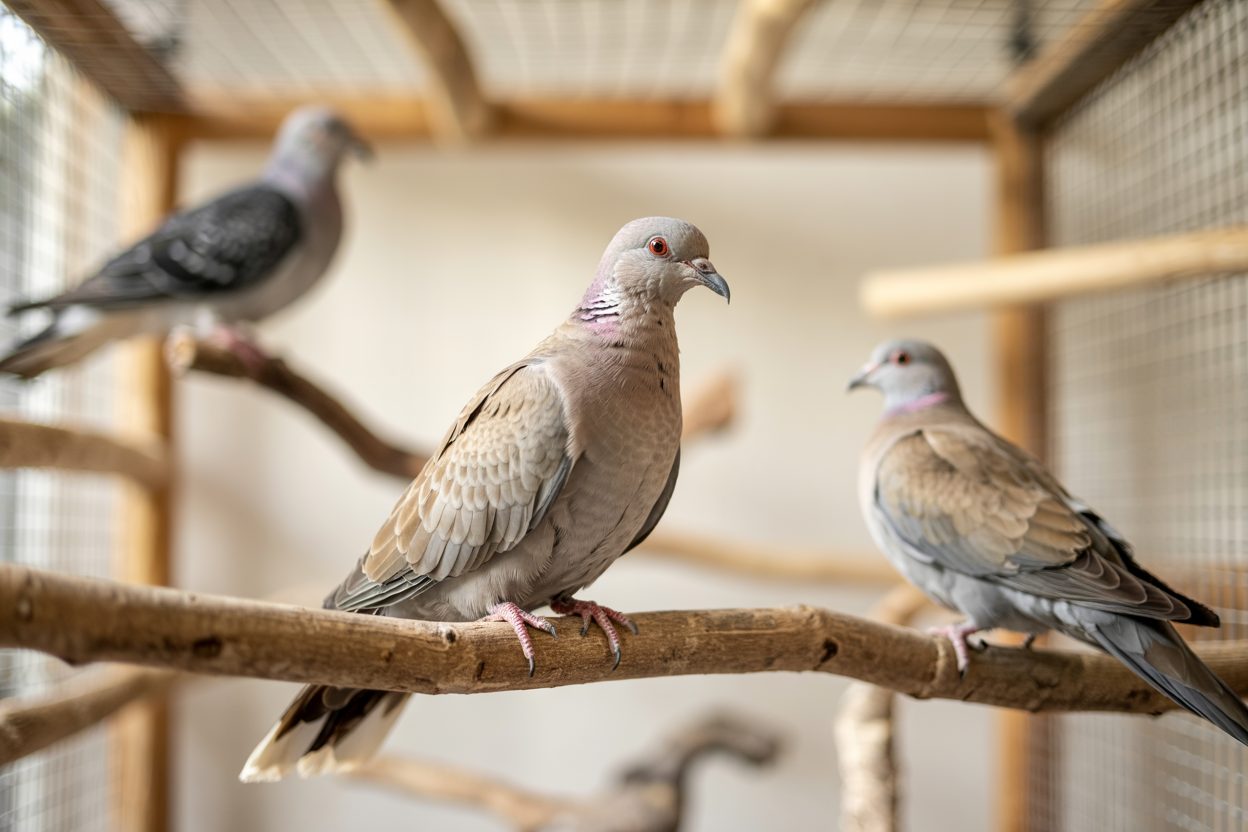
Ringneck doves produce a soft, rhythmic cooing call that peaks around 50–55 decibels, comparable to a quiet conversation across a room. No other commonly kept pet bird produces less noise.
Remember it later
Planning to try this recipe soon? Save it for a quick find later!
Their call carries very little pitch sharpness, meaning it doesn't penetrate walls or trigger neighbor complaints even in thin-walled apartments.
The trade-off is that doves are pair-oriented birds, not interactive companions in the parrot sense. They coo from their perch, forage, and display natural behavior, but they don't ride shoulders or learn tricks readily.
For keepers who want a living, gently animated presence without noise or high interaction demands, ringneck doves are optimal.
Dove Housing for Apartment Keepers
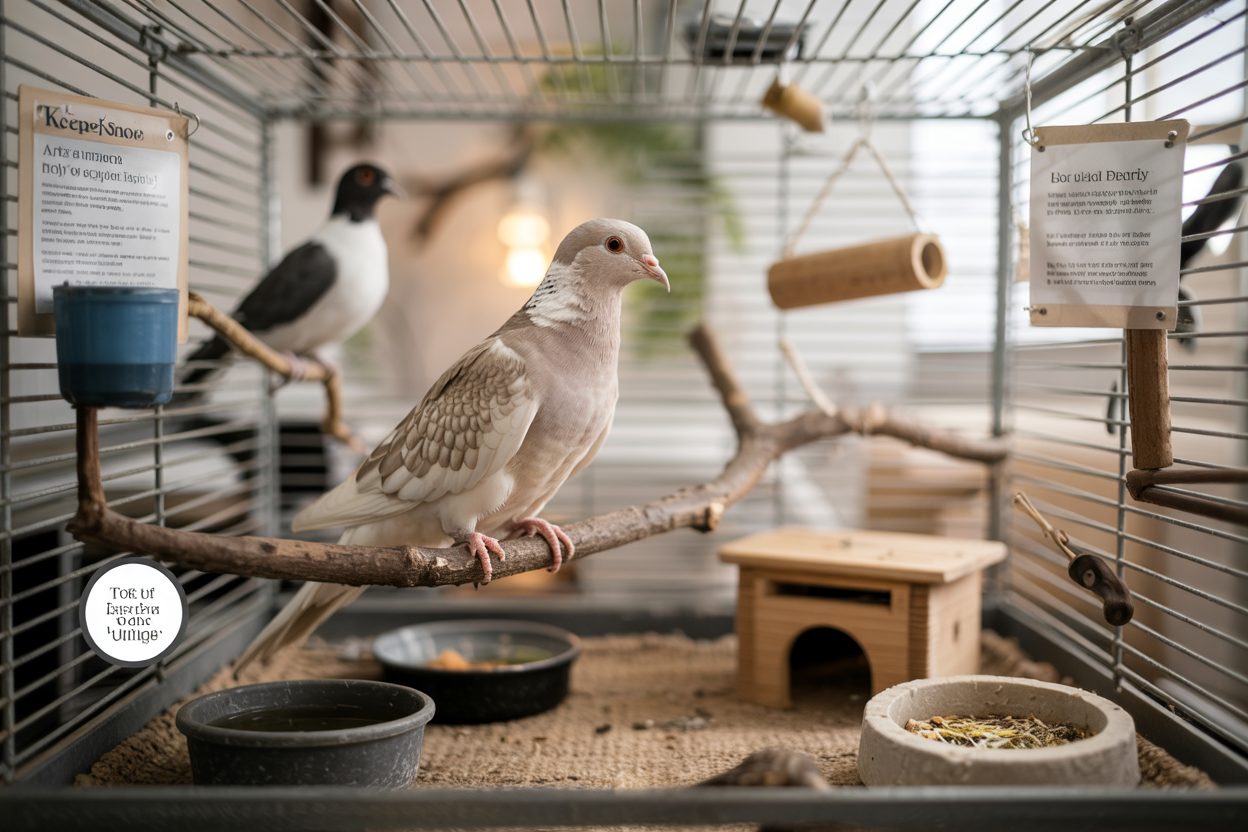
A pair of ringneck doves needs a minimum 24×24×36 inch cage with 0.5-inch bar spacing. This is smaller than any parrot requirement and fits comfortably in most studio or one-bedroom apartments.
Doves prefer flat perches over round dowel rods and appreciate a flat wicker nesting platform even when not breeding.
Ringneck doves top the quiet bird list and our full dove care guide covers the simple housing and diet requirements of this gentle species.
Fresh food is part of every quiet bird's diet and our guide on birds eating apple covers the simple prep steps that make it a safe daily offering for any species.
- Noise timing: doves coo most in the morning and during pair courtship, never at the intensity that wakes neighbors
- Same-sex pairs: two males or two females prevent the breeding cycle that produces 6–12 clutches per year
- Diet simplicity: dove seed mix plus dark leafy greens 3x per week, fresh water daily, insoluble grit always available
Zebra Finch and Canary, Best Hands-Off Quiet Birds
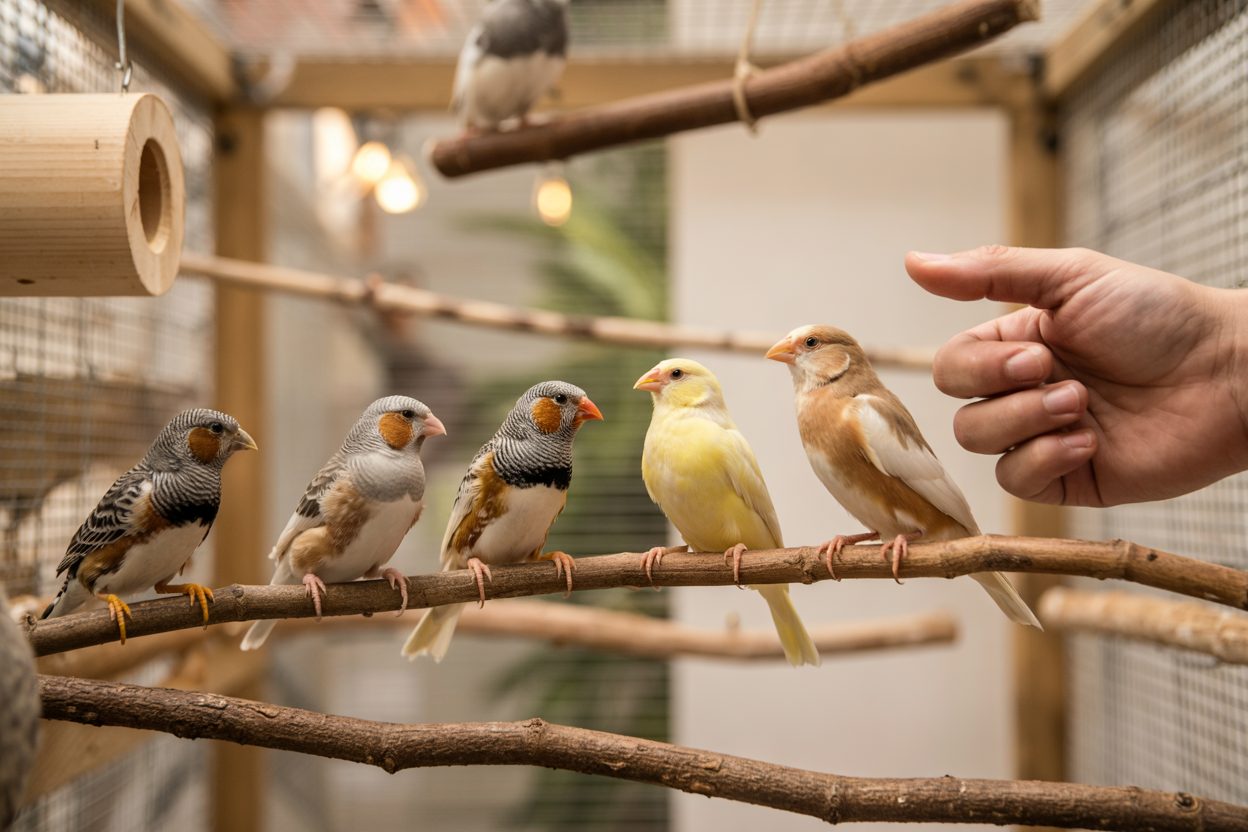
Zebra finches produce a soft, chittering chatter at 55–60 dB that most neighbors never hear through a closed door. They need to be kept in pairs or small groups, a single finch is unhappy and more vocal than a paired bird.
Male canaries sing, and their song is truly pleasant: complex, varied, melodic. At 60–65 dB, male canary song is comparable to a radio at low volume.
Female canaries don't sing, making them the appropriate choice for the most noise-restricted environments. Neither species tolerates regular handling, they are observation birds.
Finches produce soft songs rather than screaming calls, making them ideal for quiet households, and our finch care guide covers their aviary and diet needs.
Blueberries work as enrichment for quiet species without exciting vocalizations and our article on blueberries for birds covers appropriate serving frequency.
- Zebra finch minimum: a pair in a 24-inch wide cage, never keep a single finch
- Canary sex selection: females are silent, males sing 5–10 minutes at intervals throughout the day
- Neither species talks: finches and canaries are not mimics and cannot learn words
- Canary molt note: males stop singing during the annual molt (usually late summer), this is normal and temporary
Budgerigar, Quietest Interactive Parrot
Among interactive, handleable parrots, budgies are the quietest. At 65–68 dB peak, a budgie's chatter and mimicry stays within a range that most apartment buildings tolerate.
The sound is constant during active periods (morning and afternoon) but doesn't have the sharp, penetrating frequency of a conure or cockatiel contact call.
Male budgies talk constantly, a soft, rapid stream of words, whistles, and sounds that becomes surprisingly easy to tune out at background levels. This is very different from the intermittent, piercing contact calls of medium parrots.
Most apartment keepers who've had both describe the budgie as far easier to live with for noise.
Budgie Noise Management
Budgies quiet down substantially when covered at night and when they feel secure and settled in their environment. Anxious or isolated budgies are louder than content, well-exercised ones.
A budgie that gets daily out-of-cage flight time and returns to a cage it considers home is a calmer bird than one confined all day with unspent energy.
Canaries sing beautifully without the piercing calls of parrots and our canary bird care guide is essential reading for anyone drawn to a musical bird.
Most quiet bird species are also beginner-friendly, and our best birds for beginners guide shows where the two lists overlap for new keepers.
- Night cover: a breathable cage cover signals sleep time, dramatically reduces early morning chattering
- Flight time: 1–2 hours of out-of-cage flight daily reduces frustrated vocal behavior
- Cage placement: a cage in a socially active room (living room) keeps the bird less anxious than isolation in a bedroom
Cockatiel, Quiet Enough for Most Apartments
Cockatiels peak at 65–70 dB with contact calls that carry further than their decibel rating suggests. The whistle frequency cuts through ambient noise more efficiently than the lower-frequency chattering of budgies.
Most apartment keepers find cockatiels manageable, some find the contact call too persistent through walls.
The contact call pattern is predictable: cockatiels call most intensely when they can't see or hear their keeper. If you leave the room, expect 2–5 minutes of persistent whistling until the bird hears a response.
Teaching the bird that a whistle response from you satisfies the contact drive reduces duration significantly.
Budgies are quieter than most parrots while still being interactive, and our budgie care guide covers their noise level in context of apartment living.
If you want some talking ability without the screaming, our best talking birds guide highlights which species offer vocabulary without excessive volume.
Parrotlet, Small but Surprisingly Bold Vocals
Parrotlets are small (5 inches, 1 oz) but their call is sharper and more piercing than their size suggests. At 65–70 dB, they're comparable to cockatiels in volume but produce a different frequency profile, shorter, sharper chirps rather than sustained whistles.
They work in most apartments but are not as reliably quiet as budgies.
Parrotlets compensate with exceptional personality for their size: bold, playful, and highly interactive, they are essentially a miniature parrot with large-parrot attitudes. The keeper who values interactivity over pure quiet will find the parrotlet's moderate noise level a reasonable trade.
Cockatiels make contact calls that carry, but are far quieter than conures or cockatoos, a point our cockatiel care guide addresses with specific decibel context.
Two of the more vocal small parrots are compared in our lovebird vs budgie guide, which covers noise differences in detail for apartment keepers.
Birds to Avoid in Apartments
Several popular pet birds are truly inappropriate for most apartment situations regardless of how appealing they are otherwise.
Parrotlets are surprisingly quiet for a parrot and our parrotlet care guide covers how their vocal output compares to similarly sized budgies and lovebirds.
- Macaws: 100–105 dB peak, capable of triggering noise ordinance complaints through concrete walls
- Cockatoos (Moluccan/Umbrella): 85–129 dB, the Moluccan is the loudest pet bird available
- Sun Conure: 88–120 dB, widely recognized as among the loudest small parrots relative to size
- Caique: 75–85 dB, persistent shrieking play calls not suitable for shared walls
- Amazon parrots: 80–100 dB, loud morning and evening vocalization periods