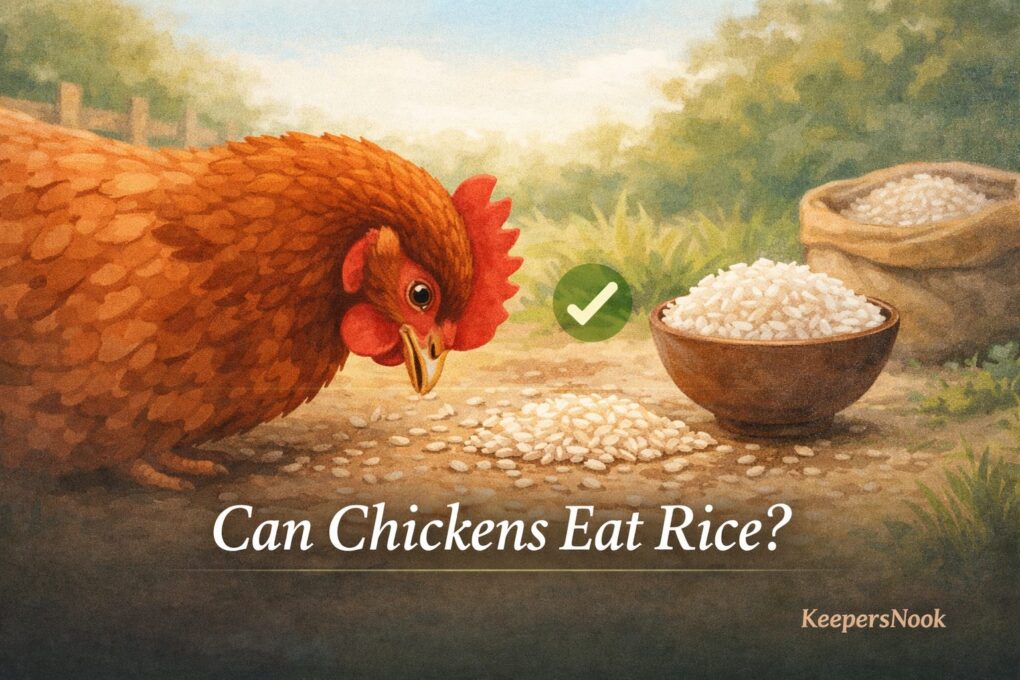
Rice is one of the most searched chicken treats, and the answer is simpler than most people expect. Good flock health starts with understanding what counts as a safe supplement and what can quietly cause problems over time.
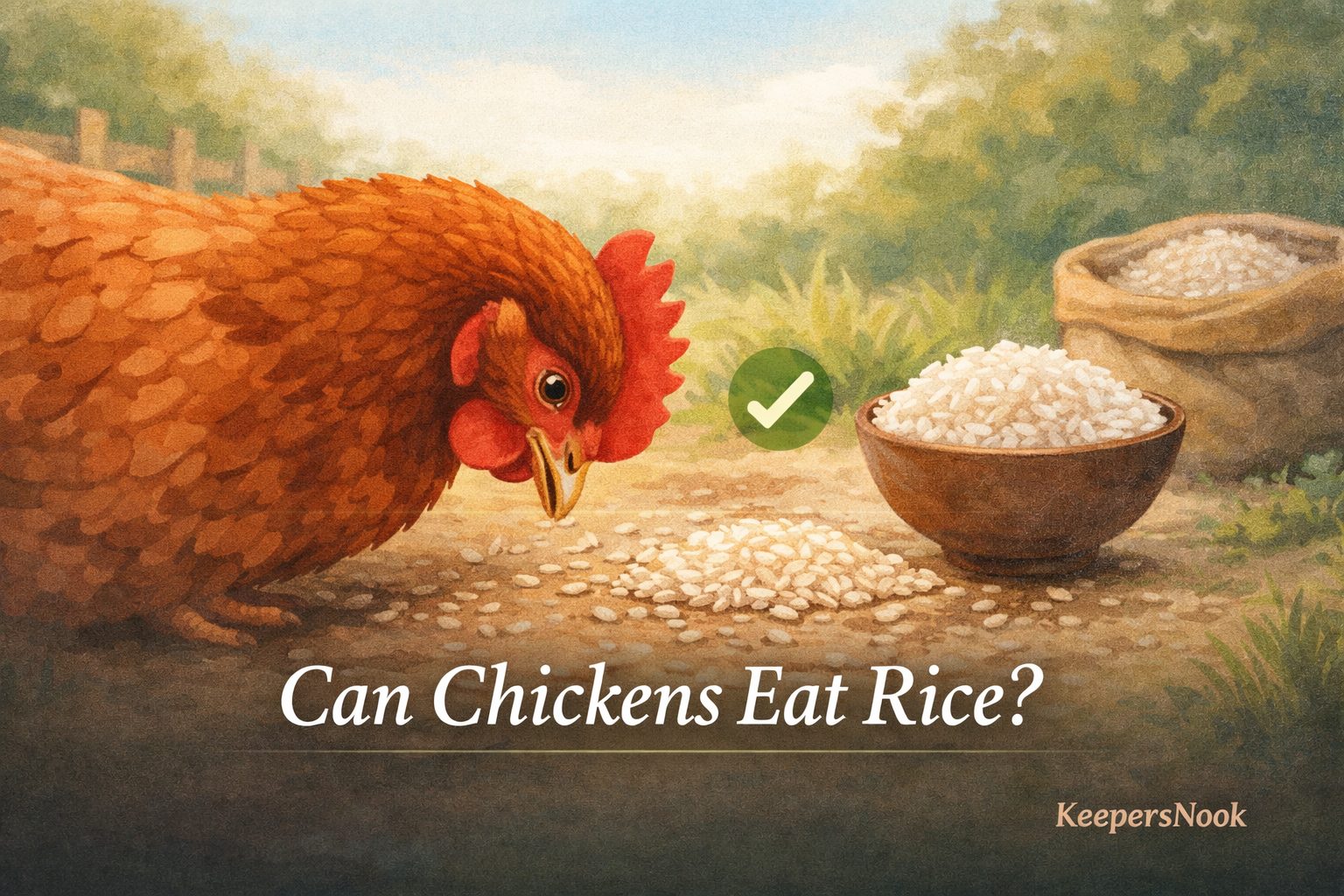
We have fed rice to backyard chickens for years and tested all three forms. Here is exactly what works, what to avoid, and how much is too much.
Can Chickens Eat Rice? The 3 Types Compared
Not all rice is equal for chickens. The preparation method changes digestibility, nutrient density, and choking risk.
Remember it later
Planning to try this recipe soon? Save it for a quick find later!
| Type | Safe? | Digestibility | Prep Needed | Best Use |
|---|---|---|---|---|
| Cooked White Rice | Yes | High | Cook plain, no salt | Primary rice treat |
| Raw White Rice | Yes (limit) | Low | None, but restrict quantity | Occasional scratch-style treat |
| Cooked Brown Rice | Yes | Medium-High | Cook fully, fully softened | Nutrient-boosting treat |
| Raw Brown Rice | Caution | Low | Avoid or limit to pinch amounts | Not recommended |
| Seasoned or Fried Rice | No | N/A | Never serve | None |
Seasoned rice is the one hard line. Salt, garlic, onion, and oil all cause harm.
Plain rice cooked in water is the only version we recommend.
Cooked White Rice: The Safest Form for Chickens, 95% Digestibility
Cooked white rice has had its outer bran layer removed and its starch fully gelatinized by heat. That makes it one of the most digestible carbohydrates a chicken can eat outside of their standard layer feed.
The starch converts quickly to glucose, which gives hens a fast energy boost. This makes cooked white rice especially useful in cold weather when birds burn more calories staying warm.
- Texture: Soft and easy to swallow, no choking risk for adult birds.
- Starch content: Roughly 28g per 100g cooked, a reliable quick-energy source.
- Digestibility rate: Estimated at 90-95% by Poultry Science research on cereal starches.
- Moisture: Adds hydration, useful on hot days when birds drink less than needed.
- Protein: Low at around 2.7g per 100g, so it does not replace layer pellets.
Portion size matters here as much as preparation. A tablespoon per bird is a treat.
Half a bowl per bird is a dietary problem that displaces the protein and calcium chickens need for egg production.
Raw Rice and Chickens: Is the "Exploding Birds" Myth True?
The myth that raw rice kills birds by expanding in their stomach has been studied and debunked repeatedly. The Cornell Lab of Ornithology addressed this directly: birds have strong muscular gizzards that handle dry grain without issue.
That said, raw rice is still not our first choice for chickens. It passes through the digestive tract with less starch conversion than cooked rice, meaning birds get fewer calories from the same amount.
Raw brown rice is a different situation. The intact bran layer contains phytic acid, which binds to minerals like zinc and calcium and blocks absorption.
- Raw white rice: Safe, low digestibility, fine as occasional scratch.
- Raw brown rice: Contains phytic acid that reduces mineral absorption; limit or avoid.
- Puffed rice (Rice Krispies type): Avoid entirely. Added sugar and salt.
Brown Rice for Chickens: More Nutrients, 3 Key Prep Rules
Cooked brown rice has a meaningful nutritional advantage over white. The bran layer adds fiber, B vitamins, and manganese that white rice has stripped away during milling.
Manganese supports bone development, eggshell quality, and enzyme function. Laying hens have higher manganese needs than most poultry guides acknowledge.
The spoilage rule is the one keepers most often skip. Cooked rice left in a warm run on a summer afternoon becomes a bacterial growth medium within hours.
How Much Rice Can Chickens Eat? The 10% Treat Rule Explained
The standard rule in poultry nutrition is that treats should make up no more than 10% of a chicken's daily diet. For a typical laying hen eating 120g of feed per day, that is about 12g of treats total.
One tablespoon of cooked white rice weighs roughly 10-12g. That means a single tablespoon of rice effectively fills the entire treat budget for the day.
- Standard laying hen: Max 1 tablespoon cooked rice, 2-3 times per week.
- Broilers or meat breeds: Reduce to a teaspoon. They are already on high-calorie feed.
- Chicks under 8 weeks: Skip rice entirely. Their digestive tracts are not mature enough for extra starches.
- Molting hens: Prioritize protein over rice treats during the molt. Feather regrowth needs amino acids, not carbohydrates.
High-production breeds like Rhode Island Reds and Australorps lay almost daily and have the least room in their diet for low-protein treats.
What to Pair with Rice and What to Skip for Chickens
Rice is a blank-canvas food that pairs well with high-protein leftovers. Mixing plain cooked rice with scrambled eggs or mealworms gives chickens carbohydrates and amino acids in the same serving.
- Scrambled eggs (plain): Excellent protein source. Mix 1 egg with 1 tablespoon rice for 4-6 hens.
- Mealworms (dried): High protein offset to the carbohydrate load in rice.
- Grapes: Safe in moderation. See our grape guide for portion sizes.
- Tomatoes: The flesh is safe. Read the full details on feeding tomatoes to chickens.
- Avocado: Never mix with rice or any treat. is toxic to chickens.
- Celery: Safe but low-value. Our celery guide covers the right way to serve it.
- Watermelon: High water content makes it a good warm-weather pairing. Details in the watermelon guide.
Rice for Specific Chicken Breeds: What Keepers Notice
Most chicken breeds handle rice the same way. The differences show up in feeding behavior, not digestion.
- Dual-purpose breeds (Rhode Island Red, Orpington): Monitor portions closely. These birds eat aggressively. Check our Orpington breed guide for weight management notes.
- High-production layers (Australorp, Leghorn): Treat budget should stay minimal. Production depends on precise protein and calcium ratios.
- Bantams: Cut all portions in half. Their small crop volume fills fast and rice expands slightly on cooling.
If you are still choosing which breed fits your setup, our the best egg-laying breeds covers how diet affects production. New flock owners can also start with our beginner breed recommendations.
Rice Compared to 4 Other Grain Treats for Chickens: Protein and Starch
- Cooked white rice: 2.7g protein, 28g starch per 100g, easy to digest
- Cooked oats: 2.5g protein, 12g starch per 100g, lower starch, good fiber
- Plain bread: 9g protein, 49g starch per 100g, but contains salt and preservatives
- Cooked quinoa: 4.4g protein, 21g starch per 100g, most nutritionally complete option
- Scratch grain mix: 10g protein, 50g starch per 100g, high energy supplement
Rice sits in the middle: modest protein, moderate starch, and no harmful fillers. That makes it a safe occasional treat, but not a meaningful nutritional contributor compared to cooked quinoa.
None of these grains replace a complete layer feed, which delivers the calcium, amino acid profile, and vitamin balance your flock needs daily. Treats should stay within the 10% guideline.