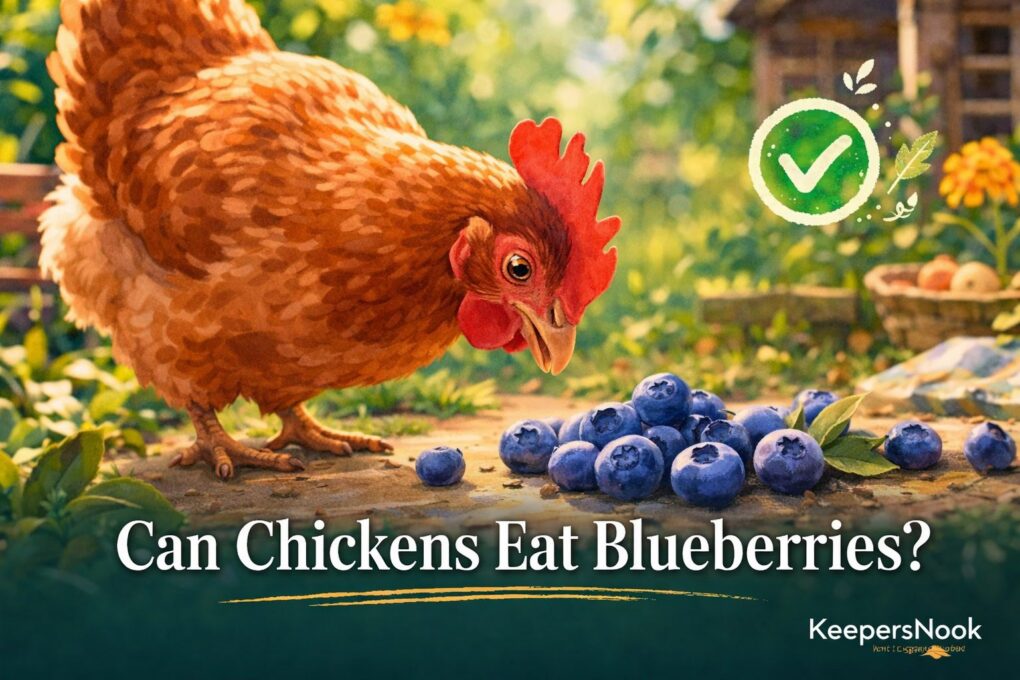
Blueberries are one of the few treats that need almost no scrutiny before hitting the run. No toxic parts to remove, no minimum ripeness requirement, no chopping for standard hens.
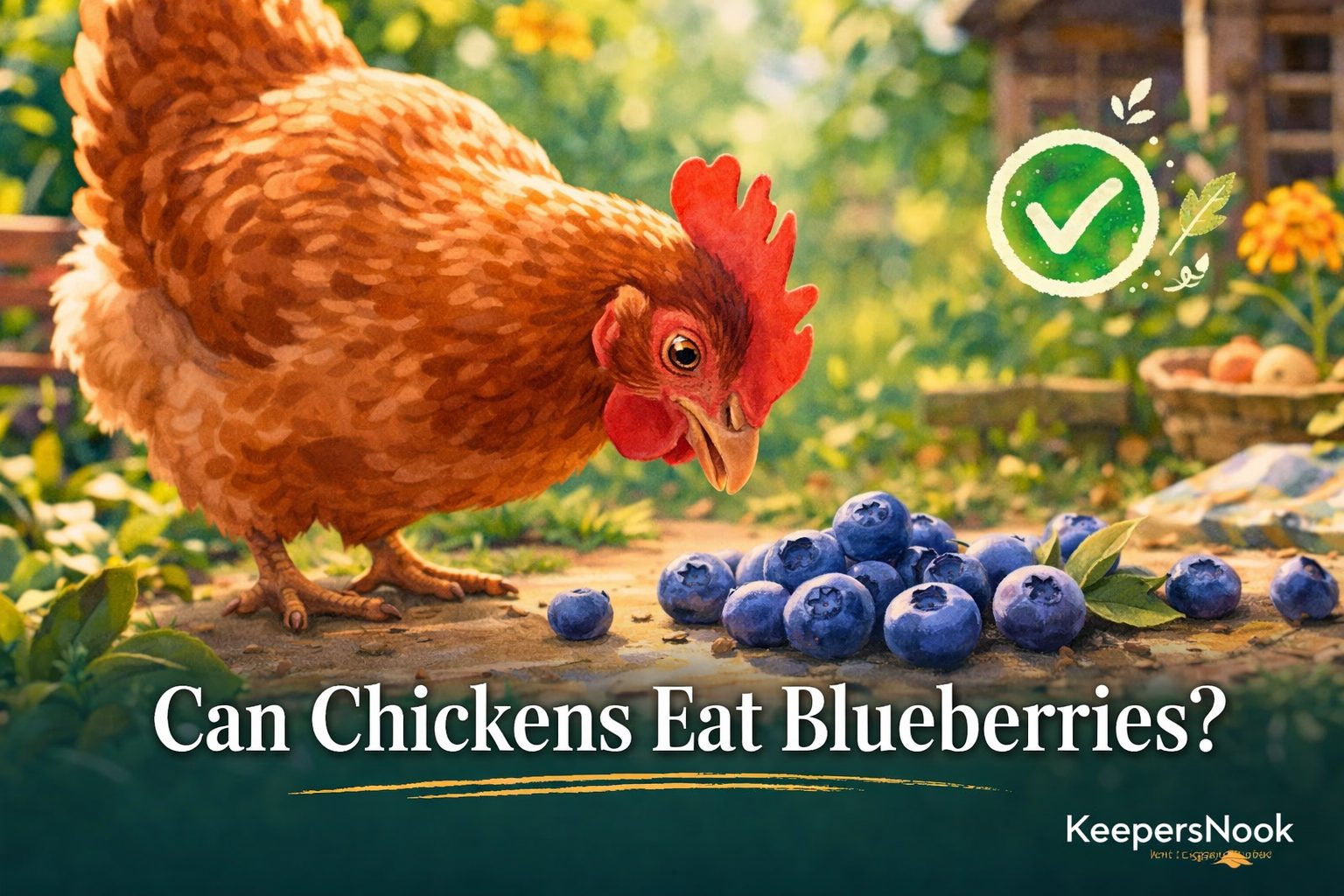
The main task is rinsing. Ten seconds under cold water is all the prep this fruit requires.
That safety card holds for every standard backyard breed. Bantams get the same berries, just fewer per session.
Why Blueberries Are Safe for Chickens: Zero Toxic Compounds
Some fruit treats come with conditions. Higher-sugar grapes need halving for bantams and carry pesticide concerns on the skin.
Remember it later
Planning to try this recipe soon? Save it for a quick find later!
Persin-containing avocado causes cardiac damage and stays out of the run entirely.
Blueberries contain none of those hazards. No solanine, no persin, no cyanogenic glycosides, no oxalic acid at harmful concentrations.
Every part of the berry clears the safety threshold. The skin carries the anthocyanin load.
The flesh provides water and sugar. The seeds are small enough that even bantams pass them without difficulty.
- Skin: Edible and safe. Contains the highest concentration of anthocyanins in the berry.
- Flesh: The main edible portion. 84% water, mild sweetness, easy to digest.
- Seeds: Tiny and non-toxic. No cyanogenic compounds, unlike apple seeds.
- Stems: Not harmful. Chickens ignore them. Remove before serving to keep cleanup easy.
This clean safety profile is why blueberries appear in nearly every poultry extension feeding guide as a model treat. They provide real nutritional value without requiring keeper vigilance beyond portion size.
Blueberry Nutrition for Chickens: 10g Sugar and High Antioxidants per 100g
The USDA FoodData Central database lists blueberries at approximately 57 calories per 100g, 10g of sugar, 84% water, and a strong micronutrient profile. That sugar figure matters because it sits comfortably below the 16g-per-100g level that grape-heavy treat days deliver.
Vitamin C runs 9-10mg per 100g. Chickens synthesize their own vitamin C under normal conditions, but endogenous production drops during heat stress above 85°F or during illness.
Dietary vitamin C in those windows supports recovery.
Anthocyanins are the pigments responsible for the berry's deep blue color. A 2020 study in Poultry Science found that broiler diets supplemented with blueberry pomace showed improved antioxidant status and reduced markers of oxidative stress.
At backyard treat quantities the effect is modest, but the contribution is genuine rather than empty calories.
Manganese at roughly 0.34mg per 100g supports eggshell formation. Vitamin K at approximately 19mcg per 100g supports blood clotting and bone metabolism.
For vitamin C-rich strawberry rotation, alternating with blueberries gives a broader micronutrient spread than either fruit alone.
| Berry | Safe? | Sugar per 100g | Prep Required | Best Feature |
|---|---|---|---|---|
| Blueberries | Yes | 10g | Rinse only | High antioxidants, zero prep, no toxic parts |
| Strawberries | Yes | 4.9g | Rinse, remove hull | Lowest sugar of popular berries, high vitamin C |
| Raspberries | Yes | 4.4g | Rinse only | Lowest sugar of all common berries, high fiber |
| Blackberries | Yes | 4.9g | Rinse only | High vitamin C, seeds and skin both safe |
| Cranberries | Yes | 4g | Rinse only | Very tart, many birds refuse them |
| Grapes | Yes | 16g | Rinse, halve for bantams | Highest sugar, strict portion control needed |
Blueberries lead this list on ease of use. The combination of low prep, clean safety profile, and meaningful antioxidant content earns them a permanent place in a well-managed treat rotation.
How to Serve Blueberries: Fresh, Frozen, and What to Avoid
Fresh blueberries are the simplest option. Rinse under cold water, walk to the run, scatter across the ground.
Your flock will find every berry without assistance.
Frozen blueberries are equally safe and often cheaper outside of summer. The freezing process creates no toxic compounds.
Nutritional value is essentially identical to fresh.
Dried blueberries are available but not recommended as a regular source. Dehydration concentrates sugar well above the 10g fresh baseline.
A few pieces once in a while is harmless. Regular dried blueberry servings are not worth the sugar load when fresh or frozen are available.
Commercial blueberry products with added sugar, syrups, or preservatives stay out of the run entirely. Plain and unsweetened is the only form worth offering alongside hydration-heavy watermelon in a summer rotation.
- Fresh (preferred): Rinse and scatter. No further prep for standard hens.
- Frozen (excellent alternative): Offer straight from frozen in summer. No nutritional loss.
- Dried (occasional only): Plain and unsweetened only. Limit to a few pieces per bird.
- Juice or flavored products: Do not feed. Added sugars and additives disqualify them.
The one prep step that applies to both fresh and frozen: remove uneaten berries from the run after two to three hours. Blueberries ferment quickly in warm weather, and fermented fruit causes digestive upset.
How Many Blueberries Per Chicken: The 10% Rule for Blueberries
The standard backyard poultry guideline is that all treats combined should stay at or below 10% of total daily food intake. A laying hen eats roughly 100-130 grams of feed per day, which puts the treat ceiling at 10-13 grams.
Ten to fifteen blueberries weigh approximately 15-25 grams, depending on berry size. That slightly exceeds the daily treat ceiling, which is why twice-weekly sessions rather than daily feeding is the right cadence.
High-production layers like the prolific Rhode Island Red need their 16% protein layer ration intact for consistent laying. A colorful Easter Egger laying through most of the year has the same requirement.
Treats that displace layer feed reduce protein and calcium intake, and the effect shows up in shell quality first.
A reliable sign that treats are displacing feed: hens leaving pellets in the feeder while waiting for the next treat delivery. At that point, cut back on frequency before production numbers drop.
Which Chickens Love Blueberries: Breed Observations with 3 Common Types
Most breeds respond enthusiastically to blueberries. The scramble starts when the first berry hits the ground.
A few breed-specific observations are worth noting for keepers managing flocks with mixed temperaments.
Calm Wyandotte hens are steady eaters that tend to share treats without much competition. In a mixed flock, their temperament means subordinate birds get access to berries without intervention from the keeper.
Active breeds like Leghorns and flighty heritage crosses will sprint across the run at the sight of berries. Scatter wider for active flocks so dominant birds cannot claim the whole scatter zone.
- Heavy breeds (Orpingtons, Wyandottes, Sussex): Steady eaters. Scatter widely to prevent boss hens from monopolizing the pile.
- Production layers (Rhode Island Reds, Leghorns): High caloric need means the 10% treat ceiling is more important, not less. Keep portions firm.
- Bantams and small breeds: Reduce to 5-8 berries per session. Standard-sized berries are fine whole.
Breed guides on top egg-laying breeds cover the metabolic differences between production hybrids and heritage birds in more detail. That context helps you calibrate how much treat room each bird in your flock actually has.
Blueberries in a Full Chicken Treat Rotation: 4 Pairings That Work
Blueberries fit cleanly into a multi-fruit rotation because their sugar level is moderate enough to combine with lower-sugar options on different days. The goal is variety across the week, not stacking fruit on the same day.
A simple weekly structure: blueberries twice per week, one other fruit or vegetable on two additional days, and three days of layer feed only. That structure keeps total treat intake well within the 10% ceiling while giving your flock regular enrichment.
- Blueberries + watermelon: Alternate on different days. Watermelon's 6g sugar makes it the lower-sugar choice for days when you want a larger volume treat.
- Blueberries + banana pieces: Bananas run 14g sugar per 100g. Offset higher-sugar banana days with a smaller volume, and schedule on non-blueberry days.
- Blueberries + ripe tomato flesh: Tomatoes are safe when red and ripe. The green stem and leaves contain solanine and stay out of the run.
- Blueberries + leafy greens: Kale, chard, and spinach add carotenoids and vitamin A. These are not fruits, so they do not stack sugar against the treat budget the same way.
For the full context on what produces the best results across a long laying season, a well-designed coop setup and consistent feed management matter more than any single treat. Treats are supplemental.
Feed quality and housing are the foundation.
If your flock responds to blueberries, the wider berry family is worth rotating in:
- Raspberries: Lowest sugar of common berries at 4.4g per 100g. Seeds and skin both safe. Canes not typically eaten.
- Blackberries: 4.9g sugar, high vitamin C, seeds and skin fine. Good rotation partner with blueberries.
- Strawberries: 4.9g sugar. Wash strawberries thoroughly before feeding, as strawberries rank high on pesticide residue lists.
- Cranberries: Very tart at 4g sugar. Many chickens refuse them. Offer a few to test before buying a full bag.
- Elderberries: Fully ripe black or blue elderberries only. Unripe green elderberries and all elderberry leaves contain sambunigrin, a cyanogenic glycoside. Do not feed unripe or unknown elderberries.
Berries to avoid entirely: holly berries, mistletoe berries, and any wild berry you have not positively identified as food-safe. When in doubt, skip it.
The berry list above gives you safe variety without overlapping into the restricted fruit territory that includes avocado. Avocado contains persin in the skin, flesh, and pit, and causes cardiac damage in chickens.
It never goes in the run.