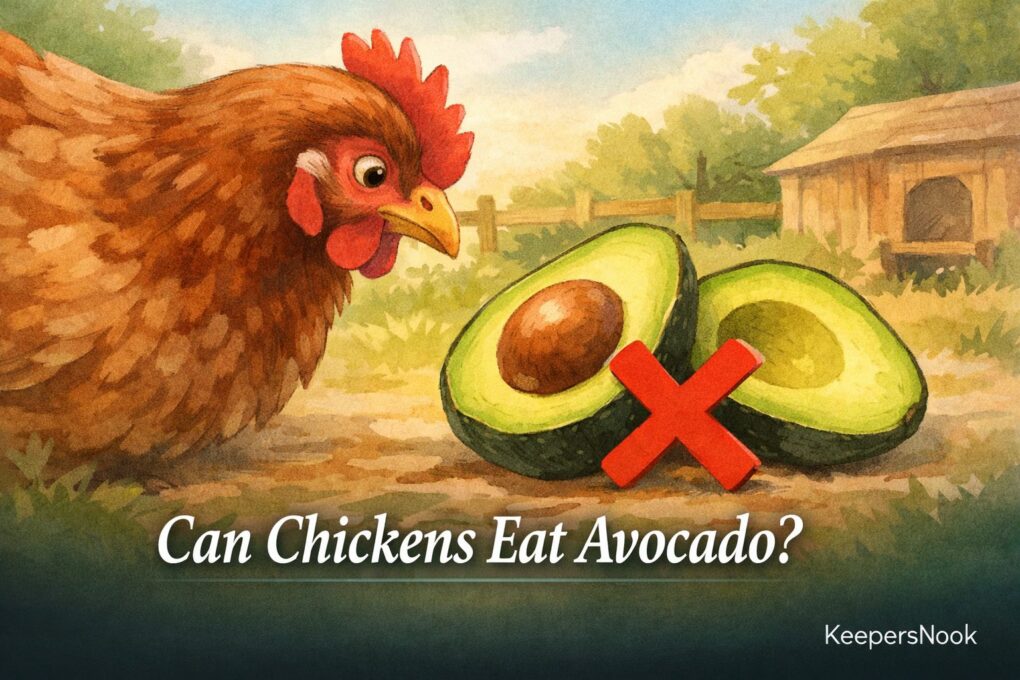
The Merck Veterinary Manual classifies avocado as toxic to birds. Do not feed it in any form.
Avocado is one of the most dangerous kitchen scraps you can offer your flock. Unlike foods with a hard safe/unsafe line by plant part, persin is distributed throughout the entire avocado plant.
Building solid poultry safety habits means knowing which foods carry no safe serving size. Avocado is at the top of that list.
Below: how persin works, which parts carry the most risk, signs of poisoning, and the safe fruit alternatives that replace avocado with zero downside.
Why Avocado Is Toxic to Chickens: Persin Targets the Heart in 24 Hours
Persin is a fatty acid derivative produced by the avocado plant as a natural antifungal compound. It is present in the skin, pit, leaves, bark, and flesh.
Remember it later
Planning to try this recipe soon? Save it for a quick find later!
In poultry, persin causes edema. fluid buildup around the heart and lungs that restricts cardiac function and breathing. The Merck Veterinary Manual documents this mechanism specifically in birds, and the Journal of the American Veterinary Medical Association recorded fatal avocado toxicosis in a flock of canaries as early as 1994.
Onset is not immediate. Symptoms typically appear within 12 to 24 hours of exposure, which means a bird can look normal for hours before deteriorating rapidly.
Death from significant persin exposure can occur within 24 to 48 hours of ingestion.
A single exposure to avocado skin or pit can be fatal, and the 12-24 hour symptom lag means your birds may look fine initially. Remove all avocado scraps from any area where your flock forages.
The mechanism is distinct from solanine poisoning in green tomatoes, where the toxic compounds concentrate in specific plant parts. With avocado, persin is systemic throughout the plant, with concentration varying by part and ripeness but never reaching zero.
This categorically removes avocado from the "feed in moderation" category. There is no safe dose established for poultry in any controlled study.
Which Avocado Parts Contain Persin: All 6 Parts Rated
Every component of the avocado plant carries persin at some concentration. The table below reflects current veterinary consensus.
| Avocado Part | Persin Level | Risk to Chickens | Verdict |
|---|---|---|---|
| Skin / outer peel | Very high | Cardiac edema, death | Never feed |
| Pit / seed | Very high | Cardiac edema, death | Never feed |
| Leaves | Very high | Cardiac edema, death | Never feed |
| Bark / wood | High | Cardiac and respiratory damage | Never feed |
| Unripe flesh | High | Cardiac and respiratory damage | Never feed |
| Ripe flesh | Low (not zero) | Sub-lethal cardiac stress possible | Avoid entirely |
The ripe flesh carries the most debate among backyard keepers, and we address that directly in the next section.
If you grow avocado trees, fence your flock away from the entire area. Fallen leaves and dropped fruit create exposure risk that bypasses your direct control.
- Skin and pit: The highest-persin parts of the fruit. Both are commonly left as kitchen scraps alongside the edible flesh.
- Leaves and bark: A hazard for any chickens that free-range near an avocado tree. Most birds do not eat leaves by choice, but some do.
- Unripe flesh: Higher persin than ripe flesh. Never feed green or underripe avocado.
Discard avocado pits and skins in a sealed bin. Do not compost them in an open pile accessible to your flock.
The Ripe Flesh Controversy: Why Chickens Should Avoid All Avocado Flesh
Persin concentration varies by cultivar, ripeness stage, and individual bird tolerance. A dose that causes no visible symptoms in one bird may be fatal to another.
The Merck Veterinary Manual and the AVMA both classify avocado as toxic to birds. We follow that guidance.
Ripe Hass avocado flesh contains the lowest persin concentration in the entire plant, but "lowest" is not "none." Persin is fat-soluble and concentrates in the flesh alongside the fruit's high fat content.
The absence of immediate visible symptoms is not evidence of safety. Sub-lethal exposure may still cause cumulative cardiac stress over multiple exposures.
No controlled study has established a safe dose of avocado flesh for poultry. We will not speculate on one.
Other kitchen staples carry hidden risks too: onion contains thiosulfate that damages red blood cells in poultry, making it another item to keep permanently off the scrap list.
If you need a high-energy treat with comparable caloric density, provide potassium and energy with zero toxic compounds and no vet controversy.
- Hass variety: Most common, persin in flesh is "low but detectable" per toxicology references. All Guatemalan hybrids apply.
- Fuerte variety: Similar persin profile to Hass. Not safer.
- Mexican varieties: Leaves may contain higher persin than Guatemalan types. Avoid all.
Breed hardiness does not affect toxin tolerance. Rhode Island Reds are robust egg layers with strong constitutions, but persin causes cardiac myonecrosis regardless of breed size or vitality.
The same risk applies to Silkies, which are smaller and lighter than production breeds, and to larger dual-purpose breeds like the Australorp.
Signs of Persin Poisoning in Chickens: 5 Symptoms to Watch at 12 Hours
Because persin poisoning has a 12 to 24 hour onset window, you need to know what to watch for after any suspected exposure.
Early signs are subtle and easy to dismiss as a tired bird having an off day.
- Lethargy and ruffled feathers: First visible sign. The bird sits away from the flock and does not respond normally to activity around her.
- Labored or open-mouth breathing: Signals cardiac edema developing around the lungs. This is a medical emergency at any severity.
- Refusal to eat or drink: Appetite drops sharply as cardiac function declines.
- Weakness in legs: Birds that cannot stand or stumble when walking. Appears as edema worsens.
- Sudden death: Reported in high-dose exposures, particularly from skin or pit fragments. No prior warning.
Do not wait for multiple symptoms before contacting a vet. A single symptom after confirmed avocado exposure is enough to act.
What to Do If a Chicken Eats Avocado: 8-Step Response
Speed matters more than any other factor in an avocado exposure event. Act before symptoms appear.
Prompt action gives the vet the best chance to provide supportive care before cardiac edema becomes severe. Early treatment is the difference between a difficult recovery and a fatality.
Once your flock is safe, audit your run and foraging area for avocado scraps. If you share a property with neighbors who compost kitchen waste, talk to them about avocado disposal.
Safe Fruit Alternatives to Avocado for Chickens: 5 Zero-Toxin Options
Avocado offers chickens no nutritional benefit that cannot be matched by safer foods. Every nutrient in avocado flesh, including potassium, vitamin E, and healthy fats, is available from ingredients with zero toxicity risk.
- Grapes: toxic compounds in grapes. All colors and parts are safe. Halve for bantams. Feed 4-6 per hen, 2-3 times per week.
- Watermelon: delivers 92% water content with no persin, no solanine, and no prep beyond slicing. A top summer heat-stress treat.
- Strawberries: safe including the tops and hull. Low sugar at 4.9g per 100g. Wash for pesticide residue.
- Blueberries: Blueberries pack antioxidants at roughly 10g sugar per 100g. No prep needed for standard-sized hens. Feed 10-15 per bird twice a week.
- Bananas: provide potassium and energy at 14g sugar per 100g. Higher caloric density than most fruits. Feed as an occasional treat, not daily.
All five options cover the treat-variety need without any of the cardiac risk that makes avocado off-limits.
The 10% rule applies to all treats: combined, they should not exceed 10% of total daily feed intake. Layer feed at 16% protein remains the non-negotiable primary food source for laying hens.
When you are building out your safe treat rotation, your coop setup matters too. A secure run prevents neighbors' compost from reaching your flock.
If you are new to keeping chickens, the right starter breed is the first step to a healthy flock. Breeds like the Australorp and Rhode Island Red are forgiving of beginner mistakes on the management side, but no breed is forgiving of toxic food exposure.
Avocado and Chickens: Full Verdict on Toxicity, Risk, and What to Feed Instead
The answer to "can chickens eat avocado" is no, across every part of the plant and every variety. Persin causes cardiac myonecrosis in birds at exposure levels that do not require large quantities.
The ripe flesh carries the lowest persin concentration, but that concentration is not zero, no safe dose has been established, and the consequences of misjudging that line are severe and often irreversible.
The practical rule is simple: treat avocado like any other confirmed toxin. Keep it out of the run, out of the compost, and off the scrap list permanently.
Chocolate carries a similar all-parts toxic profile: theobromine in chocolate causes cardiac and neurological damage in chickens with no safe serving threshold established for poultry.