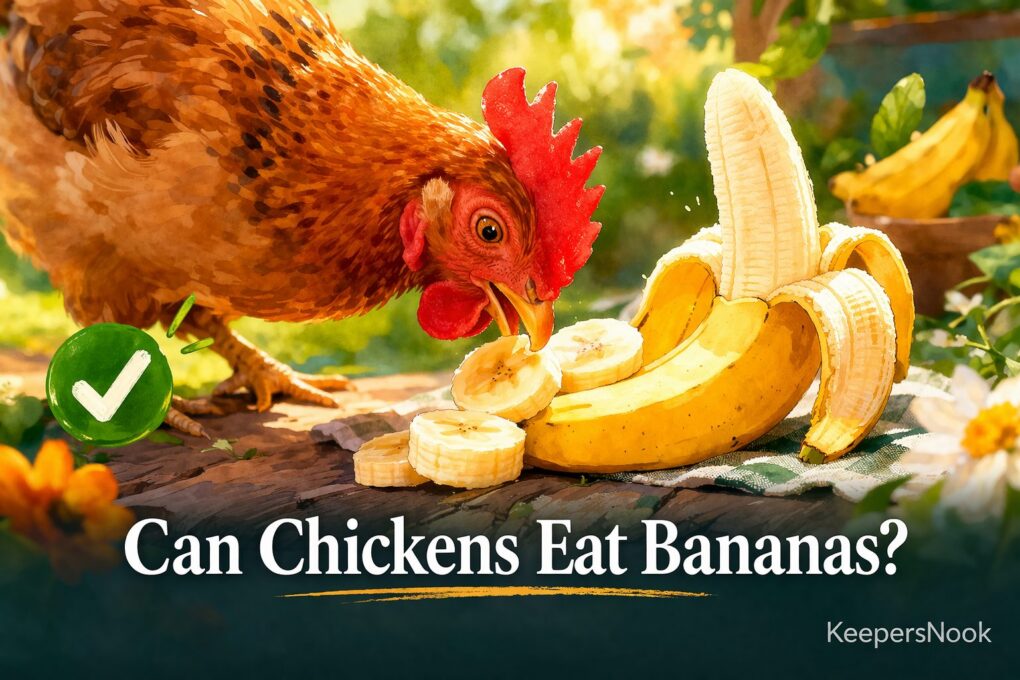
Bananas are one of the most common kitchen scraps keepers offer their flocks, and the overripe ones tend to pile up fast. Good news for hen nutrition: bananas carry no toxic compounds, no harmful alkaloids, and no risk at the serving sizes we recommend.
The question is not whether bananas are safe. It is whether you are feeding them in a way that supports rather than undermines flock health.
This guide gives you the sugar numbers, the correct serving size, and the signs to watch for if you overfeed.
Can Chickens Eat Banana Peels? Safe but Mostly Ignored by Chickens
Banana peels contain no compounds toxic to chickens. The fiber and tannin content is higher than in the flesh, which gives peels a slightly bitter profile that most birds avoid on instinct.
Remember it later
Planning to try this recipe soon? Save it for a quick find later!
A small number of chickens will peck at a peel if you leave it in the run. Most will strip the flesh and walk away.
Conventional banana peels carry more pesticide residue than the flesh due to how bananas are grown and stored. If you want to offer the peel, use organic bananas.
Otherwise, peel first and compost the skin.
There is no nutritional reason to push the peel. Offer it if your chickens show interest, skip it if they don't.
The flesh is where the useful nutrients are.
Bananas Contain 14g of Sugar Per Fruit: What That Means for Chickens
A medium banana contains roughly 14 grams of sugar, made up of fructose, glucose, and sucrose in roughly equal thirds. That is substantially more sugar than most poultry treats and the primary reason bananas are a limited offering rather than a daily one.
For context, only 4.9g of sugar per 100g serving, making them a much lower-glycemic alternative at comparable volume.
Chickens have a limited capacity to process excess dietary sugar. Over time, consistent overfeeding of high-sugar foods contributes to fatty liver syndrome, weight gain, and loose droppings in laying hens.
16g sugar per 100g, placing them in the same restricted category as bananas. Both are nutritious and safe, but both require strict portion discipline.
The standout nutrient in bananas is potassium: 422mg per fruit. Potassium supports muscle function and cardiac health in laying hens, and bananas are one of the better natural sources of it in the treat category.
Vitamin B6 is the other meaningful contribution. It supports protein metabolism and nervous system function, which matters particularly during molt when hens are rebuilding feathers rapidly.
- Sugar per medium banana: 14g (fructose, glucose, sucrose combined)
- Potassium per fruit: 422mg (one of the highest in common poultry treats)
- Vitamin B6: 0.4mg per fruit (supports protein metabolism during molt)
- Water content: 75% (moderate hydration value, lower than watermelon)
- Calories per fruit: approximately 89 kcal (calorie-dense compared to leafy treats)
Those numbers explain the weekly frequency cap. The potassium and B6 are useful; the sugar and calorie density require you to limit how often you use bananas as a treat vehicle.
How to Feed Bananas to Chickens: Ripe, Overripe, and Green Compared
Ripeness affects texture and digestibility more than it affects the safety profile. All three stages are worth understanding before you decide what to offer.
Ripe yellow bananas are the standard offering. Peel, break into rough one-inch chunks, and scatter in the run.
Most hens eat them quickly. The texture is soft enough that choking is not a concern for adult birds.
Sugar content is at its peak at this stage.
Overripe bananas with brown-speckled skins are softer and slightly sweeter. The starches have converted fully, making digestion easier.
Mash them or break into small chunks. Sugar load is similar to ripe bananas by weight, so keep the same serving limits.
Unripe green bananas are not recommended. High resistant starch content makes them harder to digest, and the firm texture is less appealing to most flocks.
There is no benefit to offering green bananas when ripe ones are available. Wait for full ripeness before feeding.
The preparation approach is simple regardless of ripeness stage. Peel the banana, break or slice it into pieces your hens can manage, and scatter it in the run or a shallow dish.
Remove uneaten banana from the run within two to three hours. Banana flesh is moist and will attract flies and rodents if left overnight.
How Much Banana Per Chicken: Serving Size and Weekly Limits
The standard treat rule applies here: treats should not exceed 10% of daily caloric intake. For a laying hen eating roughly 100-120 calories per day from layer feed, that leaves a narrow window for calorie-dense treats like banana.
Half a banana per hen per session, one to two times a week, lands within that window. For a flock of six hens, three bananas split across two feeding sessions is a reasonable weekly maximum.
Plain cooked rice is a lower-sugar carbohydrate alternative that works well on days when you want to skip a fruit treat. Unsalted and cooled, it provides energy without the fructose spike.
Combining banana with bread or corn on the same day layers two high-carbohydrate treats in one feeding window. Choose one per session.
Signs of Sugar Overload from Banana Treats in Chickens
These signs are not banana-specific. They apply to any high-sugar treat rotation.
If you are feeding grapes, bananas, and blueberries across the same week, the combined sugar load is what matters.
Track your treat days on a simple calendar. Most keepers who run into sugar-related issues are not overfeeding any single food.
They are feeding three different treats on three different days and not calculating the weekly total.
| Sign | What It Indicates | Action |
|---|---|---|
| Loose, watery droppings | Excess sugar or water intake | Stop banana treats for 1 week, confirm layer feed access |
| Reduced feed intake | Hens filling up on treats instead of balanced feed | Cut treat frequency, increase feed access |
| Reduced egg production | Nutritional imbalance from treat overfeeding | Return to primary feed for 2 weeks, reintroduce treats slowly |
| Weight gain in non-broody hens | Caloric surplus from sugar and excess carbohydrates | Assess total treat load across all treat types that week |
| Increased thirst | High sugar content drawing water through osmosis | Ensure fresh water is always available, reduce banana frequency |
Most of these signs resolve within a week of returning to a primary-feed-only diet. Fatty liver syndrome takes longer and may require a vet assessment if you suspect it has developed.
Breed Differences: Do Chickens React Differently to Bananas?
No breed is allergic to or harmed by banana in a way other breeds are not. The serving limits apply equally across breed types.
That said, body size and metabolic rate affect how quickly a calorie-dense treat affects condition.
Larger, more active birds like Rhode Island Reds have the body mass to absorb an occasional treat without visible impact. Smaller, lighter breeds accumulate excess calories more quickly at the same serving size.
High-production breeds can be particularly sensitive to fatty liver syndrome. Leghorns, bred for maximum egg output, are at higher baseline risk for fatty liver when caloric balance tips even slightly.
Keep banana treats stricter for high-production flocks: once a week rather than twice.
- Heavy breeds: Rhode Island Reds, Orpingtons tolerate occasional treats well due to body mass, but obesity risk rises with age and reduced activity
- High-production breeds: Leghorns and similar breeds should receive banana no more than once per week due to fatty liver risk
- Dual-purpose breeds: Standard limits (twice weekly, half banana) work well for most dual-purpose flocks
- Bantam breeds: Quarter banana per bird maximum due to smaller body size and caloric needs
If you are building your flock and have not chosen a breed yet, our guide on top egg-laying breeds covers production rates and body type differences that affect treat tolerance. For keepers just starting out, beginner-friendly breeds tend to be forgiving of minor treat variations while you establish your feeding routine.
Lower-Sugar Treat Alternatives to Bananas for Chickens
Bananas are a solid treat choice within the frequency limits. But if you want to offer something daily or are managing a flock prone to weight issues, lower-sugar alternatives give you more flexibility.
- Strawberries (4.9g sugar/100g): the lowest-sugar fruit options and the most flock-friendly for frequent use
- Watermelon (6g sugar/100g): 92% water content makes watermelon the best hot-weather treat for hydration
- Blueberries (10g sugar/100g): higher in antioxidants than most fruit treats, moderate sugar level
- Cooked rice (minimal sugar): plain unsalted cooked rice provides energy without fructose; good for molt recovery
One food to avoid entirely: avocado. Our guide on is toxic to chickens covers the persin compound in detail.
Unlike bananas, there is no safe serving size for avocado flesh, skin, or pit.
The wider your treat variety, the easier it is to keep any single food within safe limits while still giving your flock enrichment and nutritional variety.