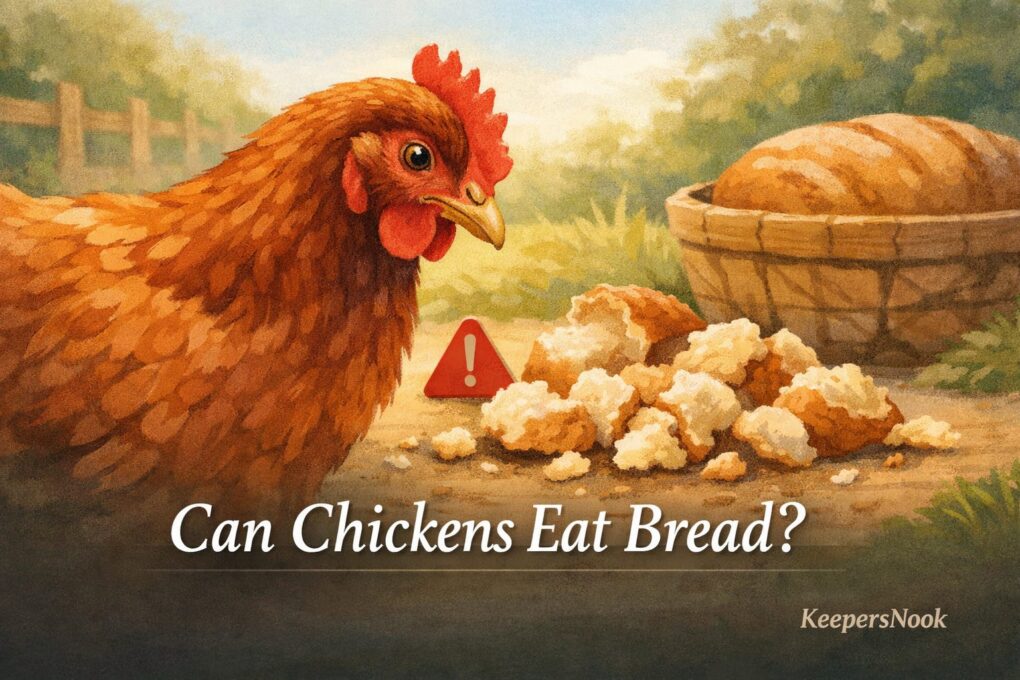
Good layer feed basics separate keepers who maintain steady egg production from those who wonder why output drops mid-summer. Bread is one of the most common scraps tossed to backyard flocks, and most guides wave it through without much scrutiny.
The reality is more nuanced. Bread is not toxic the way persin from avocado damages cardiac tissue, but it carries three real problems: empty calories, crop impaction risk, and mycotoxin danger when mold appears.
Plain bread only. Never moldy.
Not often.
Below: what bread actually contains, which types are safest, how to serve it without causing crop problems, and which breeds handle high-treat diets least well.
Why Bread Gives Chickens Empty Calories: 2g Protein Per Slice
A standard slice of white bread delivers roughly 77 kcal, 2g protein, 14g carbohydrates, and less than 1g fiber. A laying hen needs 15-20g of dietary protein daily to maintain consistent egg production and feather condition.
Remember it later
Planning to try this recipe soon? Save it for a quick find later!
That 2g figure means bread contributes almost nothing useful to the birds that eat it most eagerly.
Layer feed is formulated with exact protein, calcium, phosphorus, and vitamin ratios a hen needs. When bread fills even a small portion of the crop, it crowds out pellets that would have delivered real nutrition.
Refined starch in white bread causes a rapid glucose spike followed by a crash. This pattern, repeated frequently, stresses the pancreas and disrupts the steady energy metabolism laying hens depend on.
The effect is subtle over a week but measurable over a month.
- White bread: 8g protein per 100g, 2.7g fiber, high glycemic index. Lowest nutritional value of any common type.
- Whole wheat bread: 13g protein per 100g, 6.9g fiber. Marginally better, still mostly empty carbohydrates.
- Sourdough: 9g protein per 100g, 2.8g fiber. Fine if plain; check ingredient list for garlic or onion additions.
- Multigrain: 11g protein per 100g, 5.5g fiber. Acceptable if free of Allium seeds.
- Garlic or herb bread: Never feed. Allium compounds cause hemolytic anemia in poultry.
A 280 eggs per year has higher protein and calcium demands than most heritage breeds. High-output hens show the effects of nutritional displacement faster than low-production breeds.
Compare that output demand to a 300 eggs per year: both breeds have almost no metabolic margin for treats that deliver starch instead of protein. Their feed must stay consistent.
Repeated low-level mycotoxin exposure is the more common danger. A flock that receives slightly moldy scraps over weeks can develop cumulative liver damage before any single feeding looked severe enough to cause alarm.
If you would not eat it yourself, do not feed it to the flock.
Moldy Bread and Chickens: Aflatoxin B1 Reaches the Whole Loaf
Aflatoxin B1, produced by Aspergillus flavus and Aspergillus parasiticus, is among the most potent naturally occurring carcinogens known. Poultry are especially sensitive to aflatoxin compared to most other livestock species.
Clinical signs of mycotoxin poisoning include lethargy, reduced feed intake, ruffled feathers, pale combs, and, in severe cases, loss of coordination. Egg production drops significantly before visible symptoms appear.
What looks like a clean slice with one spotted corner has mycelium threads running throughout the crumb. The visible discoloration is the sporulation stage, not the start of contamination.
By the time you see the mold, the whole slice is compromised. Store bread in a sealed container and inspect it before feeding, not after tossing it into the run.
- Never scrape and salvage: Mycotoxins are distributed throughout the bread, not only on the visible surface patch.
- Never toast to "fix" it: Heat-stable mycotoxins survive baking temperatures.
- Never feed sour-smelling bread: Fermentation odor signals bacterial or mold activity even when no visible growth is present.
- Always inspect the full slice: Check both faces, both ends, and the interior crumb if you cut it.
tomato stems and leaves is a risk limited to specific plant parts. With moldy bread, there is no safe portion to separate out.
Discard the entire slice.
Bread Types for Chickens Compared: Fiber Decides the Best Option
Neither white nor whole wheat bread is a good treat. If you are going to feed bread at all, whole wheat is the marginally better choice because of its fiber content and lower glycemic load.
The table below covers the most common varieties your flock might encounter as kitchen scraps.
| Type | Protein (per 100g) | Fiber (per 100g) | Verdict |
|---|---|---|---|
| White bread | 8g | 2.7g | Lowest value; high glycemic index |
| Whole wheat bread | 13g | 6.9g | Better fiber; still mostly empty carbs |
| Sourdough | 9g | 2.8g | Fine if plain; check for garlic or onion |
| Multigrain | 11g | 5.5g | Acceptable if no Allium seeds |
| Garlic or herb bread | 8g | 2.4g | Never feed. Allium compounds toxic to poultry |
| Moldy (any type) | N/A | N/A | Never feed. Aflatoxin risk |
rice digests more cleanly than any bread type in the table above. It disperses easily in the crop, carries near-zero mold risk, and causes no gummy compaction.
Garlic and onion belong to the Allium family. Thiosulfates and organosulfur compounds in both damage red blood cells in poultry and cause hemolytic anemia over time.
Garlic bread is not a safe treat even in small amounts.
How to Feed Bread to Chickens: Chickpea-Sized Pieces Prevent Crop Impaction
Fresh soft bread has a dense, gummy texture that compacts when wet. A large chunk gulped quickly can form a sticky dough mass in the crop that resists normal grinding.
This is crop impaction, and bread is one of the more common non-fiber causes in backyard flocks.
Stale bread is preferable to fresh. It is drier, less gummy, and breaks apart more readily in the crop during digestion.
Scattering small pieces across the run rather than piling them in one spot prevents dominant hens from monopolizing the treat.
Every bird in the flock gets a fair portion when you spread the pieces over a wider area.
The same impaction concern appears with long fibrous vegetables. Piece size and prep technique are always the primary safety controls, regardless of the food type.
Signs Chickens Are Eating Too Much Bread: 4 Production Signals
Nutritional displacement from excess bread shows up gradually. Individual feeding sessions look harmless, and the cumulative effect over 2-4 weeks becomes measurable.
Egg production is the most reliable early indicator.
- Layer feed left in feeder: Hens holding out for treats rather than eating their pellets.
- Soft-shelled eggs: Calcium deficit from displaced layer feed showing up in shell quality.
- Reduced egg count: Protein shortfall hits production before any other visible symptom.
- Weight gain around the keel: Excess carbohydrates convert to fat. Check keel bone monthly.
Keepers who rotate in genuinely nutritious treats avoid these problems. 4.9g sugar per 100g, a fraction of what starchy bread delivers at the same palatability to your flock.
Watermelon runs 92% water and is a summer standout that delivers hydration alongside a small sugar load rather than dense starch.
vitamin K and potassium that bread does not, though their 16g sugar per 100g means they also need portion control in a well-managed treat rotation.
Better Grain Treats Than Bread for Chickens: 5 Alternatives With Real Nutrition
Bread is the convenience option, not the optimal grain treat. Several common alternatives deliver better nutritional profiles at similar or lower cost.
The key difference: these grains do not compact into a dough ball in the crop.
Cracked corn: Higher calorie density than bread, useful in winter to help birds generate body heat overnight. Limit in summer, as excess carbohydrates in heat stress the liver.
Rolled oats: Higher fiber and protein than white bread. Scatter raw rolled oats in the run as a foraging enrichment activity.
No prep needed.
Cooked plain rice: Easily digestible, low mold risk, and far less prone to crop impaction than bread. Neither white nor brown rice should be salted or seasoned before feeding.
Millet: Small seeds that chickens scatter and chase, providing behavioral enrichment alongside calories. A handful scattered on the ground keeps a flock occupied for 20 minutes.
Barley: High fiber, moderate protein. Feed whole or soaked.
Soaked barley sprouts quickly in warm weather, so offer fresh and remove leftovers the same day.
All five deliver real caloric value without the mold risk and impaction potential that bread carries. Reserve bread for genuine scrap-reduction situations, not as a planned weekly treat.
Breed choice also shapes how much dietary margin exists for low-value treats. A 200 eggs per year has more metabolic room for occasional starch than a high-output production hybrid burning through 300 eggs.
Keepers who want to know which breeds have the highest nutritional demands can laying production by breed. The highest producers are the ones where bread frequency matters most.
A well-structured coop and feeding area makes portion control easier. If you with dedicated feeding stations, scattering small treat amounts becomes habit rather than guesswork.