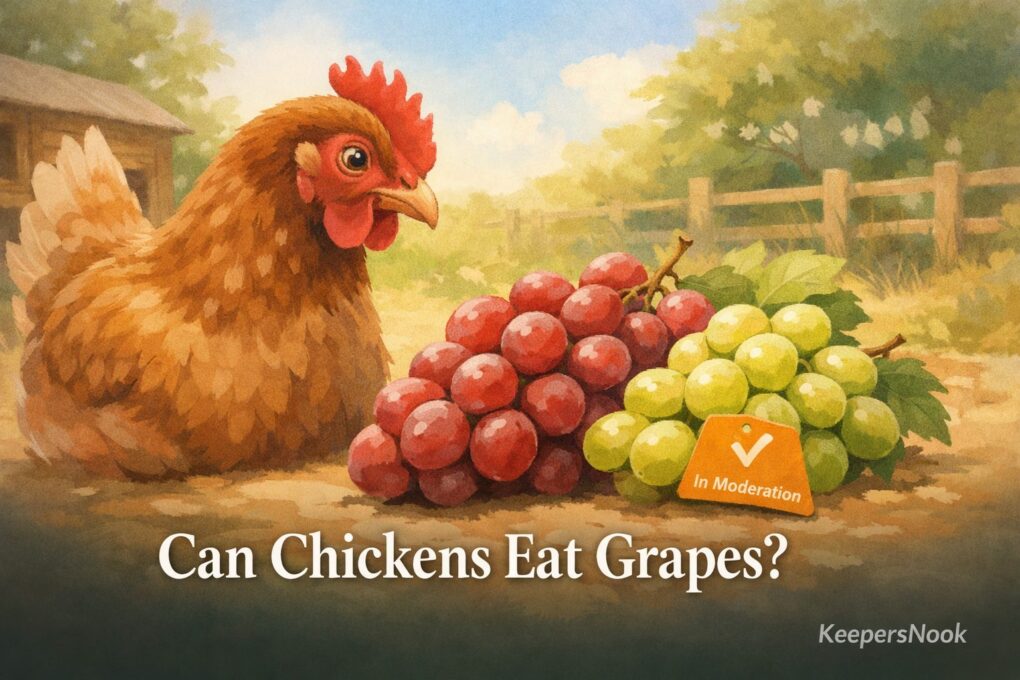
Can Chickens Eat Grapes? The Short Answer With Numbers
Yes, chickens can eat grapes, and most flocks go absolutely wild for them. The key constraint is portion size and preparation, not the fruit itself.
Remember it later
Planning to try this recipe soon? Save it for a quick find later!
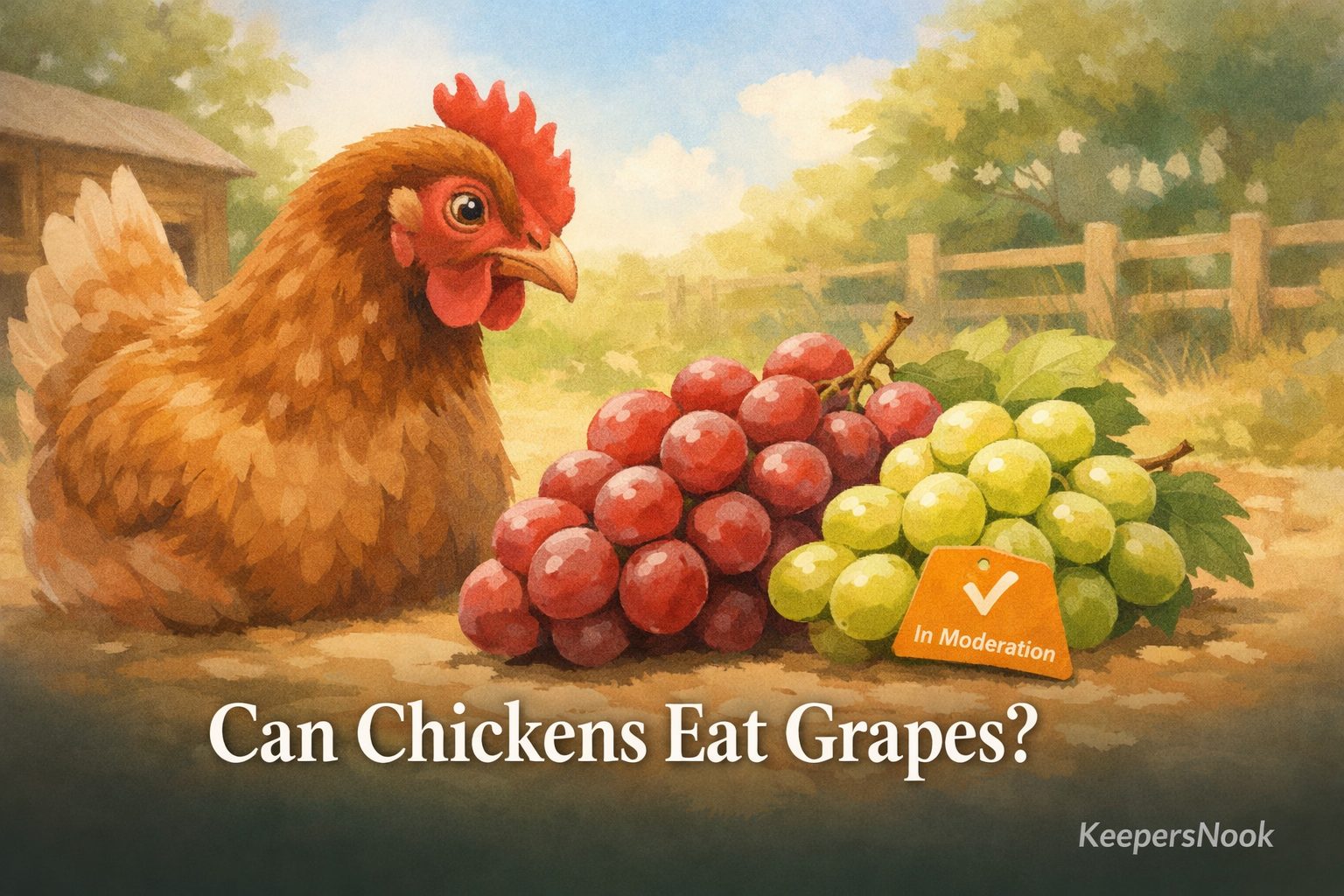
Grapes are roughly 81% water with a moderate sugar load of 16 grams per 100g. That sugar content is why frequency matters.
Too many grapes too often pushes excess simple sugars into a diet that should be anchored by quality layer pellets.
Vitamin K supports bone metabolism and blood clotting in laying hens. That alone makes grapes a more nutritionally useful treat than most processed snacks you might grab off the shelf.
Which Parts of the Grape Are Safe? A Part-by-Part Safety Table
Not every part of a grape plant carries the same risk level. This table breaks down what to feed, what to skip, and what to watch.
| Grape Part | Safety Status | Notes |
|---|---|---|
| Flesh (seedless) | Safe | Primary feed part. High water, moderate sugar. |
| Skin (seedless) | Safe | Contains resveratrol and antioxidants. Fine in normal portions. |
| Seeds | Use caution | Tannin-rich, choking hazard for smaller birds. Remove or choose seedless. |
| Raisins (dried grapes) | Avoid | Concentrated sugar, linked to kidney issues in dogs. Poultry data is limited but risk is not worth it. |
| Grape leaves | Low benefit | Not toxic in small amounts, but no meaningful nutritional upside. Skip them. |
| Grape vines | Avoid free access | Chickens will strip vines. Monitor if they have garden access near grapevines. |
How to Prep Grapes for Chickens: 5-Step Checklist
Prep takes under two minutes and eliminates the main choking and contamination risks. Follow these steps every time.
How Many Grapes Can a Chicken Eat? Portion Data by Breed Size
The standard guideline is that treats, including all fruit, should make up no more than 10% of daily caloric intake. For a standard laying hen eating roughly 130-150 calories per day, that ceiling sits around 13-15 calories from treats total.
At 67 kcal per 100g, a single medium grape weighs about 5g and delivers roughly 3.3 calories. That math puts the practical limit at 4-5 grapes for a large hen on days you offer them.
- Large breeds (Rhode Island Red, Plymouth Rock): 3-5 grapes per serving, 2-3 times per week
- Medium breeds (Wyandotte, Orpington): 2-4 grapes per serving, 2-3 times per week
- Bantam breeds: 1-2 halved grapes per serving, 1-2 times per week
- Chicks under 8 weeks: Avoid. Their digestive systems need starter feed, not sugar.
- Molting hens: Reduce treat frequency during molt. Protein demand is elevated and you want nutrients going toward feather regrowth.
If you keep a mixed flock, including the high-producing Rhode Island Red, size-sort your treats so smaller birds aren't outcompeted at the treat pile.
Do Grapes Offer Any Nutritional Benefit to Chickens?
Grapes are not a superfood for chickens, but they do pull measurable weight in a few areas. The nutritional case is real, just modest.
- Hydration support: At 81% water, grapes contribute meaningfully on hot days when birds may under-drink.
- Vitamin K: At 14.6 mcg per 100g, grapes support bone density and blood clotting function in laying hens.
- Antioxidants: The skin contains resveratrol and flavonoids that may reduce oxidative stress, though poultry-specific research is limited.
- Enrichment value: Foraging for grapes in bedding or a scatter-feed setup stimulates natural behavior and reduces flock stress.
Compare that profile to deliver more vitamin C per gram, or watermelon, another hydrating option with a lower sugar density. Grapes earn a place in the rotation but don't need to be the dominant fruit.
What Fruits Can Chickens Eat Alongside Grapes?
Chickens can eat a wide range of fruits as part of a varied treat rotation. Here are the most common options and how they compare to grapes.
- Strawberries: Higher vitamin C, lower sugar than grapes. Excellent option for frequent rotation.
- Blueberries: Dense in antioxidants. Feeding blueberries supports immune health with a low calorie load per berry.
- Watermelon: 92% water, low calorie. Best hot-weather treat in the lineup.
- Bananas: High in potassium but also high in sugar. Banana feeding results in very soft droppings if overfed.
- Tomatoes (ripe only): Safe in moderation. Tomatoes for chickens must be ripe since green tomatoes contain solanine.
- Avocado: Do not feed. Avoiding avocado is non-negotiable. Persin in the flesh and pit is toxic to poultry.
Rotating fruits prevents fixation on any single sugar source and gives your flock a broader micronutrient spread across the week.
What Foods Should Not Be Fed With Grapes?
Grapes pair fine with most safe produce, but a few common treats create problems when stacked together in the same feeding session.
- Bread on the same day: Bread's low nutrient density stacks empty calories on top of fruit sugar. Never combine the two in one treat session.
- Rice and grapes together: Adding rice to a grape day pushes carbohydrate load well past the 10% treat ceiling for most hens.
- Celery on the same day: Not harmful, but creates crop blockage risk and there's no nutritional reason to combine them.
- Moldy or fermented fruit of any kind: Never serve grapes or any fruit that has started to ferment. Fermented sugar produces ethanol and can intoxicate birds, sometimes fatally.
The simplest rule: grapes are a solo fruit day. Pick one fruit per treat session and keep variety across the week, not within a single feeding.
If you're still building out your flock's treat protocol, the best starter breeds are generally more adaptable foragers who handle varied treats without digestive upset.
How Grapes Compare to 5 Other Chicken Treats: Sugar Per 100g
- Grapes: 16g sugar per 100g, the highest on this list
- Bananas: 12g sugar per 100g, sweet but also offer potassium
- Blueberries: 10g sugar per 100g, antioxidant-rich with a lower sugar load
- Watermelon: 6g sugar per 100g, mostly water, great for hot days
- Strawberries: 4.9g sugar per 100g, a genuinely low-sugar option
- Carrots: 4.7g sugar per 100g, the lowest here and a solid everyday snack
Grapes carry more than three times the sugar of carrots or strawberries, which is why stricter portion limits apply. While a hen can handle a few grapes a couple of times per week, you can offer carrots or strawberries more freely.
The higher a treat sits on this list, the smaller the serving and the longer the gap between offerings. Variety across the lower-sugar options keeps your flock happy without the metabolic strain.