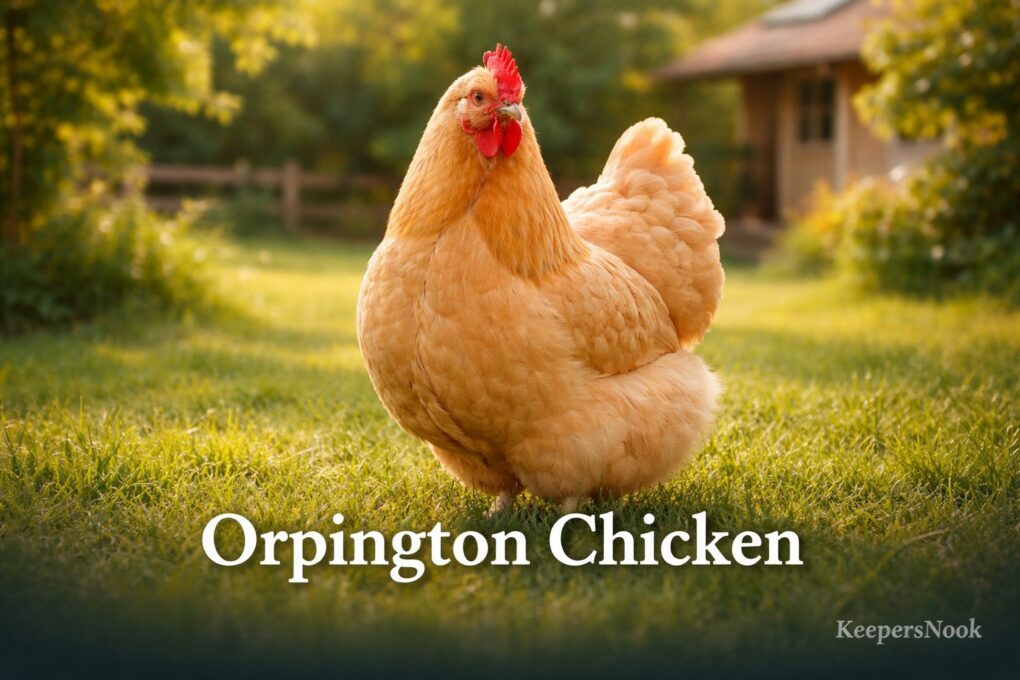
Buff Orpingtons make up the vast majority of Orpington flocks kept today. The name and the golden bird have become nearly synonymous in backyard keeping circles.
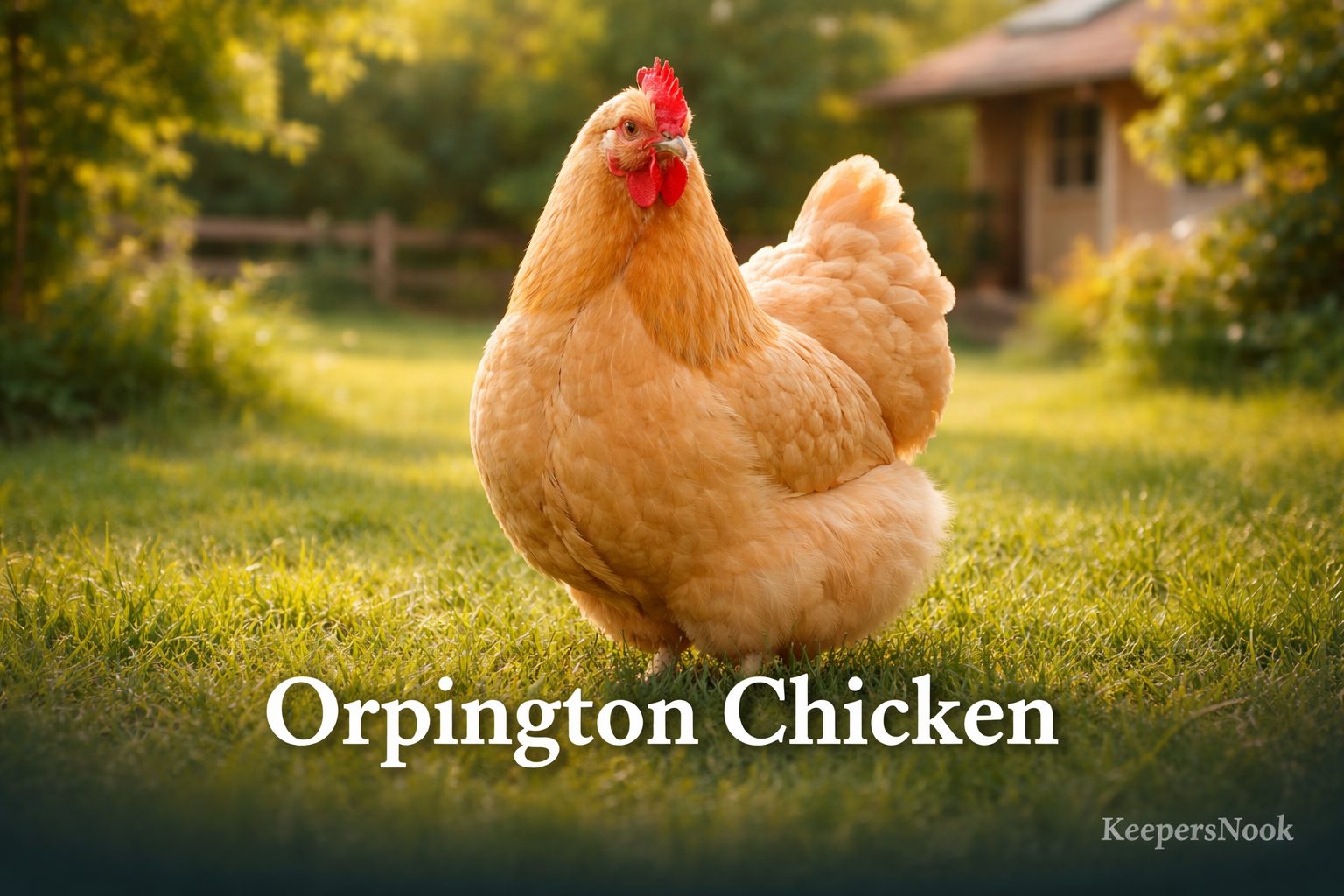
This guide covers what matters most: egg production realities, all four recognized color varieties, temperament strengths and genuine weaknesses, coop and run requirements, feeding pitfalls, and the health issues that catch new Orpington keepers off guard.
Orpington Egg Production: 200-280 Brown Eggs Per Year
An Orpington hen lays 200-280 light brown eggs per year depending on bloodline and management. Show-selected lines, bred for conformation rather than output, land closer to 200.
Remember it later
Planning to try this recipe soon? Save it for a quick find later!
Production-selected hatchery lines hit 260-280 in their first two years.
Eggs are large, light to medium brown, and consistently well-formed. Shell quality holds through the season and through winter cold, which is one reason this breed stays popular in cold-climate flocks.
Broodiness is the defining production trade-off of this breed. Buff Orpingtons go broody multiple times per season and are among the most persistent broody hens in backyard keeping.
A hen sitting for 21 days loses three weeks of production per cycle. Three broody cycles per season can eliminate 60 or more eggs from your annual count.
That broodiness is also an asset if you want to raise chicks naturally. Orpington hens are exceptional mothers.
They incubate reliably, hatch well, and raise chicks attentively. If you want chicks without an incubator or a paid broody service, an Orpington broody is one of the most dependable options available.
Keepers who want maximum uninterrupted output should look at the Rhode Island Red, which rarely goes broody and lays 250-300 eggs per year. For a breed that split the difference between Orpington calm and RIR output, the Black Australorp delivers 250-300 eggs with lower broodiness frequency.
Orpington Varieties: Buff, Black, Blue, and White Color Differences
Four varieties of Orpington are recognized by the American Poultry Association: Buff, Black, Blue, and White. All four share identical temperament, production range, and body structure.
The differences are entirely cosmetic.
Buff dominates availability. Walk into most feed stores or browse most hatchery catalogs and you will find Buff Orpingtons.
The other three varieties exist primarily through specialty breeders and exhibition lines.
| Variety | Plumage Color | Availability | Summer Heat Risk | APA Recognized |
|---|---|---|---|---|
| Buff | Warm golden-yellow | Widely available | Moderate | Yes |
| Black | Solid black with green sheen | Specialty breeders | Higher (absorbs heat) | Yes |
| Blue | Blue-grey laced | Specialty breeders | Moderate | Yes |
| White | Pure white | Specialty breeders | Lower (reflects heat) | Yes |
Black Orpingtons carry the same heat caution as Australorps. Dark feathers absorb solar radiation and raise surface temperature above the ambient air reading.
In climates with sustained heat above 90°F, White or Buff are the safer variety choices.
Blue Orpingtons produce Blue, Black, and Splash offspring when bred together, since Blue is an incomplete dominant gene. If you want all-Blue offspring, you need to source Blue to Black crosses from a breeder who manages the genetics deliberately.
Orpington Appearance: Wide, Round, and Distinctly Fluffy
Orpingtons are large, broad-bodied birds with profuse, soft feathering that gives them a rounded, almost spherical silhouette. Their actual body weight is substantial, but the feathering exaggerates it.
A Buff Orpington hen at 8-9 lbs looks considerably larger than she is.
The comb is a single, small-to-medium upright comb with five points. Its modest size is one of the breed's cold-weather advantages.
Less exposed comb tissue means lower frostbite risk than large single-comb breeds like Leghorns.
Buff Orpington hens weigh 8-9 lbs at maturity with a broad, rounded body profile. Plumage is an even warm golden-buff with no lacing, barring, or pattern variation.
The single comb is small and upright. Earlobes are red, the beak is pinkish-horn, and shanks are pinkish-white with no feathering.
Their wide body appears even broader when viewed from behind. Vent feathers accumulate debris in wet conditions and need weekly checks to prevent hygiene problems.
Orpington roosters reach 9-10 lbs at maturity and carry the same broad, fluffy profile as hens. They are among the calmer dual-purpose roosters you can keep.
Unprovoked aggression toward people is uncommon but not unknown.
Handle roosters frequently from young age and they remain manageable. The comb is slightly larger than the hen's but still relatively modest.
Saddle and hackle feathers show the same buff color as the body with no sharp color break.
Black Orpingtons carry the same broad body type with solid black plumage showing a beetle-green iridescent sheen in sunlight. Blue Orpingtons display a blue-grey laced pattern across each feather.
White Orpingtons are pure white with no pattern.
All three varieties share the Buff's temperament, production range, and coop requirements. Sourcing Black, Blue, or White Orpingtons requires specialty breeders.
Hatchery stock is almost exclusively Buff.
Orpington Temperament: The Gentlest 8-10 lb Breed You Can Keep
Orpingtons are the standard by which backyard chicken temperament is measured. They are calm, slow-moving, and tolerant of handling by children and adults.
Many keepers describe them as lap chickens that actively seek human contact during flock interactions.
They rank at the bottom of typical pecking orders in mixed flocks. That gentleness is the breed's defining social trait and its primary practical limitation when housing with assertive breeds.
Orpingtons are easily displaced from feeders in mixed flocks with assertive Rhode Island Reds, Leghorns, or Australorps. They won't compete at the feeder.
They'll wait. Monitor your Orpingtons' body condition in mixed flocks to confirm they're eating their full ration.
The same calm temperament that makes them poor competitors in mixed flocks makes them excellent first birds for families with young children. They rarely startle, rarely peck defensively, and will stand still while an unfamiliar person approaches.
If you're comparing temperament-first breeds, the Silkie is the only breed with a comparable reputation for gentleness.
Orpington roosters are one of the safer dual-purpose rooster choices. They rarely show unprovoked aggression toward people.
Compared to RIR or Australorp males, an Orpington rooster is a more practical option for a family setup. Individual variation still exists: handle them from hatch and monitor for territorial behavior as they mature.
Are Orpingtons Cold Hardy? Dense Feathering Insulates Effectively
Buff Orpingtons are among the most cold-hardy heritage breeds available. Their exceptionally dense, fluffy feathering traps a thick layer of warm air against the body.
In a dry, well-ventilated coop they handle temperatures down to -10°F without supplemental heat.
Their small comb minimizes frostbite risk compared to large single-comb breeds. This makes them a practical choice for northern climates where frostbite management for large-combed breeds becomes a recurring winter task.
Heat tolerance is a different story. Their thick feathering limits heat dissipation and makes them more vulnerable in summer heat than lighter-bodied breeds.
Above 85°F, monitor Orpingtons closely. Above 90°F, take active cooling steps.
Provide shade covering at least 50% of the run in summer. Place waterers in the coolest, shadiest part of the run and refresh them twice daily during heat above 90°F.frozen treats daily help reduce core temperature during peak heat.
Cold watermelon, frozen corn, and cold water in a shallow pan all help.
In climates with sustained heat above 95°F, Orpingtons require more active management than cold-climate keepers typically need. The White variety reduces solar heat absorption somewhat compared to Black or Buff.
Orpington Coop: 4-5 Sqft Per Bird for Wide-Bodied Comfort
Orpingtons are large birds with wide bodies. Their profuse feathering makes them appear even larger than they are, and crowded Orpingtons develop feather-pecking habits faster than most breeds.
Give them more floor space than the minimum whenever your setup allows.
Low roost bars are a structural requirement for this breed, not a preference. A heavy Orpington landing from a high roost generates significant impact force on the feet and keel bone.
Repeated hard landings cause keel bone fractures and bumblefoot progression.
Nest boxes for Orpingtons need more interior space than standard sizing. A 12x12 inch box is technically adequate but leaves a large Orpington hen little room to turn without crushing eggs. 14x14 inches gives her room to settle properly without stress.
For a full build guide including roost bar mounting, hardware cloth installation, and litter management, our chicken coop setup guide covers every component in depth.
Feeding Orpingtons: Obesity Is the Number One Risk
Orpingtons are enthusiastic eaters with a naturally slow metabolism. They eat readily, they forage eagerly, and they convert excess calories to fat efficiently.
An unchecked Orpington flock will become an overweight Orpington flock faster than you expect.
The base diet for laying Orpington hens is a standard 16% protein layer pellet or crumble, provided free-choice. Offer oyster shell in a separate dish so hens can self-regulate calcium intake without over-supplementing non-laying birds in the flock.
Treat selection matters for Orpingtons specifically. Lower-calorie options let you maintain flock interaction and enrichment without accumulating body fat.
Chilled watermelon is a good summer option: high water content, modest sugar, and zero risk at reasonable portions. Bananas are higher in sugar and should stay at small portions, two to three small pieces per hen per session.
- Layer pellets: 16% protein, provided free-choice from 18-20 weeks onward
- Oyster shell: free-choice in a separate dish, not mixed into feed
- Treats: 10% maximum of daily intake, lower-calorie options preferred
- Water: always fresh, always available, refreshed daily minimum
- Chick starter: 18-20% protein for chicks under 18 weeks, never layer pellets
Free-range access is one of the most effective tools for preventing Orpington obesity. Active foraging burns calories, supplements protein through insect intake, and keeps hens mentally occupied.
If full free-range isn't available, a generously sized run with scratch-and-peck enrichment (leaves, logs to turn over, scattered grain in the litter) provides similar benefits.
Chicks and pullets under 18 weeks eat chick starter with 18-20% protein. Never feed layer pellets to chicks.
The elevated calcium content damages developing kidneys before the reproductive system is ready to use it.
Orpington Health: 8-10 Year Lifespan With Three Main Risks
Orpingtons are hardy birds with a lifespan of 8-10 years under good management. Most health problems in this breed are management-driven, not genetic.
Three specific risks account for the majority of preventable Orpington health events.
Obesity, covered above, is the primary driver of fatty liver syndrome, reproductive disorders, and heat vulnerability. It is the most common and most preventable health problem in the breed.
Bumblefoot appears in heavy breeds that land hard from elevated roosts or walk on rough or wet ground consistently. Keep roost bars at 12-18 inches.
Inspect foot pads weekly and treat small black scabs before they progress to swollen, painful infections that require more intensive management.
External parasites are a particular concern for heavily feathered breeds. Mites and lice hide deep in dense plumage and can reach high numbers before you notice symptoms.
Part feathers at the vent and under the wings monthly. Look for tiny crawling insects or clusters of white eggs attached to feather shafts close to the skin surface.
Orpingtons are the most persistently broody large breed. A determined hen may sit for six weeks or longer if not actively broken.
Each week of broodiness costs you five to six eggs and the hen loses body weight she may struggle to regain before winter.
Wire-floor broody cage method: Place the broody hen in a cage with a wire-mesh floor and no nesting material. Elevate the cage so air circulates underneath.
Cool air against her brood patch and the absence of nest material disrupts the hormonal cycle driving broodiness. Most hens break in 3-5 days.
Persistent Orpingtons may take 7-10 days.
Position the cage inside the main coop or run so the hen can see and hear the flock. Provide full access to water and feed inside the cage.
Do not isolate her in a dark or enclosed space. The goal is temperature change at the brood patch, not stress.
Check daily. Once she stops puffing up and growling when you approach and resumes normal activity, return her to the flock.
Watch for immediate return to the nest box. If she goes straight back to brooding, repeat the process from the start.
Patience is required. Orpingtons are committed brooders and respond slowly to breaking attempts compared to most breeds.
Respiratory disease (Mycoplasma gallisepticum, infectious laryngotracheitis) spreads through new birds introduced without quarantine. Quarantine all incoming birds for 30 days minimum before they contact your existing flock.
This single practice prevents the majority of disease introductions in backyard flocks.
Vent feathers accumulate droppings during wet periods or when loose stool occurs. Check vent feathers weekly.
Trim when buildup begins rather than waiting for the problem to escalate into a fly-strike risk in warm weather.
How Orpingtons Compare: Sussex, Wyandotte, and Silkie
If you're deciding between calm, family-friendly breeds, Orpingtons sit at the center of a well-populated category. Several breeds occupy similar temperament territory with meaningful differences in egg output, broodiness, and climate performance.
The Sussex lays 250-280 eggs per year with less frequent broodiness than the Orpington, making it the better choice if you want Orpington-level calm with fewer production interruptions. The Wyandotte is similarly docile, lays 200-250 eggs, and handles cold better thanks to its rose comb eliminating frostbite risk entirely.
The Silkie is the breed comparison for pure temperament: exceptionally gentle, strong broodiness, and very low egg production at 100-150 per year.
- Vs. Sussex: Sussex lays more with less broodiness, Orpington has warmer temperament
- Vs. Wyandotte: Wyandotte handles extreme cold better, Orpington has more consistent broodiness
- Vs. Silkie: Orpington lays far more, Silkie has equally gentle temperament with smaller body
- Vs. RIR: RIR lays 50-70 more eggs per year, Orpington is significantly calmer and better suited to children
- Vs. Australorp: Australorp lays more with less broodiness, Orpington is the better temperament choice
For a broader breed comparison including egg counts, temperament ratings, and climate performance across twelve breeds, our the best beginner breeds ranks all major options against each other. And if production rate is your primary deciding factor, the best egg-laying breeds guide compares annual output numbers across the full spectrum from Leghorns to heritage dual-purpose birds.