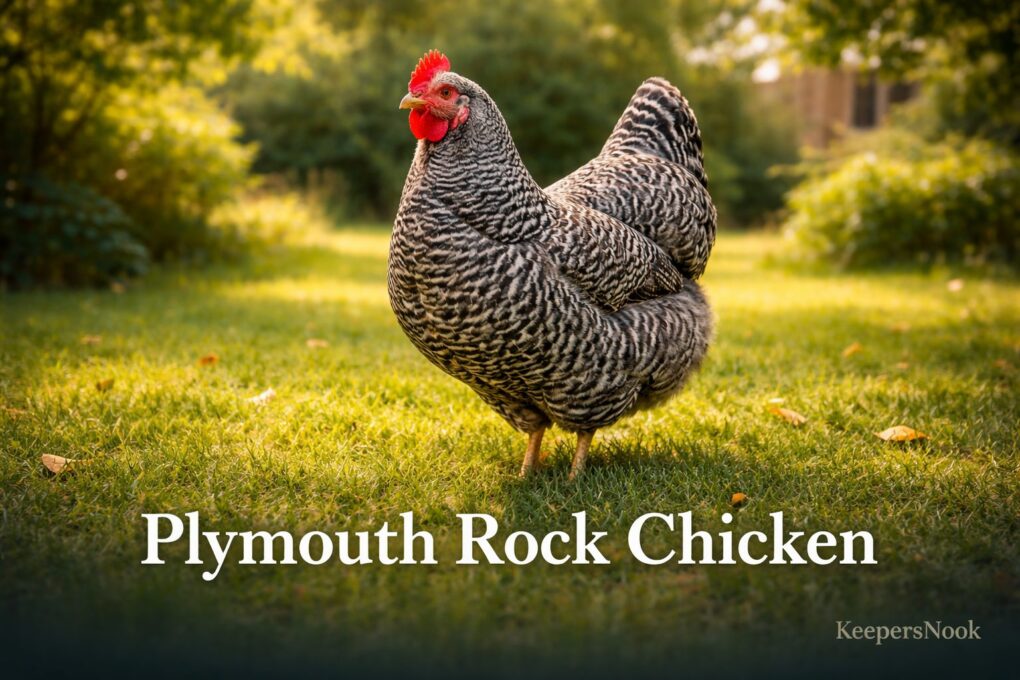
Plymouth Rocks have anchored backyard flocks for more than 150 years. That staying power is earned, not inherited.
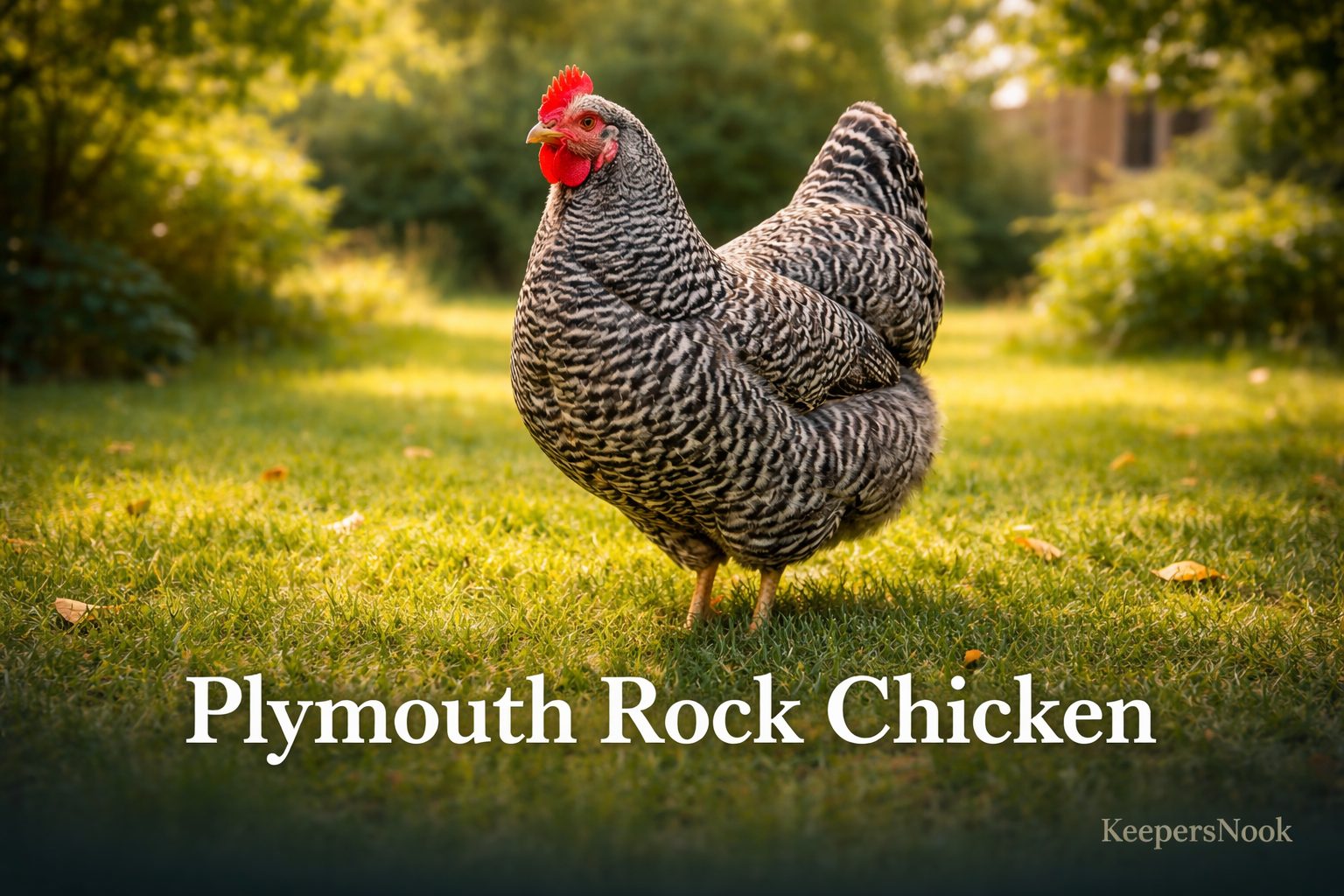
This guide covers every dimension of the breed: egg output, plumage varieties, temperament, coop requirements, feeding, health, and how the Plymouth Rock stacks up against comparable dual-purpose breeds.
Plymouth Rock Egg Production: 200–280 Brown Eggs Per Year
A well-managed Plymouth Rock hen lays 200–280 large brown eggs annually. Peak producers hit the upper end of that range in years one and two, averaging five to six eggs per week during active laying season.
Remember it later
Planning to try this recipe soon? Save it for a quick find later!
Eggs are large to extra-large with dense, rarely porous shells. You will see fewer cracked eggs in the nest box than with lighter Mediterranean breeds.
Production is not just about quantity. Consistency across seasons is where Plymouth Rocks outperform many heritage breeds.
They slow in winter but rarely stop entirely, especially with supplemental lighting.
- Year 1–2: 250–280 eggs at peak performance under good nutrition
- Year 3–4: 200–230 eggs, roughly a 10–15% annual decline after first molt
- Year 5+: 150–180 eggs; hens remain useful as flock anchors and pest control
- Winter production: 70–80% of peak with 14–16 hours supplemental light
- Without added light: Natural molt pause runs October through December
Broodiness is moderate. Most hens go broody two to three times per season but break within three to five days in a wire-bottomed broody cage with solid airflow underneath.
Compare this to the Rhode Island Red output if maximum eggs with minimal broody interruptions is your priority. Rhode Islands sit at the higher production end and go broody less often.
Plymouth Rocks handle seasonal light changes better than Mediterranean breeds like Leghorns or Andalusians. Their body mass buffers them through temperature swings that would stress lighter birds into production drops.
Plymouth Rock Color Varieties: Barred, White, Buff, and Blue
The American Poultry Association recognizes eight Plymouth Rock color varieties. The Barred variety is the most widely kept and the one most people picture when they hear "Plymouth Rock."
Each variety shares the same body type, temperament, and production traits. Color is the only meaningful difference between them.
The Barred Plymouth Rock carries alternating black and white bars across every feather. The pattern is crisp and runs parallel to the feather shaft, creating a clean striped appearance over the entire body.
Barring is a sex-linked trait. Male chicks hatch with a larger white head spot than females, making day-old sexing possible for experienced hatchery staff.
This is the variety most commonly sold by hatcheries nationwide.
- Comb: Single, five points, upright on both sexes
- Shank color: Yellow, clean and unfeathered
- Earlobe: Red
- Skin: Yellow
The White Plymouth Rock is solid white across the entire body. No barring, no secondary color.
White varieties are common in commercial broiler production because white-skinned birds yield a cleaner-looking carcass at processing.
As a backyard breed, White Rocks are as productive and docile as Barred Rocks. They show dirt more easily, which matters if you are keeping birds in muddy runs.
The Buff Plymouth Rock carries warm golden-buff plumage throughout. The variety is less common than Barred or White but retains the same dual-purpose body and calm temperament.
Buff coloration fades to a lighter straw color in direct sunlight over time. Birds exposed to intense summer sun will look noticeably lighter by fall than they did in spring.
The Blue Plymouth Rock is a dilute color variety producing a slate-blue body with darker blue lacing on feather edges. Blue genetics follow incomplete dominance: blue crossed to blue produces 25% black, 50% blue, and 25% splash offspring.
Blue Rocks are harder to source than Barred or White varieties. Expect to pay a premium at specialty hatcheries or from small breeders focused on APA-standard birds.
Beyond these four, the APA also recognizes Silver Penciled, Partridge, Columbian, and Black varieties. All share the Plymouth Rock's dual-purpose body, single comb, and yellow shanks.
| Trait | Hen | Cock |
|---|---|---|
| Weight | 6.5–7.5 lb | 8.5–9.5 lb |
| Comb type | Single, 5 points, upright | Single, 5 points, upright |
| Shank color | Yellow, clean | Yellow, clean |
| Earlobe | Red | Red |
| Skin color | Yellow | Yellow |
| Body shape | Broad, rounded back | Long, deep chest |
| APA weight standard | 7.5 lb | 9.5 lb |
Bantam Plymouth Rocks exist in most color varieties and weigh roughly one-quarter of the standard-sized bird. They lay smaller eggs but carry the same temperament and hardiness traits.
Plymouth Rock Temperament: Docile and Safe for Beginners
Plymouth Rocks are among the calmest dual-purpose breeds you can keep. Hens rarely peck unprovoked and tolerate handling from children and adults without the flighty panic common in Mediterranean breeds.
They are curious rather than skittish. A Plymouth Rock will follow you through the run looking for treats instead of scattering when you enter.
That curiosity makes them easy to inspect, medicate, and handle for routine health checks.
Plymouth Rocks sit mid-flock in most pecking orders. They hold their own without bullying smaller breeds, making them reliable anchors in a mixed flock.
They are assertive enough to defend food and water access but not aggressive enough to injure flock mates.
Roosters are generally manageable compared to Rhode Island Red or Australorp cocks. Early, frequent handling from the brooder stage reduces territorial behavior significantly.
If a Plymouth Rock cock shows aggression past six months old, it is unlikely to improve without rehoming.
For a practical comparison across beginner-friendly breeds, the beginner breed selector breaks down docility scores alongside egg production, cost, and climate fit.
Plymouth Rock Cold Hardiness: Tolerates -20°F With One Caveat
Plymouth Rocks handle cold weather better than any comparison breed except the Chantecler. Their body mass and tight feathering retain heat without supplemental heating when the coop stays dry.
Most keepers report zero issues at temperatures down to -20°F in a well-ventilated, dry coop. Wet cold is the real threat: a damp coop at 20°F causes more respiratory damage and frostbite than a well-ventilated coop at -10°F.
Coop ventilation matters more than insulation. Keep vents open at the roofline, positioned above bird head height to eliminate direct drafts at roost level.
Ammonia and moisture from droppings cause far more respiratory damage than cold air when managed correctly.
Plymouth Rocks continue laying through moderate winters when supplemental light is provided. Compare the cold-tolerance profile of the Plymouth Rock against the pure cold hardiness of the Wyandotte, which carries a rose comb with no frostbite risk at all.
The Wyandotte cold tolerance results show a small but real edge over Plymouth Rocks in extreme cold climates above 45 degrees latitude.
- Coop temperature floor: Plymouth Rocks need no supplemental heat above -20°F in a dry coop
- Humidity threshold: Keep relative humidity below 60% inside the coop at all times
- Frostbite prevention: Petroleum jelly on comb and wattles on nights below 0°F
- Roost bar style: Flat 2-inch boards, not round dowels, so breast feathers cover toes
- Water heater: A heated waterer or base is necessary when ambient temperatures drop below 32°F
How Plymouth Rocks Compare to Similar Dual-Purpose Breeds
The Plymouth Rock sits in a competitive tier alongside several other dependable dual-purpose breeds. Understanding the specific differences helps you match the right bird to your flock goals.
Egg production across this tier is tighter than hatchery marketing suggests. The real differences show up in temperament, cold tolerance, and broodiness rates.
- Rhode Island Red: Higher egg output (250–300/yr), less broody, more assertive in pecking order. Island Red production data shows marginal egg-count advantages at the cost of a bossier flock dynamic.
- Orpington: Calmer and heavier, broody year-round, fewer eggs (150–200/yr). Orpington broodiness comparisons show it is the better choice when you want natural hatching over maximum egg counts.
- Australorp: World-record egg production history (364 eggs in 365 days under test conditions), less broody than Plymouth Rock. Australorp per-year totals average 250–300 eggs and exceed Plymouth Rock output at peak.
- Sussex: Comparable output (200–250/yr), dual-purpose, friendly. Sussex breed characteristics give it a slight edge in heat tolerance but similar cold hardiness.
- Wyandotte: Rose comb eliminates frostbite risk entirely. Wyandotte cold tolerance results make it the better choice for keepers above 45°N latitude with sustained extreme cold.
The Plymouth Rock's advantage is balance. It does not top any single category, but it performs well across all of them simultaneously.
That consistency is why it has remained the standard backyard dual-purpose breed for 150 years.
If maximum egg output is your only metric, the best egg-laying breeds ranked page puts the Plymouth Rock in its proper tier alongside Leghorns, Australorps, and production-line Rhode Islands.
Plymouth Rock Coop Setup: 4 Sqft Per Bird Minimum
Plymouth Rocks are medium-to-large birds. They need adequate floor space to prevent stress-related behaviors like feather pecking and vent pecking, especially during winter when outdoor access is limited.
The complete coop setup process covers materials, sizing formulas, ventilation design, and predator-proofing in detail. The requirements below are Plymouth Rock-specific minimums.
Roost placement matters for heavy breeds. Roosts set too high cause joint injuries when birds land on hard floors repeatedly.
Plymouth Rock hens at 7.5 lbs generate significant impact force on each landing, and bumblefoot infection often traces back to high-impact landings on hard surfaces.
A larger outdoor run dramatically reduces feather-pecking and boredom-related aggression. Plymouth Rocks are active foragers and need space to express that behavior.
Feeding Plymouth Rocks: 16% Protein Layer Feed From Week 18
Plymouth Rocks are unfussy eaters. They consume whatever quality feed you provide and self-regulate intake well, which means overfeeding is less of a problem than with some breeds.
Adult hens eat roughly a quarter-pound of feed per day under confinement. Free-range access with good pasture reduces that figure by 20–30% as birds supplement with insects, seeds, and greens.
Treats should stay under 10% of daily intake. Safe options to consider include ripe tomato flesh (never the leaves or green tomatoes), halved grapes as a hydrating summer treat, and raw or cooked carrots for beta-carotene that deepens yolk color.
Insoluble granite grit must be available free-choice whenever birds consume whole grains or forage. The gizzard cannot grind fibrous material without grit present.
Laying hens also need soluble oyster shell separately from grit.
- Chick starter (0–8 weeks): 20–22% protein unmedicated or medicated crumble
- Grower feed (8–18 weeks): 16–18% protein, no added calcium
- Layer feed (18 weeks+): 16% protein, 3.5–4% calcium, free-choice
- Oyster shell: Separate dish, free-choice from point of lay
- Granite grit: Separate dish, free-choice for all ages on solid feed
- Water: Fresh daily, minimum 500ml per bird per day, more in summer
Plymouth Rock Health: Bumblefoot, Parasites, and Disease Prevention
Plymouth Rocks are genetically hardy with few breed-specific vulnerabilities. Most health problems in this breed trace to management: coop hygiene, roost design, quarantine practices, and parasite monitoring.
Bumblefoot is the most common condition in heavier dual-purpose breeds. It appears as a black scab on the foot pad, caused by Staphylococcus bacteria entering through a small wound from a rough landing or wire floor.
Inspect foot pads weekly during routine health checks. Catching bumblefoot as a small scab rather than a swollen, hardened kernel makes treatment far simpler.
Early cases respond to Epsom salt soaks and veterinary antiseptic spray. Advanced cases need surgical debridement or veterinary intervention.
Marek's Disease: Vaccinate at hatch or within 24 hours. This is the single most important protection for backyard flocks.
Marek's spreads through dander and feather dust and persists in soil for years. Purchase vaccinated chicks from reputable hatcheries or vaccinate yourself with refrigerated vaccine at the time of hatch.
Newcastle / Infectious Bronchitis (ND/IB): Administer at day one via eye drop or spray, again at 3–4 weeks for live vaccine. Annual booster recommended for flocks with regular exposure to new birds or fair attendance.
Fowl Pox: Optional. Recommended in warm climates with heavy mosquito seasons.
Wing-web stab method at 8–12 weeks.
Infectious Bursal Disease (IBD): Optional. Administer at 2–3 weeks if sourcing birds from multiple suppliers or showing at fairs where cross-contamination risk is elevated.
Always quarantine new birds for a minimum of 30 days before mixing with an established flock. Watch for rattling breath, nasal discharge, and swollen sinuses as early indicators of Mycoplasma or infectious bronchitis.
Contact your state extension poultry specialist for the current recommended protocol in your region. Biosecurity practices reduce disease risk more than any vaccination schedule alone.
External parasites including mites and lice are universal problems in backyard poultry. Mites hide in coop cracks during daylight and feed on birds at night.
Lice spend their entire life cycle on the bird. If you spot mites on birds during a daytime inspection, the infestation is already severe.
Check under wing feathers and around the vent weekly. Provide a dust bath area with dry sand and food-grade diatomaceous earth.
Treat the coop structure with permethrin spray and treat birds simultaneously for complete control.
Plymouth Rocks live 8–10 years. Egg production declines significantly after year three, but older hens contribute to flock stability, predator alerting, and garden pest control.
Is the Plymouth Rock Right for Your Flock?
The Plymouth Rock fits a specific keeper profile well. If you want a breed that lays reliably through multiple seasons, handles cold winters without heated coops, and stays calm enough for children to interact with safely, this is a strong match.
It is not the right choice if maximum eggs per year is your only priority. The Australorp and production-line Rhode Island Red both exceed Plymouth Rock output at peak.
It is also not the choice for warm climates where heat tolerance matters more than cold hardiness: the Sussex handles heat better with comparable production numbers.