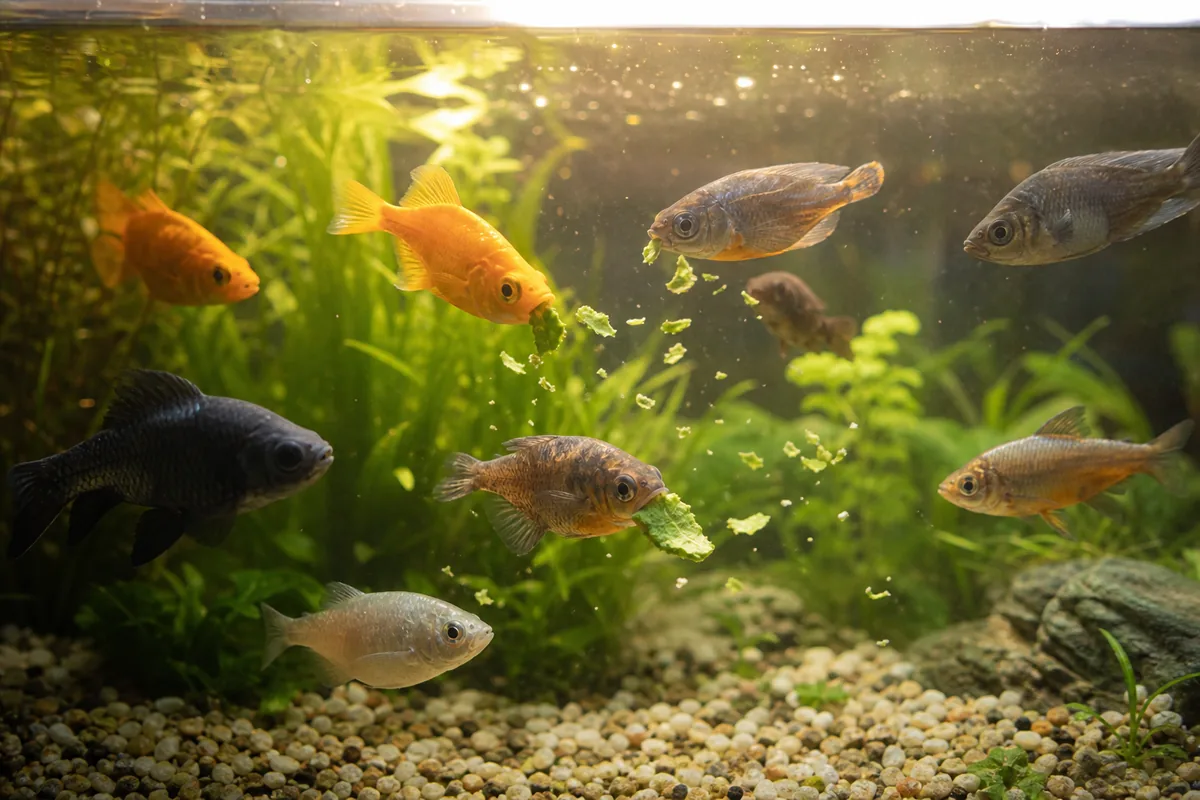
Spinach is one of the most nutrient-dense vegetables you can offer an aquarium fish It. It carries iron, vitamin K, vitamin A, and folate in concentrations that outperform most other common tank vegetables.
The problem is the oxalic acid that comes with all of that nutrition.
Understanding that trade-off tells you exactly when spinach is useful and when to reach for cucumber as alternative greens instead.
Spinach for Aquarium Fish
- Fresh or frozen spinach (unseasoned)Safe
- blanched or rawSafe
- baby spinach preferred for small speciesSafe
- Canned or seasoned spinach (sodiumUnsafe
- additives)Unsafe
- spinach fed daily or more than once per week (oxalate accumulation risk)Unsafe
Prep: Rinse thoroughly, blanch in boiling water for 30-60 seconds, cool fully to near-tank temperature, weigh down near substrate with a stainless fork or veggie clip Freq: Once per week maximum; rotate with romaine, zucchini, or cucumber on other feeding days Amount: One small leaf or a 2-3 inch piece per 10 gallons; remove all uneaten spinach within 12 hours
Why Spinach Has an Oxalate Problem for Fish
Oxalic acid is a naturally occurring compound in many leafy greens. Spinach has one of the highest concentrations of any common vegetable at 970mg per 100g, placing it well above romaine lettuce (33mg) (33mg), zucchini (24mg), and cucumber (11mg).
The issue is that oxalate binds to calcium in the digestive tract and forms insoluble calcium oxalate crystals that the body cannot absorb. For fish fed spinach regularly, this means calcium never reaches the bones, scales, and metabolic processes that depend on it.
Blanching reduces oxalate content to a degree. The boiling water leaches some oxalic acid out of the leaf into the blanching water, which you discard.
It does not eliminate oxalates entirely, but it reduces the load enough that once-per-week feeding carries no meaningful risk for healthy adult fish.
The practical rule: treat spinach like a supplement with a weekly ceiling, not a staple you offer every day.
Goldfish are one of the most consistent spinach consumers in the hobby because their naturally plant-heavy diet makes them well-suited to leafy greens as a supplement. Our goldfish care guide covers the full vegetable rotation that gives these omnivores the dietary variety they need.
Key facts
- Oxalic Acid Content
- 970mg per 100g. one of the highest concentrations in common tank vegetables
- Iron Content
- 2.7mg per 100g. significantly higher than zucchini (0.4mg) or cucumber (0.3mg)
- Vitamin K
- 483mcg per 100g. supports bone and scale development in long-lived species
- Max Time In Tank
- 12 hours. remove all uneaten spinach before it starts breaking down and fouling water
- Blanch Time
- 30-60 seconds in boiling water. softens leaf and reduces some oxalate content
- Never Feed
- Canned spinach, creamed spinach, or any variety with added salt, oil, or seasoning
Which Eat Spinach: Species That Benefit Most
Spinach works best for herbivorous and omnivorous species with digestive systems built to process plant cellulose. Carnivorous fish like bettas will ignore it entirely, which is the correct outcome for their biology.
For pleco blanched greens are a dietary staple, and spinach fits well into that rotation. Bristlenose plecos will rasp a blanched spinach leaf efficiently, particularly when tank algae is running low.
The iron and vitamin content supports their health during periods between algae growth cycles.
Molly fish graze blanched spinach steadily when it is weighted near mid-column, which suits their surface-to-mid-water feeding behavior better than positioning food on the substrate. Our molly care guide covers how their herbivore-leaning diet shapes their response to leafy greens as a regular supplement.
- Bristlenose pleco: Rasps blanched spinach effectively; good rotation item alongside zucchini and algae wafers
- Common pleco: Same feeding behavior; needs larger portions due to body size
- Goldfish: Accepts spinach readily as part of their naturally plant-heavy diet; limit to once weekly
- Molly: Omnivorous livebearers that graze spinach well; softened baby spinach preferred
- Silver dollar: Naturally herbivorous; one of the most enthusiastic spinach consumers in the hobby
- Otocinclus: Will graze blanched spinach when tank algae is insufficient
- Mystery and nerite snails: Work blanched spinach steadily without creating significant water quality risk
Goldfish veggie treats should rotate across several vegetables each week. Spinach once a week, romaine once, and blanched peas occasionally gives goldfish a varied plant-based supplement profile without over-relying on any single green's oxalate load.
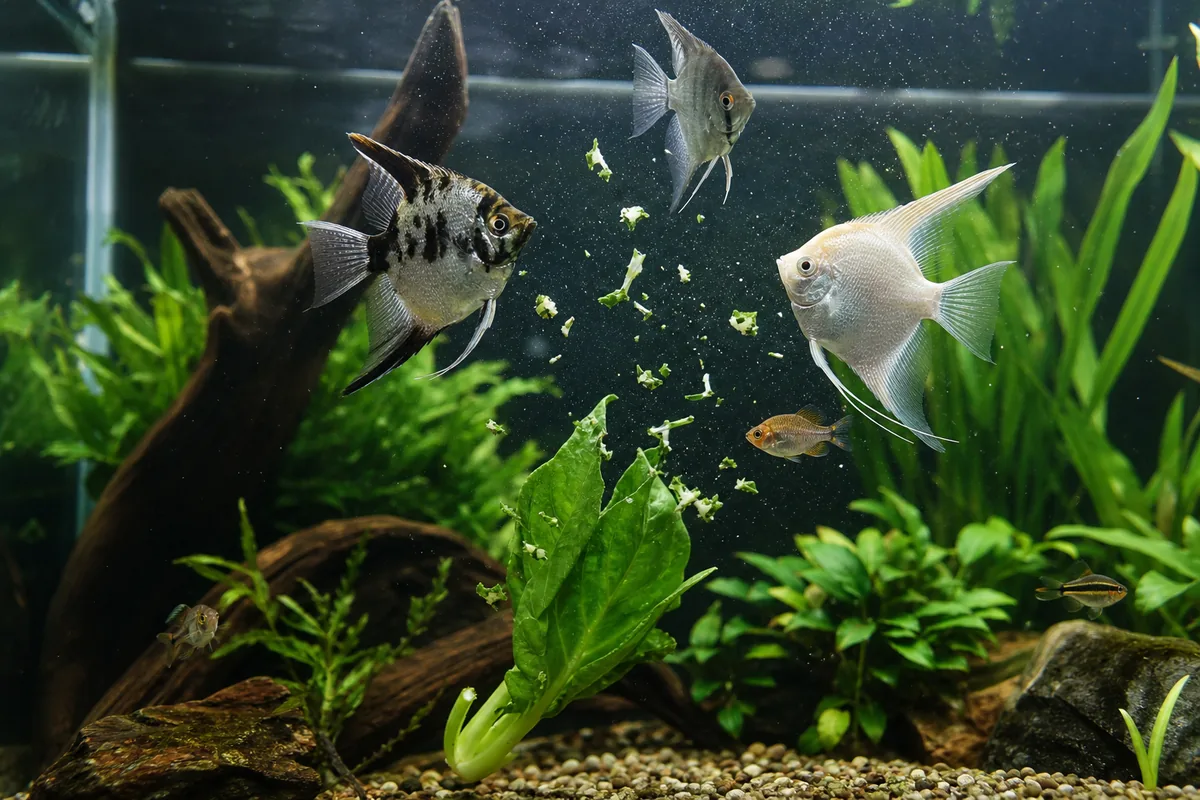
How to Prepare Spinach for Fish: Blanching Method
Preparation takes under three minutes. The goal is to soften the leaf, reduce some of the oxalate content by leaching it into the blanching water, and cool the spinach fully before it enters the tank.
Raw spinach is not harmful, but the leaf is often too firm and buoyant for bottom-feeding species to access effectively. Blanching solves both problems at once.
Otocinclus graze blanched spinach particularly well when tank algae is running low, making it a practical emergency supplement between algae growth cycles. Our corydoras care guide covers how bottom feeders interact with weighted vegetables and which placement techniques work best near the substrate.
- Select fresh or frozen spinachChoose fresh baby spinach or standard fresh spinach with no added seasoning. Frozen unseasoned spinach works if thawed first. Avoid pre-washed bagged spinach with preservative coatings and never use canned spinach of any kind.
- Rinse under cold running waterHold the leaves under running water for 30 seconds. Rinse both sides. Fresh spinach can carry surface pesticide residue even when sold as pre-washed.
- Blanch in actively boiling water for 30-60 secondsDrop the leaves into boiling water. Hold for 30 seconds for a light blanch that retains texture. Hold up to 60 seconds for a softer result suited to small fish and shrimp. Do not exceed 60 seconds: the leaf breaks apart and will foul the tank faster.
- Discard the blanching waterPour out the water immediately. The oxalic acid that leached out during blanching is in this water. Discarding it is the step that meaningfully reduces the oxalate load in the spinach you feed.
- Cool under cold water for 60 secondsRun cold water over the blanched leaves until they reach near room temperature. Then rest them in a bowl of cool water for 3-5 minutes. Spinach that enters the tank warm stresses fish and can cause a localized temperature spike in small tanks.
- Weigh down near the substratePush a stainless steel fork through the leaf or use a veggie clip positioned near the bottom of the tank. Bottom feeders like plecos and otocinclus will not surface to feed. The spinach must be within their reach to be useful.
- Remove within 12 hoursSpinach breaks down faster than firmer vegetables like cucumber or zucchini. Pull all uneaten spinach within 12 hours. In tanks under 10 gallons, check at 6-8 hours. Decomposing spinach releases organic matter that spikes ammonia quickly.
Spinach Nutrition Data: What Fish Actually Get From It
Spinach outperforms most tank vegetables on micronutrient density. The iron content alone makes it worth rotating in for herbivorous species that may not get sufficient trace minerals from algae wafers alone.
| Nutrient | Per 100g Raw Spinach | Relevance to Fish |
|---|---|---|
| Oxalic Acid | 970mg | Binds calcium; primary reason to limit feeding frequency |
| Iron | 2.7mg | Supports enzyme function; notably higher than most tank vegetables |
| Vitamin K | 483mcg | Supports bone and scale development in long-lived species like plecos and goldfish |
| Vitamin A | 469mcg RAE | Supports eye health and immune function |
| Folate | 194mcg | Important for cell division; useful for breeding groups |
| Calcium | 99mg | Present but partially blocked by oxalate binding in the gut |
| Protein | 2.9g | Higher than cucumber (0.59g); adds minor protein value for omnivores |
The protein content is worth noting. At 2.9g per 100g, spinach provides more protein than any other common tank vegetable, which gives it marginal value even for omnivorous species that primarily eat protein-based staple foods.
Compare spinach to cucumber, where the main nutritional story is fiber and hydration with minimal vitamins. Spinach is genuinely nutrient-dense, and the once-per-week frequency limit is a precaution against oxalate accumulation, not a sign that the vegetable is nutritionally poor.
Zucchini is the lowest-oxalate option among the most commonly offered tank vegetables and pairs naturally with spinach in a weekly rotation. Our zucchini feeding guide covers how its 24-hour tank window and pleco-friendly texture make it the ideal companion to spinach's shorter feeding schedule.
Watermelon can serve as a fruit-day treat in the same weekly rotation as spinach, adding beta-carotene and vitamin C without adding oxalate load. Our watermelon feeding guide explains the one-to-two-hour removal window and which species benefit most from occasional soft fruit alongside their vegetable supplements.
Peas round out a practical weekly plant rotation with spinach and zucchini by targeting fiber delivery specifically for constipation-prone species. Our pea feeding guide explains how to deshell them and use them therapeutically for goldfish swim bladder issues.
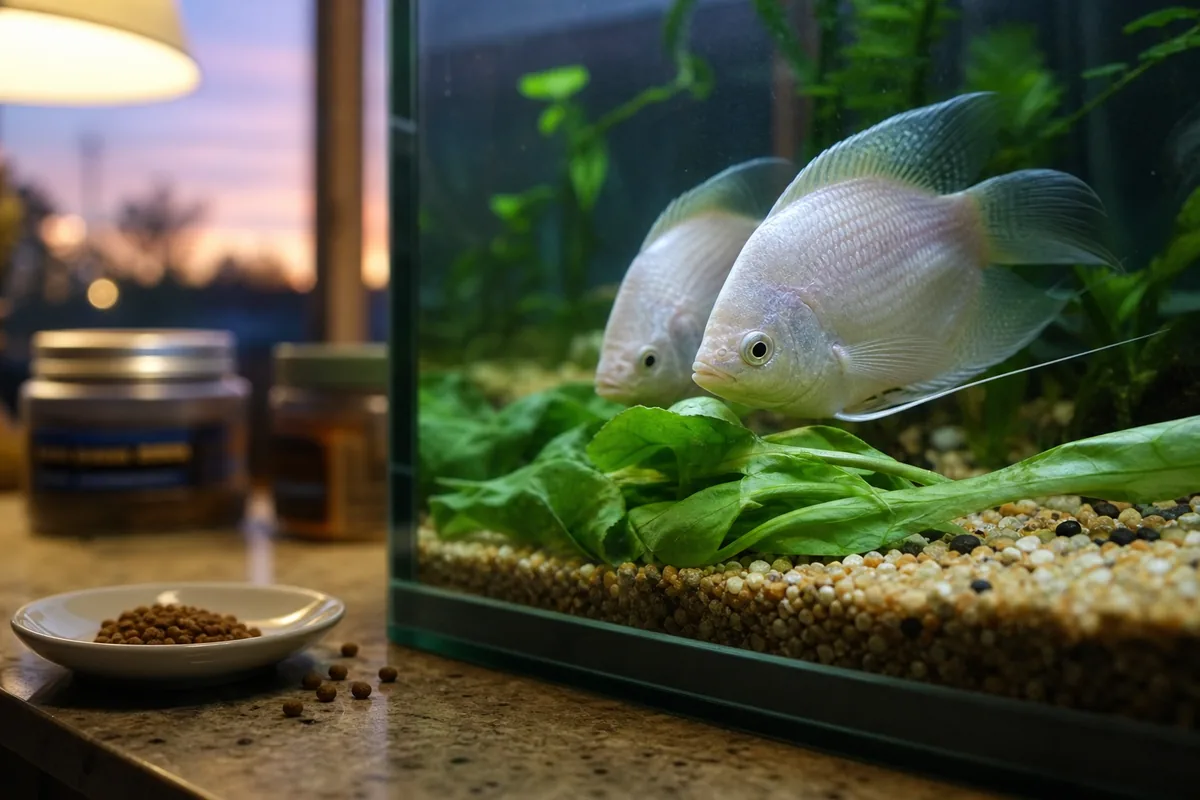
Better Alternatives for Fish: Lower-Oxalate Greens to Rotate In
The weekly ceiling on spinach means you need other vegetables for the days in between. Several options deliver plant-based variety without the oxalate concern, making them suitable for more frequent feeding.
Understanding processed food risks for fish reinforces why whole vegetables like these are the correct supplemental choice: unprocessed plant matter with predictable chemistry and no expansion risk.
- Romaine lettuce: 33mg oxalate per 100g; blanch 10-15 seconds or clip raw; remove within 8-12 hours as it deteriorates faster than firmer vegetables
- Zucchini: 24mg oxalate per 100g; the most popular pleco vegetable in the hobby; prepare identically to cucumber; higher acceptance rate than spinach for most species
- Cucumber: 11mg oxalate per 100g; lowest oxalate of the common tank vegetables; safe for 1-2 feedings per week; peel before use to remove pesticide-concentrated skin
- Blanched peas (shelled): No oxalate concern at feeding quantities; a classic remedy for mild constipation in goldfish and bettas; remove outer skin before offering
- Kale: Lower oxalate than spinach at 491mg per 100g; blanch for 45-60 seconds; use as a rotation item rather than a daily staple
A practical weekly rotation for a pleco or goldfish tank: spinach on Monday, zucchini on Wednesday, romaine on Friday. That pattern delivers variety, keeps oxalate load low, and gives the fish meaningful plant-based supplementation three times per week alongside their staple food.
Sources and references
- Oxalate content of selected vegetable foodsof Agricultural and Food Chemistry, Vol. 49(10), 2001, Chai and Liebman
- Nutrient Requirements of Fish and ShrimpNational Research Council, National Academies Press, 2011
- Dietary mineral interactions and calcium bioavailability in fish: effects of oxalate and phytateAquaculture Nutrition, Vol. 18(4), 2012