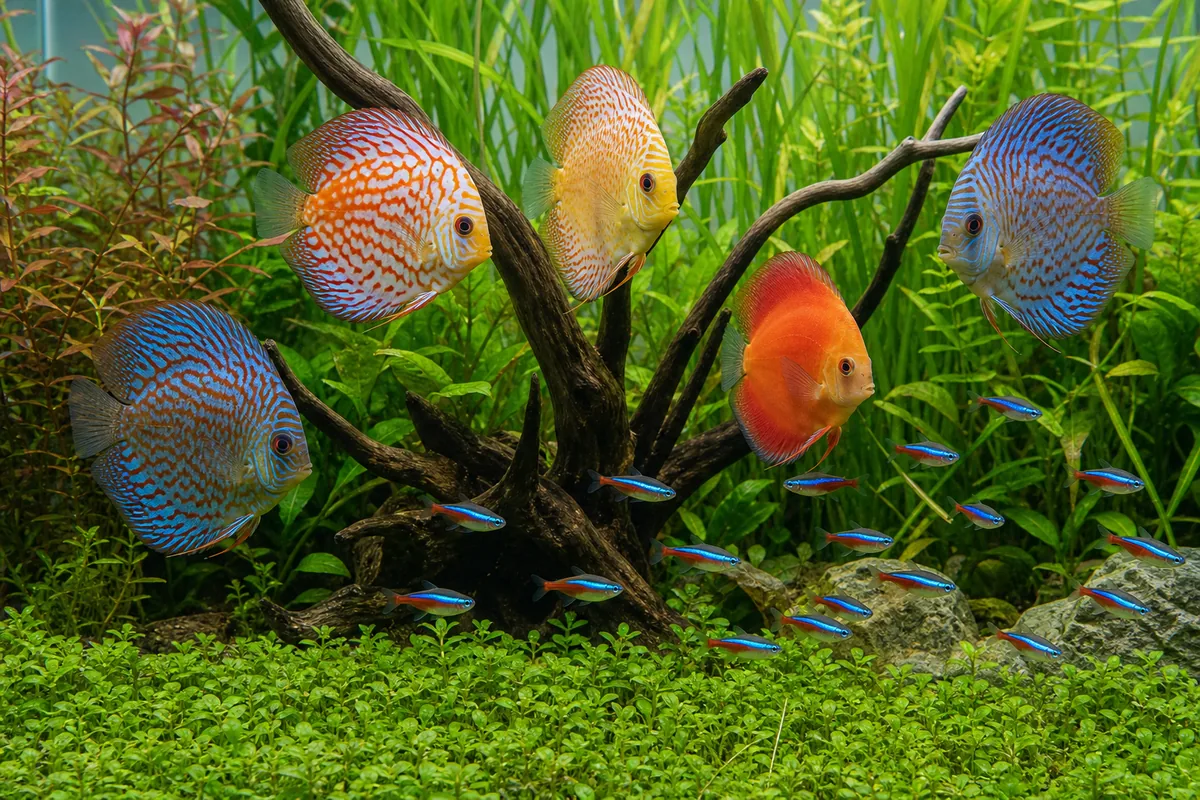
The discus-neon tetra pairing has a romantic appeal. Both species come from the same slow-moving, blackwater tributaries of the Amazon.
Both do well in soft, acidic water. Both look stunning in a planted tank.
The appeal is real. The temperature problem is also real, and it does not go away with careful management.
Compatibility verdict
- Discus + Neon TetraDependsClassic biotope pairing but temperature mismatch is the primary concern. Discus need 82-86°F, neon tetras prefer 72-78°F.
The 60% figure reflects tanks where keepers successfully maintain the pairing at a compromise temperature around 82°F. The neon tetras survive in most cases.
They do not thrive.
A fish that survives at the edge of its temperature tolerance is under chronic stress, and chronic stress compresses lifespan.
Discus vs. Neon Tetra: Species Comparison
| Parameter | Discus | Neon Tetra | Shared Range |
|---|---|---|---|
| Temperature | 82-86°F | 72-78°F | 82°F (edge of neon range) |
| pH | 6.0-7.0 | 6.0-7.0 | 6.0-7.0 (full overlap) |
| Hardness | 1-4 dGH (very soft) | 2-10 dGH (soft) | 2-4 dGH |
| Tank size minimum | 55 gal (group of 4-6) | 10 gal | 55 gal minimum |
| Adult size | 6-8 inches | 1.5 inches | No safe shared size range |
| Temperament | Peaceful, slow | Peaceful, active | Compatible behavior |
The water chemistry overlap is genuine and unusually clean. Both species evolved in the same blackwater habitat, so pH, hardness, and mineral content align well across the full range.
Temperature is where the ranges pull apart, and temperature is the factor you cannot split down the middle without consequences.
The Temperature Problem
Discus are warm-water specialists. Their immune systems, digestion, and metabolic rate are calibrated for water in the 82-86°F range.
Below 80°F, discus become sluggish, stop feeding normally, and grow more susceptible to infection and parasites.
Neon tetras are tropical fish that prefer the cooler end of the tropical range. Their optimal zone sits between 72°F and 78°F.
At 82°F, neon tetras remain active and eat normally but their cellular repair mechanisms slow, their susceptibility to disease increases, and their average lifespan drops.
The compromise temperature of 82°F is survivable for neon tetras. It is not optimal for them, and "survivable" is not the standard a keeper should accept for any species in their care.
Discus kept below 82°F face the opposite problem. Immune suppression at lower temperatures makes them vulnerable to hole-in-the-head disease, ich, and bacterial infections, which spread through a discus group rapidly.
Will Discus Eat Neon Tetras?
Discus are slow, deliberate cichlids. They are not hunters in the way that oscar fish or jack dempseys are.
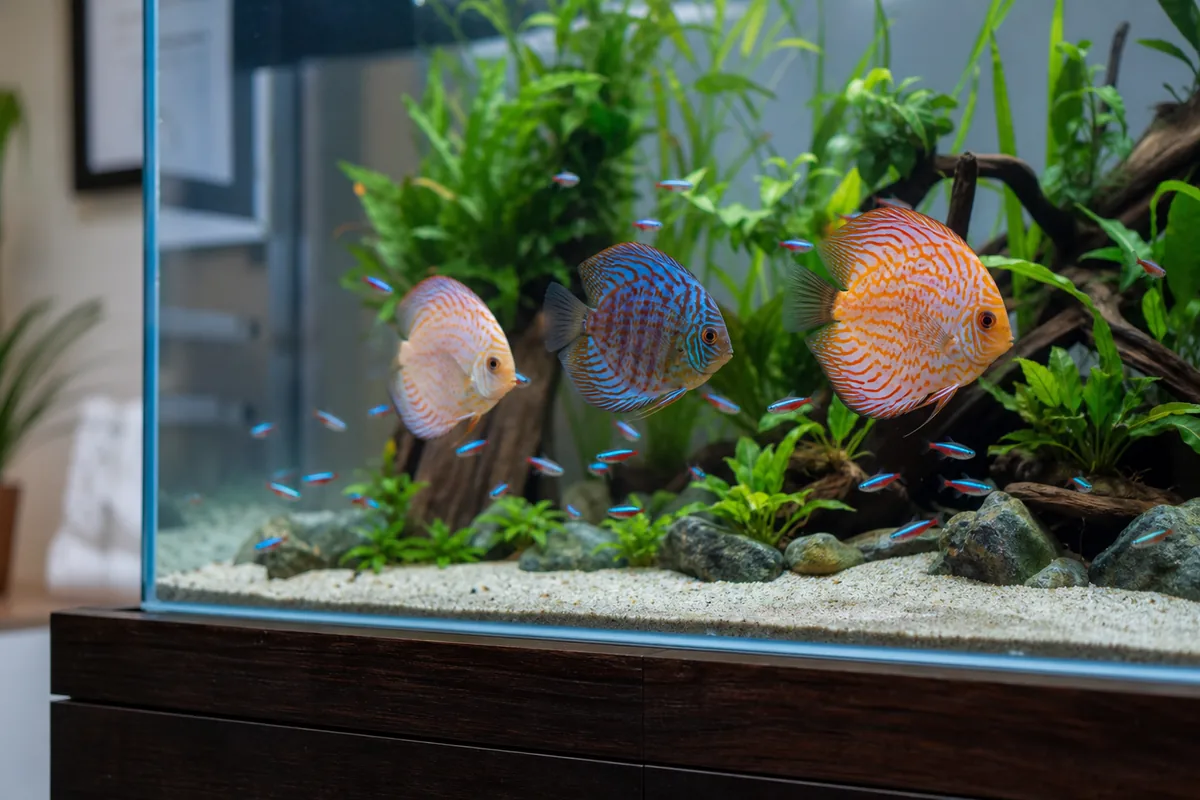
Adult neon tetras at 1.5 inches are technically small enough to fit in the mouth of a full-grown discus at 6-8 inches, but active predation is uncommon.
The more realistic risk is opportunistic feeding. A discus that is underfed, or that encounters a weak, dying, or very small tetra, may consume it without active intent to hunt.
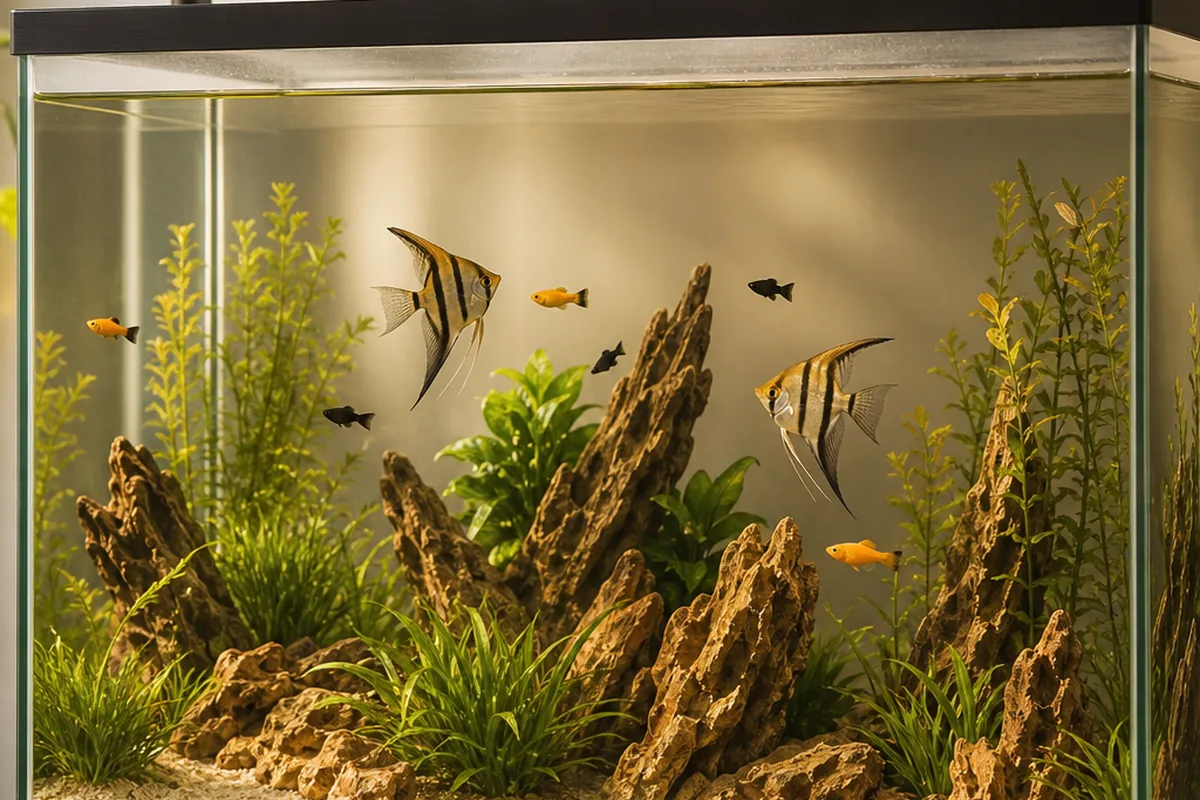
The cichlid-tetra risks seen with angelfish are less acute with discus, but the size disparity still creates an environment where small losses can occur without obvious predatory behavior.
Discus are also sensitive to the stress that a fast-moving active school of tetras can introduce. Neon tetras dart and school erratically, and this activity can unsettle discus, particularly during feeding time when discus prefer a calm, predictable environment.
The Case for Cardinal Tetras Instead
Cardinal tetras (Paracheirodon axelaris) are the correct dither fish for a discus tank. They are not a substitute for neon tetras with a different name.
They are a genuinely different species with a meaningfully higher temperature tolerance.
Cardinal tetras tolerate 80-84°F comfortably, which sits squarely inside the discus optimal range. They share the same water chemistry requirements, the same Amazon blackwater origin, and a similar visual profile to neon tetras but with a longer red stripe running the full length of the body.
The pairing of discus and cardinal tetras is the standard recommendation in dedicated discus-keeping communities for three reasons:
- Cardinal tetras thrive at discus temperatures rather than merely surviving them
- Cardinals provide the same dither fish function, reducing discus skittishness in open water
- The biotope authenticity is preserved, since both species share wild distribution in the central Amazon
If you are planning a discus tank and considering tetras as dither fish, choose cardinals before neons. The tetra variety guide covers the full temperature tolerance spectrum across tetra species to help you match correctly.
When the Discus-Neon Tetra Pairing Can Work
There are keepers who run discus tanks at the lower end of the discus range, around 82°F, and maintain neon tetras successfully for 2-3 years. This is not a myth. it is simply not the best outcome available for either species.
The pairing is most defensible when:
- The tank runs at exactly 82°F and holds that temperature precisely without swings
- The discus group consists of tank-raised specimens, which often tolerate slightly lower temperatures better than wild-caught fish
- The neon tetra school contains 12 or more individuals, reducing individual stress from isolation
- Water quality is kept at the highest standard, with weekly changes of 25-30% using temperature-matched water
- The keeper accepts that neon tetra lifespan in this setup will be shorter than in an optimal tank
These are not conditions that make the pairing good. They are conditions that make it workable.
The better path is the same one that experienced discus keepers have settled on over decades of keeping: tetra schooling needs are best met with a species that actually tolerates the temperature your discus require.
Our discus care guide covers the full temperature requirement in the context of overall husbandry, showing why every tank mate decision in a discus setup flows from the thermal baseline first.
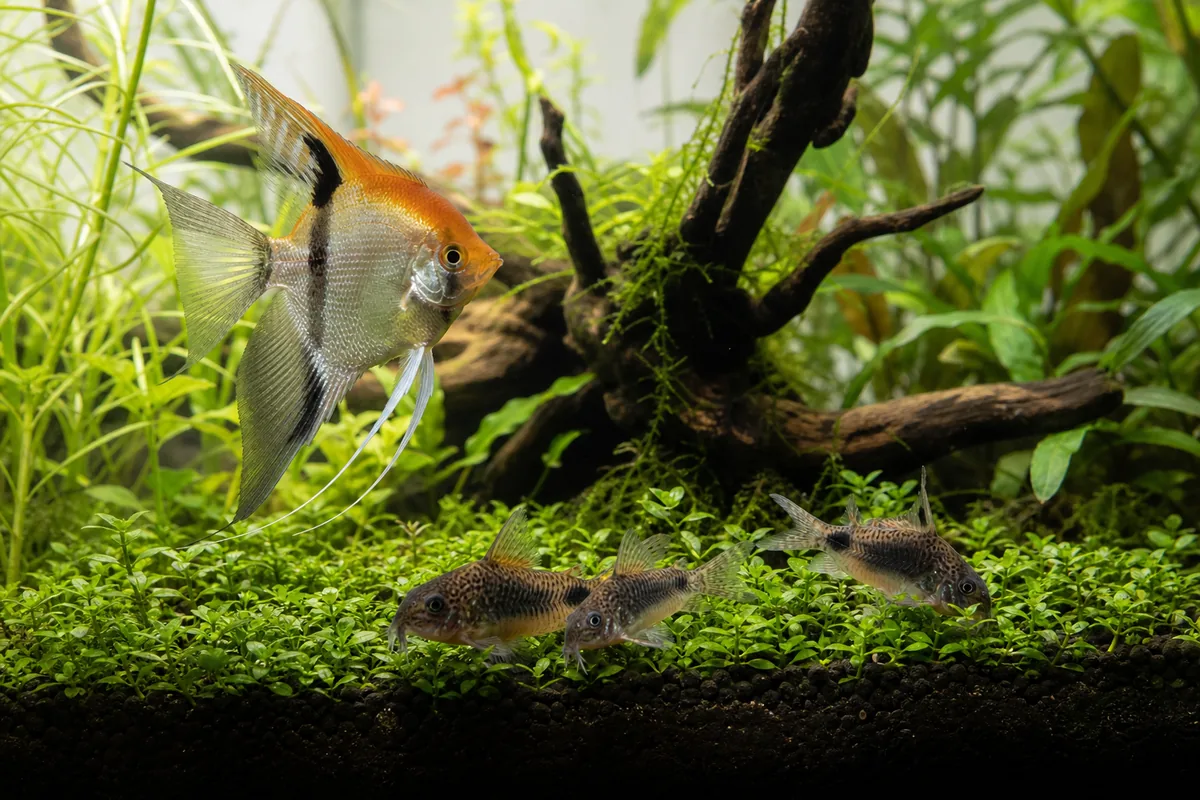
For keepers interested in exploring what tetra safe mates look like in a community setting, corydoras at the bottom of a discus tank also follow this same principle. the chosen species must genuinely tolerate discus temperatures.
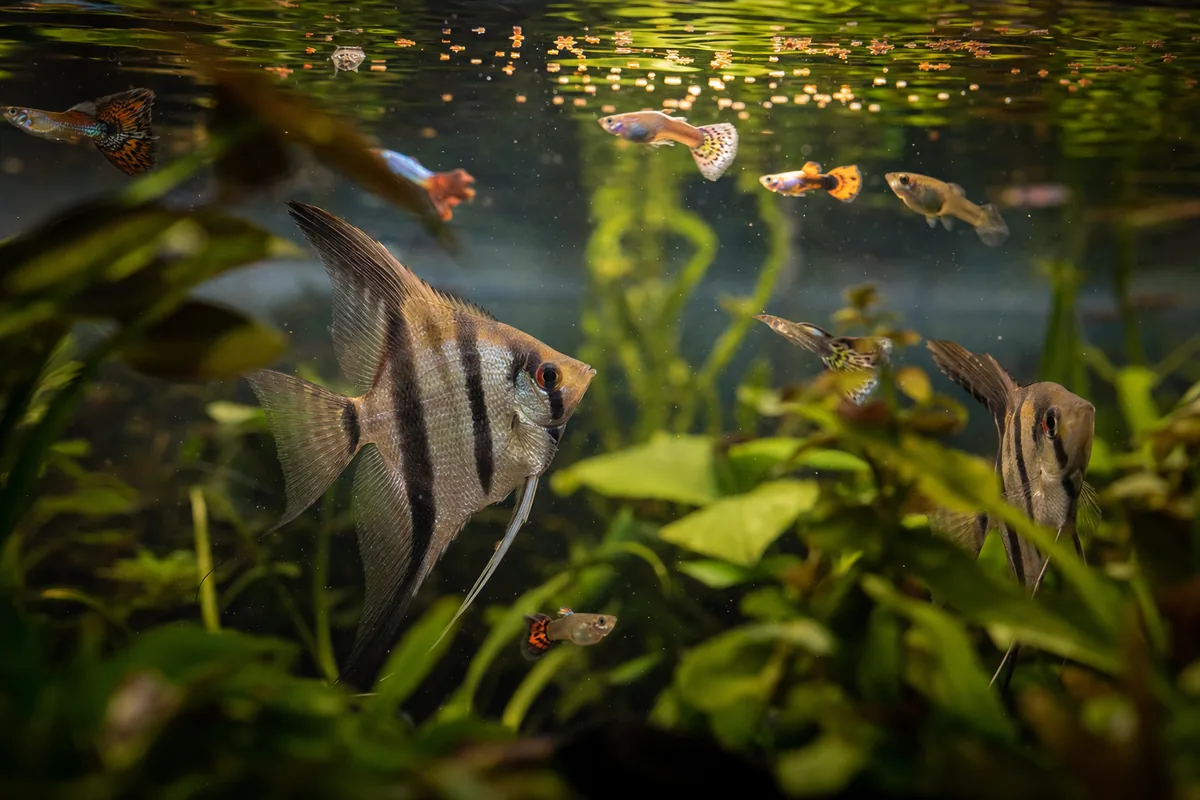
Guppies are another species sometimes considered for discus tanks. Our guppy-tetra guide explains their shared thermal preferences, which sit well below discus requirements and make both species equally poor candidates for a true discus setup.
Sources and references
- Thermal tolerance and temperature effects on immune function in Paracheirodon innesi (neon tetra)of Fish Biology
- Discus fish (Symphysodon spp.) husbandry: water quality, temperature requirements, and compatible speciesAquaculture Research
- Amazonian blackwater fish communities: biotope aquarium design and species compatibilitySmithsonian Tropical Research Institute