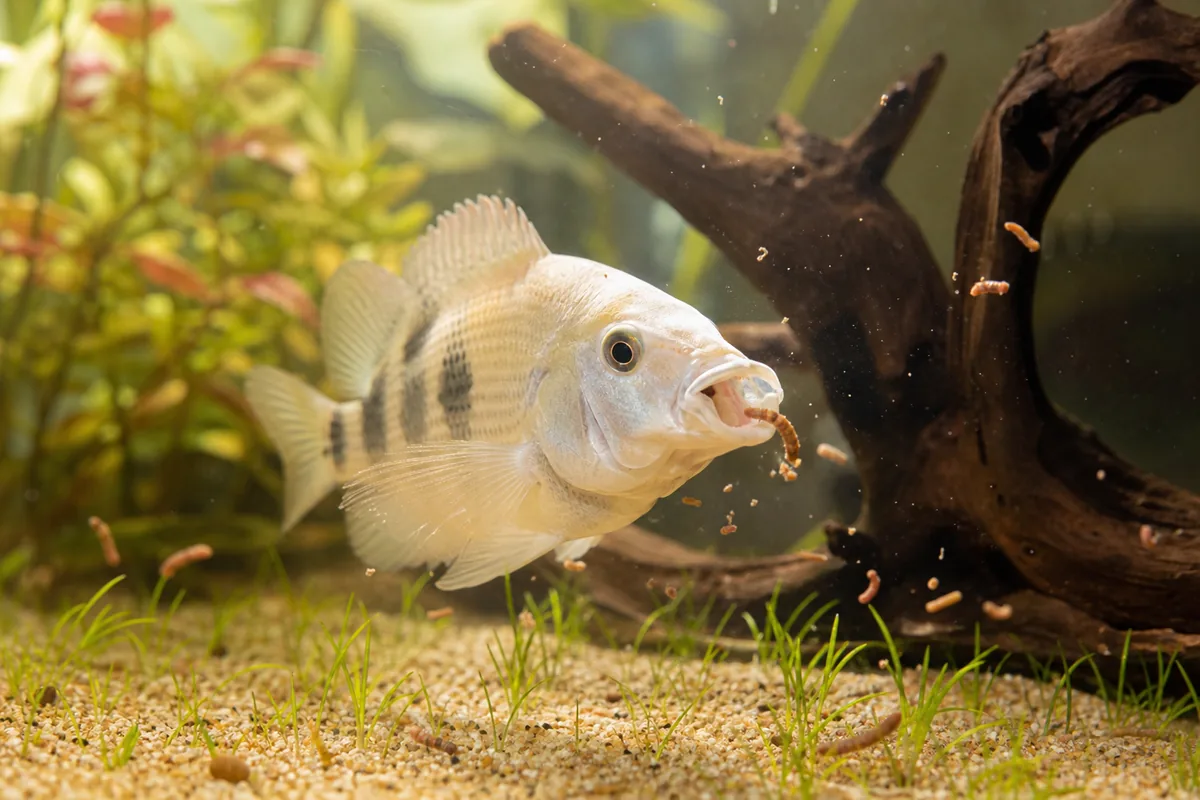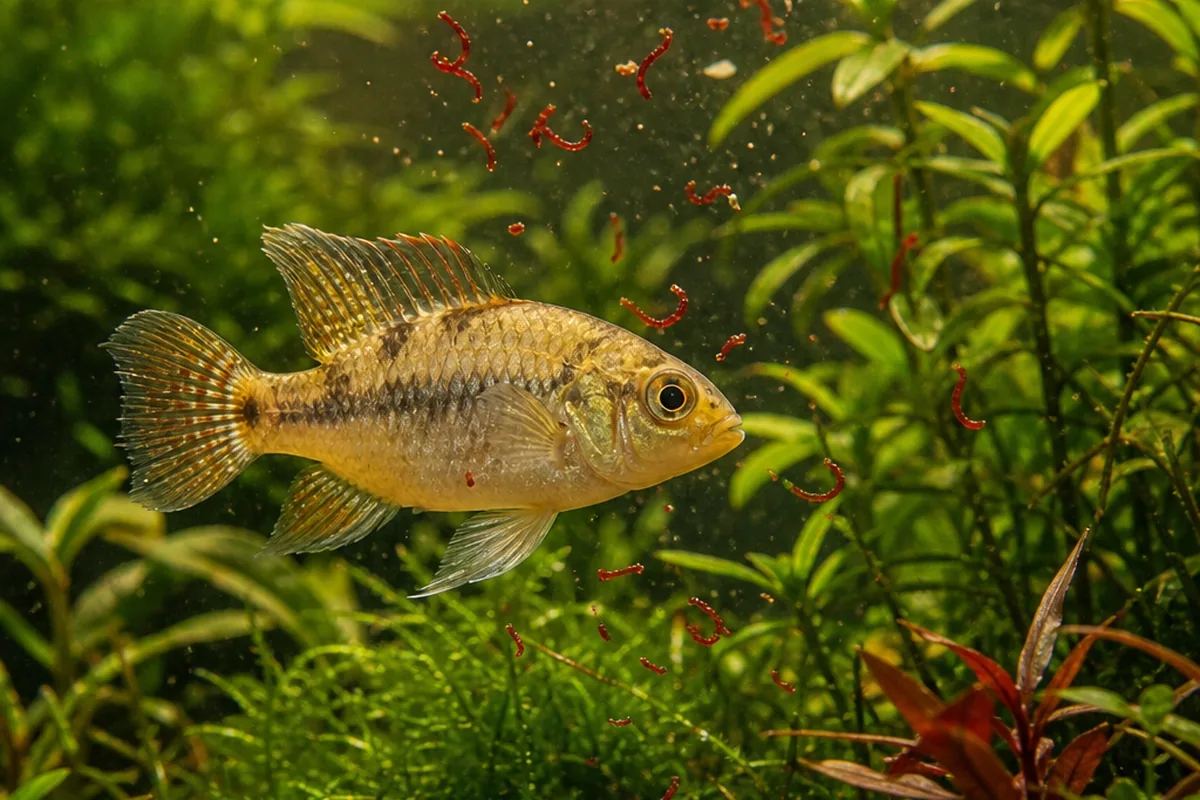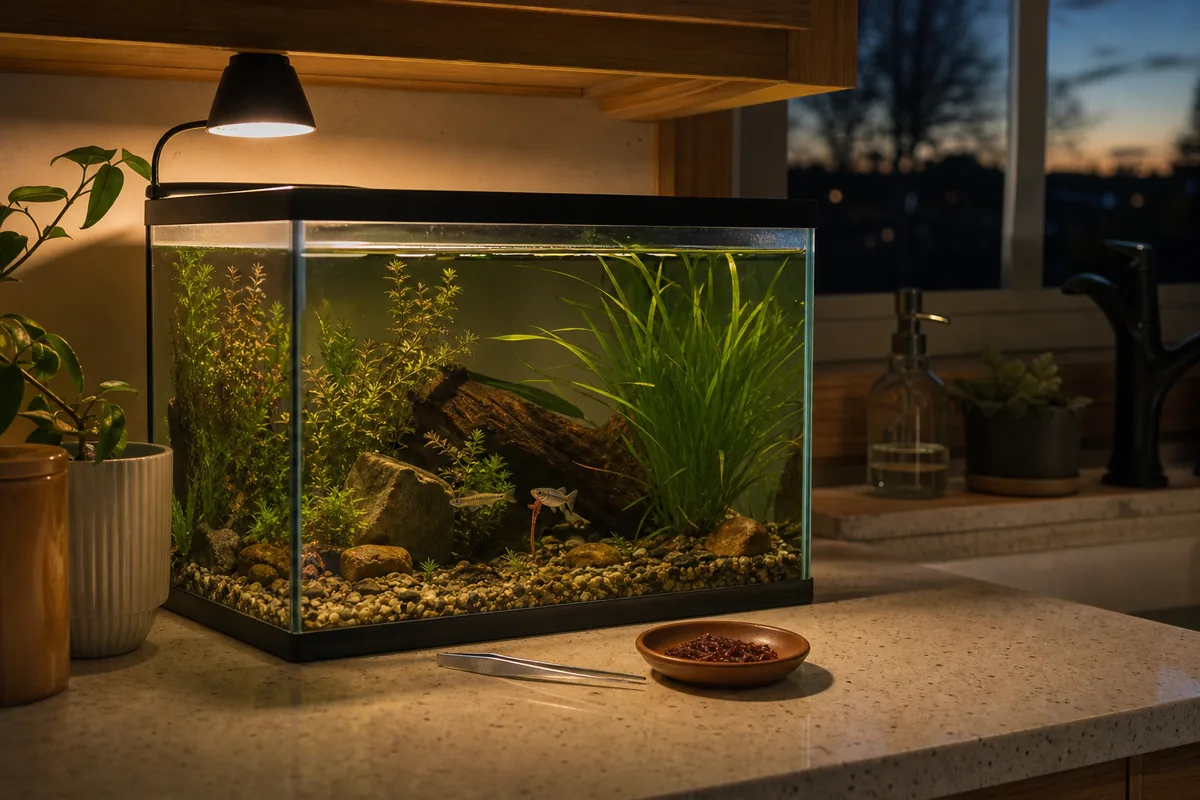
Earthworms are one of the oldest and most effective live food for aquariums, used long before commercial fish foods existed. Fish encounter worms naturally whenever rain washes them into rivers, ponds, and streams, and that instinct to strike at a wriggling worm is hard-wired into most freshwater species.
The real questions are which worms are safe, how to prepare them correctly, and how to source them without introducing pesticides or pathogens into your tank.
Earthworms for Freshwater Fish
- Nightcrawlers (Lumbricus terrestris)Safe
- red wigglers (Eisenia fetida)Safe
- blackworms (Lumbriculus variegatus) from fish storesSafe
- home-cultured worms from pesticide-free compostSafe
- Worms from soil treated with pesticidesUnsafe
- herbicidesUnsafe
- or synthetic fertilizers. Worms from compost containing citrus or manure from medicated animalsUnsafe
Prep: Purge worms for 24 hours on damp paper towels to clear gut contents. Rinse thoroughly under cool water. Chop to size: 5mm pieces for small fish, larger sections or whole small worms for large fish (oscars, large cichlids). Freq: 1-2 times per week as a supplement alongside staple food Amount: Feed only what fish consume in 3-5 minutes. Remove uneaten pieces immediately as they foul water quickly.
Wild-caught earthworms are one of the few live foods you can source for free, but that convenience comes with real preparation requirements. Skip the purging step and you risk introducing gut contents, heavy metals, and chemical residues directly into your tank.
Do the prep work correctly and you have one of the most nutritious, cost-effective supplements available to freshwater keepers.
Key facts
- Protein Content
- Approximately 60-70% protein on a dry-weight basis, one of the highest among natural live foods
- Key Nutrients
- Rich in essential amino acids, iron, calcium, and B vitamins that support muscle growth and immune function
- Best Species
- Nightcrawlers (Lumbricus terrestris) and red wigglers (Eisenia fetida) are the two most practical choices for aquarium feeding
- Breeding Use
- Earthworms are a premier conditioning food for breeding fish, triggering spawning behavior across cichlids, bettas, and gouramis
- Home Culture
- Red wigglers can be raised indefinitely in a home worm bin (vermicomposting), providing a free, pesticide-free supply year-round
The 60-70% protein figure on a dry-weight basis places earthworms ahead of bloodworms at roughly 55% and well above most commercial pellet foods. That protein load is built from a broad spectrum of essential amino acids, meaning the muscle-building nutrition is highly bioavailable for fish.
Iron and calcium content make earthworms particularly useful for species that strip minerals rapidly during growth phases or heavy breeding cycles.
Earthworm Types That Are Safe: Nightcrawlers vs. Red Wigglers vs. Blackworms
Three worm types cover the full range of practical options for freshwater keepers. Each has a different size profile, availability, and ideal use case.
Nightcrawlers (Lumbricus terrestris) are the large worms most people find in garden soil after rain. Their size makes them ideal for oscar live prey and other large cichlids.
A single nightcrawler provides a substantial meal for a large fish and can be chopped into multiple feeding portions for smaller species.
Red wigglers (Eisenia fetida) are smaller, faster-reproducing worms used in composting bins. They are easier to culture at home, stay smaller (making them practical for medium-sized fish ), and are available from many online suppliers and bait shops.
Their higher reproductive rate means a home worm bin can supply worms indefinitely.
Blackworms (Lumbriculus variegatus) are an aquatic species sold at fish stores as live food. They are technically a different family from earthworms but share similar nutritional properties and are safe, convenient, and require no soil-based sourcing or preparation.
They are the easiest entry point for keepers who want live worm nutrition without the collection and purging process.
| Worm Type | Size | Best For | Source | Purging Required? |
|---|---|---|---|---|
| Nightcrawler (Lumbricus terrestris) | Large (8-20cm) | Oscars, large cichlids, large predators | Garden, bait shops | Yes, 24 hours |
| Red Wiggler (Eisenia fetida) | Small-medium (3-8cm) | Medium fish, breeding conditioning | Compost bins, online suppliers | Yes, 24 hours |
| Blackworm (Lumbriculus variegatus) | Small (2-5cm) | All sizes, community tanks, fry conditioning | Fish stores (live food section) | No, sold ready to feed |
For most home aquarium keepers, starting with store-bought blackworms or red wigglers from a vermicomposting bin eliminates the chemical contamination risk entirely and still delivers the same high-protein nutritional profile.
Earthworm Sizing Guide: Chopping for Small vs. Large Fish
Piece size is the most important preparation variable. A worm piece too large causes a fish to reject it, swallow it whole and risk impaction, or tear at it and leave fragments that foul the water.
The standard rule is to cut pieces no larger than the fish's eye diameter. That size guideline applies to virtually all freshwater species and eliminates guesswork at feeding time.
- Small fish under 3 inches (tetras, guppies, small rasboras): 3-5mm pieces, finely chopped. Many small species will ignore earthworms entirely; prioritize blackworms for this size class.
- Medium fish 3-6 inches (angelfish, medium cichlids, gouramis): 1-2cm sections. Match to mouth width. Angelfish protein needs are well served by chopped red wigglers at this size.
- Large fish 6 inches and over (oscars, large cichlids, large catfish): Whole small worms or half a nightcrawler. Oscar live prey feeding benefits most from whole worms, which trigger the full hunting and swallowing response.
- Goldfish: 5-10mm pieces, offered occasionally as a treat. Goldfish worm feeding should be limited to once per week given their lower protein tolerance compared to carnivores.
Chopping is straightforward with a clean pair of scissors over a paper towel. Cut the worm into pieces, transfer them with tongs or a pipette, and drop them into an area of the tank with good water flow to keep them moving and trigger the feeding response.
How to Source Earthworms Safely: Garden Collection vs. Home Culture
Safe sourcing is the single biggest variable that separates earthworms as a reliable food from earthworms as a contamination risk. Two approaches work reliably: careful garden collection and home vermicomposting.
Garden collection is practical only if you know your soil history with certainty. If the area has never been treated with any pesticide, herbicide, or chemical fertilizer, and manure from non-medicated animals was the only amendment used, worms from that ground are safe after proper purging.
If there is any doubt, do not collect from that location.
Home vermicomposting eliminates the uncertainty. A plastic bin with damp bedding (shredded newspaper or coconut coir), kitchen vegetable scraps, and a starting population of red wigglers from a reputable supplier produces a continuous supply of pesticide-free worms.
The setup costs under ten dollars and maintains itself with minimal attention.
- Compost bin requirements: Keep damp but not wet. Feed vegetable scraps, coffee grounds, and plain cardboard. Never add citrus peels, onion, meat, or dairy.
- What not to compost: Citrus and alliums are toxic to worms. Manure from animals on antibiotics or dewormers can transfer medication residues into worm tissue.
- Harvesting: Push bedding to one side, add fresh food to the other side, and wait a few days. Worms migrate toward the new food source, leaving the harvest side clear.
- Storage: Keep live worms refrigerated in a small container with damp bedding. They stay viable for 1-2 weeks at 4-8°C.
Bait shops are a middle-ground option. Most sell nightcrawlers raised in controlled conditions.
Ask whether the worms were raised in pesticide-free medium. Most suppliers can confirm this, and bait-shop nightcrawlers are generally safe after a standard 24-hour purge.
This sourcing discipline matters less with filler food problems like bread, where the issue is nutritional emptiness rather than contamination. With earthworms, the nutrition is excellent and the contamination risk is the only real concern, making sourcing the skill that matters most.
Earthworms as a Breeding Conditioning Food for Freshwater Fish
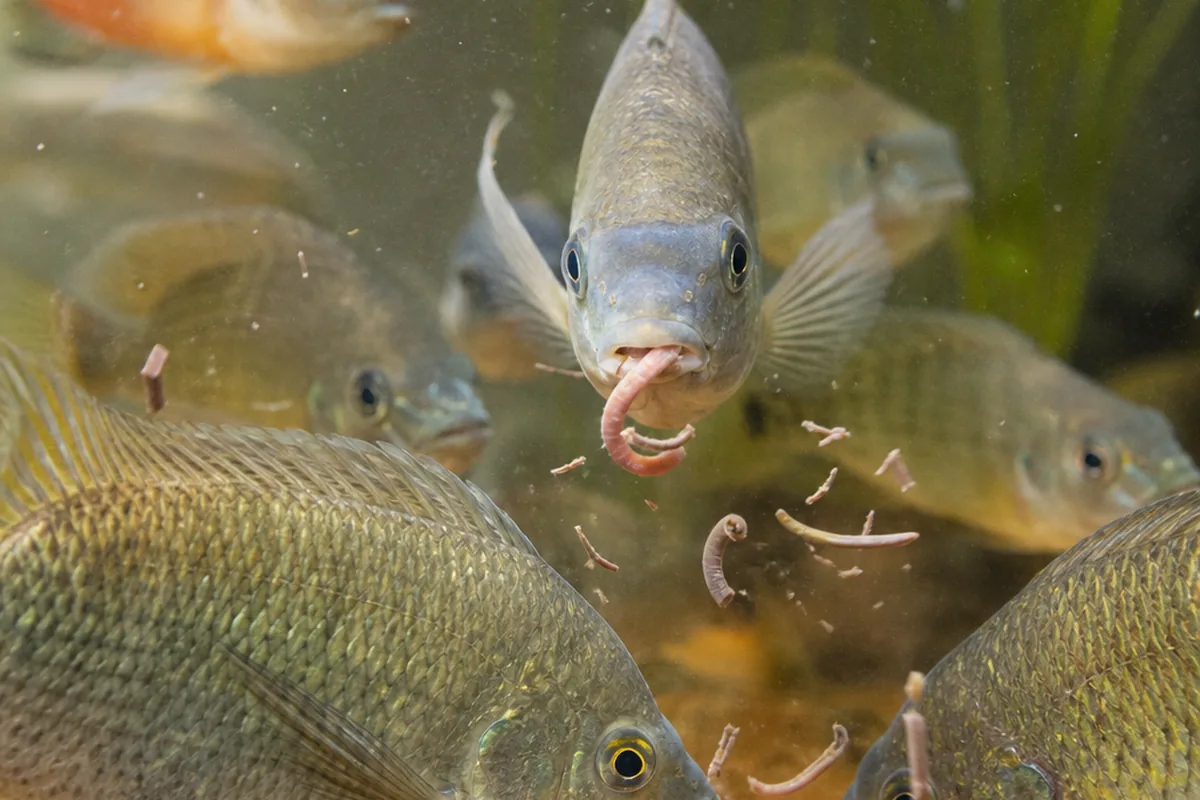
The conditioning use case is where earthworms genuinely outperform most commercial options. High protein intake combined with the stimulation of live prey triggers reproductive readiness in a wide range of freshwater species.
Cichlid breeders have used nightcrawlers as a pre-spawn conditioning food for decades. The amino acid density and caloric richness signal to the fish that food is abundant, the environmental cue that precedes natural spawning seasons for most tropical species.
The protocol is straightforward: increase earthworm feedings to once daily for 7-10 days alongside a small temperature increase of 1-2°C above the species' standard range. This combination of protein loading and temperature shift triggers courtship and spawning behavior across bettas gouramis, gouramis, many South American cichlids, and most larger community fish used for intentional breeding.
- Condition breeding pairs separately to control food intake per fish
- Use red wigglers or chopped nightcrawlers at the appropriate size for the species
- Return to normal 1-2 times per week feeding once spawning is complete
- Combine with water changes of 20-30% to simulate the rainy season trigger many species respond to
No commercial food replicates the live prey feeding behavior that earthworms produce. The wriggling motion in water activates predator instincts, reduces stress-related inhibition of spawning, and keeps breeding fish in peak physical condition through the conditioning period.
For keepers who want a live food with similar protein density but easier sourcing, bloodworms as a conditioning food are a practical complement to earthworms in a pre-spawn feeding rotation, offering comparable protein at a more consistent supply from any fish store.
Sources and references
- Proximate composition and amino acid profiles of Lumbricus terrestris and Eisenia fetida for use as aquaculture feed ingredientsAnimal Feed Science and Technology, Vol. 162(3-4), 2010
- Earthworm tissue as a biomonitor of soil pesticide contamination: accumulation patterns and toxicity thresholdsEnvironmental Pollution, Vol. 157(8-9), 2009
- Live food organisms in freshwater aquaculture: nutritional value and conditioning effects on broodstock reproductive performanceReviews in Aquaculture, Vol. 6(3-4), 2014