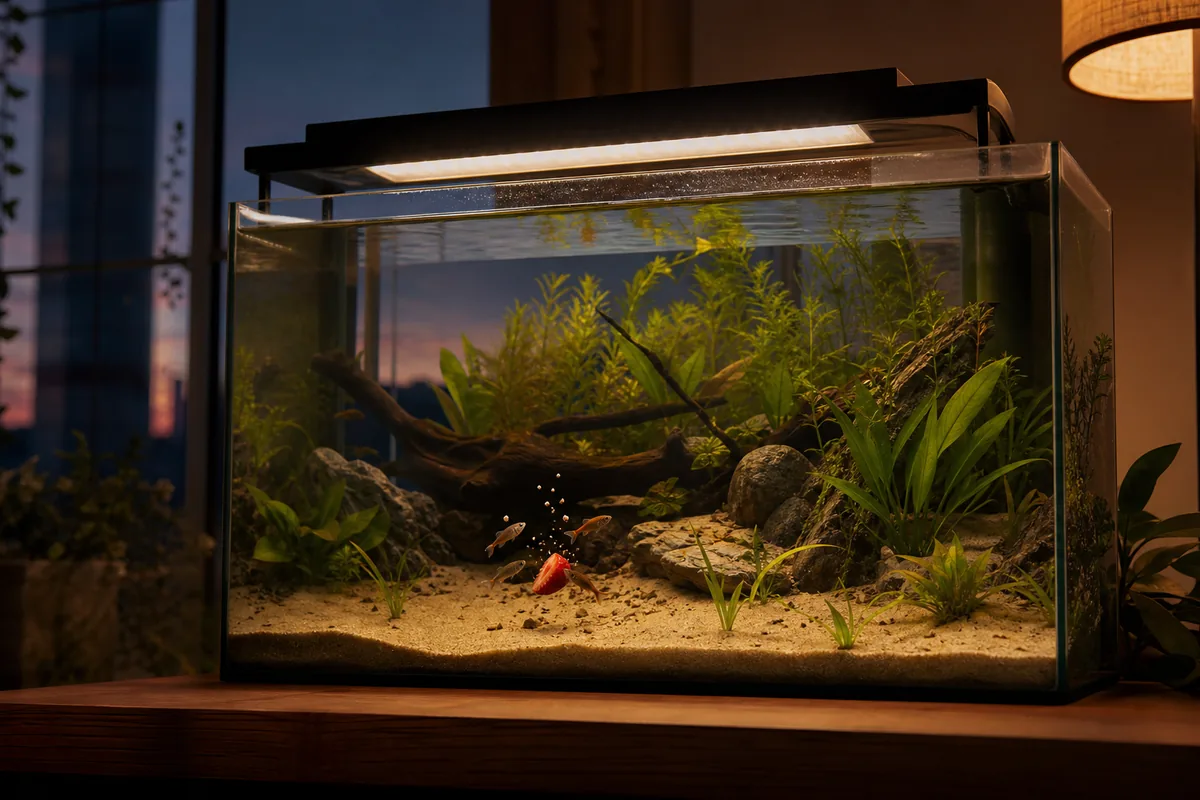
Strawberry for Freshwater Fish
- WashedSafe
- peeled flesh cut into 2-3mm piecesSafe
- Green tops and leaves (not toxic but stringy and indigestibleUnsafe
- remove always)Unsafe
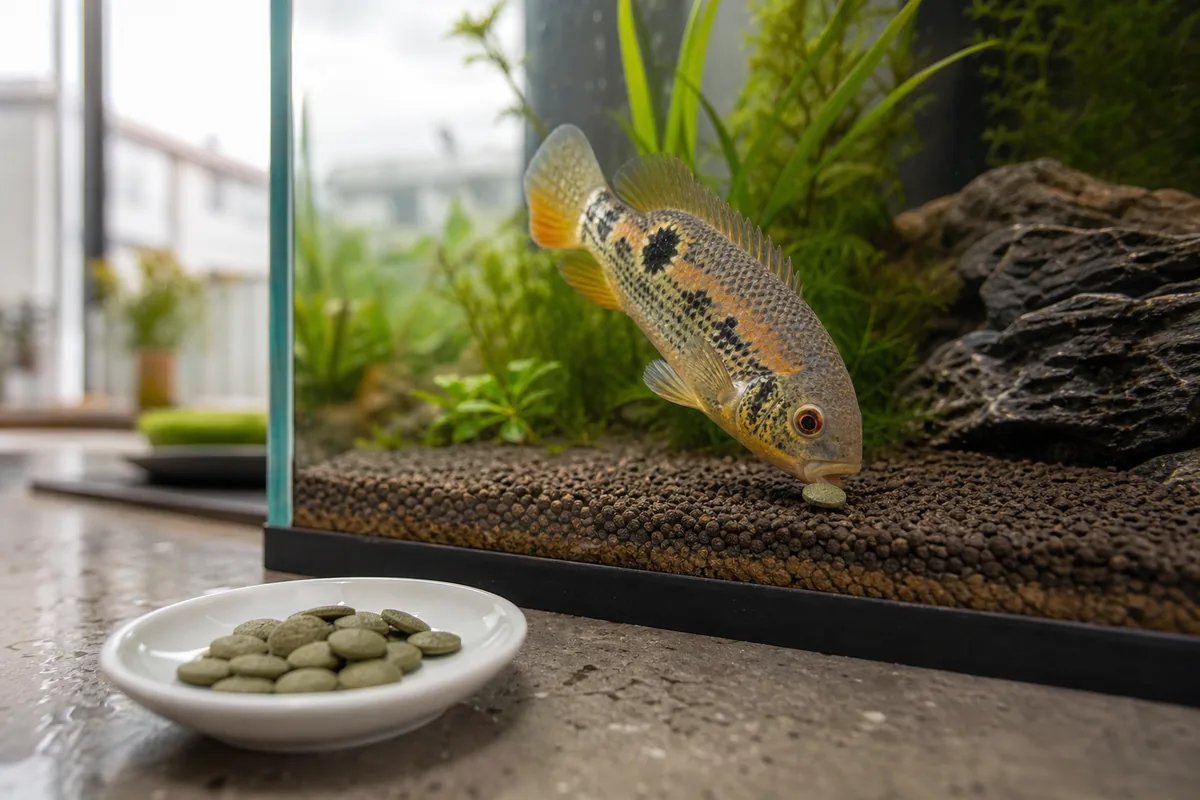
Prep: Wash thoroughly, remove green tops, peel outer skin, cut into 2-3mm cubes Freq: Once every 1-2 weeks Amount: 1-2 small pieces per fish; remove all uneaten pieces within 1-2 hours
Can Fish Eat Strawberry? Which Species Benefit from Strawberry Treats
Not every fish in your tank is a candidate for strawberry. Carnivores like bettas and oscars have no biological need for fruit sugar and will likely ignore a strawberry piece entirely.
The species that benefit are omnivores with plant-processing digestive systems.
The three strongest candidates are goldfish fruit feeding routines, where variety is a core part of their diet, mollies, and platies. All three are omnivores that naturally graze on plant matter and accept soft fruit readily.
Goldfish accept strawberry as readily as any soft fruit because their long intestinal tract is built to process simple sugars from fallen vegetation in ponds. Our goldfish care guide covers how their omnivore biology makes them the most versatile fruit feeders among common aquarium species.
- Goldfish: Enthusiastic fruit eaters; accept strawberry pieces at tank temperature without hesitation
- Mollies: Omnivores that graze on plant material; strawberry fits their natural feeding pattern well
- Platies: Similar to mollies; accept soft fruit as part of a varied diet
- Guppies: Will nibble at strawberry but benefit less; their small mouths limit intake
- Corydoras: May investigate bottom-sunk pieces but are not primary fruit consumers
- Bettas: Obligate carnivores; ignore strawberry entirely, which is the correct response
If your tank mixes species, the fruit feeds the omnivores while carnivores eat their normal staple. There is no risk of the strawberry harming carnivorous tankmates: they simply will not eat it.
Key facts
- Sugar Content
- 4.9g per 100g, lower than banana (12g), mango (14g), or grapes (16g)
- Acidity
- pH 3.0-3.5, significantly more acidic than most vegetables
- Vitamin C
- 58.8mg per 100g, high: beneficial antioxidant for omnivores
- Manganese
- 0.39mg per 100g, supports enzyme function in fish metabolism
- Folate
- 24mcg per 100g, supports cell production in growing fish
- Water Content
- 91g per 100g, high moisture: dissolves relatively quickly in tank water
- Seeds
- Surface achenes (the small seeds) are tiny and harmless; fish ignore or pass them
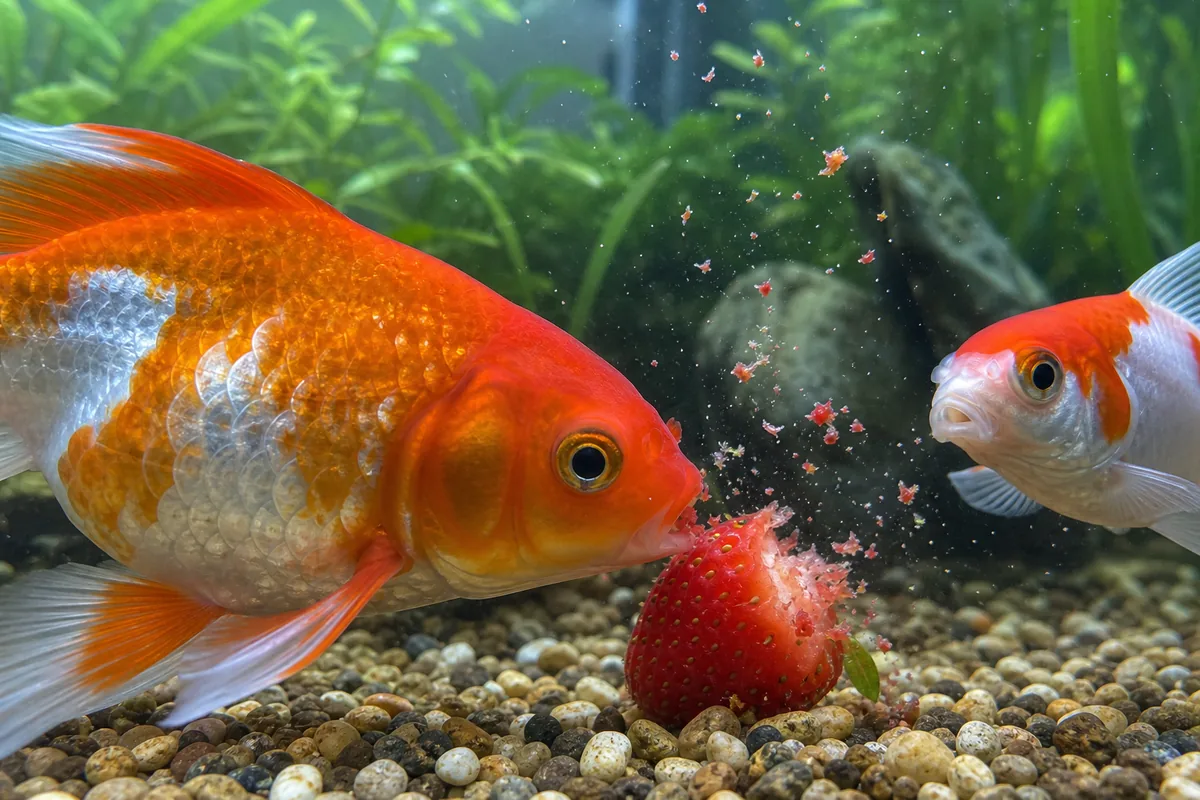
Strawberry Acidity: What pH 3.0-3.5 Means for Your Fish Tank
Strawberry sits at pH 3.0-3.5, which is substantially more acidic than most foods you would offer aquarium fish For. For context, tap water typically runs at pH 7.0-7.5 and most freshwater fish thrive at pH 6.5-7.5.
In a properly sized tank, a 2-3mm piece of strawberry will not measurably shift water chemistry. The tank volume dilutes the acid rapidly, and a healthy biological filter buffers small pH shifts within minutes.
Platies kept in well-filtered tanks of 20 gallons or more face virtually no pH risk from a small strawberry piece, and their omnivore digestive system handles fruit sugar efficiently. Our platy care guide explains their dietary flexibility and how to incorporate fruit treats into their weekly feeding rotation.
- Tanks 20 gallons and over: Negligible pH impact from 1-2 small pieces; no concern
- Tanks 10-20 gallons: Minimal risk if pieces are properly sized and removed within 2 hours
- Tanks under 10 gallons: More caution needed; small water volume amplifies any pH shift from decomposing acid fruit
- Nano tanks (5 gallons and under): Reduce portion to one 2mm piece maximum and remove after 1 hour
The real pH risk is not from the piece entering the tank: it is from a strawberry piece left to decompose. Strawberry dissolves faster than firmer fruits and vegetables.
Once it begins breaking apart, the acidity releases into the water column steadily. Remove all uneaten pieces within 1-2 hours without exception.
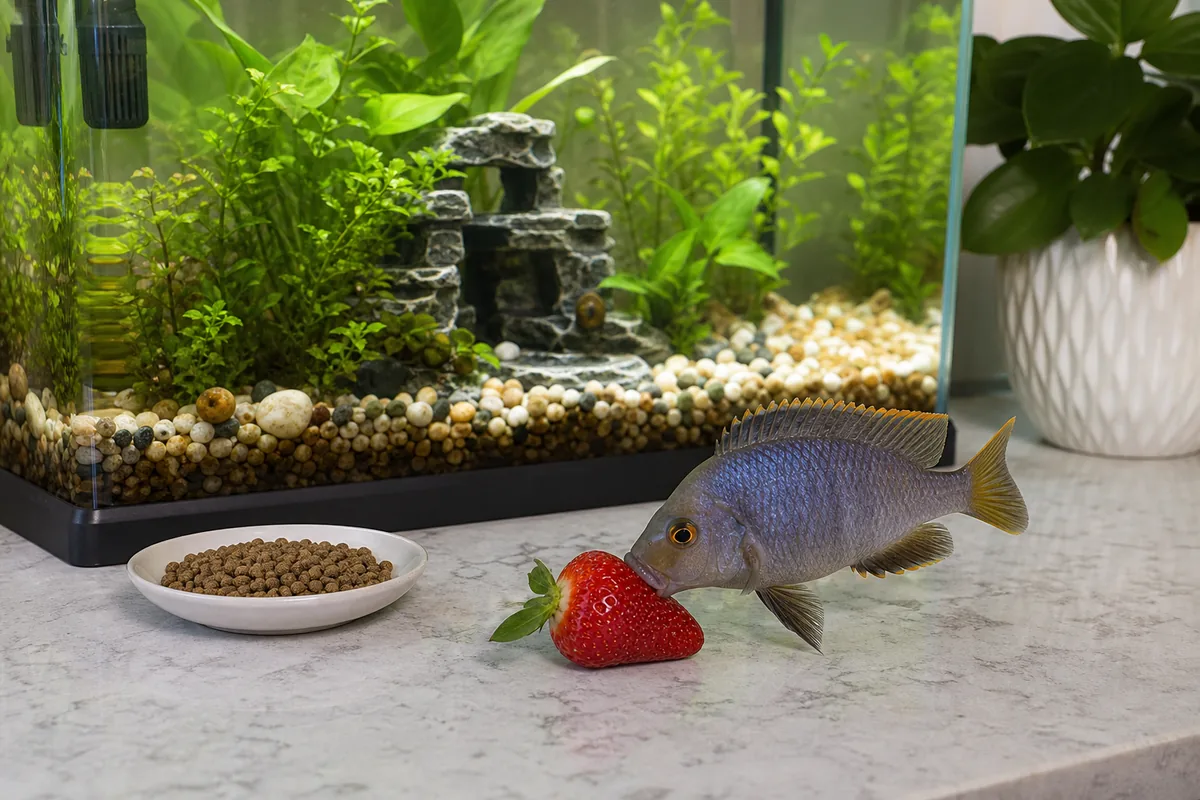
How to Prepare Strawberry for Fish: Step-by-Step
Strawberries rank among the highest pesticide-residue fruits in annual testing. The preparation process matters more here than with most aquarium treats because the residue sits on the surface of a fruit your fish will eat directly.
Washing alone is not sufficient for conventional strawberries. The texture of the strawberry surface traps pesticide residue in the seed pockets.
Organic strawberries remove most of the concern, but the other prep steps still apply.
- Step 1: Wash under cold running water for at least 30 seconds; gently rub the surface
- Step 2: Remove the green top and leaves completely; they are stringy, tough, and indigestible for fish
- Step 3: Peel the outer skin to remove the surface layer where pesticide concentrates
- Step 4: Cut the flesh into 2-3mm cubes; this is genuinely small, about the size of a match head
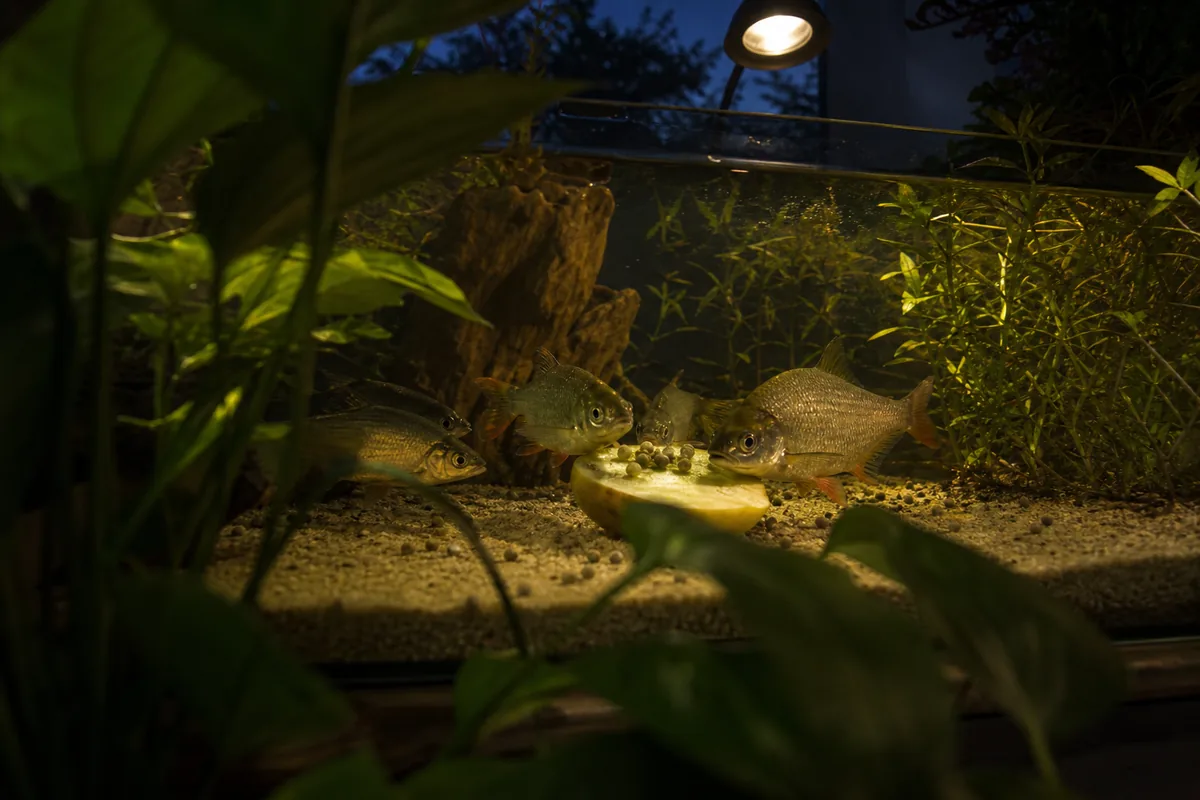
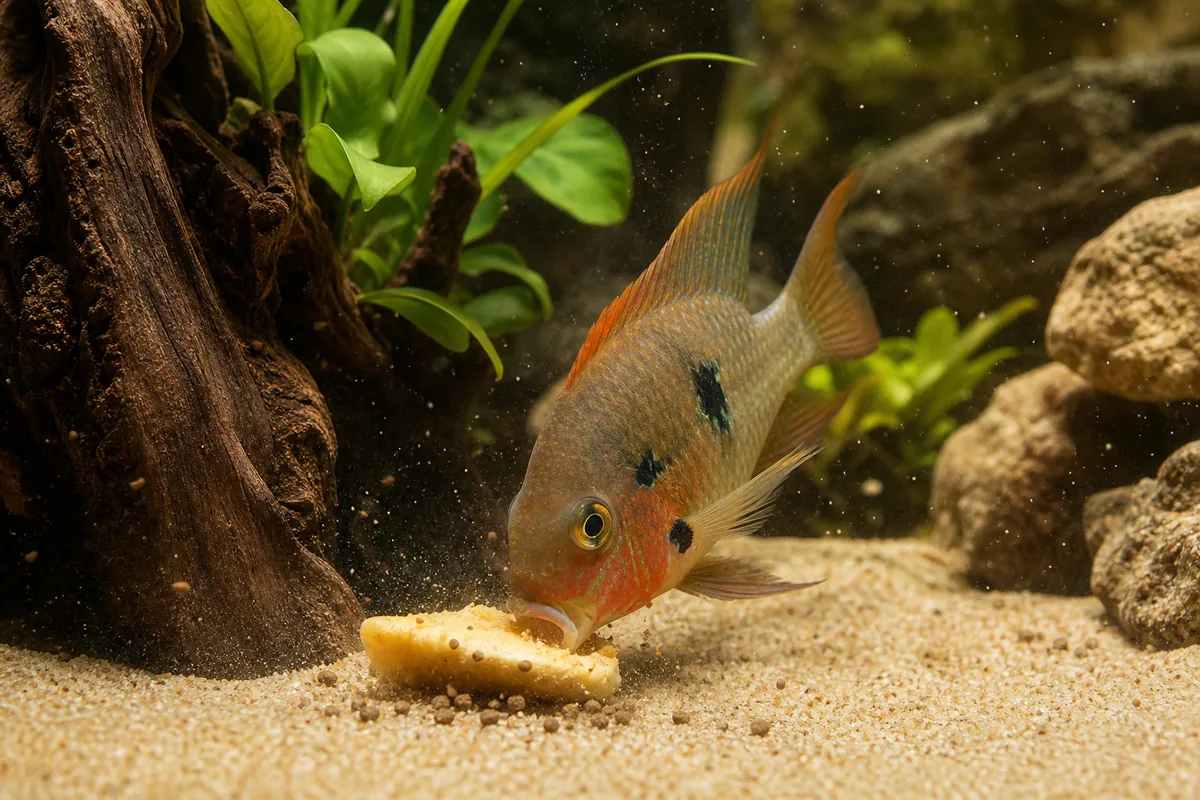
- Step 5: Drop pieces directly into the tank near the surface; omnivores find them quickly
- Step 6: Set a 1-2 hour removal timer; pull all uneaten pieces before they begin dissolving
Strawberry Nutrition Table: What Your Fish Actually Gets
Strawberry delivers real nutritional value for omnivorous fish particularly, particularly vitamin C and manganese. The sugar content is lower than most fruits, which is one reason it sits in the conditional-safe category rather than a blanket avoid.
| Nutrient | Per 100g Raw Strawberry | Relevance to Fish |
|---|---|---|
| Sugar | 4.9g | Low for fruit; still limits frequency to 1-2x per month |
| Vitamin C | 58.8mg | High; antioxidant support for omnivores |
| Manganese | 0.39mg | Enzyme cofactor; supports metabolic function |
| Folate | 24mcg | Cell production; useful for breeding populations |
| Fiber | 2.0g | Supports digestion in herbivore-leaning omnivores |
| Potassium | 153mg | Trace electrolyte; minimal uptake through gut |
| Protein | 0.67g | Negligible; strawberry is not a protein source |
| Calories | 32 kcal | Very low calorie density; no obesity risk at correct portions |
Compared to staple foods like high-quality pellets or frozen bloodworms, strawberry contributes almost no protein or calories. Its role is supplementary variety, not nutrition.
Fish that eat strawberry in addition to a quality staple get the benefit. Fish that eat it instead of their staple do not.
The processed food risks that apply to bread and similar items do not apply here: strawberry is a whole food with no additives. The limits come from acidity and sugar, not from artificial ingredients.
How Often Can Fish Eat Strawberry? Frequency by Species
Once every 1-2 weeks is the correct frequency for all species. This applies even to goldfish and mollies, which accept fruit enthusiastically.
Enthusiasm is not a nutritional signal.
Mango has a higher sugar content than strawberry at 14g per 100g versus 4.9g, which makes strawberry the better fruit choice when you want to offer something sweet without a heavy sugar load. Our mango feeding guide explains the sugar comparison across common fruit treats and helps you decide which to prioritize in a rotation.
Melon sits in the same occasional fruit category as strawberry and pairs well with it in an alternating weekly schedule, since neither overlaps in flavor profile or nutrient content. Our melon feeding guide covers cantaloupe and honeydew preparation and the two-hour removal window that both fruits share.
Guppies benefit from strawberry only in very small pieces due to their narrow mouths, and they should receive fruit treats far less often than larger omnivores. Our guppy care guide covers how their body size affects portion sizing and feeding frequency for any treat food.
Fish in the wild encounter ripe fruit opportunistically: a berry falls into the water, they eat it, and weeks pass before another arrives. That intermittent exposure is what the feeding schedule should replicate.
Offering strawberry weekly at the high end, or every two weeks as the standard, stays within that range.
- Goldfish: Once every 1-2 weeks; 1-2 pieces per fish per session
- Mollies: Once every 2 weeks; rotate with other treats to avoid sugar habituation
- Platies: Once every 2 weeks alongside their normal pellet and daily vegetable picks
- Guppies: Once every 2 weeks maximum; portions should be half the size used for goldfish
- Mixed community tanks: Once every 2 weeks; feed during normal feeding time so omnivores reach it before it begins dissolving
If you notice fish losing interest in their staple pellets after introducing fruit treats, extend the interval. Pellets are nutritionally complete.
Strawberry is not.
Sources and references
- Nutrient Requirements of Fish and ShrimpNational Research Council, National Academies Press, 2011
- USDA FoodData Central: Strawberries, rawU.S. Department of Agriculture, Agricultural Research Service, FoodData Central, 2023
- Pesticide Residue Monitoring Program: StrawberriesU.S. Food and Drug Administration, Pesticide Monitoring Program Annual Summary, 2022