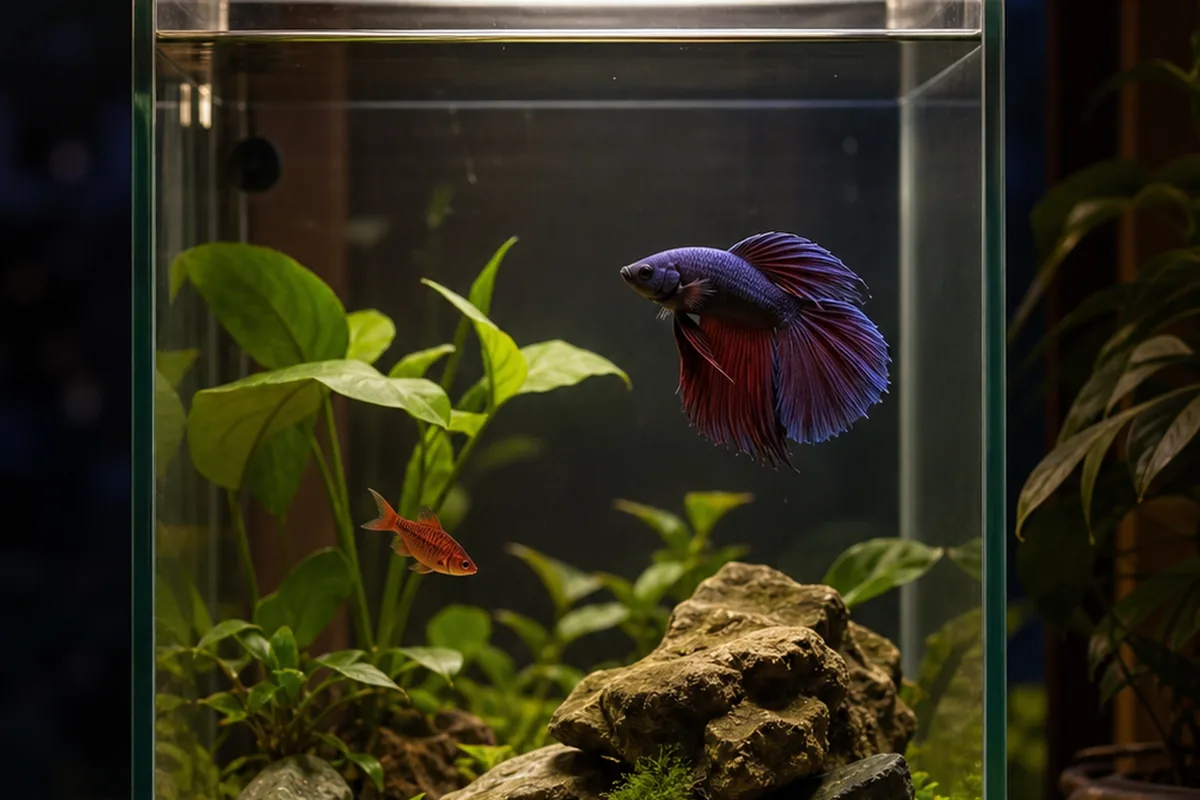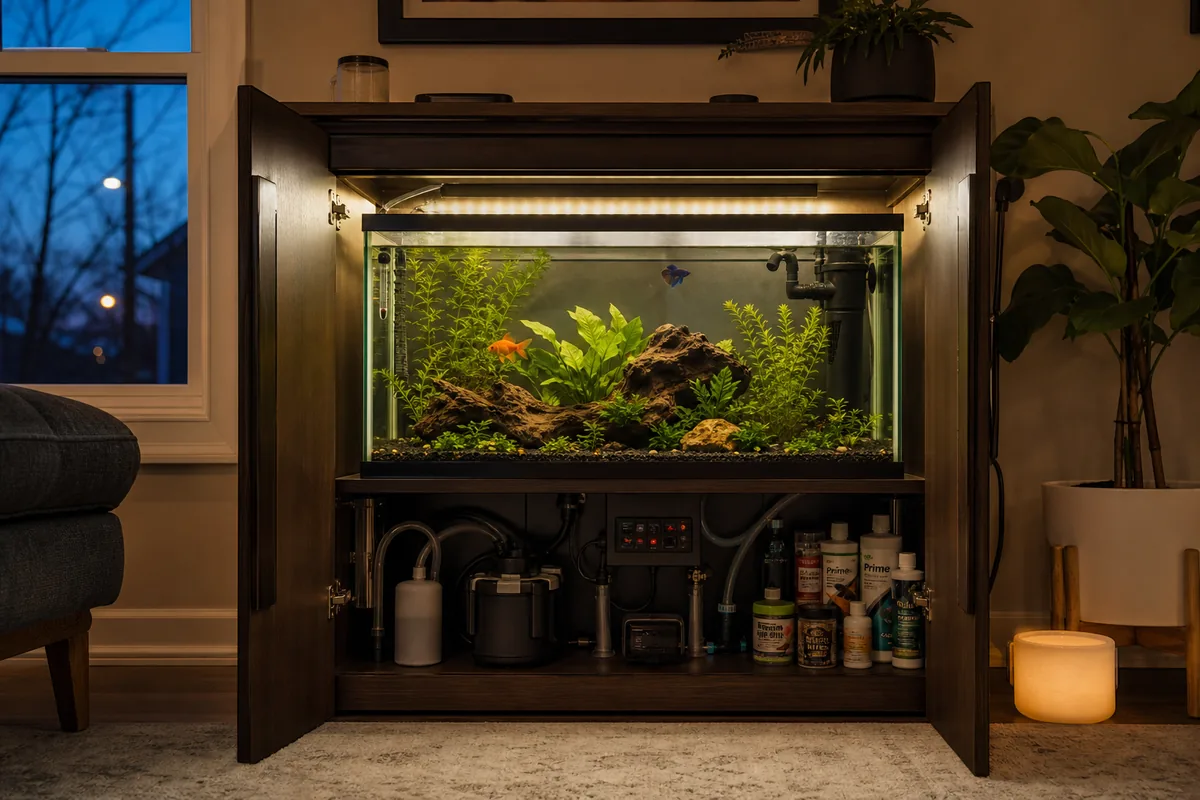
The pairing looks reasonable on paper. Both fish are sold in the same pet store aisle, both tolerate a range of water conditions, and a new keeper who sees them coexist briefly in a shop tank assumes the combination works.
It does not.
This guide covers why the temperature gap is uncrossable, what the secondary failure points are, and which species actually belong with each fish.
Compatibility verdict
- Goldfish + BettaDependsNo viable shared temperature exists. The 5% reflects tanks where both fish survive briefly at 74°F. Survival at a suboptimal temperature is not compatibility.
The 5% represents tanks where both fish are alive after 30 days at a compromise temperature around 74°F. At that temperature, the goldfish is warm-stressed and the betta is cold-stressed.
Neither fish is healthy. Both are managing a chronic stressor.
Why Goldfish Need Cold Water: 65-72°F Is a Biological Requirement
Goldfish (Carassius auratus) are cold-water fish. Their metabolism, immune function, and organ systems are calibrated for water between 65-72°F.
This is not a preference. It is a biological requirement.
At temperatures above 74°F, goldfish metabolism accelerates beyond sustainable limits. They eat more, produce more waste, and consume more oxygen.
Internal organ function degrades steadily.
The damage is not immediately visible, which is why keepers miss it. A goldfish at 78°F looks active for weeks or months.
The internal decline is accumulating the entire time.
- Swim bladder disease: warm water disrupts buoyancy regulation, causing a goldfish to float, sink, or list sideways
- Fin rot: elevated temperature suppresses immune response, allowing bacterial infections to establish in fin tissue
- Shortened lifespan: goldfish kept at betta temperatures live 2-3 years instead of a potential 10-15 years
- Oxygen depletion: warm water holds less dissolved oxygen, and goldfish are already high-demand consumers
The complete goldfish care guide covers the full parameter set these fish need to reach their potential lifespan.
Running the temperature in the other direction harms the betta equally. At 72°F, a betta's metabolic rate drops below the threshold for healthy immune function.
Bettas in cold water become lethargic, stop eating consistently, and develop fungal and bacterial infections at sharply higher rates. Ich is the most common outcome within 4-8 weeks.
How Betta and Goldfish Temperature Ranges Compare: No Overlap Exists
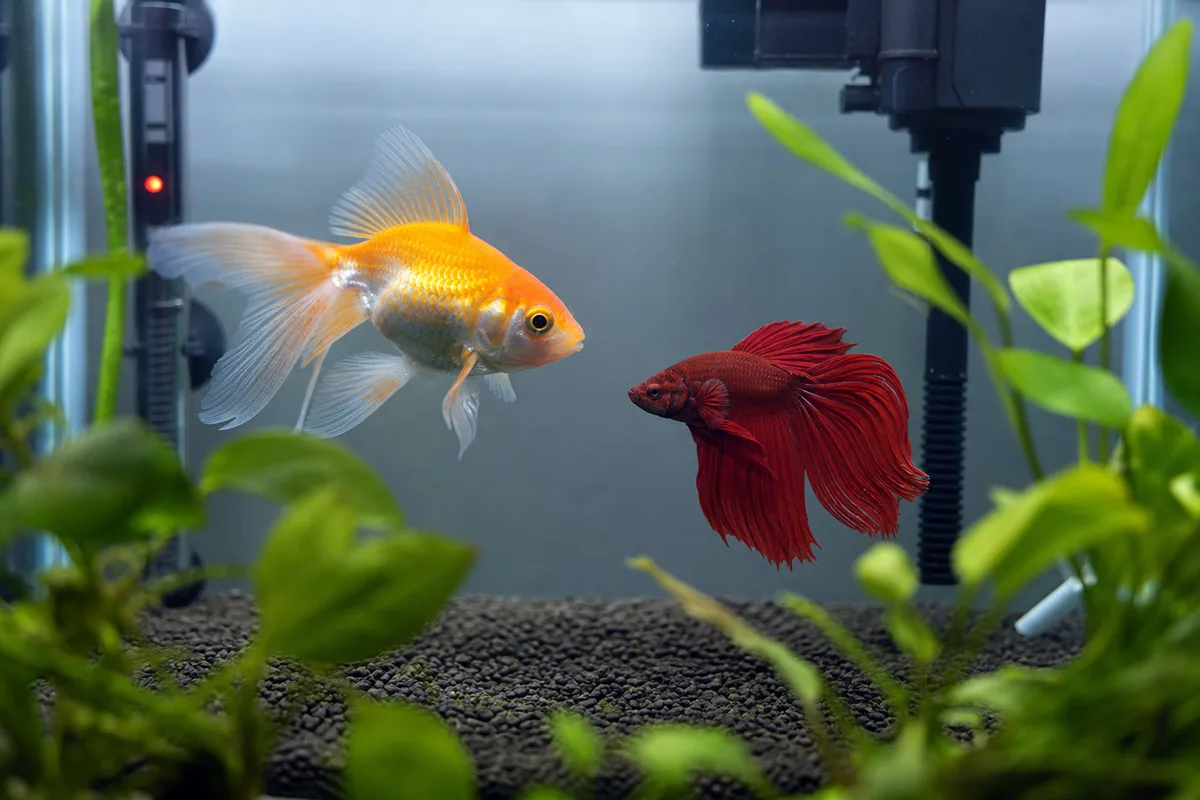
The numbers make the incompatibility plain. There is a 4-degree gap between the top of the goldfish range (72°F) and the bottom of the betta range (76°F).
That gap is not negotiable.
| Parameter | Goldfish | Betta | Overlap |
|---|---|---|---|
| Temperature | 65-72°F | 76-82°F | None viable |
| pH | 7.2-7.6 | 6.5-7.5 | 7.2-7.5 (narrow) |
| Tank size (minimum) | 20 gal per goldfish | 10 gal (betta only) | Incompatible footprint |
| Filtration current | High flow required | Gentle flow required | Direct conflict |
| Adult size | 6-12 in (common) | 2.5-3 in | No shared housing scale |
The pH overlap of 7.2-7.5 is narrow but technically shared. It is irrelevant because the temperature conflict makes any shared tank unviable before pH is a factor.
The filtration conflict is an additional practical problem. Goldfish are heavy waste producers and need strong water movement to maintain water quality.
A betta's flowing fins can suffer physical damage from the current a goldfish setup requires.
Why Goldfish Bioload Makes Betta Housing Impossible at Any Temperature
Even if the temperature problem did not exist, the bioload mismatch would end this pairing. A single common goldfish produces more ammonia than most betta-appropriate tank sizes can process.
Goldfish are notoriously dirty fish. They eat constantly, produce large amounts of waste, and require water changes of 25-30% weekly in a properly sized tank.
A 10-gallon betta setup cannot absorb that ammonia load without spiking to dangerous levels.
- Ammonia spikes: goldfish produce waste at a rate that overwhelms betta-scale filtration within days
- Nitrate accumulation: even with filtration, nitrate builds faster in a goldfish-betta tank than safe weekly water changes can clear
- Oxygen competition: goldfish consume dissolved oxygen at higher rates than bettas, reducing available oxygen for the betta
The adult size disparity amplifies this problem. Common goldfish reach 6-12 inches under proper conditions.
Fancy varieties like orandas and ryukins max out at 6-8 inches.
A tank large enough to house adult goldfish comfortably requires 20 gallons per fish, strong filtration, and water movement that a betta cannot tolerate physically. Our 10-gallon stocking guide shows how different the stocking math looks when you are planning a betta setup versus a goldfish setup.
The checklist above represents failures that occur simultaneously, not sequentially. You cannot solve one without creating another.
What a "Compromise Temperature" of 74°F Does to Both Fish
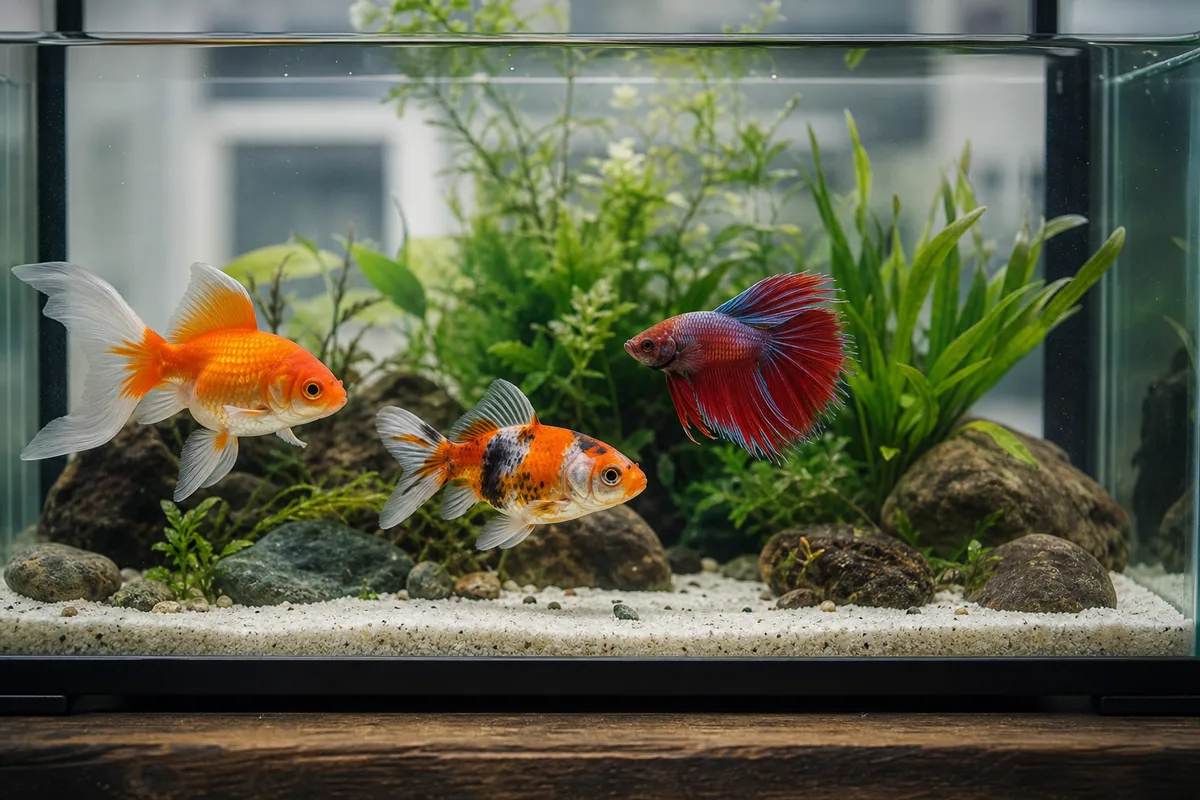
Some keepers settle on 74°F as a midpoint. This is the temperature where the two ranges are closest, and some discussions online present it as a viable compromise.
It is not.
At 74°F, both fish are outside their optimal range. The goldfish is warm-stressed and the betta is cold-stressed.
Both are running on suppressed immune systems simultaneously.
Pros
- No visible aggression in early weeks
- Both fish eat in the first days
- No immediate physical injury at 74°F
Cons
- Goldfish develops swim bladder and fin rot within 2-3 months at warm temperatures
- Betta develops ich and lethargy at 74°F within 4-8 weeks
- Neither fish reaches its potential coloration or activity level
- Goldfish lifespan drops from 10-15 years to 2-3 years under warm conditions
- Betta immune system cannot fight off infections in cold water
The absence of aggression is the most common reason keepers believe this pairing is working. They interpret "they are not fighting" as "this is fine." The real damage is physiological and takes weeks to become visible.
Thermal stress is cumulative. A goldfish that has spent three months in warm water has already sustained organ damage. Dropping the temperature later does not reverse what has occurred.
The short-term coexistence that keepers observe in pet stores is a product of the store's holding conditions, not evidence of compatibility. Stores often hold fish at temperatures that fall between ideal ranges because they house many species in the same room.
What Actually Lives With Goldfish: 4 Compatible Species
Goldfish belong with other cold-water species. The species below share the 65-72°F range and similar waste tolerance.
None of them is a betta.
- White cloud mountain minnows: active schooling fish that thrive at 64-72°F, no aggression toward goldfish, and low bioload
- Weather loaches: bottom-dwelling scavengers that tolerate the same cold water and help clean up leftover food
- Other goldfish: the simplest solution, keeping goldfish with goldfish of similar size avoids predation and matches all parameters
- Zebra danios: cold-tolerant schooling fish that handle temperatures down to 64°F and coexist with goldfish in the 68-72°F range
For a ranked list with success rate data, see our goldfish tank mate guide covering 15 species with parameter overlap details.
Full alternatives for goldfish keepers (not bettas)
Goldfish need tank mates that match their cold water, their size potential, and their waste output. The species that work: White cloud mountain minnows: 64-72°F, peaceful, 1.5-inch max size, school of 6+ recommended Weather loaches (dojo loach): 50-77°F, gentle, grow to 10-12 inches, good substrate scavengers Zebra danios: 64-77°F, hardy schooling fish, 2-inch max size, active enough to avoid goldfish Rosy barbs: 64-72°F, 6-inch max, need a 30+ gallon tank, avoid with fancy goldfish whose fins they may nip Other goldfish: same variety at similar size is the most predictable choice Keep goldfish separated from tropical species by at least 6°F. Any tropical species that requires 78°F or above is incompatible regardless of behavior.
What Actually Lives With Bettas: Tropical Species at 76-82°F
Bettas need tank mates that share their tropical water requirement and do not trigger aggression. The right candidates occupy different water column zones and carry no visual profile that mimics a rival betta.
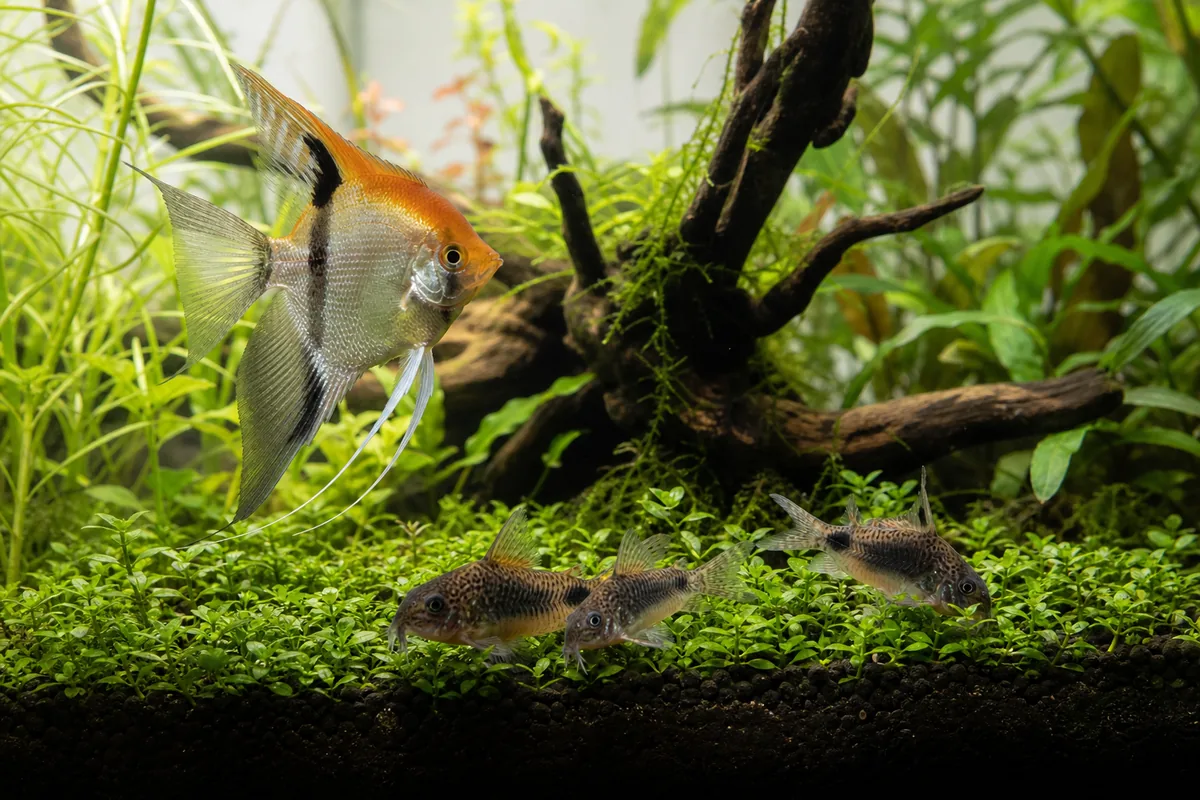
Corydoras catfish are the most reliable betta tank mate available. They are bottom dwellers, completely peaceful, and their size and shape trigger no aggression response.
Our full corydoras care guide covers the six species most suitable for betta setups.
Neon tetras work in tanks of 20 gallons or more with calm individual bettas. The pairing succeeds about 60% of the time depending on the betta's temperament.
See our and neon tetra compatibility guide for the full assessment. Neon tetra care requirements align well with betta water parameters.
Full alternatives for betta keepers (not goldfish)
Bettas need tropical companions at 76-82°F. The species that work reliably: Corydoras catfish: bottom zone, 76-80°F, the single most reliable betta companion across all setups Neon tetras: mid zone, 72-80°F, works with calm bettas in 20+ gallon planted tanks Platys: temperature-flexible platys handle the upper 70s and carry no fin profile that triggers betta aggression Nerite snails: armored, slow-moving, bettas cannot injure them, excellent algae cleaners Amano shrimp: large enough that most bettas ignore them, unlike smaller cherry shrimp which bettas often eat For 20 species ranked by compatibility rate and tank size requirement, see our betta tank mates guide.
The temperature requirement is the first filter every tank mate decision should pass through. See our betta pairing guide for species that share the betta's thermal range and have documented compatibility data.
Sources and references
- Thermal tolerance and metabolic rate in Carassius auratus at varying temperature regimesComparative Biochemistry and Physiology, Part A, Vol. 171, 2014
- Temperature-dependent immune function and disease susceptibility in Betta splendensof Thermal Biology, Vol. 58, 2016
- Coldwater and tropical fish: incompatibilities in community aquarium managementof Florida IFAS Extension, FA004