Betta fish can live with tank mates, but only when the other species does not look, move, or feed like a rival. Start with the freshwater fish pillar if you need the broader community-tank context before choosing a species.
Tank size is the main limit on success. In tanks under 10 gallons, snails are the only honest recommendation for most keepers.
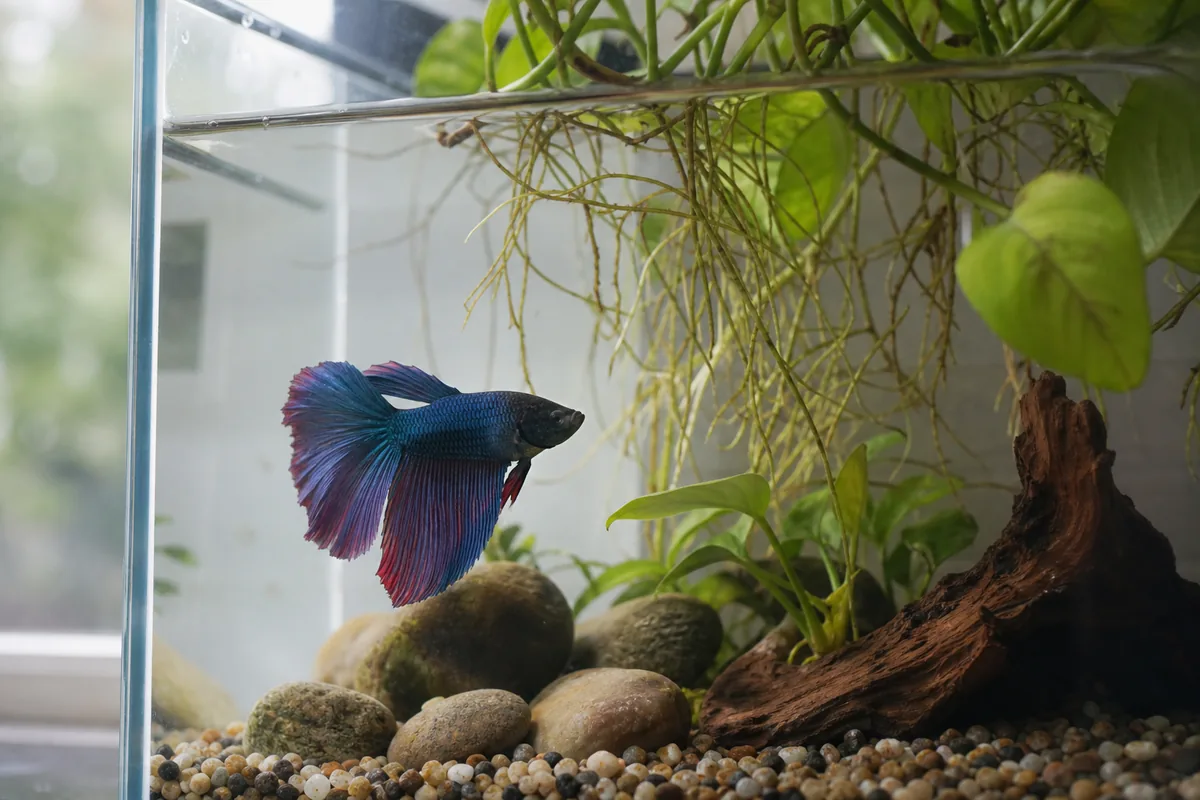
A calm betta is still a territorial fish. That is why the safest companions are bottom dwellers, armored invertebrates, or fast schooling fish in larger planted tanks.
Which tank mates work best for bettas?
The best betta tank mates solve a specific problem instead of just filling space. Some work because they stay on the bottom, while others work because a school spreads the betta's attention.
Use this table first, then match the species to your tank size and layout. If your setup is still basic, build around the betta tank setup guide before adding any new animal.
| Species | Best for | Min tank | Zone | Main reason it works | Main limit |
|---|---|---|---|---|---|
| Corydoras catfish | 20-gallon community tanks | 20 gal | Bottom | Different territory and peaceful group behavior | Need a school and floor space |
| Nerite snails | 5-gallon and 10-gallon tanks | 5 gal | Glass and hardscape | No fins, no rivalry cues, almost zero social conflict | Need enough algae or supplemental feeding |
| Mystery snails | Small tanks that need one visible companion | 5 gal | Glass and substrate | Large shell protects them from curiosity nips | Some bettas nip antennae |
| Kuhli loaches | Heavily planted 20-gallon tanks | 20 gal | Bottom | Nocturnal behavior keeps them out of conflict | Need sand and a group |
| Ember tetras | Calm planted tanks with a mild betta | 15 gal | Mid-water | Small body and tight schooling reduce challenge signals | Still share space with the betta |
| Harlequin rasboras | 20-gallon community tanks | 20 gal | Mid-water | Fast, coordinated schooling keeps pressure low | Need swimming room and a group |
| Cherry shrimp | Dense planted tanks with lots of cover | 10 gal | Bottom and plants | Adults can disappear into cover and biofilm zones | Juveniles are easy prey |
The pattern is clear. The safest choices either live far from the betta's patrol route or give the betta nothing obvious to challenge.
What actually makes a betta tank mate safe?
Betta compatibility is less about a species list and more about avoiding three triggers. Long fins, bright rival-like colors, and shared mid-water territory create most failures.
Water overlap matters too. Bettas do best around 76-80 F, so a companion that only thrives cooler will force a compromise you should not make.
- Body shape: Flowing fins and broad displays make another fish look like a challenger.
- Swim zone: Species that camp in the same mid-water lane trigger more chasing.
- Feeding pace: Fast surface feeders turn every meal into a territorial event.
Pros
- Bottom dwellers like corydoras catfish avoid the betta's patrol lane
- Armored snails add almost no social stress and fit small tanks
- Schooling fish can work when the school is large enough to stay coordinated
- Planted tanks break sight lines and reduce constant tracking
- Well-fed bettas are less likely to harass every new movement
Cons
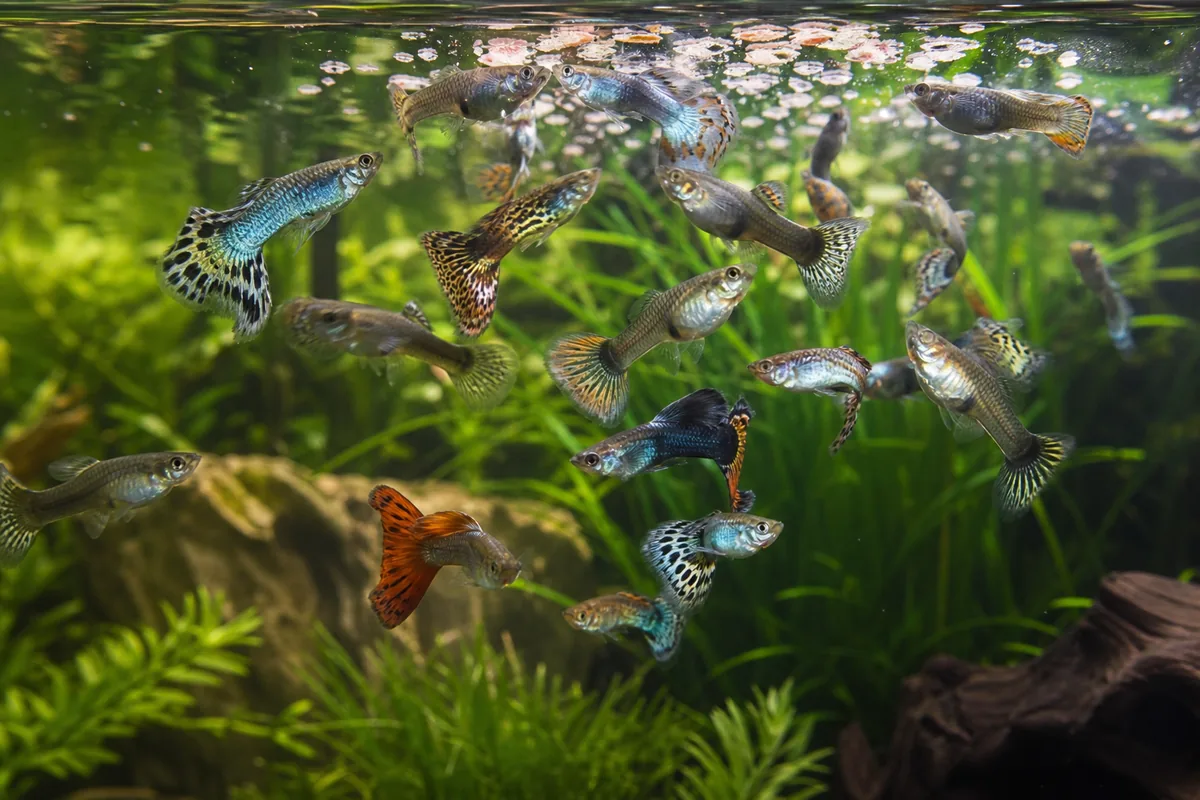
- Male guppies look too much like rival bettas and fail fast
- Small tanks magnify every territorial chase
- Sparse decor leaves shrimp and schooling fish exposed
- Cool-water fish force an unhealthy temperature compromise
- One backup tank or divider is mandatory because temperament is never guaranteed
A species can be peaceful and still be a poor betta match. That is why neon tetras and guppies stay popular online even though many real tanks go badly.
Food competition also matters. Slow feeders and surface competitors stress a betta more than species that browse the bottom or graze algae between meals.
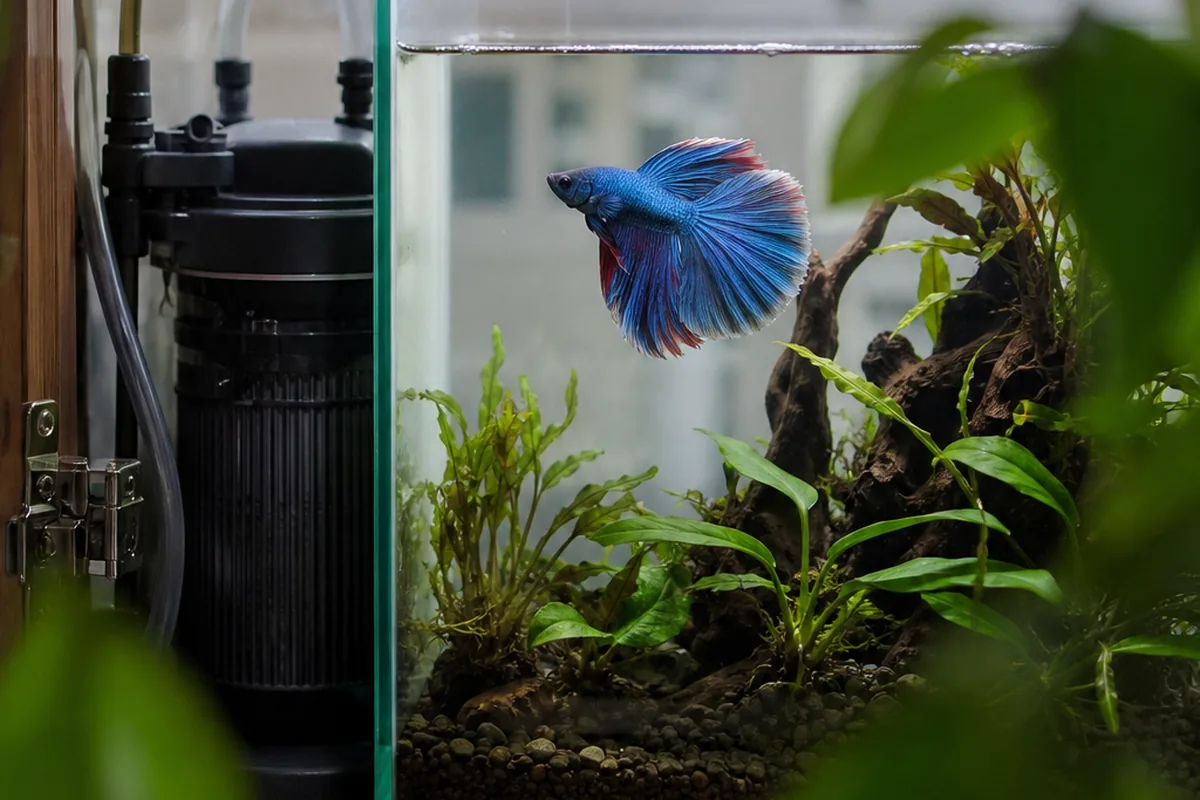
Which choices fit your setup best?
The right answer changes with tank size and how much management you want. We would rather give you three dependable lanes than a flashy list that hides the conditions.
Corydoras catfish are the best fish choice for a 20-gallon betta tank
Corydoras are the cleanest answer for keepers who want a real fish companion. A school stays near the substrate, keeps moving, and rarely gives the betta a reason to flare.
The pairing works best when you copy the details from our betta with corydoras guide. That means a school of at least six, smooth substrate, and enough floor area that the betta never has to share every inch.
This is the most reliable option because it separates the fish by behavior, not just by hope. When the tank is big enough, both species can act normally.
Nerite and mystery snails are the safest small-tank answers
Nerite snails are the only tank mate we recommend with real confidence in many 5-gallon betta tanks. They do not challenge the betta, they stay useful, and they bring almost no bioload compared with another fish.
Mystery snails can work too, but they are more exposed because their antennae invite exploratory nips. If your betta already flares at its reflection all day, stick with nerites instead.
Small tanks punish bad choices quickly. Use the stocking limits in our 5-gallon stocking guide if you are trying to stretch a nano setup.
Kuhli loaches work when the tank is quiet and the bottom is soft
Kuhli loaches are one of the lowest-conflict fish companions for bettas. They vanish into the hardscape and come out most when the lights are low.
A betta cannot obsess over a fish it barely sees.
The tradeoff is setup quality. Kuhlis need sand, caves, and a group, so they are not a shortcut for an undersized or bare tank.
Ember tetras and harlequin rasboras are the best schooling tests
If you want movement in the middle of the tank, ember tetras are usually the softer bet than neons. Their color is muted, their size is small, and a school of eight or more stays visually coherent.
Harlequin rasboras need a little more room, but they often work well in planted 20-gallon tanks because they are fast enough to avoid occasional charges. Feed them well and keep the school full so no single fish gets isolated.
These are not beginner-proof pairings. Check your betta's normal body condition and feeding behavior with our betta diet guide before turning a solo tank into a community.
Cherry shrimp are possible, but only if you accept losses
Cherry shrimp are not a zero-risk tank mate for bettas. Adult shrimp can survive in dense moss and root tangles, but juveniles are often treated as live food.
This pairing works best for keepers who want a planted display first and a shrimp colony second. If you want every shrimp to survive, do not use a betta as the centerpiece fish.
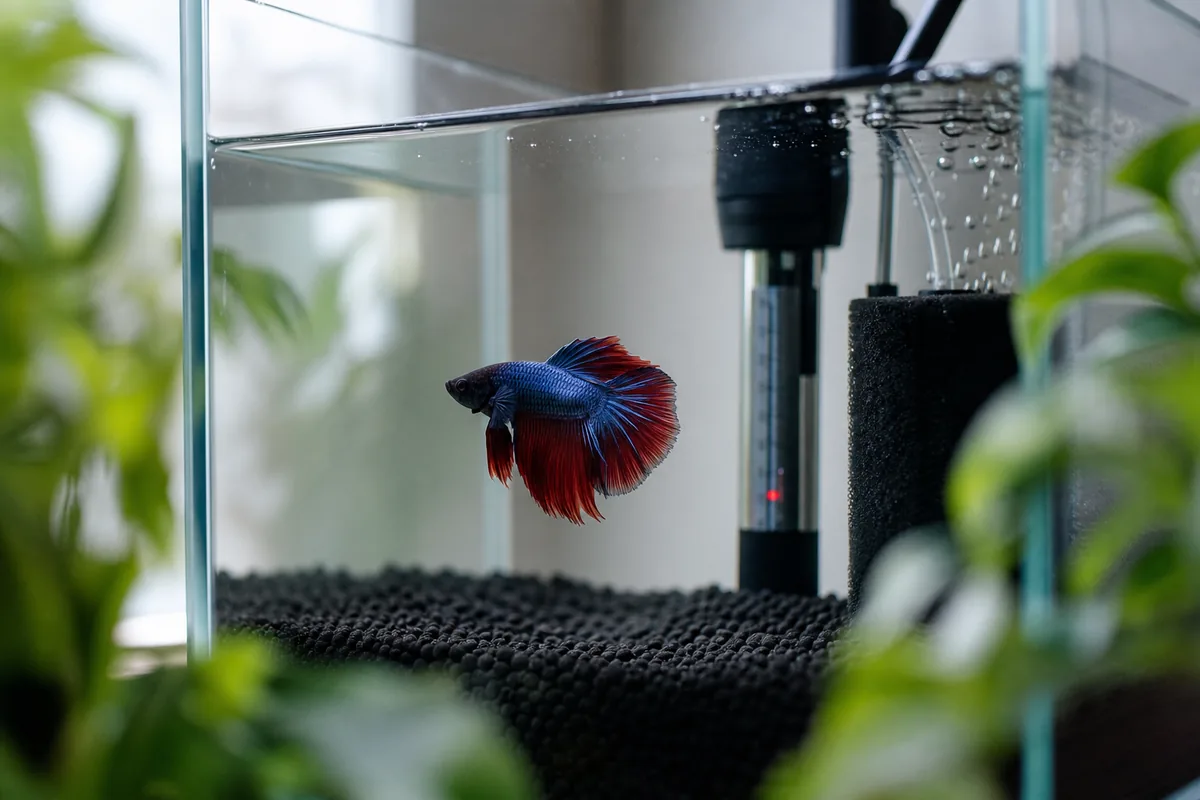
Which cause trouble fast?
The most common betta mistakes come from species that look beautiful together in a store but fail in a home tank. The problem is usually visual rivalry, fin damage, or temperature mismatch.
Male guppies are the classic bad idea. Their tails, color, and mid-water display behavior push the exact buttons that make a betta chase.
That is why our betta with guppies breakdown is mostly a warning, not a recommendation. A few calm females may survive in specific tanks, but the pairing is not stable enough to suggest as a default plan.
Neon tetras are more conditional than most articles admit. Their bright blue stripe and shared swimming zone make them far riskier than embers in tanks under 20 gallons.
- Guppies: Fancy tails and display behavior trigger direct rivalry.
- Neon tetras: They can work, but only in larger planted tanks with a calm betta.
- Goldfish: Cold-water needs make them incompatible even before aggression starts.
- Tiger barbs: Fin nipping turns a betta tank into a stress loop fast.
Read the thresholds in our neon tetra pairing guide if you are tempted by that pairing. It can work, but only in the kind of planted tank that already has margin for mistakes.
The same logic applies to any fish with long fins, surface-feeding urgency, or obvious aggression. Bettas do not need a mirror image in the next lane.
How should you add tank mates to a betta tank?
Introduction order matters almost as much as species choice. Even a good pairing can fail if the betta already owns every sight line in the tank.
- Rearrange decor: Move wood, plants, and caves before the new animals go in.
- Feed first: Offer the betta a normal meal so it does not greet movement with hunger.
- Acclimate slowly: Match temperature and water chemistry over 30 to 45 minutes.
- Dim the lights: Lower visual stimulation during the first hour after release.
- Watch the first two hours: Short curiosity is fine, but repeated cornering is not.
- Keep a backup ready: Separate fish the same day if chasing becomes constant.
If your betta patrols nonstop, flares every few minutes, or stops the new fish from feeding, the pairing is failing. Remove the tank mate before the damage becomes visible.
Some keepers blame every failure on "a mean betta," but setup is often part of the cause. Bare tanks, tiny footprints, and underfed fish create predictable conflict.
Choose the pairing that matches your tank, not the one that looks best in a store lineup. Betta success comes from reducing pressure, not from forcing variety.
Sources and references
- Betta splendens species profile and care parametersSeriouslyFish, accessed 2026
- Corydoras genus profile and group behaviorSeriouslyFish, accessed 2026
- Kuhli loach Pangio semicincta profile and habitat notesSeriouslyFish, accessed 2026
- Aggression and territorial behavior in Betta splendensof Fish Biology, 2011