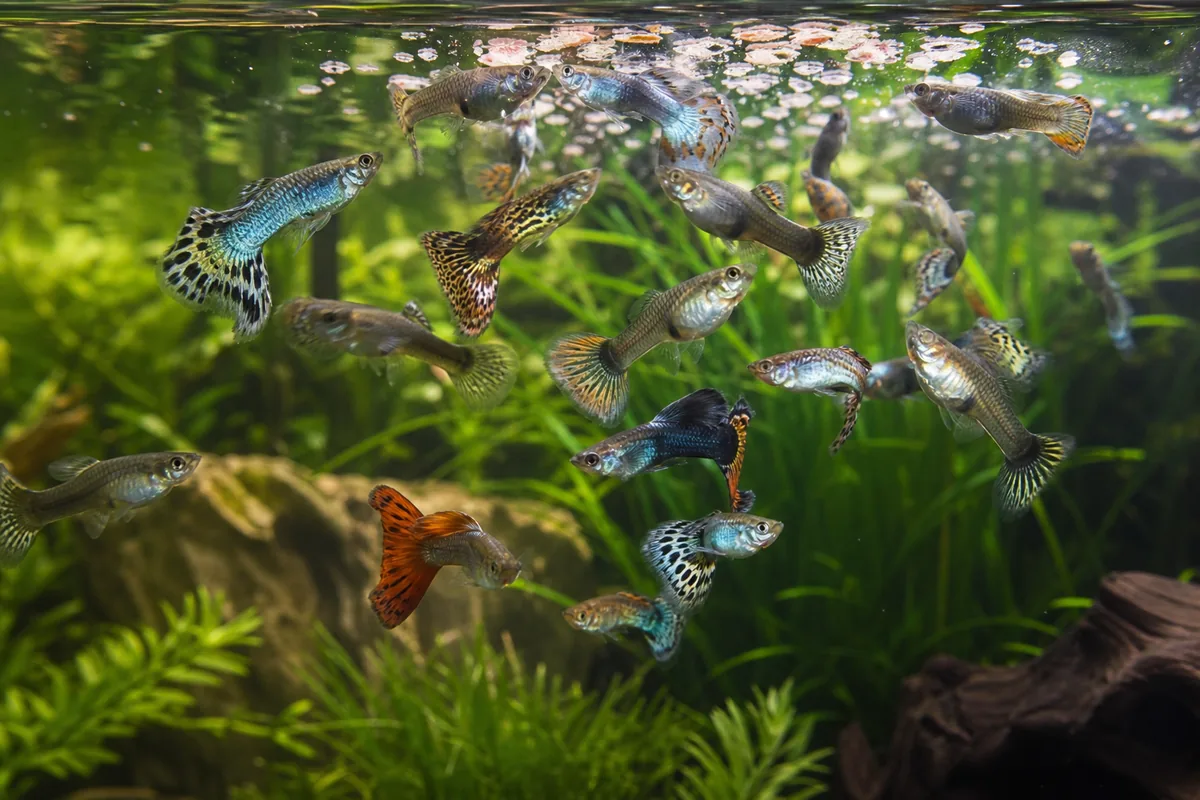
Guppies mix well only when the whole community tank plan stays calm and lightly stocked. The safest pairings match water needs, feeding pace, and swim zone instead of just body size.
A healthy guppy group spends most of its time in the upper and middle water. Good tank mates leave those lanes open and avoid turning every feeding session into a chase.
Compatibility verdict
- Guppies + Peaceful community fishCompatibleBottom dwellers and calm mid-water fish usually fit best when the tank is planted and not crowded.
| Tank Mate | Why It Works | Main Watchout |
|---|---|---|
| Corydoras | Stay low in the tank and rarely bother fins | Need groups and clean substrate |
| Platies | Match warm water and peaceful community behavior | Livebearer numbers can climb fast |
| Mollies | Share similar water preference and body language | Larger mollies can outcompete timid guppies |
| Snails or shrimp | Add cleanup without fish-level aggression | Baby shrimp may get eaten |
What Makes A Good Guppy Tank Mate?
The best match stays peaceful and ignores flowing tails. Guppies struggle most with fish that nip fins, dominate food, or patrol the same upper-water lane all day.
Water profile matters too. Guppies usually do best with species that tolerate the same warm, moderately hard conditions instead of fish that want a completely different setup.
- Temperament first: choose fish that do not chase, nip, or body-check smaller tank mates
- Zone balance: lower or middle swimmers usually fit better than another restless surface fish
- Feeding pace: calm eaters work better than fish that rush every bite
- Adult size: a fish that stays peaceful at two inches can still become a problem at five
Which Tank Mates Work Best For Guppies?
Bottom dwellers are often the easiest win because they avoid direct overlap. A group of peaceful corydoras uses the lower tank, cleans up leftover food, and rarely creates social friction with guppies.
Platies usually fit well too because they share a similar rhythm without carrying the same delicate tails. A healthy platy group can work in the same warm planted tank as long as the stocking plan stays controlled.
Mollies can work when the tank is large enough and the fish are not pushy at feeding time. Our molly pairing guide explains why extra space and breeding control matter more than the label on the tank.
Snails and some shrimp also fit many guppy tanks because they add cleanup without changing the social tone. Keep in mind that tiny shrimp babies are still easy targets in a hungry livebearer tank.
Pros
- Bottom dwellers usually fit the layout cleanly
- Peaceful livebearers can share the same water profile
- Snails and some shrimp add cleanup with little aggression
Cons
- Livebearers can overbreed fast
- Larger mollies may dominate food
- Baby shrimp are easy prey in active guppy tanks
Which Mates Cause Trouble Fast?
Fin nippers cause trouble quickly because guppies advertise themselves with long colorful tails. Even a small fish can stress them badly if it pecks fins every time the group crosses the tank.
Fast upper-water fish can also make the tank feel crowded. Guppies already use the busiest part of the aquarium, so another species that lives in the same lane can turn normal movement into nonstop pressure.
Do not treat goldfish as a cute exception. A proper goldfish setup uses cooler water, heavier filtration, and a very different waste profile from a warm planted guppy tank.
How Should You Stock A Guppy Community Tank?
Build the aquarium around the guppies instead of adding them to a random leftover mix. Start with the guppy group, add one calm lower-zone species, and widen the plan only after the tank stays stable under real feeding load.
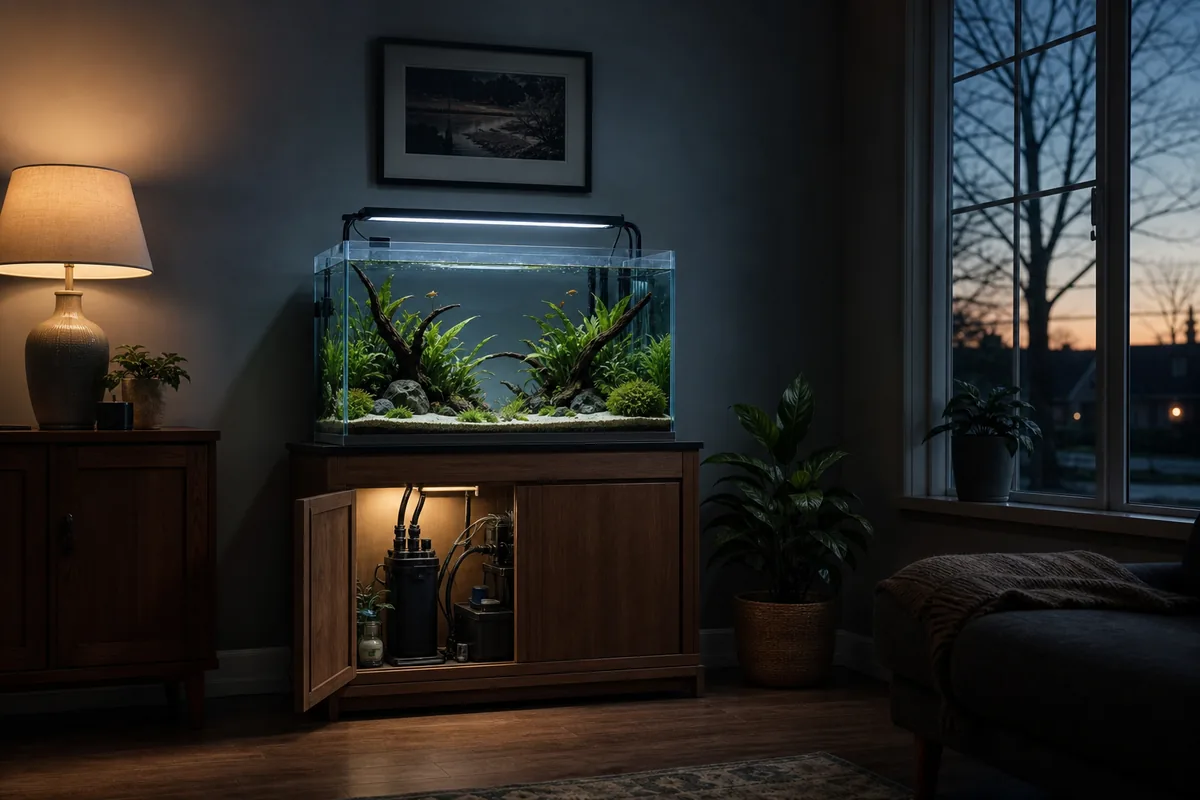
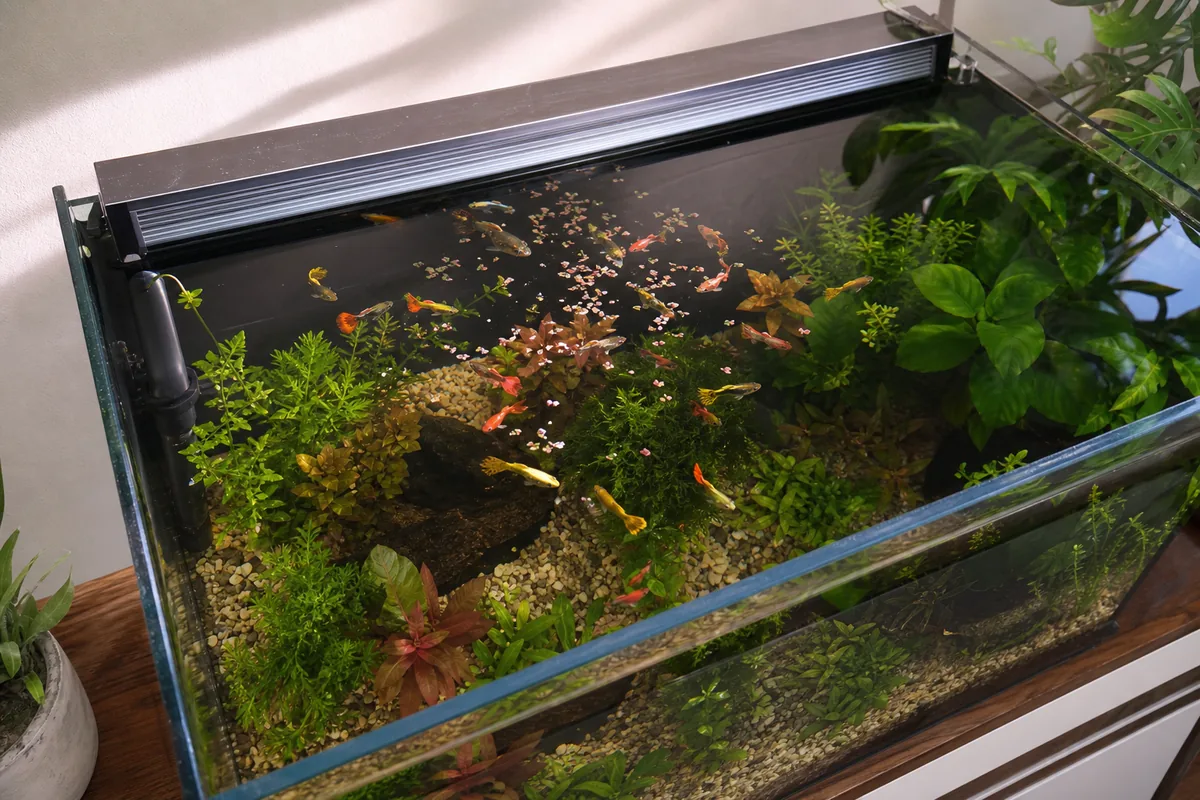
Plants, open swimming lanes, and sensible sex ratios matter as much as species choice. A solid guppy tank setup solves half the compatibility problems before the second species even enters the water.
- Start light: add one compatible group at a time instead of filling every layer at once
- Watch sex ratios: too many males can make the whole tank feel competitive and frantic
- Leave cover: plants and hardscape give weaker fish a chance to break line of sight
- Plan for fry: breeding can change stocking pressure much faster than beginners expect
What Should You Choose?
Choose calm tank mates that either stay lower in the tank or simply ignore guppy fins. Corydoras, platies, selected mollies, and some invertebrates usually give you the cleanest community result.
Avoid fish that nip, chase, or crowd the same upper-water space all day. Guppies thrive in peaceful movement, not constant negotiation.
Sources and references
- Guppy Fish Care SheetPetMD
- Guppy Care Sheet PDFAquarium Industries
- Best Guppy Tank MatesAqulator