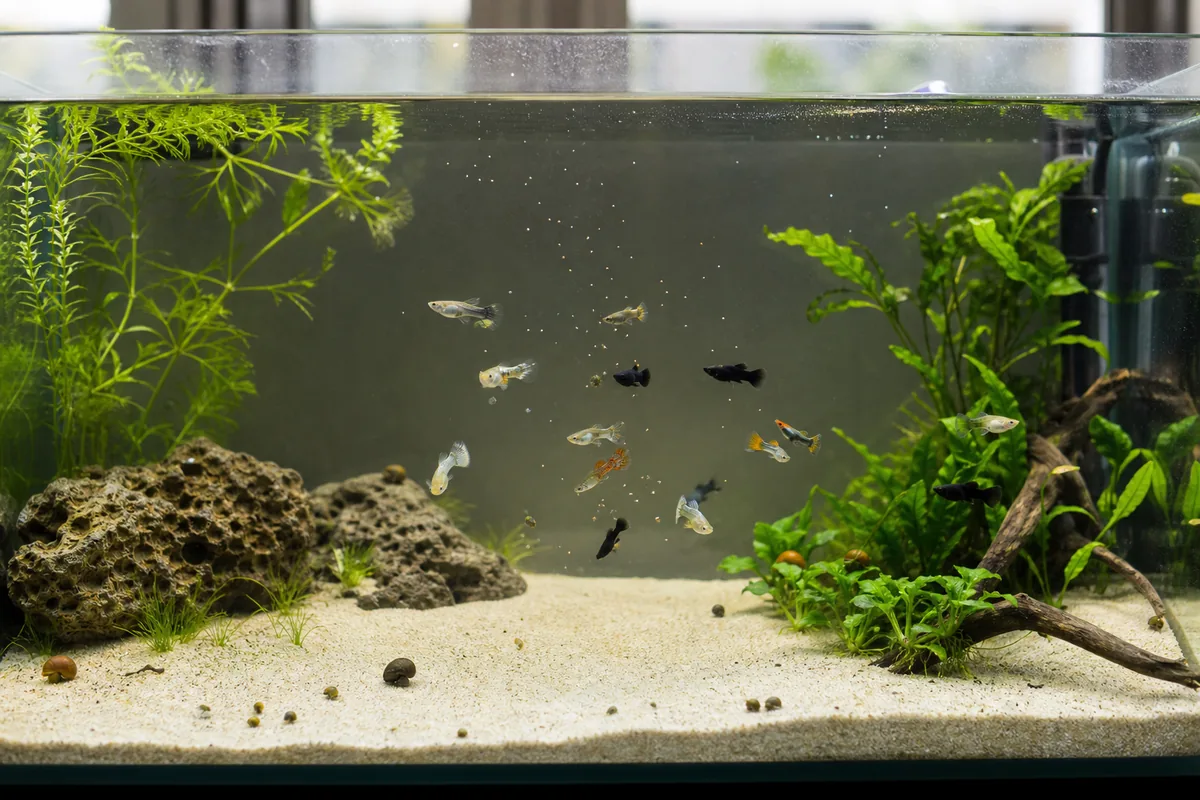
Compatibility verdict
- Guppy + MollyDependsSame family, different water hardness needs. A pH of 7.8 and moderate hardness is the workable middle ground.
Why Guppies and Mollies Can Live Together in a 30-Gallon Tank
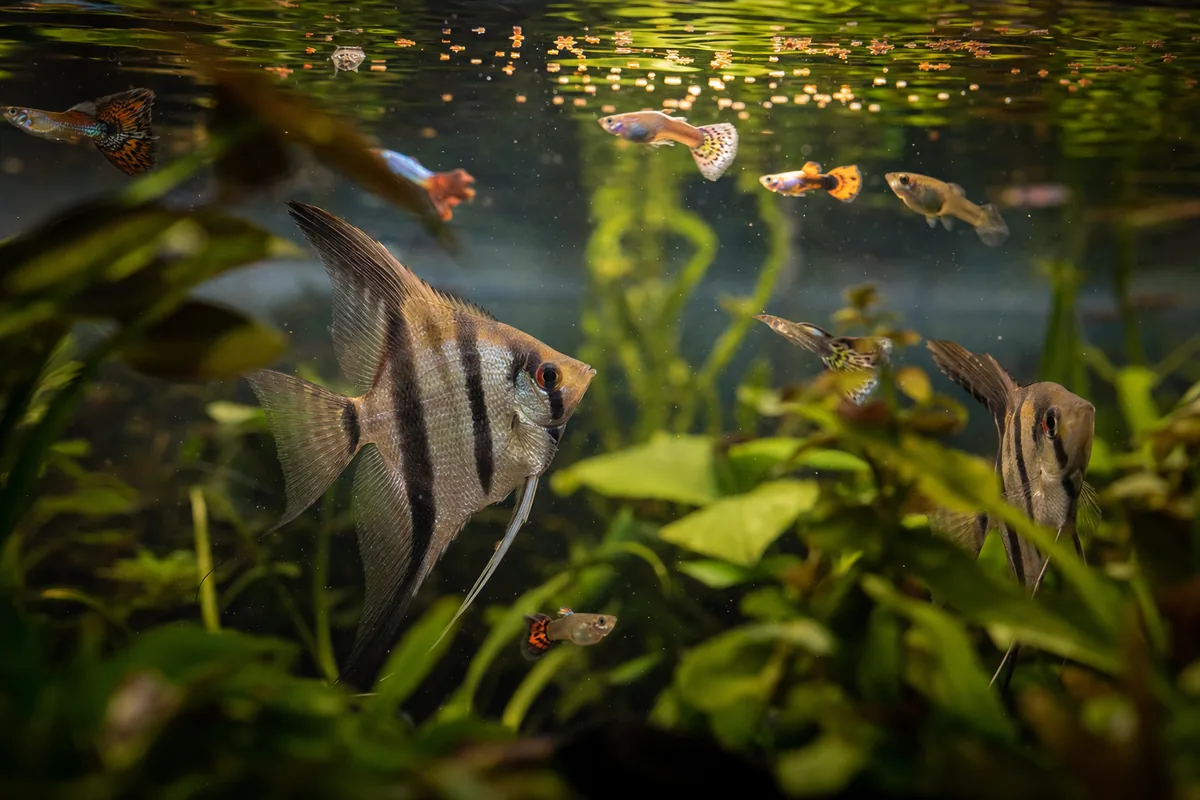
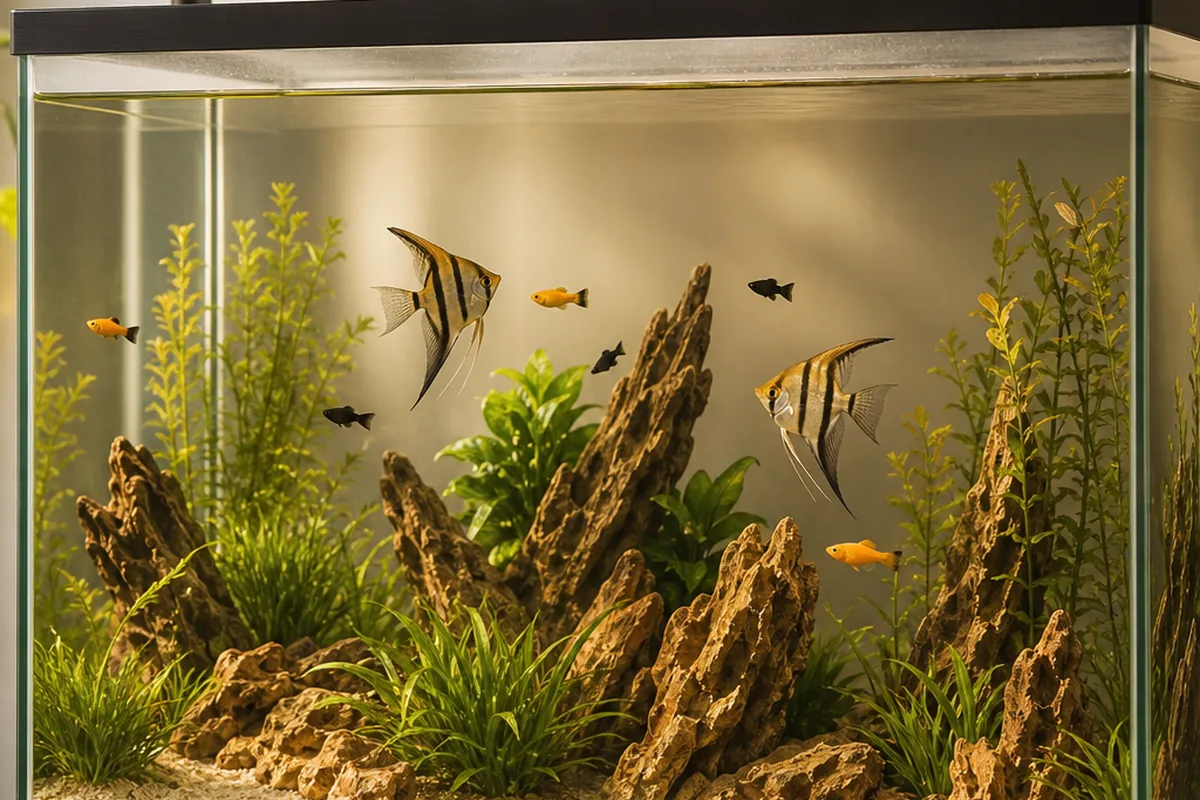
Both species belong to the family Poeciliidae and share the same basic biology: live-bearing, omnivorous, and non-territorial toward other species. Guppy behavior is calm and social, and mollies match that temperament.
The 30-gallon minimum is not arbitrary. A 20-gallon squeezes the molly group too tight, and tight quarters raise stress cortisol, which suppresses immune function.
- Shared temperament: Both are peaceful, mid-water swimmers with no territory to defend
- Compatible diet: Both accept quality flake, micro-pellets, and blanched vegetables
- Similar activity cycle: Both are diurnal and active during the same hours
- Livebearer reproduction: Fry from both species behave the same way and can be managed together
- Predator response: A mixed group schools loosely when startled, reducing individual stress
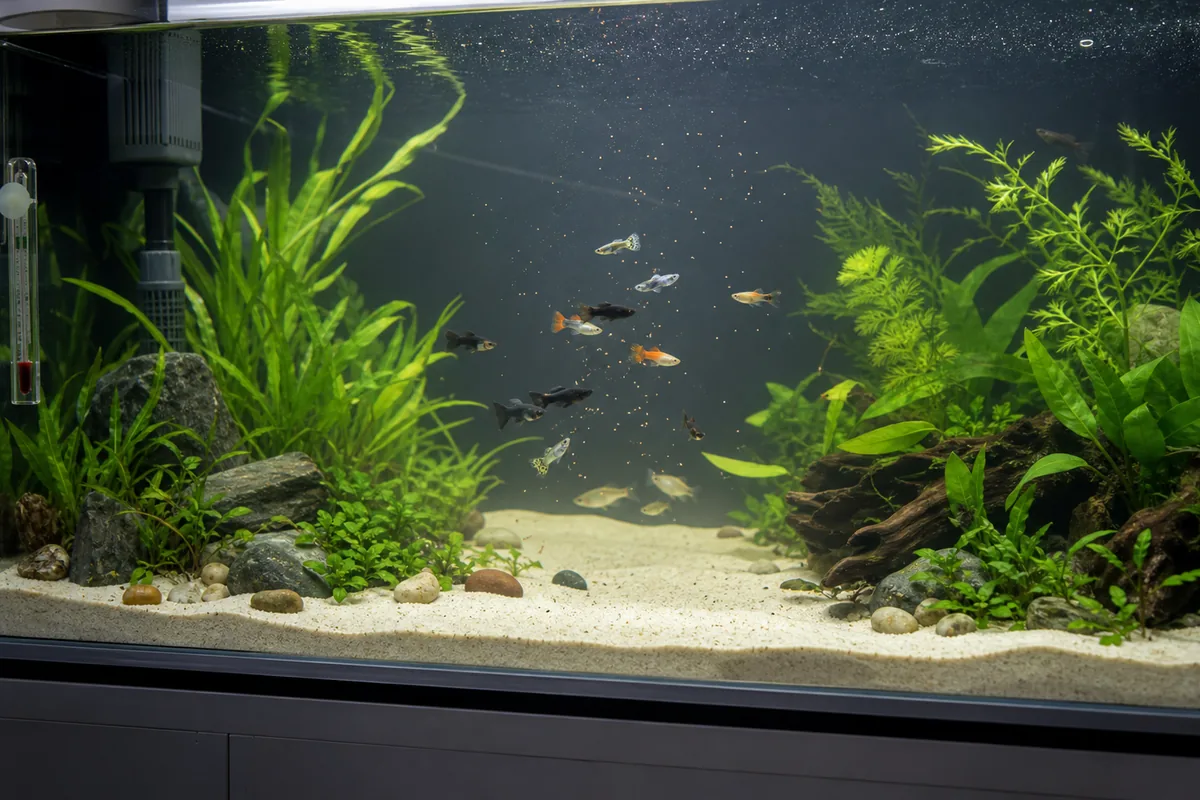
The Water Hardness Gap Between Guppies and Mollies: 3-30 dGH
Mollies thrive in hard, alkaline water. Wild molly populations in coastal Mexico and Central America inhabit brackish estuaries with high mineral content.
Guppies come from softer, warmer streams in Trinidad and Venezuela.
When you try to house both species, you are asking one of them to live outside its optimal range.
| Parameter | Guppy Range | Molly Range | Overlap Zone |
|---|---|---|---|
| Temperature | 72-82°F | 75-82°F | 75-82°F |
| pH | 6.8-7.8 | 7.5-8.5 | 7.5-7.8 |
| Hardness (dGH) | 3-12 | 15-30 | 10-15 (suboptimal for both) |
| Salinity | Tolerates low salt | Benefits from 1 tbsp/5 gal | Very low salt acceptable |
| Adult size | 1.5-2.5 in | 3-4.5 in | N/A |
The hardness overlap is the narrowest window. Mollies kept at 10-12 dGH will survive but often develop molly disease: shimmying, clamped fins, and wasting that correlates with chronically soft water.
Hybridization Risk: What Guppies and Mollies Can Actually Produce
Because both species are Poeciliidae livebearers, cross-breeding is biologically possible. Male guppies are opportunistic breeders and will attempt to fertilize any female livebearer in the tank.
- Guppy-molly hybrids: Confirmed in aquarium settings, not just theoretical
- Hybrid offspring: Usually show reduced fertility and mixed physical traits
- Female mollies: Bear the harassment burden because of size and livebearer signaling
- All-male guppy groups: Eliminate breeding attempts entirely if you want clean separation
If you want species-only breeding lines or plan to sell fry, do not mix the two species.
8 Success Requirements for Guppies and Mollies Together
- Active feeding: Both species within 30 seconds of food introduction
- Normal swimming posture: Dorsal fins erect and no listing
- Molly group foraging: On algae and tank surfaces between feedings
- Guppy coloration: Staying vivid, not fading or turning pale
- No visible chasing: Beyond brief molly-on-molly social interactions
Pros
- Social compatibility is high, no aggression between species
- Both eat the same food types and feeding schedule
- Active, visible fish that use the full water column
- Good starter combination for a community livebearer tank
Cons
- Water hardness compromise leaves both species suboptimal
- Hybridization risk requires ratio management
- Mollies need more space than beginners expect (30 gal minimum)
- Aquarium salt for mollies complicates adding salt-sensitive species later
Failure Signs: When Guppies and Mollies Are Not Compatible
Not every tap water source can reach the compromise parameters without significant intervention. If your tap water runs soft (under 5 dGH) and acidic (pH below 7.2), raising it to molly-acceptable levels requires constant buffering.
- Molly shimmying: Within the first 2 weeks, before a disease vector is established
- Guppy fin fraying: With no visible fin-nipper in the tank
- One species hovering: Near the heater or surface more than 20 minutes at a stretch
- Refusal to feed: Beyond 48 hours after introduction, with no ammonia spike present
- pH crashing: More than 0.5 units between weekly water changes
If you see two or more of these signals in the same week, separate the species. House the mollies in their own hard-water tank and the guppies in a separate 10-gallon stocking setup at their preferred parameters.
Easier Alternatives for Guppies or Mollies
Better partners and third-species additions
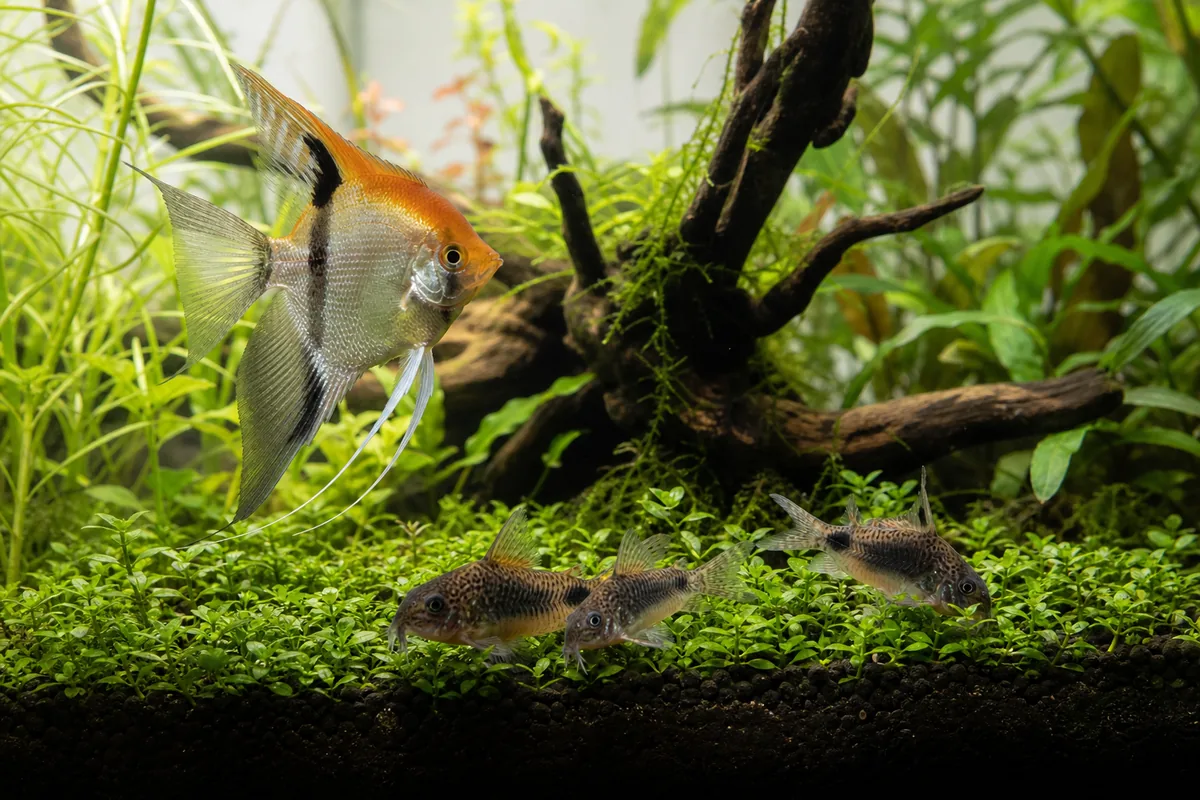
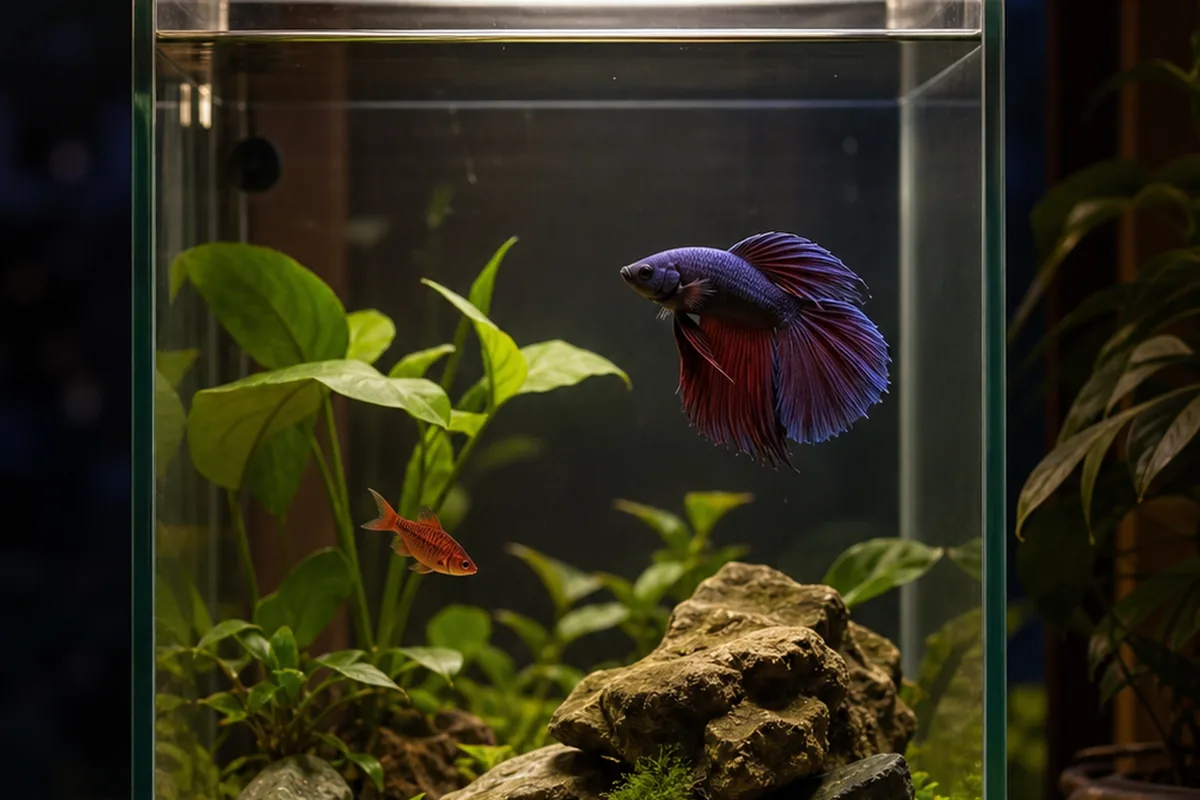
Better partners for guppies: Platies: Overlapping pH and hardness range, similar size, same calm temperament Cherry barbs: Add color without competing for resources; same soft-moderate water Corydoras: Clean the bottom and share the guppy soft-water range Bristlenose pleco: Handles algae and is fully compatible with guppy parameters Better partners for mollies: Swordtails: Prefer the same hard water, pH 7.5-8.2, and share livebearer temperament Hard-water tank mates: Include several cichlid-adjacent species that handle the mineral load Amano shrimp: Tolerate moderate salinity and benefit from the molly salt dose For smaller tanks, review our 5-gallon stocking options. Mollies are too large for that footprint, but single-species guppy trios work well.
Sources and references
- Water quality parameters for Poecilia reticulata and P. sphenopsof Fish Biology, Vol. 84, 2014
- Livebearer hybridization in PoeciliidaeCopeia, ASIH, 2009
- Brackish water tolerance in Poecilia sphenopsof Florida IFAS Extension