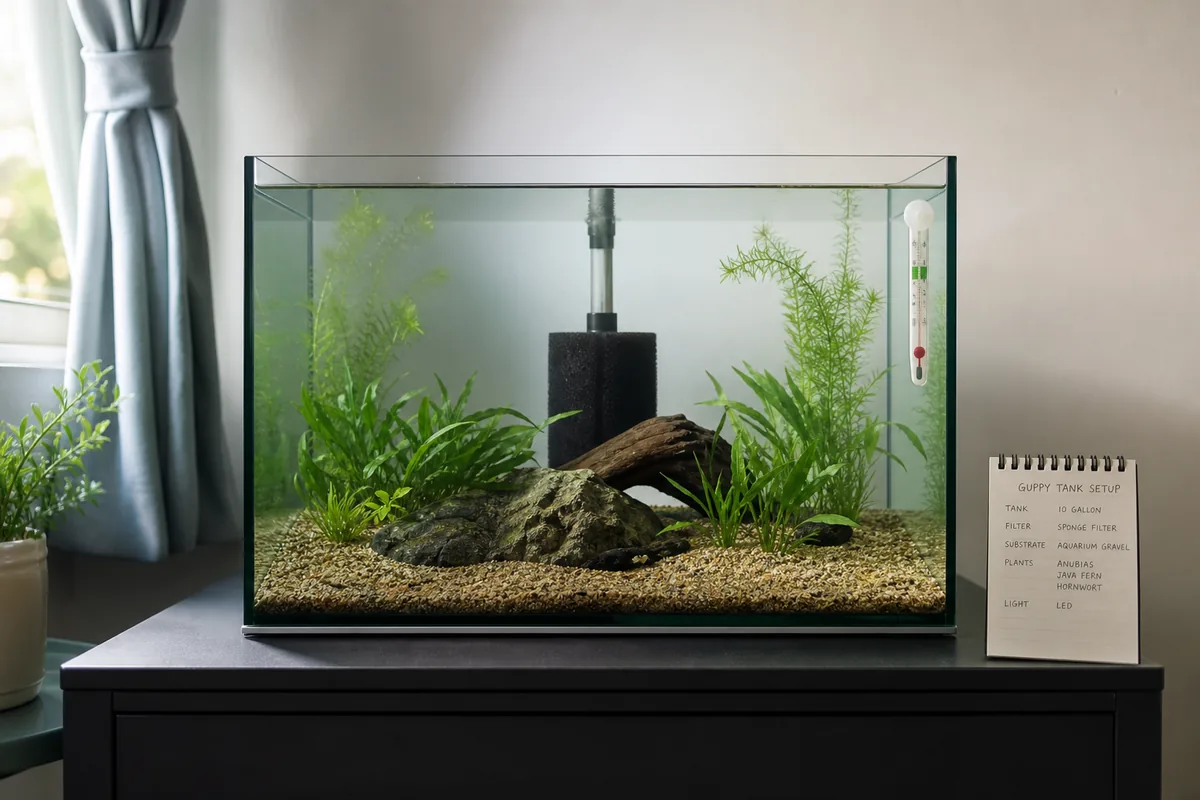
Guppies are forgiving compared with many aquarium fish, but they still punish rushed setup decisions. Good community tank planning starts with tank size, filtration, cycling, and a layout that supports steady maintenance.
That matters because guppies breed, eat, and socialize fast. Our main guppy guide covers the fish itself.
This page focuses on building the tank correctly for a beginner.
If you want a community later, plan for it now instead of retrofitting the layout afterward. Our guppy tank mate guide helps once the base setup is stable enough to support more than the starter group.
Why Does Tank Size Matter More Than A Fancy Kit?
Guppies are small, but a tiny tank still creates unstable water and social crowding. A larger beginner tank is easier to cycle, easier to heat, and easier to keep clean when the fish start breeding.
Most beginners do better with a 10-gallon or larger setup instead of chasing the smallest possible footprint. Extra water volume gives you more margin when feeding, stocking, and cleaning are not perfect yet.
If you are tempted to cram them into the smallest possible aquarium, read our 10-gallon stocking guide first. It shows how quickly a tank stops being simple once you overload it.
- Better stability: more water volume slows down waste swings and temperature changes
- Better social space: guppies can sort out movement and hierarchy with less stress
- Better growth path: plants, fry management, and extra tank mates fit more cleanly
- Better maintenance: cleaning and filter placement feel easier in a roomier tank
What Equipment Do You Actually Need?
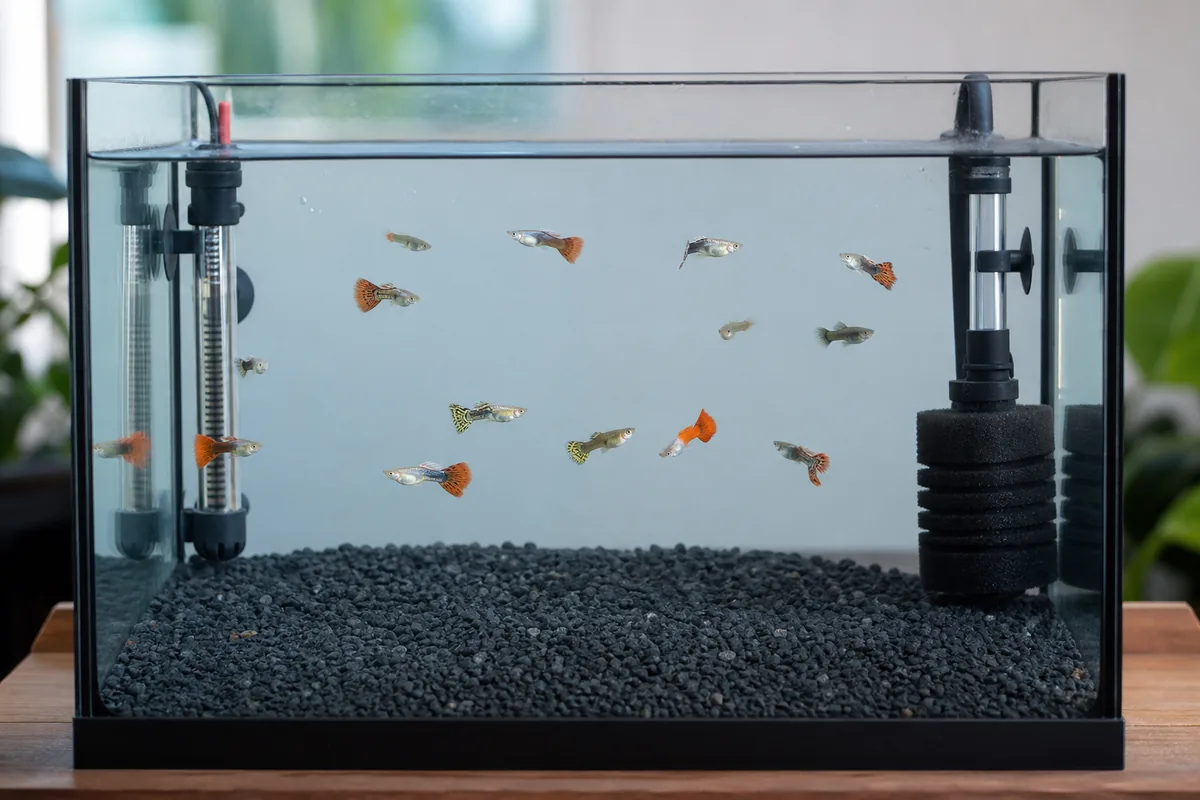
You need a cycled aquarium, dependable filtration, and a heater if the room is not consistently warm enough. You also need lighting that matches the plant plan and a lid that limits evaporation and jump risk.
You also need water tests you will actually use. Guppies may survive sloppy care longer than delicate fish, but the goal is not survival.
The goal is a stable, active colony.
| Area | Practical Baseline | Why It Matters |
|---|---|---|
| Tank size | 10-20 gallons or more | Improves stability and gives guppies room to breed and move |
| Filtration | Steady, gentle flow | Keeps water clean without battering small fish or fry |
| Plants | Use easy stem or floating plants | Adds cover, breaks lines of sight, and helps fry survival |
| Stocking plan | Keep it light at first | Prevents waste spikes and uncontrolled crowding |
How Should You Plant And Stock The Layout?
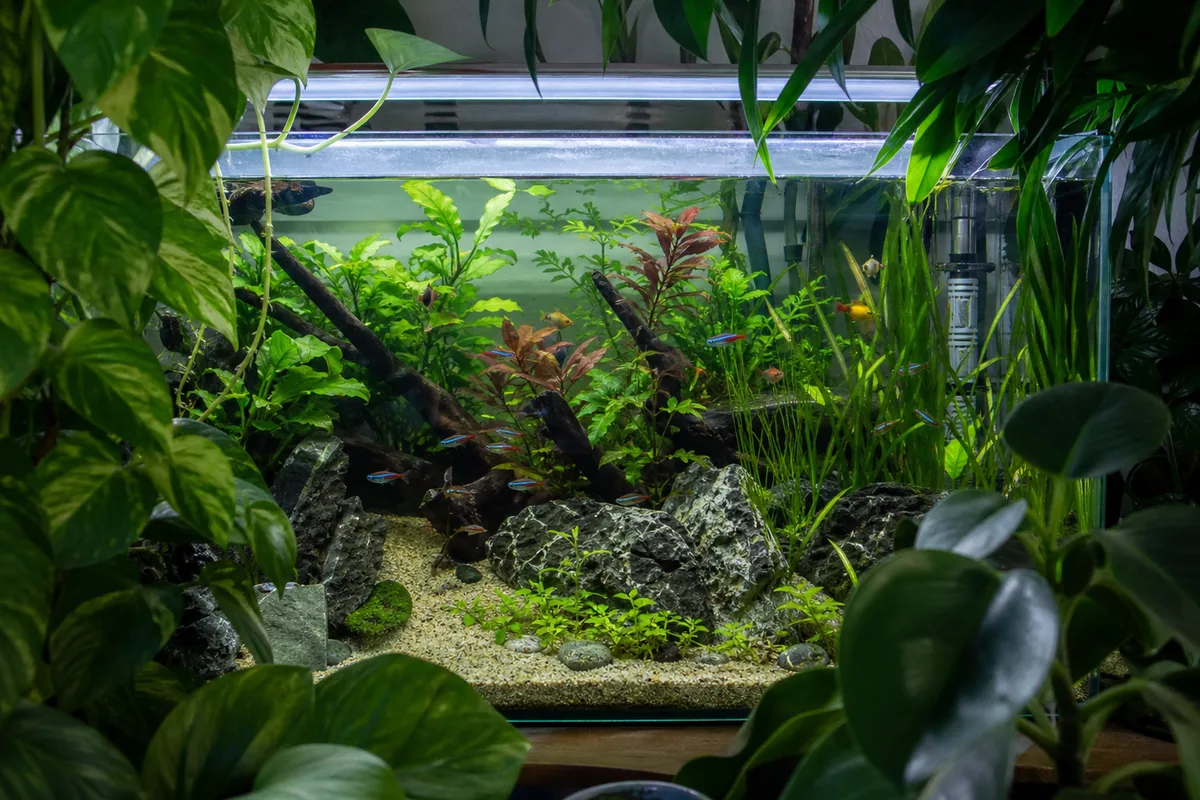
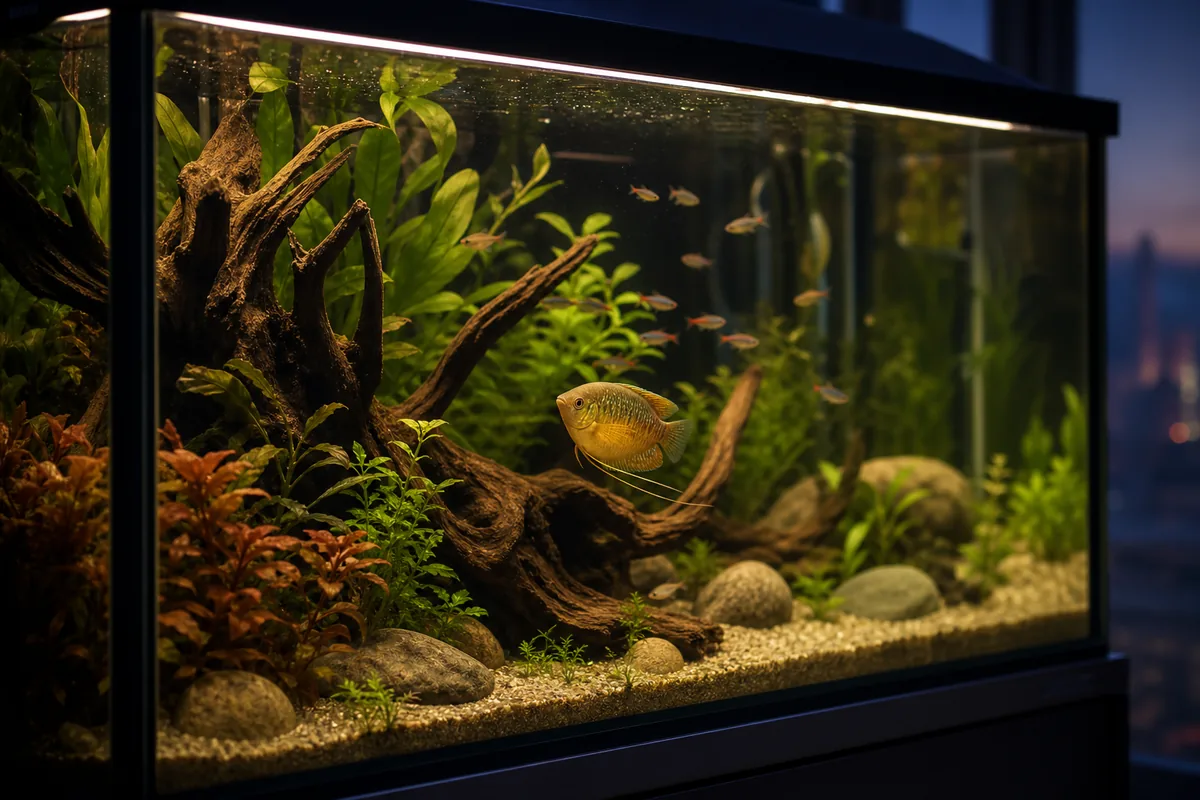
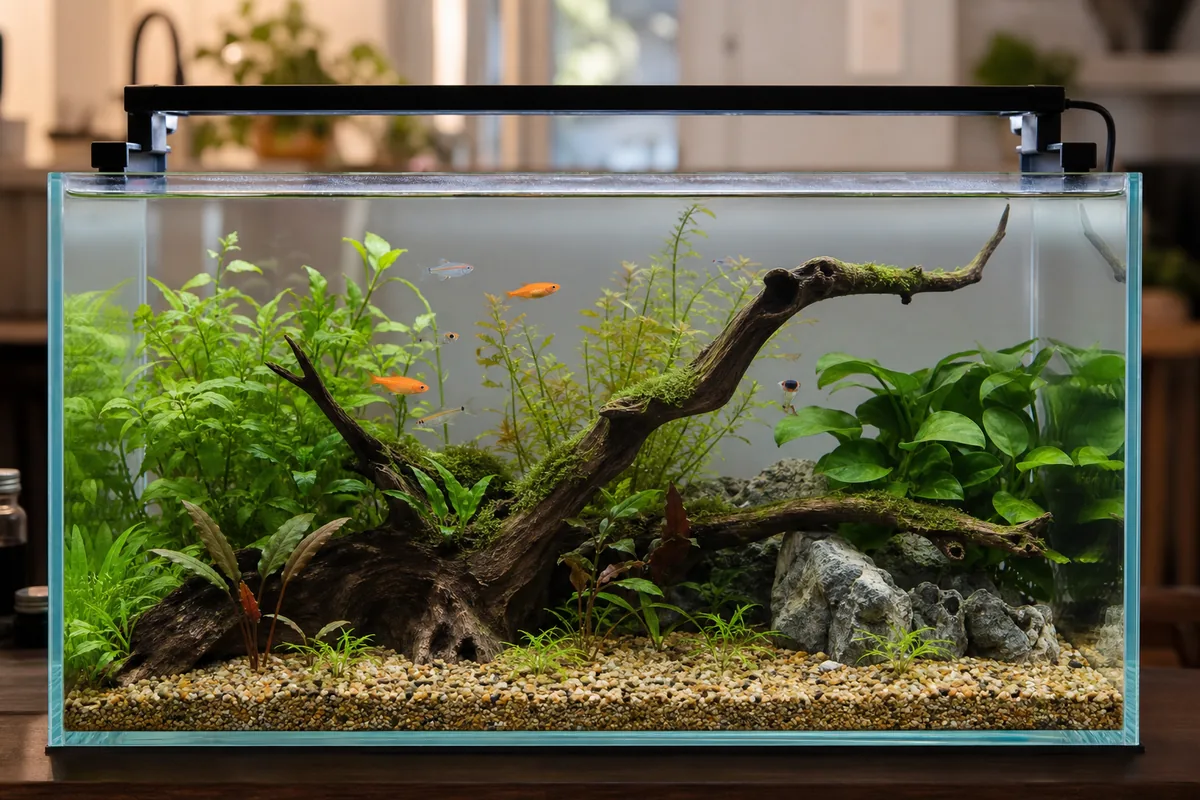
Guppies use the upper and middle portions of the tank most, so leave open swimming lanes there. Use plants and structure around the back and sides to create cover without turning the aquarium into a wall of stems.
Bottom dwellers and calm community fish usually fit best once the setup is stable. Species such as peaceful corydoras, calm platy groups, or selected molly strains can work well.
The tank still needs room and a sensible social balance before you add them.
Avoid stocking by impulse. Fast swimmers like zebra danios may be active and hardy.
They change the whole feel of the tank if you add them to a layout built only for calm guppy movement.
- Keep lanes open: guppies need visible swimming room in the upper and middle tank
- Keep cover ready: plants and structure help reduce stress and protect fry
- Keep stocking light: let the setup prove stable before you add more fish
How Do You Set Up A Guppy Tank Step By Step?
Build the system in a clean order and do not rush the cycle. The easiest guppy tank is the one that proves stable before the fish ever enter the water.
- Choose the tank sizePick a tank that gives you room for filtration, plants, and a starting group without crowding. A little extra volume makes the learning curve much easier.
- Install substrate and equipmentAdd the substrate, filter, heater if needed, and thermometer before filling the tank completely. Make sure the hardware is working the way you expect before livestock is part of the equation.
- Plant the layoutAdd easy plants and leave open swimming space through the front and top half of the tank. Think in terms of movement lanes, not just decoration.
- Cycle the aquariumRun a full fishless cycle and confirm stable readings before buying guppies. A rushed start is the fastest way to turn a hardy fish into a stressed one.
- Add the starter groupIntroduce a sensible first group and resist the urge to stock every open inch immediately. Watch appetite, activity, and water tests closely through the first weeks.
- Adjust slowlyOnce the fish settle, make only gradual changes to feeding, stocking, or layout. Slow adjustments help you catch mistakes while they are still small.
Which Beginner Mistakes Cause Trouble Fast?
The fastest mistakes are tiny tanks, rushed cycling, and ignoring how quickly guppies multiply. A setup that looks lightly stocked at purchase can become crowded fast once fry start surviving.
Another common mistake is treating hardy fish like disposable testers. Guppies do better when the system is ready first and the social plan stays under control from the start.
How Do You Maintain And Grow The Setup Safely?
Keep the routine simple: stable temperature, regular testing, measured feeding, and steady water changes. When the tank stays clean and lightly stocked, guppies usually show you that health through constant movement, color, and appetite.
If you want to expand later, do it one careful change at a time. That means adding tank mates slowly, managing fry intentionally, and keeping the layout easy to maintain instead of endlessly rebuilding it.
The best beginner guppy tank stays boring in the best way. It runs predictably, cleans up easily, and gives the fish enough room to behave like guppies instead of surviving your experiments.
Sources and references
- Guppy Care Guide: Setup, Feeding, & Compatibility for BeginnersPetco
- Guppy Care Sheet PDFAquarium Industries
- Guppy Fish Care SheetPetMD