Understanding food limits for chickens is one of the first things a keeper learns the hard way: just because a bird will eat something eagerly does not mean it should. Crackers sit at the center of that lesson.
The flock will sprint across the run for a crumbled saltine. That enthusiasm is not an endorsement of the food's suitability.
It is the same drive that makes chickens eat styrofoam pellets if given the chance.
Crackers are technically safe in very limited circumstances. But the conditions that make them safe are specific, and most crackers on a kitchen shelf do not meet them.
Crackers for Chickens
- Plain unsalted whole wheat crackersSafe
- crumbled smallSafe
- plain water crackers with no added salt or flavoringSafe
- Saltines and salted crackers (high sodium)Unsafe
- graham crackers (added sugar)Unsafe
- cheese crackers (artificial flavoringUnsafe
- sodiumUnsafe
- additives)Unsafe
- flavored cracker varieties of any kindUnsafe
- crackers with onionUnsafe
- garlicUnsafe
- or seasoningUnsafe
Prep: Crumble into small pieces no larger than a pea; never offer whole crackers that can cause crop impaction; serve dry, not soaked Freq: No more than once every two weeks as an occasional novelty treat Amount: 1-2 crackers per hen per session, crumbled; never as a meal supplement or regular scratch addition
Below: why sodium is the primary concern, a breakdown of the most common cracker types, how crackers compare to better grain alternatives, and the exact conditions under which offering one is acceptable.
Why Crackers and Chickens Are a Poor Match: The Sodium Problem
Chickens are significantly more sensitive to dietary sodium than most backyard keepers realize. A hen's kidney system manages salt excretion at a narrow margin, and excess sodium overwhelms that system quickly.
Saltines deliver 1,100mg of sodium per 100g. A single saltine cracker weighs roughly 3g, which puts one cracker at about 33mg of sodium.
That sounds modest until you consider the flock dynamic: a keeper who crumbles four saltines and tosses them into a run with six hens is distributing a meaningful sodium load to whoever eats the most.
Clinical signs of sodium toxicity in chickens include excessive thirst, wet droppings, and in severe cases, neurological symptoms. Sub-clinical excess, where birds consume sodium above their threshold but not to crisis levels, shows up as kidney stress that accumulates over time.
The sodium concern is compounded by the fact that crackers offer nothing in return. A treat that carries risk is only worth the tradeoff when it delivers meaningful nutrition.
Crackers do not clear that bar.
Cheese presents a similar sodium problem alongside high fat content.
Hard aged cheeses like parmesan carry enough salt to approach a hen's daily limit in a single tablespoon serving.
Our cheese feeding guide breaks down why cottage cheese is the only dairy option worth including in a treat rotation.
Cracker Types Compared: Which Are Safest for Chickens
Not all crackers carry identical risk. Understanding the specific problem with each common type helps keepers make a faster decision when the question comes up in practice.
| Cracker Type | Main Concern | Sodium (per 100g) | Verdict |
|---|---|---|---|
| Saltine crackers | Very high sodium | ~1,100mg | Avoid |
| Graham crackers | Added sugar, some sodium | ~450mg | Avoid |
| Cheese crackers (e.g., Goldfish, Cheez-It) | Artificial flavor, high sodium | ~900-1,000mg | Avoid |
| Butter crackers (e.g., Ritz) | Added fats, sodium | ~650mg | Avoid |
| Plain water crackers (unsalted) | Empty calories, low fiber | <50mg | Conditional |
| Plain whole wheat crackers (unsalted) | Empty calories, marginally better | <50mg | Conditional |
| Any seasoned or flavored variety | Multiple additives, high sodium | Varies, usually high | Never |
Plain unsalted whole wheat crackers are the only variety worth considering. The whole wheat component adds trace fiber that standard saltines lack entirely.
Even then, the nutritional contribution is negligible compared to what the same crop space could hold if filled with actual feed or a productive treat.
For a practical baked goods comparison, bread and crackers share the same fundamental problem: both are processed carbohydrates with low nutritional density. Bread at least carries some yeast-derived B vitamins and a softer texture that reduces crop risk.
Plain crackers offer neither advantage.
Corn is another carbohydrate-dense treat, but it delivers a real thermogenic benefit in cold weather that crackers do not. Our corn feeding guide covers how cracked corn generates body heat overnight on the roost and exactly how much to feed without displacing layer pellet protein.
Key facts
- Saltine Calories
- 421 kcal per 100g, nearly all from refined carbohydrates
- Saltine Sodium
- 1,100mg per 100g, far above safe treat thresholds
- Carbohydrates
- 71g per 100g in saltines, with minimal fiber
- Protein
- ~9g per 100g, but from refined flour with low bioavailability
- Graham Crackers
- Add sugar on top of sodium, compounding the concern
- Cheese Crackers
- Introduce artificial flavoring and colorants with no feed value
- Safe Threshold
- Only unsalted plain varieties with under 50mg sodium per 100g
- Max Frequency
- Once every two weeks, 1-2 crackers per hen crumbled small
What Crackers Do to Crop Space: The Empty Calorie Problem
A chicken's crop is a fixed-volume storage organ. Whatever fills that crop after morning feed is released determines how much nutritional content moves through the digestive system over the next several hours.
Crackers fill crop space without contributing protein, meaningful vitamins, or minerals that support egg production or feather quality. A hen that eats two large crackers has reduced her available crop volume for the layer pellets and productive treats that would have occupied that same space.
Think of crackers as junk food for chickens in the most literal sense: calorie-dense, nutrition-absent, and appealing primarily because of texture rather than any instinctive nutritional signal.
Cooked eggs fill crop space far more productively.
At 13g of protein per 100g, scrambled eggs are one of the most efficient treats for supporting molt or post-illness recovery.
Our egg feeding guide covers the essential cooking rules and how often to include them in a weekly rotation.
- Crackers deliver no protein contribution to the daily laying budget.
- They carry no vitamins relevant to egg production or immune function.
- High sodium varieties actively stress kidney function.
- Sugared varieties (graham crackers) disrupt gut flora over repeated exposure.
- Artificial flavors in cheese crackers have no business in a laying hen's diet.
A Leghorn layer diet is particularly sensitive to treat quality because Leghorns are high-output egg producers with correspondingly high nutritional demands. A treat that crowds out quality feed without contributing to that demand works against what the breed needs most.
How to Feed Crackers Safely When You Choose To
If a keeper decides to offer crackers as an occasional novelty, the approach matters as much as the cracker type. Whole crackers carry a small but real crop impaction risk if birds attempt to swallow large pieces.
Crumbling eliminates that concern entirely.
- Use only plain unsalted whole wheat or plain water crackers. Read the sodium line on the label before offering anything.
- Crumble into pieces no larger than a pea before scattering. Never hand-feed whole crackers to the flock.
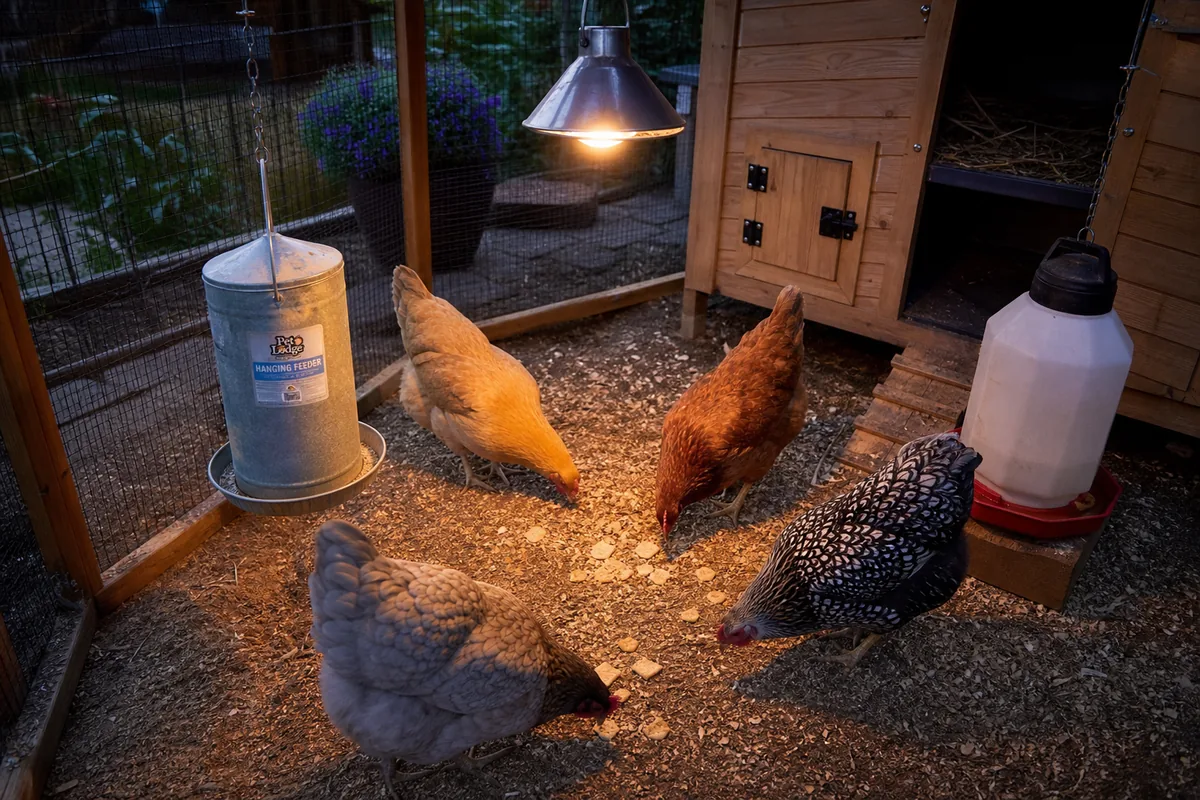
- Scatter the crumbles across the run rather than offering in a dish. Scatter feeding prevents one dominant hen from consuming the full portion.
- Limit to 1-2 crackers per hen, once every two weeks at most. This keeps the treat within the 5-10% daily supplemental budget without becoming a recurring sodium or empty-calorie source.
- Do not offer crackers on the same day you plan to reduce layer pellet access for any reason. The crop space tradeoff matters most when feed access is already constrained.
Better Grain Treat Alternatives
Every situation where a keeper considers offering crackers has a better answer available. The alternatives are not obscure or expensive.
Most are already in a kitchen or available at any feed store.
For healthier grain picks, oats are the clearest comparison point. Where crackers deliver 421 calories per 100g with almost no nutritional return, oats deliver 389 calories per 100g alongside 13g of protein, 10.6g of fiber including beta-glucan, and a nutrient profile that actually contributes to the daily laying budget.
For texture variety, which is what crackers primarily offer the flock, there are better options at every calorie level.
- Rolled oats: Scatter raw in the run for the same foraging behavior crackers produce, with genuine protein and fiber in return. No prep required.
- Cooked plain rice: Soft texture, easily digestible, zero sodium, and a useful gut-rest food after digestive disruption. See the grain treat options comparison for how rice stacks up.
- Black oil sunflower seeds (BOSS): High fat and vitamin E, beneficial for feather quality, and a foraging challenge the flock works for actively.
- Plain air-popped popcorn (unsalted, unbuttered): Satisfies the crunchy texture appeal without the sodium, and is lower in sodium than any commercial cracker.
- Dried mealworms: High protein, zero sodium, and one of the few treats that actively contributes to the laying budget rather than simply filling space.
Any of these options delivers the novelty and texture engagement that makes crackers appealing, without the sodium load or nutritional vacuum that makes crackers a poor regular choice.
Live crickets released into the run deliver the same foraging excitement as crumbled crackers without any sodium or empty calories. Our cricket feeding guide explains why a release of 20 to 30 crickets keeps a confined flock actively hunting for up to 90 minutes.
Fish is a high-protein alternative that also satisfies the novelty factor for a flock accustomed to the same treats. Our fish feeding guide covers why canned sardines in water are the fastest, most affordable option and which species to avoid.
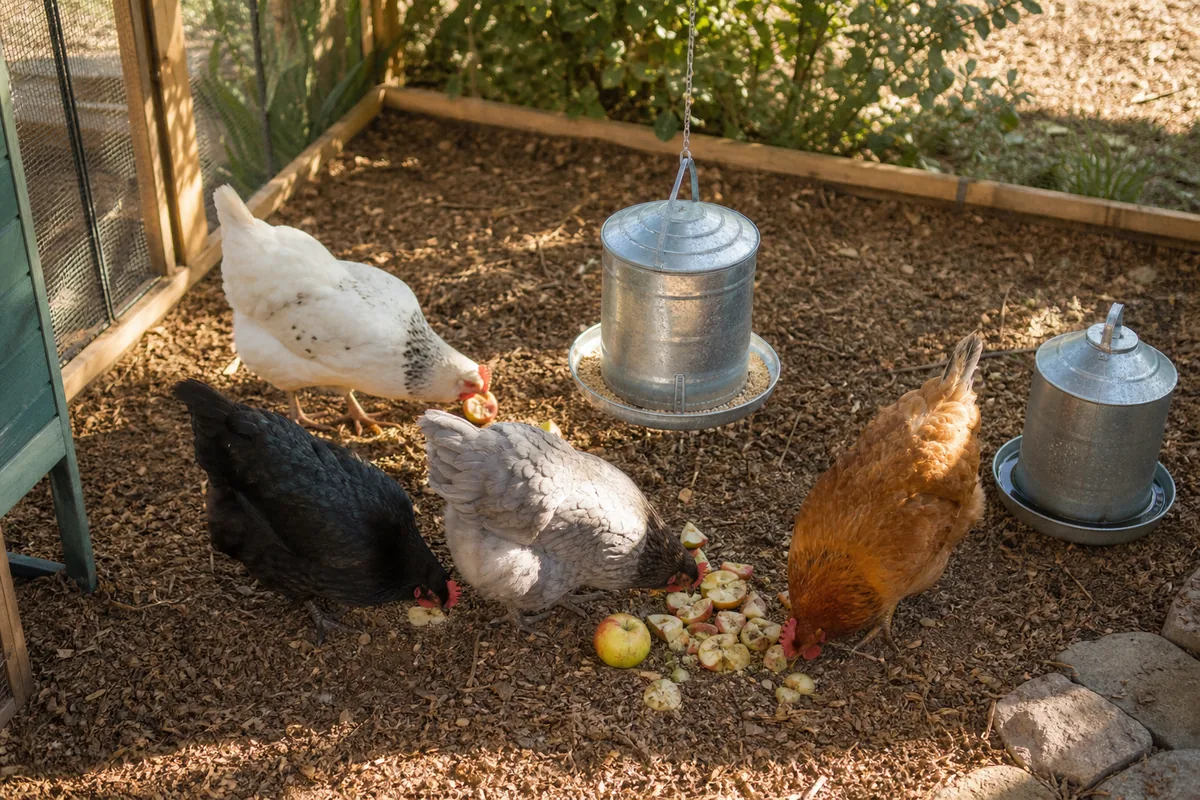
For a fruit-based crunch treat that delivers actual vitamins, apples are worth adding to the rotation. Our apple feeding guide covers the one prep step required: removing the core to eliminate the amygdalin risk from seeds before the pieces hit the run floor.
Sources and references
- Sodium toxicity in poultry: clinical signs, thresholds, and dietary managementMerck Veterinary Manual, Poultry Section: Salt Toxicosis
- Nutrient requirements of poultry, 9th revised editionNational Research Council, National Academies Press, 1994
- Poultry feed supplementation: guidelines on treats, scraps, and non-feed itemsPenn State Extension, Poultry Production Resources