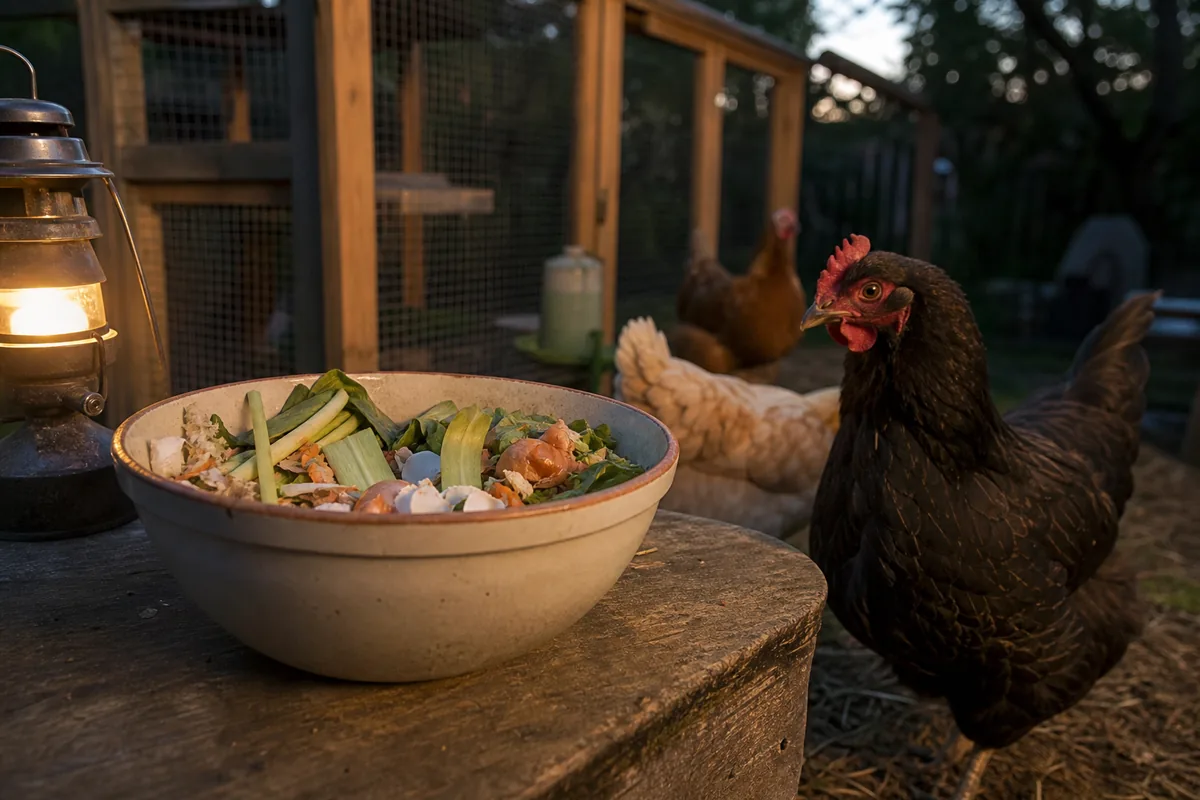
Chickens need balanced flock diet before any treat list matters. A complete layer, grower, or starter feed supplies the protein, calcium, phosphorus, amino acids, vitamins, and trace minerals that kitchen scraps cannot reliably cover.
Think of safe foods as add-ons. They can add moisture, color, foraging interest, and small nutrient boosts, but they should not replace the ration your birds are built around.
Foods For Chickens
- leafy greensSafe
- most vegetablesSafe
- plain cooked grainsSafe
- berriesSafe
- melonSafe
- mealwormsSafe
- plain cooked eggsSafe
- chocolateUnsafe
- moldy feedUnsafe
- avocado pit and skinUnsafe
- coffee groundsUnsafe
- very salty scrapsUnsafe
- raw dried beansUnsafe
- onion-heavy leftoversUnsafe
Prep: wash produce, chop firm foods, remove spoiled pieces, serve plain Freq: daily greens, occasional fruit and starch treats Amount: treats under 10% of daily intake
What Can Chickens Eat Every Day Without Unbalancing Feed?
Chickens can eat leafy greens, clean weeds, sprouted grains, and small vegetable portions most days. These foods add texture and keep birds busy without pushing the ration far off track.
Greens work best when they are fresh and free from herbicide drift. Romaine, kale, cabbage leaves, beet greens, dandelion greens, clover, chickweed, and grass clippings from untreated lawns all fit this safer daily group.
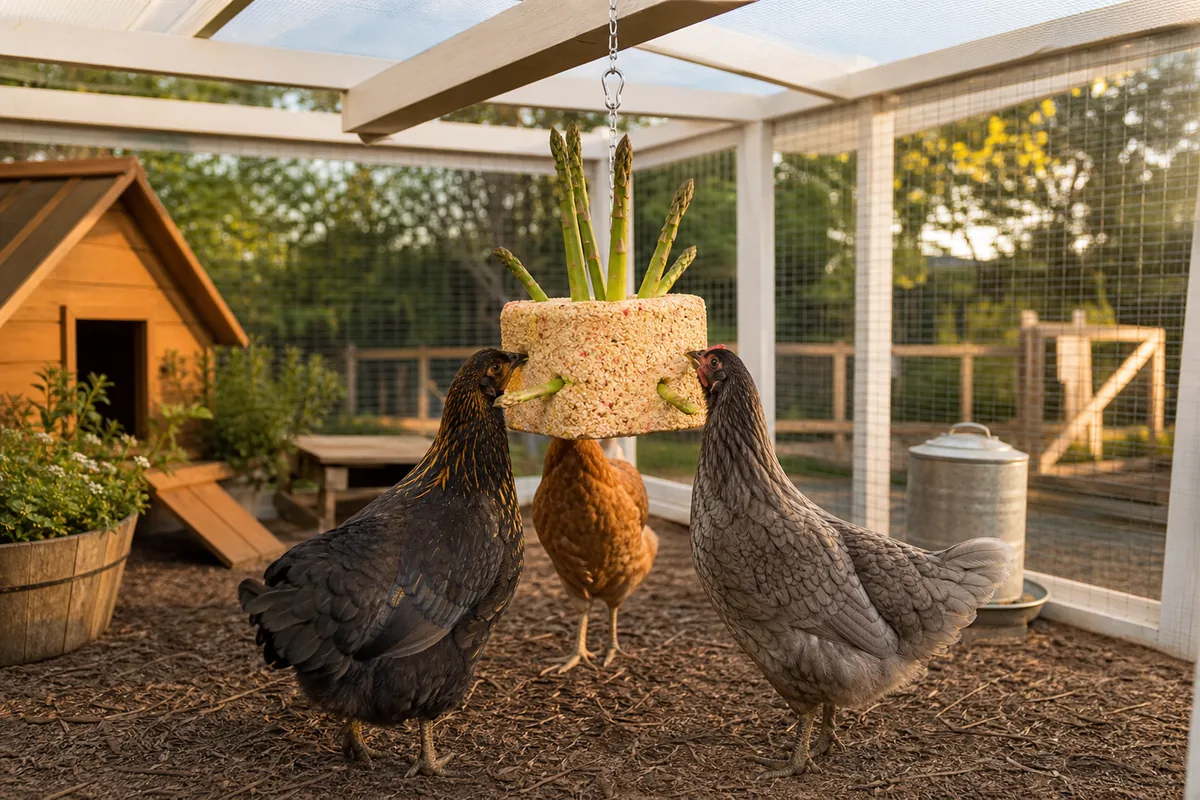
- Leafy greens: Serve chopped leaves or hang a whole cabbage for pecking activity.
- Clean weeds: Offer dandelion, clover, and chickweed only from unsprayed areas.
- Garden extras: Use outer lettuce leaves, beet tops, and overgrown herbs before they wilt.
- Sprouted grains: Feed small trays when you want winter greens without fresh pasture.
Greens still need a ceiling. If birds leave pellets behind after a large greens pile, the treat portion is too big.
Vegetables with high water content help most during heat. Our cucumber feeding guide shows why watery produce can cool a flock without adding much sugar.
What Vegetables Can Chickens Eat Safely?
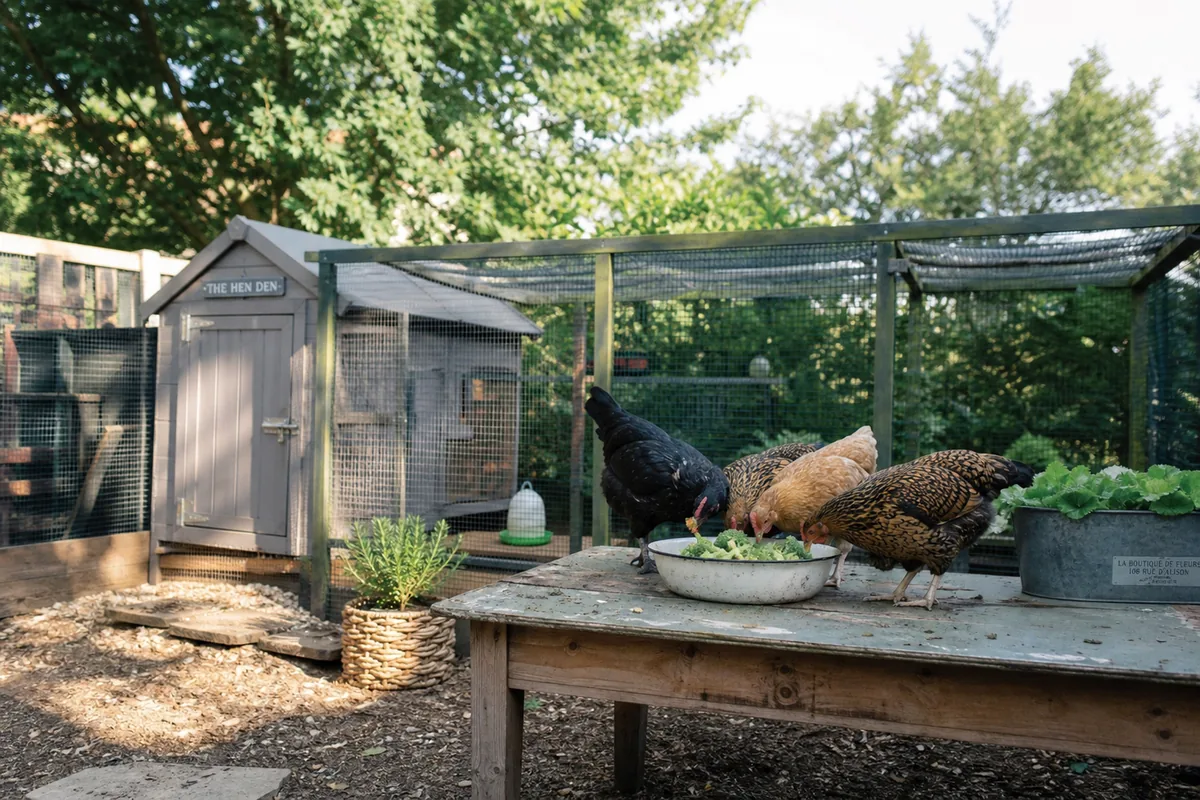
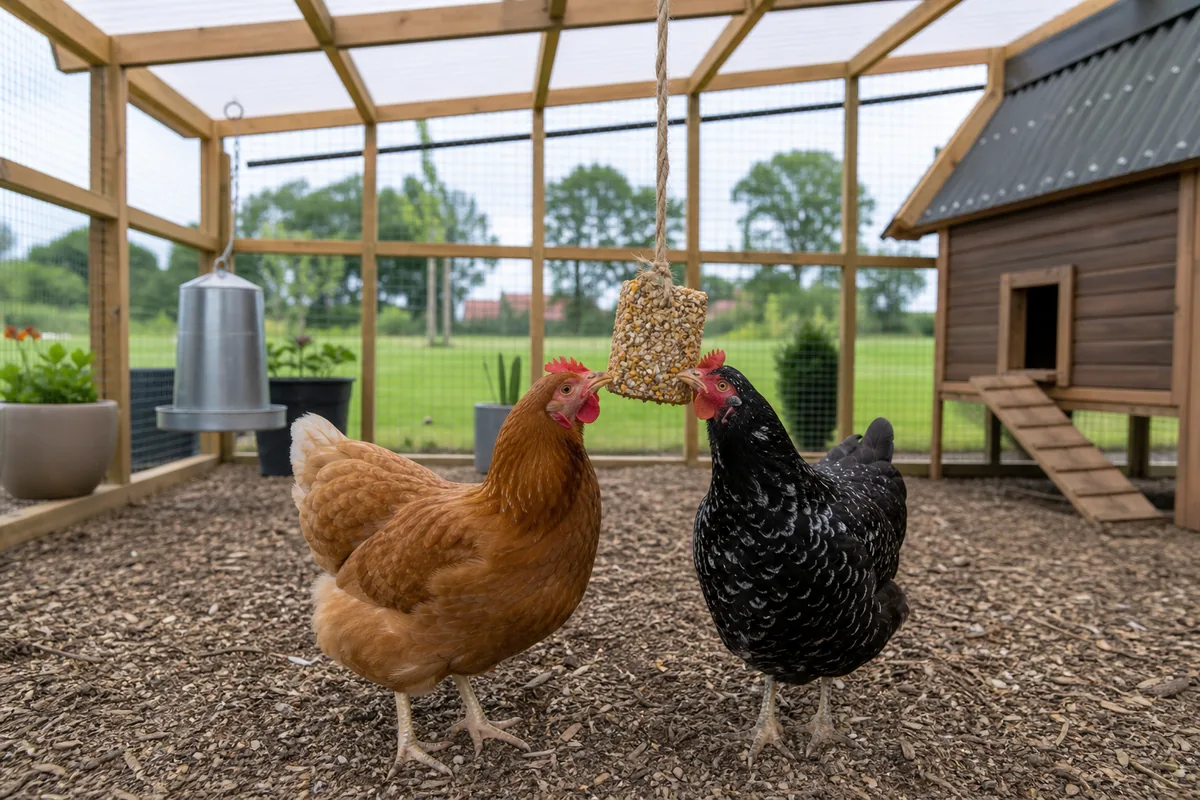
Chickens can eat most plain vegetables when they are washed, chopped, and served without butter, salt, sauce, or seasoning. Firm pieces should be cut small enough that pullets cannot swallow large chunks whole.
Carrots, squash, pumpkins, cucumbers, broccoli stems, peas, green beans, beets, turnips, and cooked sweet potato all work as treat vegetables. The best choices bring moisture or fiber without turning the feed pan into dessert.
| Food group | Best use | Limit |
|---|---|---|
| Leafy greens | Daily activity and fiber | Do not replace feed |
| Watery vegetables | Hot-weather hydration | Remove leftovers quickly |
| Root vegetables | Small chopped treats | Cook very hard pieces |
| Cruciferous vegetables | Occasional greens and stems | Too much can smell strong |
Beets are a good example of a safe vegetable that can still surprise keepers. Our beet feeding notes explain why red droppings after beet treats are usually pigment, not blood.
Cooked potatoes are different from green potato skins. Plain cooked white potato flesh can be used in small amounts, but green skins, sprouts, and leaves should stay out because they carry glycoalkaloid risk.
What Fruits Can Chickens Eat As Treats?
Chickens can eat many fruits, but fruit belongs in the treat category because sugar adds up quickly. Use fruit to reward, cool, or train the flock, not to fill the crop.
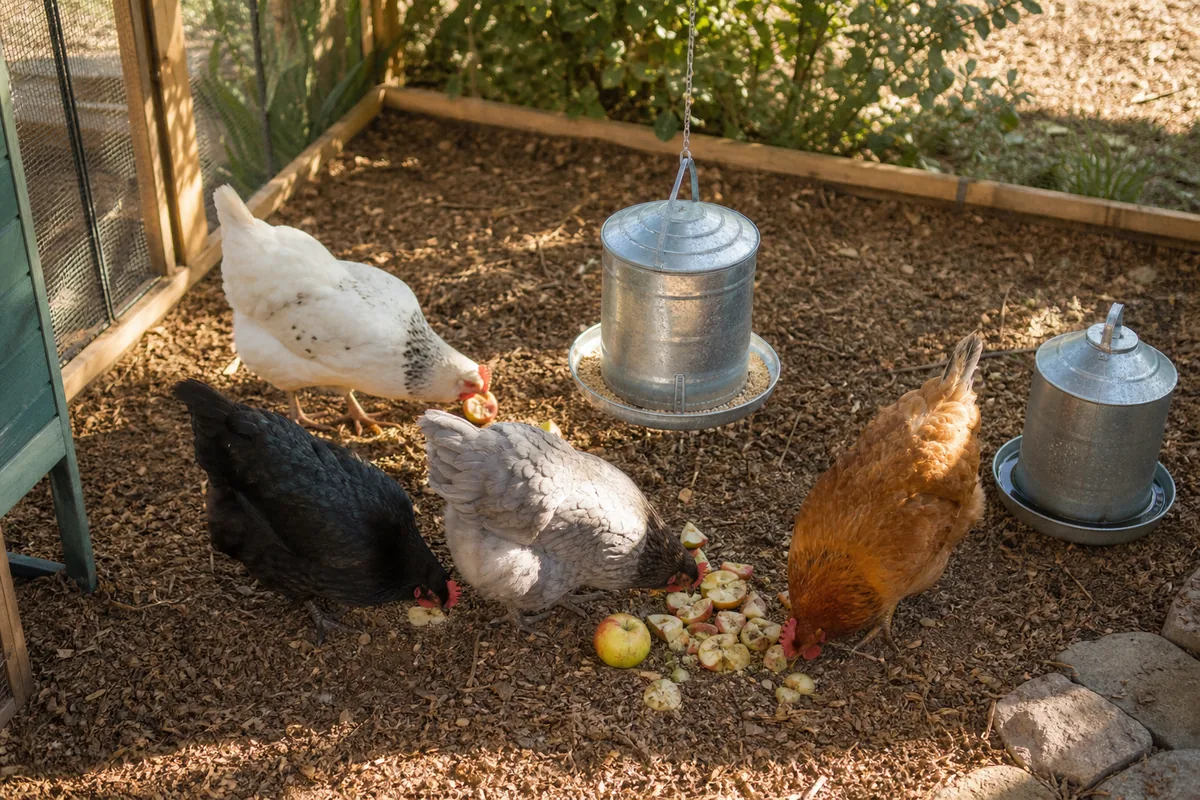
Berries, melon, apple slices without seeds, pears, peaches without pits, pumpkin flesh, and banana pieces can all be safe in small amounts. Remove pits, spoiled spots, stickers, and any fruit that has started to ferment.
- Berries: Use small handfuls for training or scatter feeding.
- Melon: Serve rind-side down so birds peck flesh instead of dirty bedding.
- Apples: Remove seeds and cut pieces thin for smaller birds.
- Banana: Use tiny pieces because soft sweet foods disappear fast.
Blackberries are one of the cleaner fruit treats because the pieces are small and easy to scatter. Our blackberry treat guide covers portion size and why staining around the beak is normal.
Fruit should not sit in the run all afternoon. Sticky leftovers attract flies, ants, rodents, and wild birds that can bring disease pressure into the flock area.
Can Chickens Eat Grains, Rice, Bread, And Pasta?
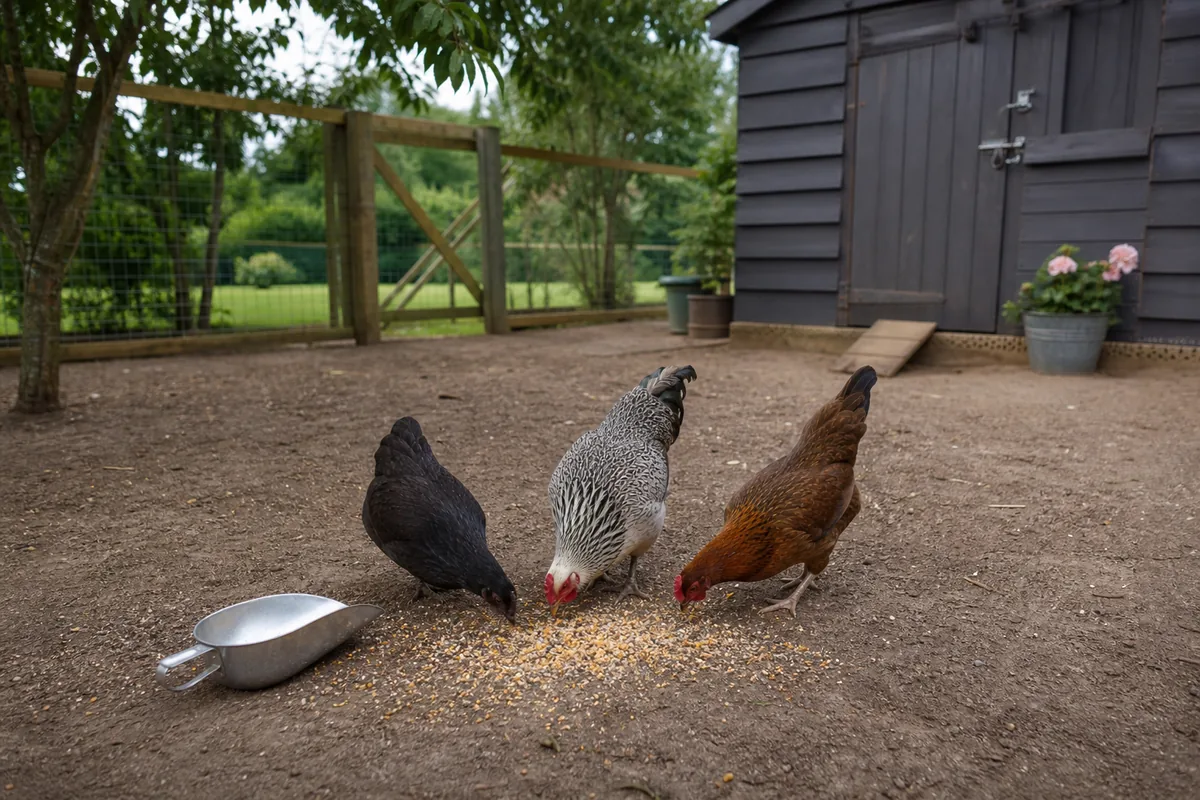
Chickens can eat plain cooked grains in small amounts, including rice, oats, barley, quinoa, and pasta. Cooked starch is easier to handle than hard dry piles, especially for younger birds.
Scratch grains are useful for activity, but they are not complete feed. University of Minnesota Extension recommends scratch in moderation and gives a practical winter cap of a handful per 10 birds.
Plain cooked rice works as a short energy treat after stress, travel, or cold weather. Our rice feeding guide explains why cooked rice fits better than raw rice for backyard flocks.
- Cooked rice: Serve plain, cooled, and loose, not salted or oily.
- Rolled oats: Use dry or lightly soaked oats in small winter portions.
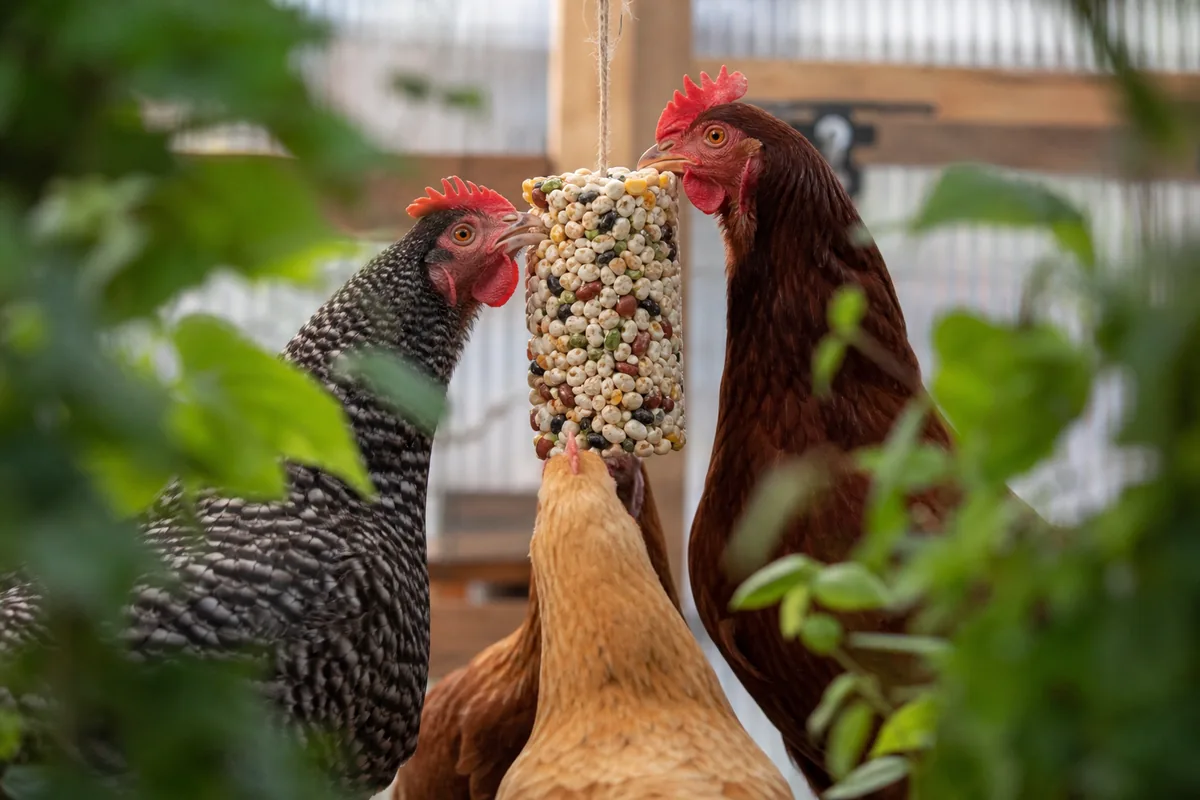
- Scratch grains: Scatter a small amount so birds have to forage.
- Bread pieces: Keep bread rare because it fills birds without much nutrition.
Do not use moldy bread, sour leftovers, or grain that smells musty. Old feed and wet grain can carry mold toxins, and Merck warns that improperly stored feed can create real poultry health problems.
Can Chickens Eat Protein Foods Like Eggs, Fish, Bugs, And Meat?
Chickens are omnivores, so animal protein is not automatically wrong. The safe line is plain, cooked, fresh, and used as a supplement rather than a messy pile of leftovers.
Plain cooked eggs, mealworms, black soldier fly larvae, earthworms from clean soil, cooked fish flakes, and tiny pieces of unseasoned cooked meat can all fit. Avoid spoiled meat, greasy scraps, cured meats, and anything cooked with onion-heavy sauces.
Breed and production goals change how much extra protein makes sense. Heavy dual-purpose birds such as Orpington chickens can gain excess weight if rich treats become routine.
Cooked egg is safe when crushed or chopped so it does not look like a raw nest egg. That distinction matters because we want nutrition support, not egg-eating behavior in the coop.
What Can Chicks And Pullets Eat Before Layer Feed?
Chicks and pullets need starter or grower feed before adult treats. Their bodies are still building bone, feather, and muscle, so low-nutrient extras crowd out the feed they need most.
Small amounts of chopped greens can work after birds are eating their main feed well. If they get fibrous foods, they also need chick-sized grit because young birds cannot grind plant pieces without help.
- Starter stage: Keep the diet almost entirely on starter feed and clean water.
- Grower stage: Add tiny green treats only after feed intake is steady.
- Point of lay: Move toward layer feed when pullets approach laying age.
- Mixed flocks: Use separate feeding areas when young birds cannot compete.
Do not give high-calcium layer feed to young chicks as their main ration. Calcium needs rise when hens start laying, but growing birds need a different mineral balance.
That age split is why one flock food chart can mislead beginners. A food that is fine for laying hens may be poorly timed for eight-week pullets.
What Foods Are Toxic Or Unsafe For Chickens?
Chickens should not eat chocolate, coffee grounds, moldy feed, raw dried beans, very salty scraps, spoiled meat, or avocado skin and pits. These foods create risk without giving the flock anything it needs.
Allium foods need caution. Garlic can be used in measured amounts, but onion-heavy leftovers, onion powder blends, and mixed seasonings are not good flock treats.
- Chocolate: Theobromine and caffeine make it a hard no.
- Moldy feed: Musty grain can carry toxins that damage birds.
- Raw beans: Dried uncooked beans contain compounds that need proper cooking.
- Salty scraps: Chips, cured meat, and salty leftovers can overload sodium.
- Avocado parts: Skin and pit are the riskiest parts and should stay out.
Garlic sits in a special category because dose matters. Our garlic safety guide separates small measured use from risky allium overfeeding.
If a food is spoiled, seasoned, greasy, or mixed with unknown ingredients, skip it. Chickens are hardy, but hardy is not the same as immune to bad feed.
How Much Treat Food Can Chickens Eat Per Day?
A practical ceiling is treats under 10% of the daily diet. For most backyard keepers, that means small handfuls, not bowls.
Merck notes that commercial poultry feeds are formulated as complete diets. When treats climb too high, the flock can miss amino acids, calcium, phosphorus, salt balance, and vitamins that the feed was designed to provide.
Layer hens need consistent calcium support, but do not solve that by dumping calcium-rich scraps into every bird. Offer oyster shell separately so laying hens self-regulate and non-laying birds are not pushed into a high-calcium diet.
Almonds show why calorie-dense treats need tighter control than greens. Our almond portion guide explains why a safe food can still be too rich for daily feeding.
How Should Keepers Build A Weekly Chicken Feeding Rotation?
A good rotation starts with feed, clean water, grit when birds need it, and oyster shell for laying hens. Treats come after that foundation is working.
Use greens most often, vegetables next, fruit sparingly, and rich protein treats only when they serve a job. That rhythm keeps birds interested without creating a flock that refuses regular feed.
| Day type | Best treat choice | Reason |
|---|---|---|
| Most days | Leafy greens or clean weeds | Low sugar and good activity |
| Hot days | Cucumber or melon pieces | High moisture and easy cleanup |
| Cold days | Small scratch scatter | Encourages movement and foraging |
| Molt support | Cooked egg or insects | Protein support for feather growth |
| Training days | Berries or tiny fruit pieces | High interest in small portions |
Rotate by job instead of novelty. A treat should cool, train, enrich, support molt, or use safe garden surplus.
Keep the boring basics boring. Clean water, dry feed storage, measured treats, and fast leftover cleanup do more for flock health than any single food list.
Write the flock's favorite treats on a simple coop note. That small record helps families avoid doubling up when more than one person feeds the birds daily.
SOURCES & REFERENCES 107.
Feeding and Management Practices in Poultry Merck Veterinary Manual, 2024 Expert 108.
Management of Backyard Poultry Merck Veterinary Manual, 2024 Expert 109.
Caring for Chickens in Cold Weather University of Minnesota Extension, 2024 University