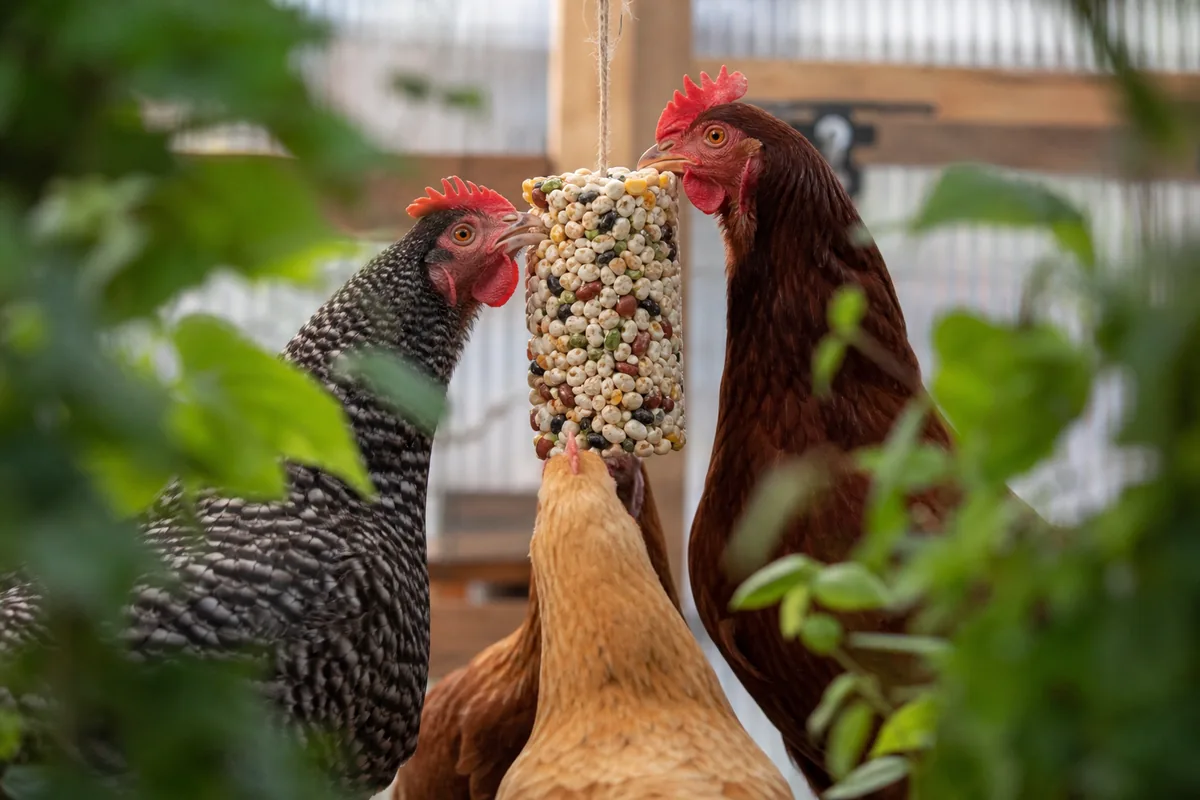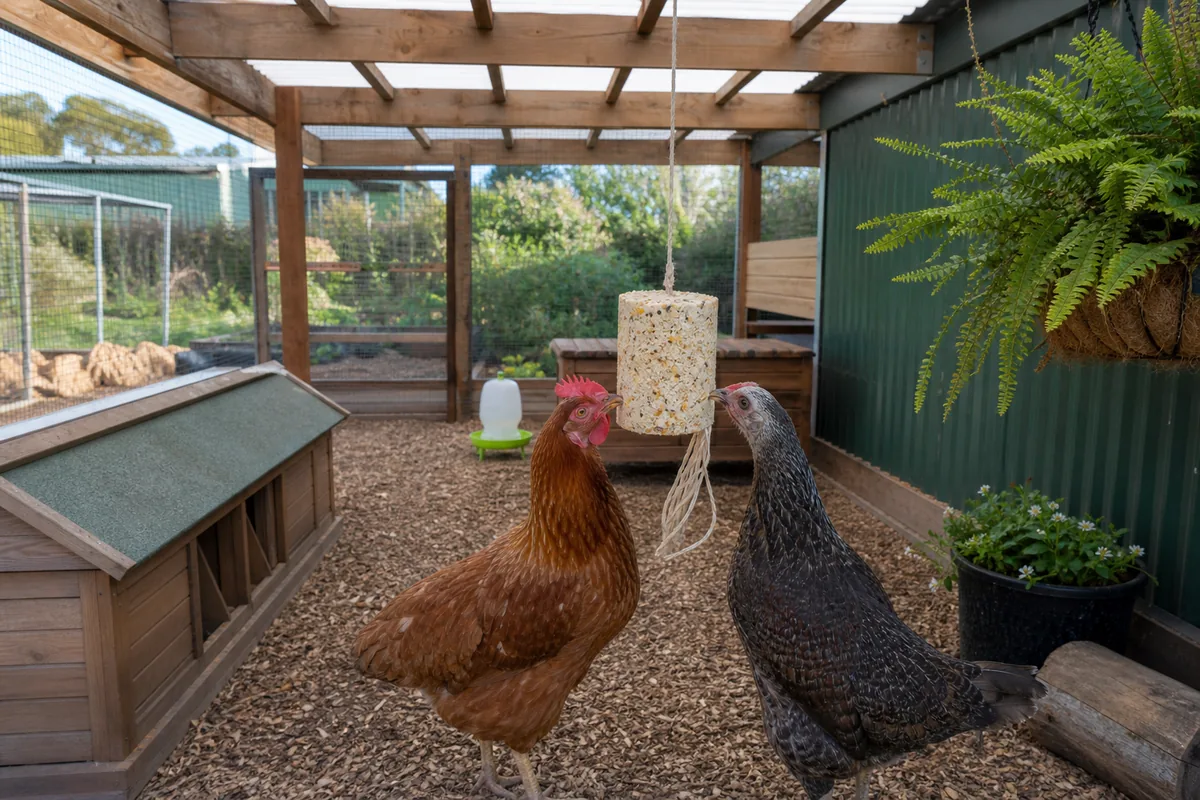
Garlic is the one food that natural flock remedies keep returning to. Backyard keepers have added it to waterers for decades, citing parasite deterrence, respiratory support, and immune-boosting properties.
The complication is that garlic belongs to the allium family alongside onions, a food that is genuinely toxic to poultry in quantity. Understanding where garlic sits on that spectrum requires looking at the actual compound responsible and how much chickens can safely handle.
Garlic for Chickens
- Fresh crushed garlic (small amounts)Safe
- garlic powder at 1-2% of feed by weightSafe
- Garlic saltUnsafe
- seasoned garlicUnsafe
- roasted garlic with additivesUnsafe
- large daily doses of raw garlicUnsafe
Prep: Crush 1 clove per gallon of fresh water, changed daily. Or mix garlic powder into dry feed at 1-2% by weight. Freq: Water treatment: daily for 1-2 week periods. Feed supplementation: short courses only. Amount: 1 clove per gallon of water; 1-2% garlic powder by feed weight
Below: the science behind allicin and thiosulphate, how garlic compares to onion toxicity, keeper protocols that appear safe, and exactly where the risk line sits.
Why Garlic Is the Allium Exception: Allicin vs. Thiosulphate Concentration in Chickens
Onions are toxic to chickens primarily because of thiosulphate compounds (n-propyl disulfide and related organosulfur molecules) that damage red blood cell membranes, triggering hemolytic anemia. The condition causes red blood cells to rupture faster than the bird can replace them, leading to weakness, pale combs, labored breathing, and death in severe cases.
Garlic contains the same class of compounds, but at substantially lower concentrations. The active compound most associated with garlic's health benefits is allicin, produced when a fresh clove is crushed or chopped and the enzyme alliinase converts alliin into allicin.
Allicin is what gives garlic its sharp smell and is responsible for documented antibacterial, antifungal, and antiparasitic activity in laboratory studies.
The key distinction from onion is proportional thiosulphate load per gram of food consumed. A hen would need to eat garlic in quantities far exceeding anything a keeper would offer before reaching the toxic threshold associated with hemolytic anemia.
Small, measured doses stay well below that threshold while still delivering allicin.
The allium toxicity risk in onions is real and well-documented. Garlic earns a conditional pass specifically because the thiosulphate concentration is lower and the allicin benefit is measurable at doses that fall below the toxic range.
Those two facts together are what make it worth using carefully.
Chocolate operates on a zero-tolerance rule where no dose is safe, in contrast to garlic where the dose determines the risk. Our chocolate toxicity guide explains how theobromine accumulates in cardiac tissue and why even milk chocolate carries real risk for a small hen.
What the Research and Extension Guidance Say About Garlic Doses for Chickens
The University of Missouri Extension lists garlic as generally safe for poultry in moderation, consistent with how most land-grant university extension programs treat it: a recognized folk remedy with plausible mechanism and a low risk profile at small doses.
Peer-reviewed poultry research has examined garlic supplementation in commercial laying hens, primarily looking at feed conversion, egg quality, and pathogen load. Several studies found that garlic powder supplemented at 1 to 2% of total diet by weight improved feed efficiency and reduced Salmonella colonization in the gut without adverse health effects.
No hemolytic anemia markers appeared at those doses.
Key facts
- Allicin Content (Crushed, Per Clove)
- ~5-9mg allicin per medium clove
- Thiosulphate Concentration Vs. Onion
- Garlic: ~1g/100g; Onion: ~3-4g/100g (approximate)
- Water Treatment Dose
- 1 crushed clove per gallon, changed daily
- Feed Supplementation Dose
- 1-2% garlic powder by total feed weight
- Extension Guidance
- University of Missouri: generally safe in moderation
- Egg Flavor Effect
- Possible at high doses; minimal at standard keeper doses
- Safe Forms
- Fresh crushed, garlic powder (pure, no additives)
- Never Use
- Garlic salt, roasted garlic blends, seasoned preparations
Studies on Silkie immune support reflect a broader truth about small heritage breeds: their compact size means the same dose-per-bird math still applies, but they eat less total feed, which naturally limits intake. The proportional thiosulphate load per body weight remains the variable that matters regardless of breed.
The Egg Flavor Question: Does Garlic Change How Your Eggs Taste
This is the concern that stops many keepers from trying garlic supplementation. The short answer: at standard keeper doses, egg flavor change is minimal to undetectable.
At high doses, it is a real possibility.
Allicin metabolites can transfer into egg yolks through the hen's bloodstream and affect flavor. The same pathway exists in dairy cows fed garlic-heavy silage, where milk takes on an off-note.
In poultry, the transfer is documented but dose-dependent.
Research on garlic powder supplementation at 1 to 2% of feed found no significant consumer-detectable difference in egg flavor in blinded taste tests. Informal keeper reports at higher doses, such as multiple whole cloves per hen per day, note a mild garlic edge in the yolk, particularly in eggs from hens on garlic water for extended continuous periods.
| Dose | Form | Egg Flavor Impact | Safety Assessment |
|---|---|---|---|
| 1 clove per gallon of water (daily) | Fresh, crushed | None to minimal | Safe |
| 1-2% by weight | Garlic powder in feed | None detected in studies | Safe |
| 3-5% by weight | Garlic powder in feed | Mild, detectable in some eggs | Use caution |
| Multiple raw cloves per hen daily | Fresh, whole or crushed | Noticeable garlic flavor | Elevated risk over time |
| Any amount | Garlic salt or seasoned blends | Irrelevant | Do not use |
Practical takeaway: if you want the immune and antiparasitic benefit without risking flavor changes, stick to water supplementation at the 1 clove per gallon rate and run it in 1 to 2 week courses rather than continuously year-round.
Asparagus causes a similar egg flavor shift through a different sulfur pathway: asparagusic acid metabolites transfer into yolk during egg formation. Our asparagus feeding guide covers how to keep servings infrequent enough to avoid a detectable flavor change.
How Keepers Actually Use Garlic: Protocols That Work in Practice
The most common real-world garlic application is the waterer method. Keepers crush one to two fresh cloves and drop them directly into a gallon waterer.
The water takes on a mild garlic infusion overnight and is changed fresh daily. Most flocks adapt quickly and drink normally within a day or two.
The second common method is feed mixing with garlic powder. Pure garlic powder, no salt or added seasonings, is measured and mixed into a batch of dry layer feed at 1 to 2% by weight.
For a 10-pound feed bag, that means 1.6 to 3.2 ounces of garlic powder mixed thoroughly. This approach is useful when you want consistent daily supplementation without the waterer maintenance.
- Waterer method: 1 crushed fresh clove per gallon of water, changed daily. Best for short-course immune support or suspected parasite pressure. Run for 1 to 2 weeks, then pause for at least 2 weeks before repeating.
- Feed powder method: Pure garlic powder at 1 to 2% by feed weight, mixed thoroughly into dry feed. Use for 2 to 4 week supplementation courses. Do not combine this with the waterer method simultaneously, as stacking doses increases cumulative thiosulphate intake.
- Seasonal prevention protocol: Many keepers run garlic water in spring and fall when parasite pressure and flock stress tend to peak with seasonal transitions. A 2-week waterer course at the start of each season is a common and low-risk schedule.
- Recovery support: After illness or in flocks recovering from respiratory infection, garlic water is sometimes used for its documented antibacterial properties. This is a supplement to veterinary care, not a replacement for it.
Pair garlic supplementation with attention to gut health approaches that support your flock's immune response from multiple angles. Plain yogurt probiotics and garlic supplementation address different parts of gut health and can be used in alternating rotations without conflict.
What Garlic Cannot Do: Keeping Realistic Expectations for Flock Health
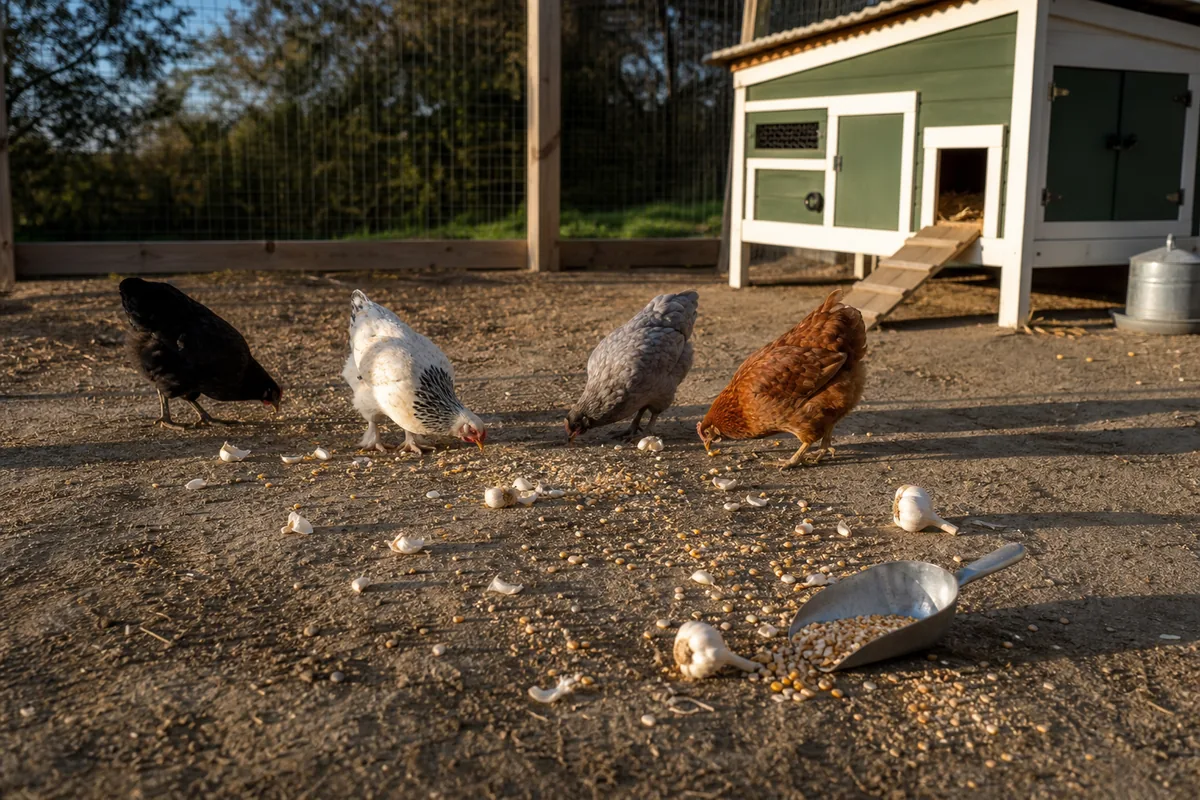
Garlic has genuine properties that make its use in backyard flocks reasonable. It also gets credited for outcomes that go beyond what the evidence supports, and that is worth addressing directly.
Allicin's antibacterial and antifungal effects are well-documented in laboratory settings. Its activity against parasites, particularly internal worms, is supported by some poultry research but not consistently enough to treat it as a reliable dewormer.
Garlic water is not a substitute for fecal egg count monitoring and targeted deworming when parasites are confirmed.
- Supported by evidence: Reduced Salmonella colonization in the gut (at feed-supplement doses). Antibacterial and antifungal activity against several common poultry pathogens. Some immune-modulating effects in commercial laying hen trials.
- Partially supported: Antiparasitic activity against internal worms. Results vary across studies and parasite species. May reduce worm burden but is not a reliable sole intervention for confirmed heavy infestations.
- Not supported: Garlic as a complete replacement for veterinary care during active infection. Garlic as a guaranteed prevention against Marek's disease, coccidiosis, or respiratory disease outbreaks. Claims that garlic "repels" mites or lice through the skin are anecdotal with no controlled study support.
Used with accurate expectations, garlic is a practical, low-cost supplement that fits naturally into a layer health basics routine. Used as a cure-all, it creates false confidence and delays appropriate care when a flock genuinely needs it.
Fish is a useful companion in a gut-health focused feeding week. Our fish feeding guide covers how omega-3 fatty acids from cooked sardines and salmon improve egg quality and how to use fish protein as a complement to garlic water courses during seasonal immune support periods.
Cooked eggs offer an easy protein boost during garlic supplementation courses when you want to support overall immune function from multiple angles. Our egg feeding guide covers the vitamin D and B12 content in yolks that supports immune and nerve function in laying hens.
Rhode Island Reds tolerate varied supplement regimens well due to their robust constitution. Our Rhode Island Red breed guide covers their feeding characteristics and why they are a reliable choice for keepers who want to experiment with natural health protocols like garlic supplementation.
Sources and references
- Effects of dietary garlic powder on laying performance, egg quality, and blood parameters of laying hensPoultry Science, Vol. 98, Issue 3, 2019
- Antimicrobial activity of allicin and garlic extracts against Salmonella and other foodborne pathogens: a reviewof Food Protection, Vol. 74, Issue 11, 2011
- Backyard poultry: safe and unsafe foods for chickensof Missouri Extension, Agricultural Publication G8590