If you're planning a flock around eggs, single biggest production variable under your control. The difference between the top and bottom of this chart is over 200 eggs per hen per year.
This guide gives you the complete picture: a 20-breed comparison table with eggs per year, egg color, size, broodiness, cold hardiness, and best-use recommendations, followed by the management factors that determine whether your birds actually hit those numbers.
Chicken Egg Production by Breed: Complete Comparison Table
The figures below reflect averages from flocks kept in good conditions with proper nutrition and 14-16 hours of light daily. Commercial battery operations run higher; free-range backyard flocks often run 10-15% lower depending on season and management.
| Breed | Eggs/Year | Egg Color | Egg Size | Broody? |
|---|---|---|---|---|
| White Leghorn | 300-320 | White | XL | Rarely |
| ISA Brown | 280-300 | Brown | L | Rarely |
| Black Australorp | 250-280 | Brown | L | Low |
| Rhode Island Red | 250-280 | Brown | L | Low |
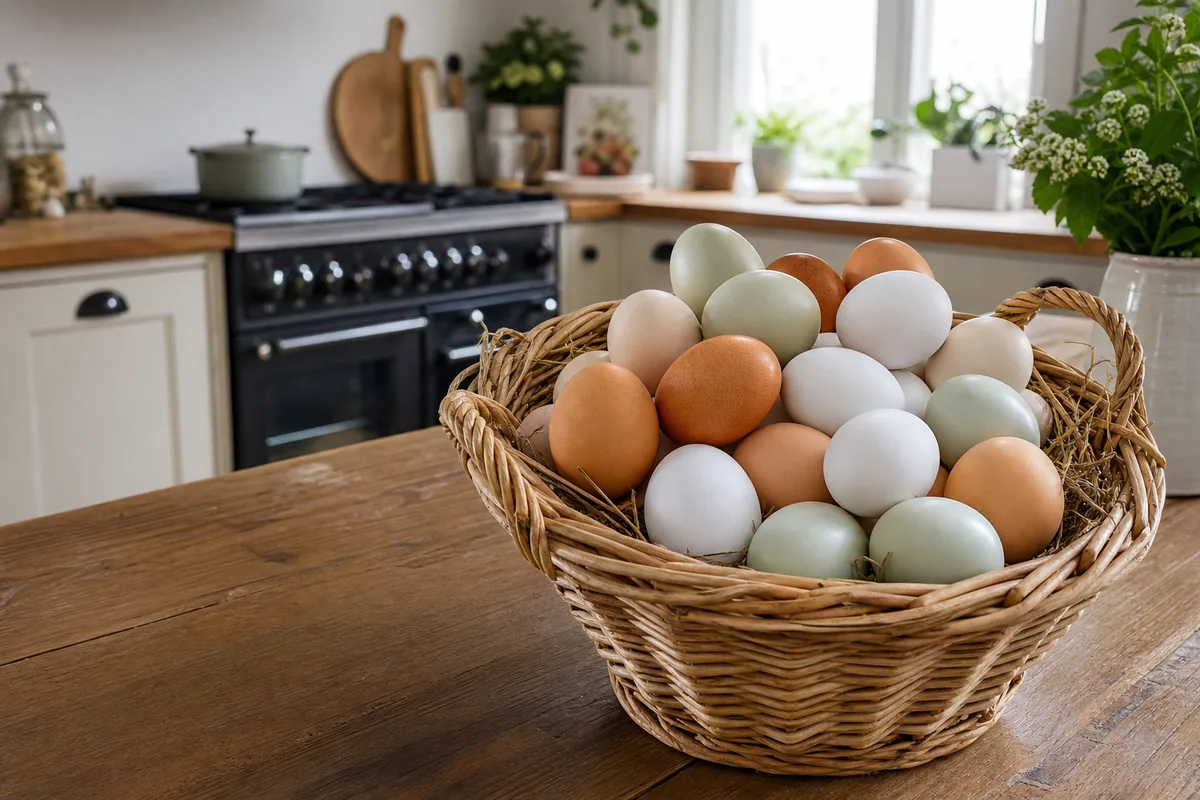
| Easter Egger | 200-280 | Blue/Green/Olive/Pink | L | Low-Moderate |
| Plymouth Rock | 200-280 | Brown | L | Low |
| Sussex | 220-250 | Tinted/Cream | L | Low-Moderate |
| Hamburg | 200-255 | White | S | Rarely |
| Ameraucana | 200-250 | Blue | M | Low |
| Welsummer | 200-250 | Dark Brown (speckled) | L | Low |
| Wyandotte | 200-240 | Brown | L | Low-Moderate |
| Orpington | 200-280 | Brown | L | High |
| Polish | 150-200 | White | M | Rarely |
| Jersey Giant | 150-200 | Brown | L | Low |
| Brahma | 150-200 | Brown | M | Low |
| Marans | 150-200 | Dark Chocolate | L | Low |
| Cochin | 150-180 | Brown | M | High |
| Silkie | 100-120 | Cream | S | Very High |
| Cornish Cross | N/A | N/A | N/A | Rarely |
| Golden Comet | 250-300 | Brown | L | Rarely |
Factors That Affect Egg Production Across All Breeds
Every breed in the table above has a ceiling. Whether your hens actually reach it depends on four management variables that interact constantly throughout the laying year.
Getting these right matters more than breed selection for most backyard keepers. A well-managed Australorp out-produces a neglected Leghorn.
Light: The Primary Driver of Egg Production
Hens require 14-16 hours of light per day to maintain peak laying. Light enters the eye, stimulates the pineal gland, and triggers the hormonal cascade that drives egg production.
Below 12 hours of light, most hens stop laying entirely. This is why production drops to near zero through winter months without intervention.
- Supplemental lighting (a simple 40-watt bulb on a timer) extends production through winter
- Light intensity matters: 1 foot-candle at bird level is the minimum effective threshold
- Sudden changes in light schedule cause stress. Increase gradually at 15-minute increments per week
- Decreasing light in fall triggers molting, which stops production for 2-3 months
Nutrition: The Production Fuel
Layer feed formulated at 16-18% protein is the non-negotiable baseline for sustained egg production. Scratch grains dilute protein content and reduce laying consistency.
Calcium is the second critical nutrient. A single egg shell requires approximately 2 grams of calcium, more than the daily dietary intake most hens consume through feed alone.
- Offer oyster shell free-choice in a separate container, not mixed into feed
- Free-range hens on poor pasture need additional protein supplementation
- Water is the most overlooked nutrient: a hen drinks 500ml per day and stops laying when dehydrated
- High-production breeds have higher nutritional demands than heritage breeds at equivalent output levels
Stress: The Silent Production Killer
Stress disrupts the hormonal cycle that drives ovulation. A hen under stress diverts energy from reproduction to survival, and egg production is the first system to shut down.
Common stress sources that cut into the numbers on your production chart:
- Predator pressure (even nighttime visits with no contact)
- Overcrowding: minimum 4 sq ft per bird indoors, 10 sq ft in the run
- Flock integration of new birds without a proper introduction period
- Extreme heat above 85°F reduces feed intake and drops production 10-20%
- Frequent handling of skittish breeds like Leghorns
Seasonal Changes in Egg Production
Every breed on this chart shows seasonal variation. The production numbers reflect annual averages, not consistent daily output across all 52 weeks.
Understanding the seasonal pattern helps you set realistic expectations and plan flock size for your target egg volume.
Spring (April-June) is peak production. Days lengthen, temperatures moderate, and hens with adequate nutrition lay at maximum rate.
A Leghorn hitting 320 eggs per year averages 6 eggs per week during this period.
Summer production holds steady if heat is managed. Above 85°F, hens eat less, which reduces the protein and calcium available for egg formation.
Shade, ventilation, and cool water are the management tools here.
Fall triggers the annual molt. As days shorten below 12 hours of light, most hens stop laying and divert energy to replacing feathers.
The molt lasts 2-3 months. Supplemental lighting delays or suppresses the molt but does not eliminate it indefinitely.
Winter production depends entirely on whether you supplement light. Without it, most breeds drop to zero.
With 14-16 hours of total light (natural plus supplemental), production-focused breeds like Leghorns and ISA Browns continue laying at 60-80% of their peak rate.
High-Production Hybrids (Leghorn, ISA Brown, Golden Comet): Spring: 6-7 eggs/week per hen. Summer: 5-6/week. Fall molt: 0 for 6-10 weeks. Winter with supplemental light: 4-5/week. Without light: 0-1/week. Heritage Layers (Australorp, RIR, Plymouth Rock, Sussex): Spring: 5-6 eggs/week. Summer: 4-5/week. Fall molt: 0 for 8-12 weeks. Winter with light: 3-4/week. Without light: 1-2/week on cold-hardy breeds (Wyandotte Brahma), Brahma). Moderate Producers (Wyandotte, Orpington, Ameraucana, Easter Egger): Spring: 4-5 eggs/week. Summer: 3-4/week. Fall molt: 0 for 8-12 weeks. Winter with light: 2-3/week. Wyandottes perform best in winter without supplemental light due to rose comb cold tolerance. Low-Production Breeds (Silkie, Cochin, Polish, Marans): Silkies and Cochins are highly broody and frequently go off lay outside of production periods. Marans maintain steady if modest output year-round. Plan for 2-3 eggs/week during peak, and extended broodiness-related pauses for Silkies and Cochins.
How Age Affects Egg Production by Breed
Every hen's production follows the same arc: rapid ramp-up, a peak window, then a sustained decline. The timing and severity of that decline differs by breed type.
Production breeds hit their peak in year one and begin declining at year two. Heritage breeds peak slightly later but maintain moderate output for longer before the same decline sets in.
The standard decline rate is 10-15% per year after peak. A Leghorn averaging 310 eggs in year one will average 265-280 in year two, 230-255 in year three, and so on.
- Year 1: Peak production. Leghorns hit 300-320. Australorps 260-280. Orpingtons 200-260.
- Year 2: 10-15% decline from year-one baseline across all breeds
- Year 3: An additional 10-15% decline. Most commercial hybrids are replaced at this point
- Years 4-6: Heritage breeds maintain 40-60% of peak production. Hybrids often drop below 100 eggs/year
- Year 7+: Most hens continue to live but rarely exceed 50-80 eggs per year regardless of breed
Commercial operations replace flocks every 12-18 months at the end of peak production. Backyard keepers typically keep hens for 5-8 years, accepting the declining production curve in exchange for the flock's established temperament and social structure.
The practical implication: if you want consistent production year after year, stagger your flock ages. Adding pullets each year means you always have first-year birds at peak output offsetting the decline in your older hens.
Maximizing Egg Output From Your Flock
The breeds in the top-ranked layers chart have been selectively bred for production. Your management determines how close to their genetic ceiling they actually produce.
These are the highest-impact changes you can make, ranked by return on investment:
- Supplemental lighting: A $15 timer and a single bulb can add 100+ eggs per hen per winter. The highest ROI management change available
- Quality layer feed at 16-18% protein: Scratch and mixed grain diets cost you 20-30% of potential production
- Free-choice oyster shell: Prevents shell quality issues before they develop, which keeps hens on their laying schedule
- Predator-proofed housing: Eliminating nighttime predator stress alone can add 15-20 eggs per hen per year
- Staggered flock ages: New pullets each year smooth out the production curve from aging hens
- Broodiness management on high-broody breeds: Breaking a broody Orpington or Cochin within 48-72 hours of setting saves 4-6 weeks of zero production
Which Breeds Are Best for Specific Situations
No single breed wins on every criterion. Match the breed to your specific goals using the breakdowns below.
Best for Maximum Annual Egg Volume
White Leghorn and ISA Brown. Nothing else in backyard poultry comes close.
If your goal is eggs per dollar of feed, choose one of these two and don't second-guess it.
Leghorns are better if you have experience managing flighty birds. ISA Browns are better if you have children or want a friendlier flock interaction.
Both deliver highest annual production numbers of any non-commercial breed.
Best Heritage Breed for Egg Production
Black Australorp, followed closely by the Rhode Island Red. Australorps hold the world egg-production record for a heritage breed (364 in 365 days) and combine that output with calm temperament and excellent cold-hardiness.
RIRs edge ahead of Australorps in adaptability and dual-purpose value. Both are significantly more productive than any other heritage breed.
The reliable RIR is America's most proven backyard layer for a reason.
Best for Cold Climates
Wyandotte or Brahma Wyandottes. Wyandottes have rose combs that resist frostbite in hard winters, and they maintain laying better than single-comb breeds without supplemental lighting.
Brahmas are the coldest-climate dual-purpose option, though their production rate is lower.
Best for Colored Eggs
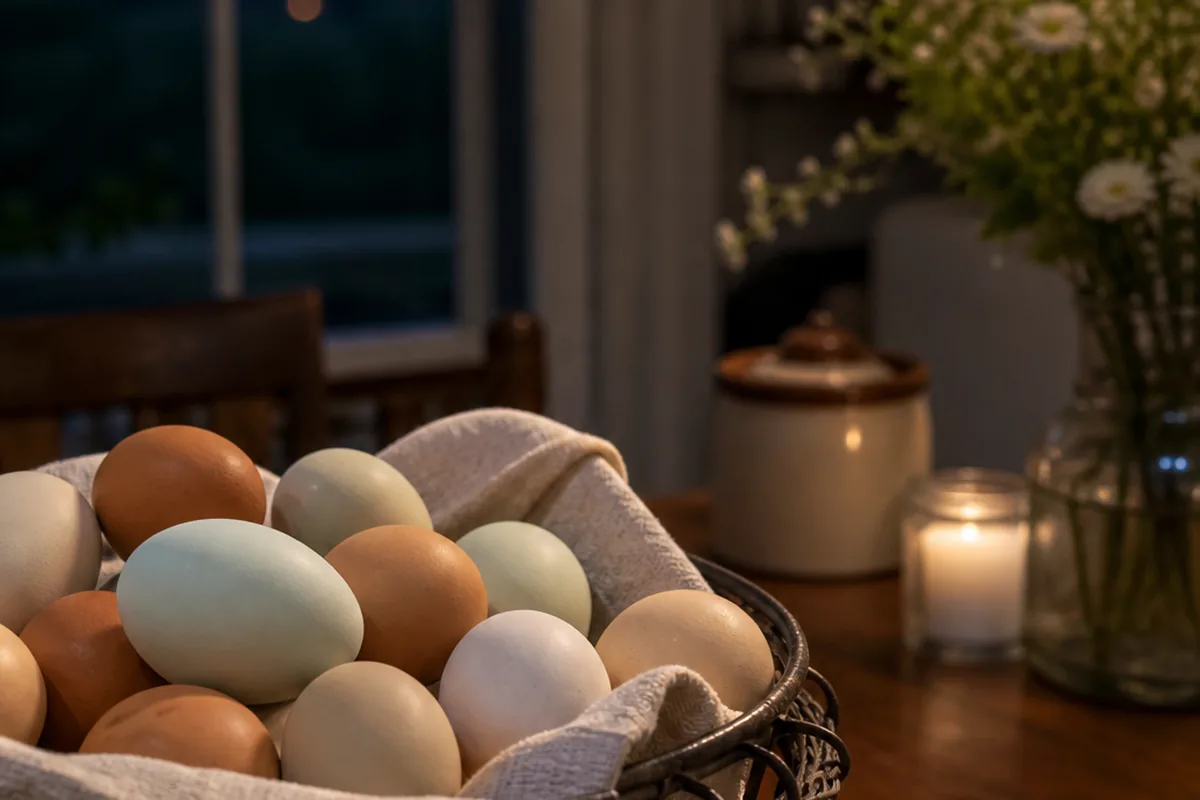
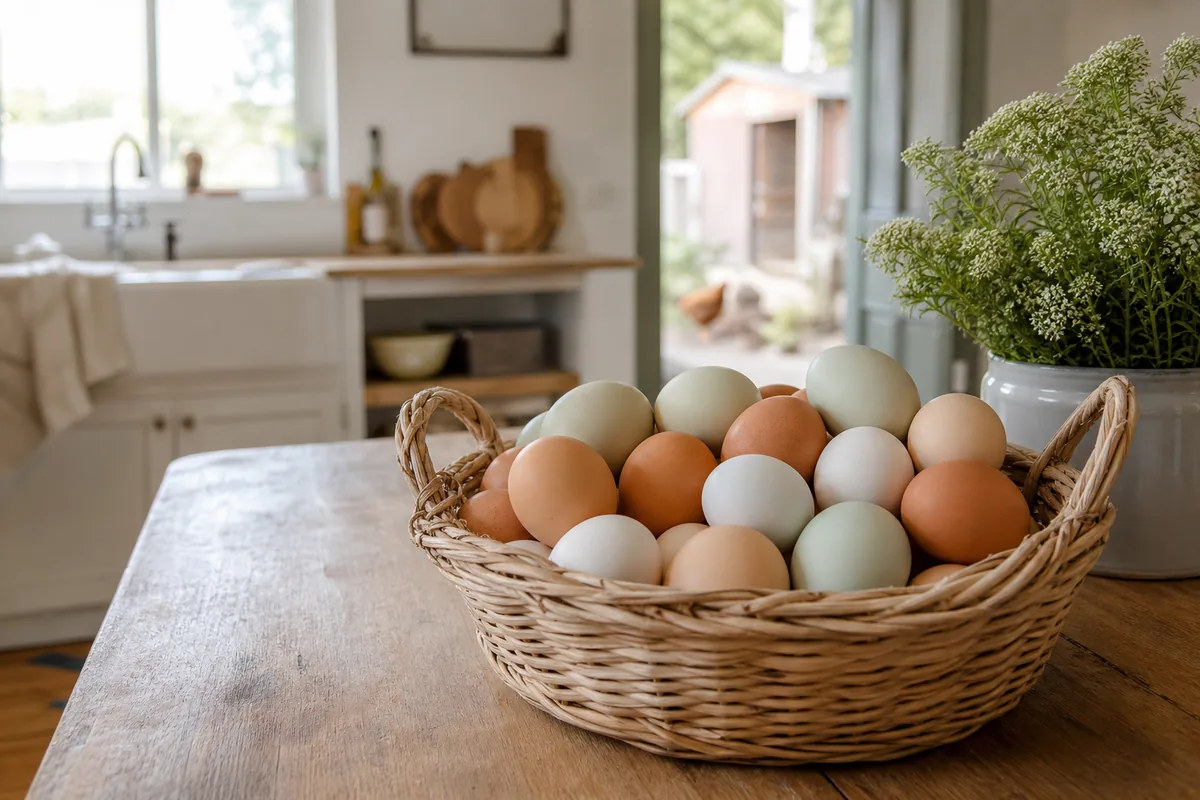
Easter Eggers for variety (blue, green, olive, pink from the same flock). Ameraucanas for standardized true blue.
Welsummers for the most visually distinct dark brown speckled eggs. Marans for the darkest chocolate brown eggs, the target for premium farm stand sales.
Best for Families with Children
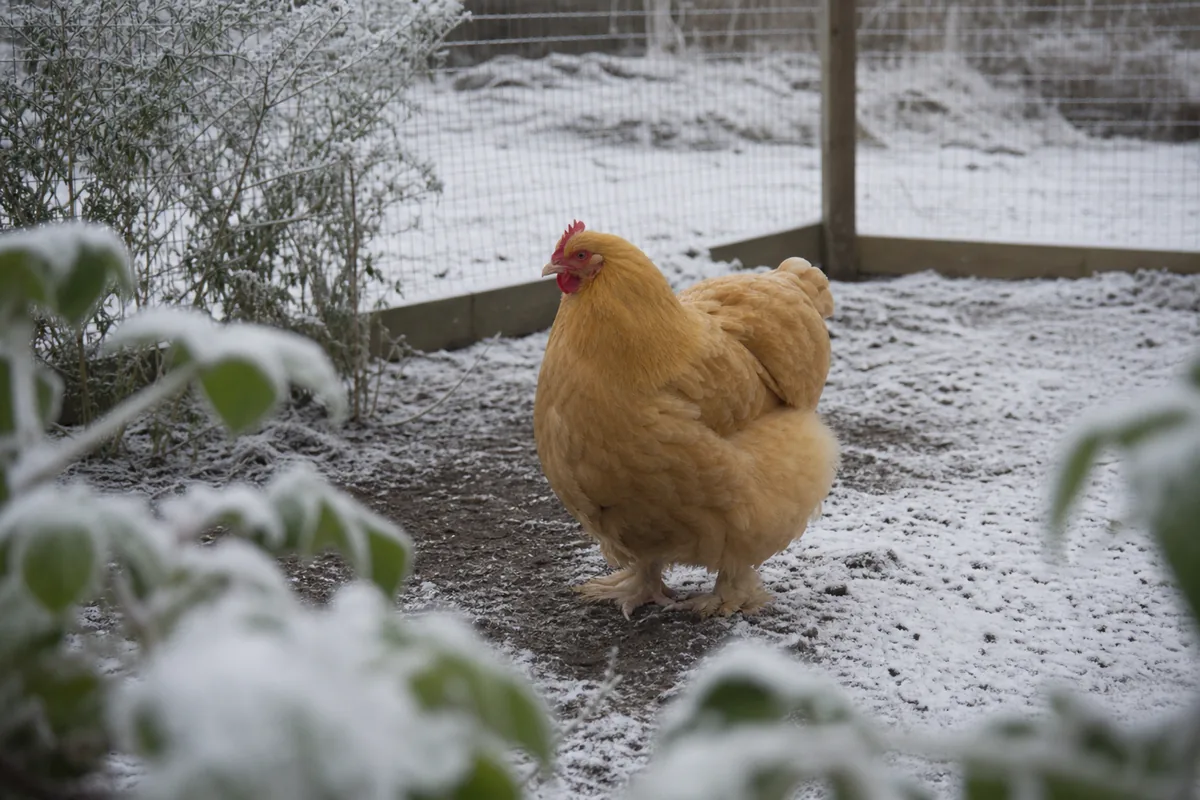
Buff Orpington or Plymouth Rock. Both are calm, tolerant of handling, and large enough that children are comfortable around them.
Orpingtons are warmer and more lap-friendly. Rocks are more production-focused and slightly less broody.
Our Buff Orpington guide covers the full temperament, broodiness, and production profile of the most popular family-friendly laying breed.
What to Avoid if You Want Eggs
Do not buy Silkies, Cochins, or Polish chickens if egg production is your primary goal. All three are highly broody, low-volume layers that will consistently disappoint production-minded keepers.
They have genuine strengths in other areas, but egg output is not among them. Keepers who want both eggs and table meat should read our dual-purpose breed guide before making a final selection.
Sources and references
- Factors affecting egg production in backyard chicken flocksof Georgia Cooperative Extension
- Poultry breed selection for small and backyard flocksPenn State Extension
- Effect of photoperiod on egg production in laying hensPoultry Science (Oxford Academic)