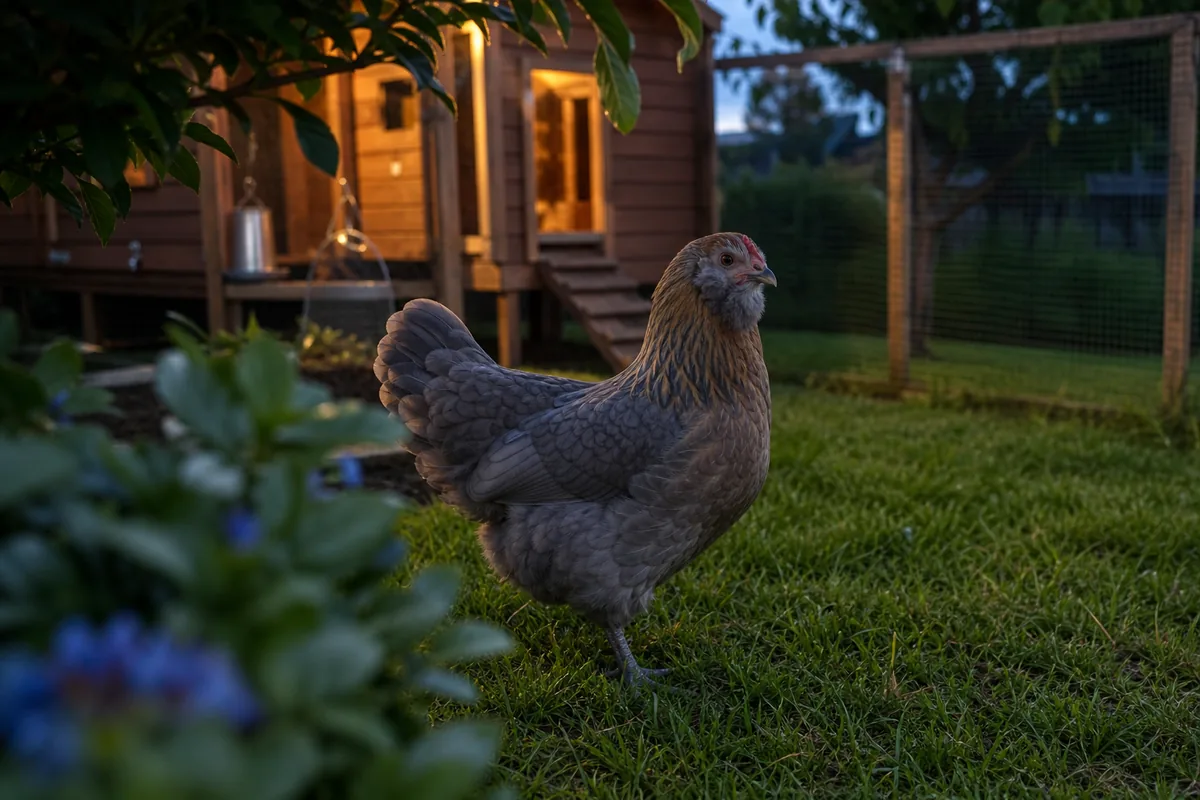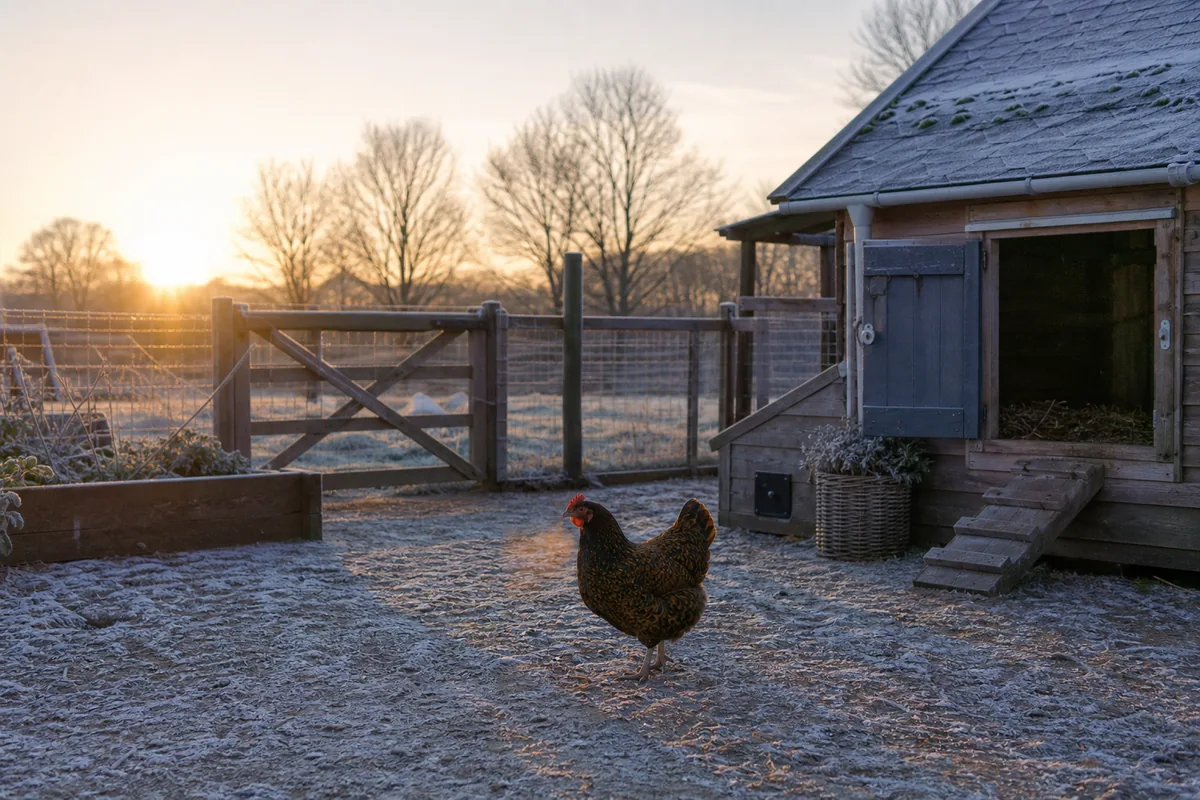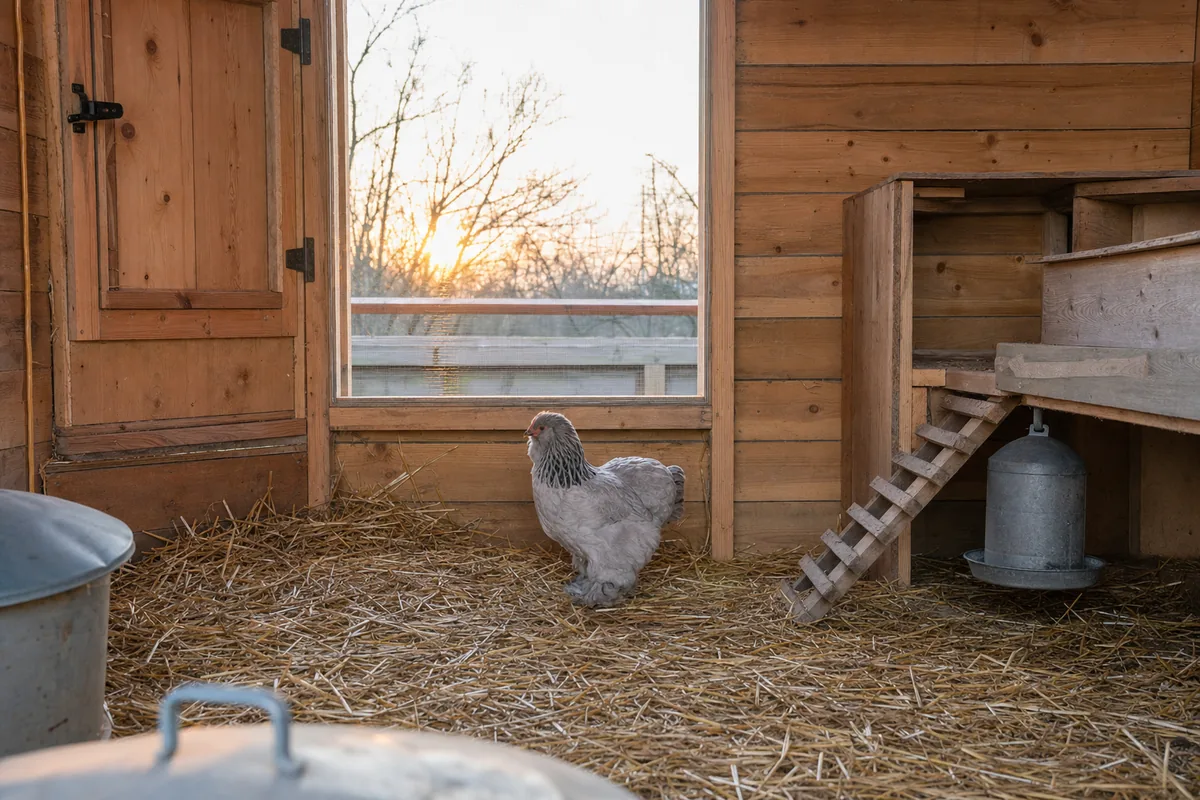
No other breed combines this level of docility with practical egg production and a forgiving attitude toward beginner mistakes. The Buff Orpington is not the highest-laying bird in the chicken world, but it is the easiest to keep, the most child-friendly, and the most likely to become a genuine pet that also delivers eggs.
This guide focuses specifically on the Buff color variety, the breed's defining form, and covers everything you need before you order your first chicks: egg production, weight, temperament, brooding behavior, coop requirements, heat management, and how the Buff compares to other Orpington color varieties.
Key facts
- Eggs/Yr
- 200-280
- Hen Weight
- 8 lbs
- Rooster Weight
- 10 lbs
- Egg Color
- Light brown
- Cold Hardy
- Excellent
- Temperament
- Extremely gentle
Buff Orpington History: From Orpington, England to America's Most Popular Backyard Breed
William Cook developed the Orpington breed in the village of Orpington, Kent, England, in 1886. His goal was a dual -purpose bird suited to British weather: heavy enough for the table, productive enough for the egg basket, and calm enough for small-scale keeping.
Cook crossed Black Plymouth Rocks, Langshans, and Minorcas to produce the original Black Orpington. The Buff color variety followed in 1894 and immediately outpaced the others in popularity.
Its golden-amber plumage stood out visually, its temperament was even softer than the Black, and its performance on both eggs and table weight made it an instant standard.
The breed arrived in the United States in the 1890s and was admitted to the American Poultry Association Standard of Perfection in 1902. By the early twentieth century, Buff Orpingtons were the dominant breed in both American and British poultry yards.
Industrial breeds displaced them commercially in the 1950s, but the backyard chicken revival of the 2000s restored the Buff to its current position at the top of every popularity survey.
The Orpington breed family today includes Black, Blue, White, Lavender, and Chocolate color varieties alongside the Buff. All share the same body type and temperament.
The Buff is the most widely available from hatcheries and the most studied for backyard performance, which is why it anchors the breed's reputation.
Egg Production: 200-280 Brown Eggs Per Year
A Buff Orpington hen in her first two laying years produces 200-280 large light-brown eggs annually. That works out to four to five eggs per week at peak, placing the breed solidly in the mid-range of heritage layers rather than at the top.
Hens begin laying at 20-24 weeks, slightly later than lighter breeds like Leghorns or Rhode Island Reds. First eggs are medium-sized and reach full large size by weeks 26-28.
Egg color is a warm light brown, consistent throughout the hen's laying life.
Production declines gradually after the first molt at 18 months. Expect a 15-20% drop per year in years two and three.
Buff Orpingtons rarely maintain the same output as lighter production breeds past year two, but many hens continue producing three to four eggs per week into years four and five. The tradeoff is a slower decline than high-production breeds that burn out by year three.
Broodiness frequency is the most significant production variable in Buff Orpingtons. A hen that goes broody three times in a season may produce 40-60 fewer eggs than her annual potential.
Hatchery-sourced Buffs tend to go broody less often than heritage-strain birds, but the behavior is too common to ignore when calculating expected egg output.
For a ranked comparison of annual output across popular breeds, see our breeds ranked by output. The Buff Orpington does not place at the top on raw numbers, but it places consistently when temperament, cold hardiness, and broodiness usefulness are factored in alongside production.
Appearance: Size, Plumage, and Physical Traits
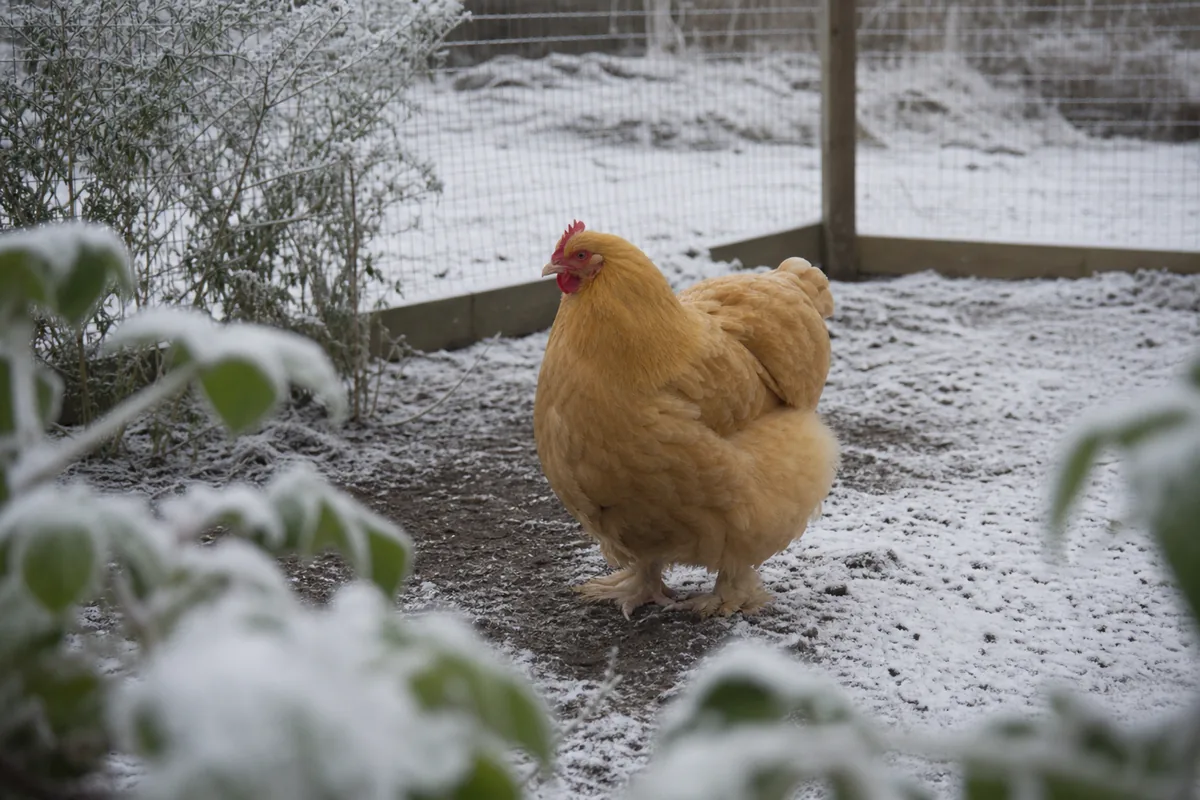
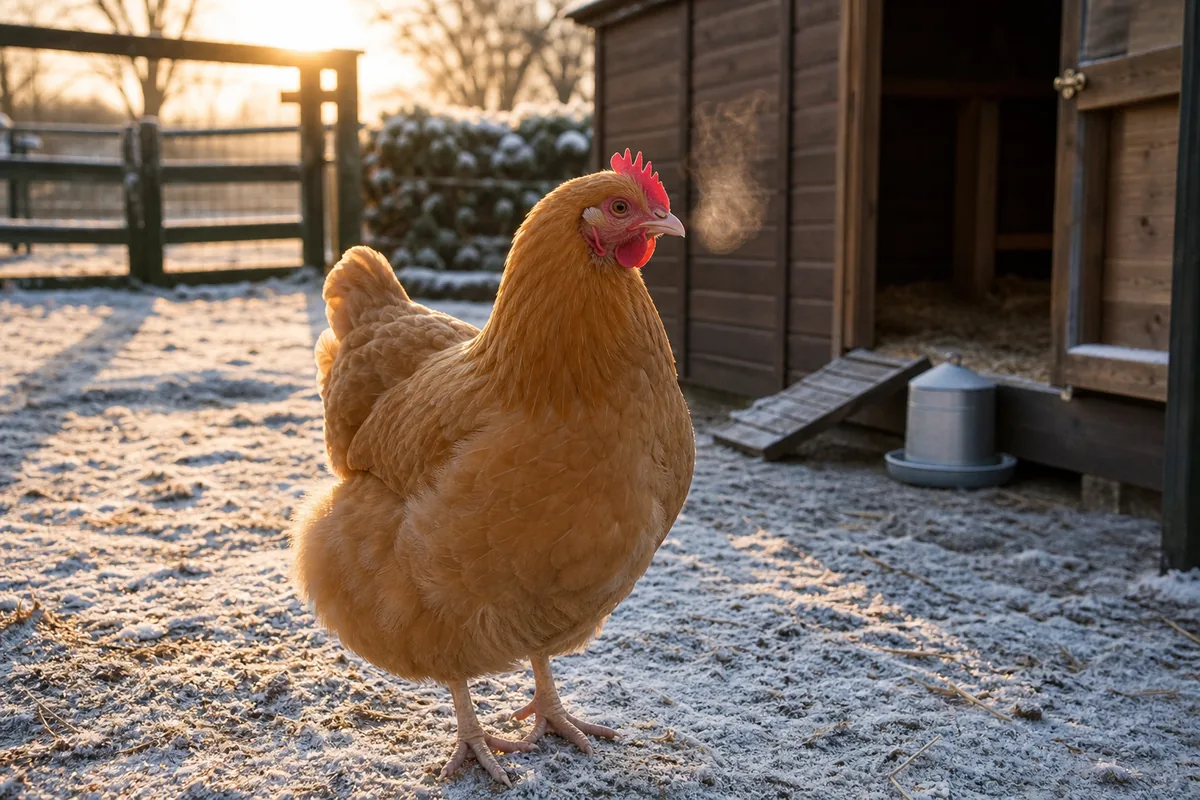
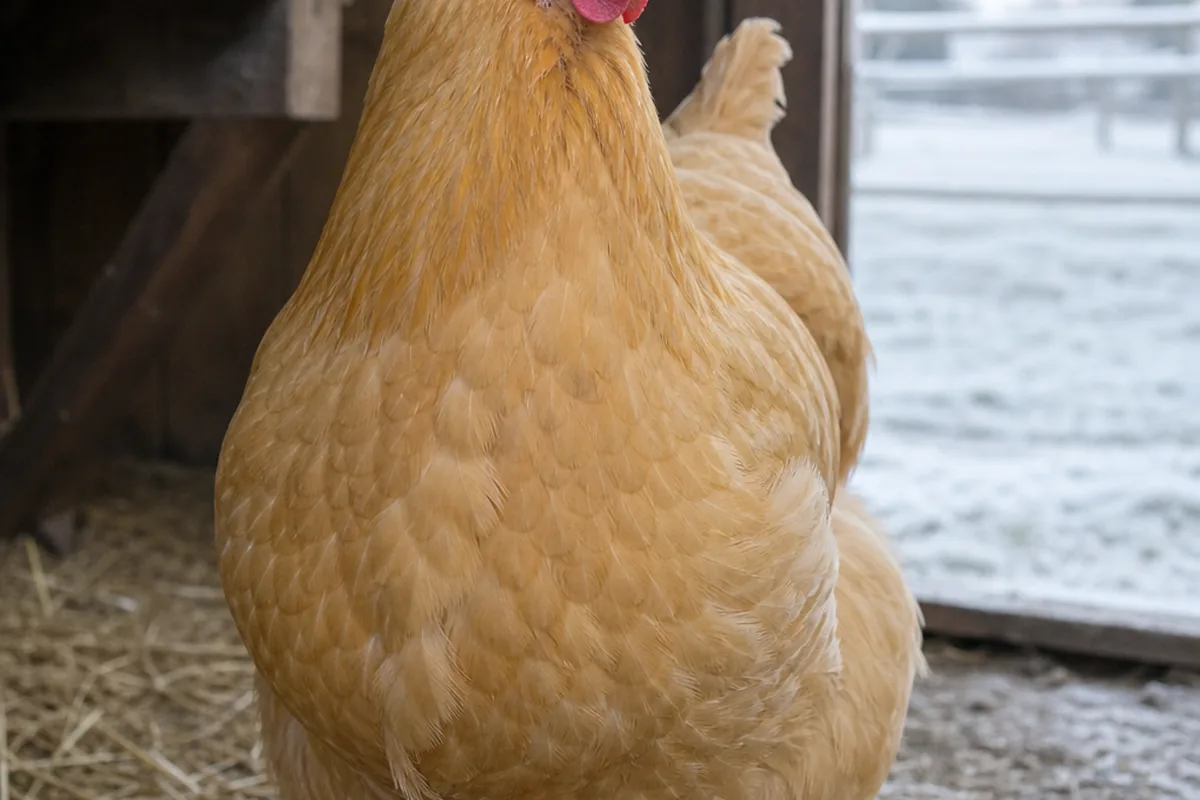
The Buff Orpington is a large, round bird with dense golden-amber plumage that covers the body in an almost spherical silhouette. The feathering is profuse without being extreme: full enough to give the breed its characteristic fluffy appearance, but shorter and tighter than heavily feathered breeds like the Cochin.
Adult hens weigh 8 lbs. Roosters reach 10 lbs.
Both carry a single, five-pointed comb that sits upright and moderate in size. Legs are clean (no feathering), pinkish-white, and set wide apart to support the heavy body.
Eyes are reddish-bay. Beak is pinkish-white.
The overall impression is of a solid, well-padded bird built for cold climates.
The "Buff" color is a warm golden-amber that should be uniform across the body without red, orange, or white bleeding into the feathers. Exhibition-quality birds show very consistent color across the hackle, back, and tail.
Hatchery birds often show slight color variation, particularly lighter hackles and slightly darker saddle feathers in roosters, which matters at shows but not in the yard.
| Trait | Buff Orpington Hen | Buff Orpington Rooster |
|---|---|---|
| Weight | 8 lbs | 10 lbs |
| Comb | Single, 5-point, upright | Single, 5-point, upright, larger |
| Leg color | Pinkish-white, clean | Pinkish-white, clean |
| Plumage | Golden-amber, uniform | Golden-amber, slightly richer hackle |
| Body shape | Round, broad, low-set | Broader, more upright tail |
| APA Class | English | English |
The Buff is visually distinct from the other Orpington colors in one important practical way: its plumage color does not show dirt or fecal staining as visibly as a White Orpington, and it maintains better camouflage against aerial predators than a white bird in an open run.
Temperament: The Lap Chicken Standard
The Buff Orpington's temperament is its defining characteristic. These birds actively seek human contact.
They follow keepers around the yard, sit on laps when given the opportunity, tolerate handling by children with unusual patience, and rarely display aggression toward flock mates or people.
That docility is not accidental: it is the consistent result of 130 years of selective breeding for exactly this disposition. The Buff is the breed most often cited in research on human-poultry interaction for precisely this reason.
It is the safest breed to hand to a child.
Pros
- Most gentle, child-safe breed in the standard backyard category
- 200-280 eggs per year with consistent light-brown color
- Excellent cold hardiness from dense underfeathering
- Dual-purpose: table weight of 8-10 lbs
- Outstanding natural mothers: the most reliable broody breed
- Low aggression in mixed flocks; rarely bullies smaller breeds
- Calm temperament means quieter yards than assertive breeds
Cons
- Goes broody frequently, which interrupts egg production
- Heat-sensitive: needs shade management above 85°F
- Prone to obesity when confined; requires regular foraging or measured feed
- Can be bullied by assertive breeds like Rhode Island Reds or Plymouth Rocks
- Lower egg output than production breeds like Leghorns
- Single comb requires frostbite management below 10°F
- Slower to lay than lighter breeds (20-24 weeks vs 18-20)
The downside of this docility is vulnerability in a mixed flock with assertive breeds. Buff Orpingtons do not compete aggressively for feed.
Place them with Rhode Island Reds, Plymouth Rocks, or other dominant breeds and the Buffs will consistently lose access to the feeder unless you provide multiple feed stations. For a flock composed entirely of Buffs or paired with other gentle breeds, that is not an issue.
Buff Orpington roosters follow the same temperament pattern as the hens. They are significantly calmer and less likely to develop human-directed aggression than Rhode Island Red or Plymouth Rock roosters.
Regular handling from cockerel age maintains that calm disposition. Even so, any rooster that charges children should be rehomed immediately regardless of breed.
For context on how the Buff fits alongside other docile and assertive breeds, see our best beginner chicken picks. The Buff Orpington ranks first or second in nearly every beginner-oriented breed comparison.
Broodiness: Useful Tool or Production Problem?
The Buff Orpington goes broody more reliably than any other common backyard breed. A single hen may go broody two to four times per season in warm climates sitting, sitting tight on eggs or an empty nest box for up to 21 days at a time.
Whether that is an asset or a problem depends entirely on your goals.
If you want to hatch your own chicks without an incubator, a broody Buff Orpington is the easiest path available. She will incubate a clutch of 8-12 eggs, hatch them, protect the chicks with genuine ferocity, and teach them to eat and drink without your intervention.
Her large body covers a full clutch efficiently and her calm temperament means she rarely abandons the nest. That is the best natural brooding performance of any common backyard breed.
- Clutch size she can cover: 8-12 large eggs, or up to 15 bantam eggs
- Incubation period: 21 days from the last egg she settles on
- Brooding period after hatch: 6-8 weeks before she weans chicks
- Eggs lost per broody cycle: 40-60, depending on season length
- Best use case: Hatching replacement pullets each spring without buying new chicks
If you want maximum eggs without raising chicks, broodiness is a management task. Move the hen to a wire-bottomed broody-breaker cage within two to three days of observing sitting behavior.
Keep her there for 48-72 hours with food and water. Most hens resume laying within a week.
Leaving a broody hen sitting for a full 21 days costs you three to four weeks of eggs and sometimes triggers a molt immediately after, costing another 6-8 weeks of production.
Vs Other Orpington Colors: What Makes the Buff Different
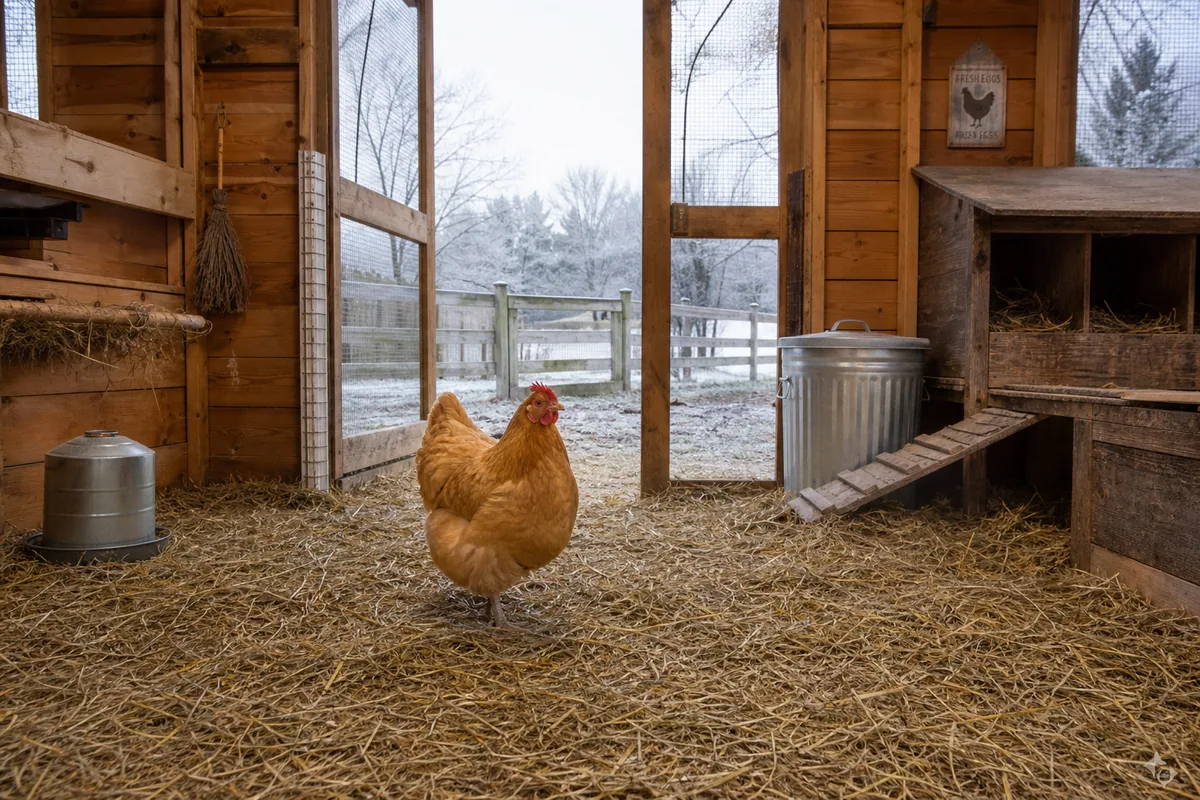
All Orpington color varieties share the same body type, weight, temperament, and egg production range. The Orpington breed family includes Buff, Black, Blue, White, Lavender, and Chocolate.
The differences between them are real but more specific than they appear at first glance.
| Variety | Availability | Broodiness | Eggs/Year | APA Recognized |
|---|---|---|---|---|
| Buff | Every major hatchery | Very high | 200-280 | Yes (1902) |
| Black | Common | High | 180-260 | Yes (1902) |
| Blue | Less common | High | 180-250 | Yes (1902) |
| White | Common | High | 180-260 | Yes (1905) |
| Lavender | Specialty breeders only | Moderate-high | 160-220 | No |
The Buff's main practical advantages over other Orpington colors are availability and hatchery investment. Because the Buff has been the dominant commercial form for 130 years, hatcheries have selected more carefully for egg production and laying consistency in the Buff than in rarer varieties.
A Buff from a reputable hatchery will typically lay at the high end of the breed range. Lavender or Chocolate Orpingtons sourced from specialty breeders may lay at the lower end as their genetics are less selectively managed for production.
The Buff's golden plumage also provides better camouflage in a standard backyard setting than a White Orpington. That is a minor but real predator-avoidance factor in open runs without full overhead coverage.
Climate Tolerance: Cold Hardy, Heat Sensitive
Buff Orpingtons handle cold weather with genuine effectiveness. Their dense underfeathering creates significant insulation.
A healthy Buff in good feather condition handles temperatures to 0°F without supplemental heat, provided the coop is dry, well-ventilated at the roofline, and free of drafts at roost height.
Cold hardiness is one of the breed's consistent strengths. The profuse plumage that defines the Buff's appearance is the same feature that makes it effective in northern climates.
Keepers in Minnesota, Canada, and northern Europe regularly report Buff Orpingtons wintering comfortably without heated coops.
- Single comb: Apply petroleum jelly to the comb and wattles on nights below 10°F to prevent frostbite on the tips
- Ventilation priority: Moisture from respiration is more dangerous than cold air. Keep high roofline vents open year-round
- Waterer management: Use a heated base waterer or bring water in twice daily below 25°F
- Body condition check: Run your hands under the feathers monthly in winter. Buffs look fully feathered even when underweight; check the keel bone directly
Heat tolerance is the breed's primary weakness. The same dense feathering that insulates in cold becomes a liability above 85-90°F.
Buff Orpingtons show heat stress signs earlier than lighter or less-feathered breeds: panting, spreading wings away from the body, seeking shade, and reducing movement. At sustained temperatures above 95°F, heat stress becomes heat stroke risk.
Obesity compounds heat sensitivity. Buff Orpingtons are naturally efficient feed converters, which means they gain weight easily in confinement.
An overweight Buff tolerates heat even less effectively than a bird in proper condition. Free-range access during the coolest parts of the day serves double duty: exercise controls weight and cooler air reduces heat exposure.
Coop Requirements and Flock Integration
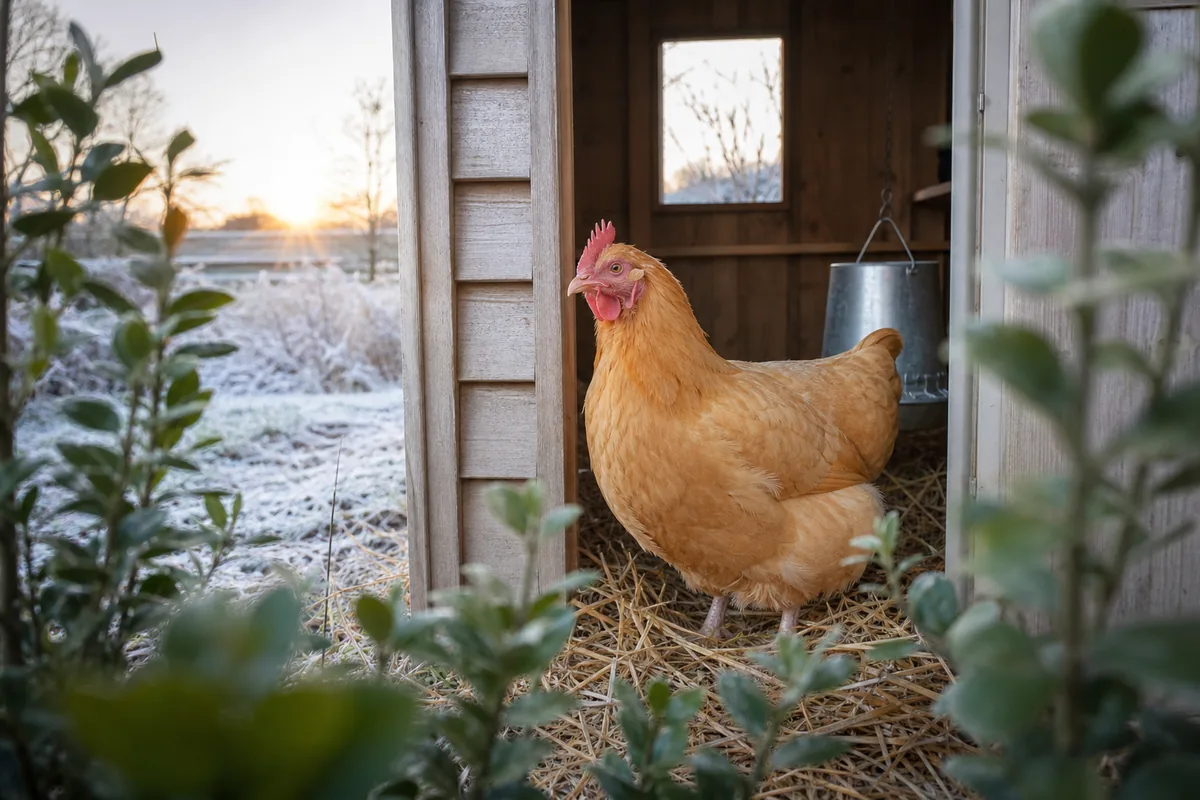
Buff Orpingtons are large birds with quiet behavior patterns. They adapt to both confined and free-range setups, but their size and tendency toward obesity mean space minimums matter more for Buffs than for smaller, more active breeds.
Flock integration requires attention to breed pairing. Buff Orpingtons rank low in mixed-breed pecking orders when kept with assertive breeds.
Rhode Island Reds, Plymouth Rocks, and Australorps will push Buffs away from feeders and occasionally pull their feathers. That is not catastrophic in a large run with multiple feed stations, but it does affect Buff body condition and laying consistency over time.
The most effective pairings are other gentle, similarly sized breeds. well with Buff Orpingtons because they share the same low-aggression temperament and similar body size.
Silkies and Polish are too small and too gentle; they end up at the bottom of the order even below Buffs. The ideal all-gentle flock uses Buff Orpingtons alongside Cochins, Australorps, and Brahmas.
For a cold-hardy gentle breed that pairs well with Buffs and brings a rose comb advantage in freezing climates, our Wyandotte guide covers the most compatible high-output addition to an all-calm flock.
Diet: Managing Weight in an Efficient Breed
Buff Orpingtons are efficient feed converters. They gain weight easily and do not self-regulate intake as effectively as lighter breeds.
Left with free-choice layer pellets and limited exercise, a confined Buff will become overweight within months. Obesity in hens causes reduced egg production, increased broodiness, and higher risk of internal laying and egg-binding complications.
The base diet is standard 16% protein layer pellets from 20-24 weeks onward. The management difference from lighter breeds is portion control and exercise, not feed type.
- Layer pellets: 16% protein, primary diet. Measure for confined birds rather than free-choice if body condition is poor
- Grower feed: 15% protein, weeks 8-20. Switch to layer at first egg, not at 18 weeks, because Buffs lay later
- Chick starter: 20-22% protein, hatch to week 8
- Oyster shell: Free-choice in a separate dish for laying hens only. Do not mix into chick or grower feed
- Insoluble grit: Free-choice whenever birds eat whole grains or forage
- Protein increase during molt: Raise to 18-20% protein. Buff feather regrowth is substantial given their plumage volume
Body condition scoring is the most important health monitoring task for Buff Orpingtons. Slide your hand under the feathers along the keel bone monthly.
A correct-weight hen shows a keel bone that is palpable but not sharply prominent and not buried under fat. A buried keel in a hen that feels "round" through the feathers means she is overweight.
Increase foraging time and reduce treats immediately.
Treats should not exceed 10% of daily intake. High-value options for Buffs are dried mealworms (protein during molt), plain cooked squash (low calorie, high water content for summer), and leafy greens.
Avoid corn and bread as regular treats in Buffs specifically because their caloric density accelerates weight gain without nutritional benefit.
Sources and references
- Buff Orpington breed history, APA Standard of Perfection recognition, and dual-purpose performance characteristicsThe Livestock Conservancy
- Broodiness frequency, incubation behavior, and broody-breaker management in backyard laying breedsPenn State Extension. Poultry Science
- Heat stress physiology and management in heavy dual-purpose chicken breedsPoultry Science, Vol. 100, Issue 9, 2021