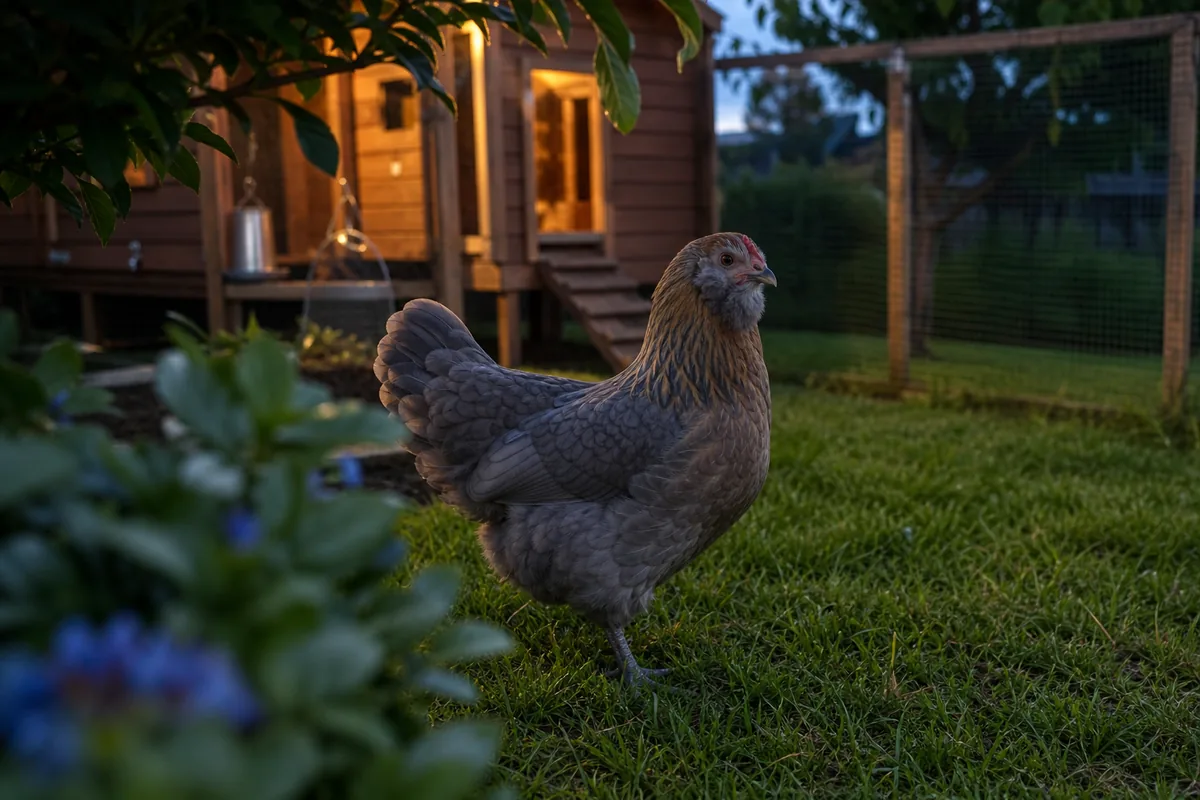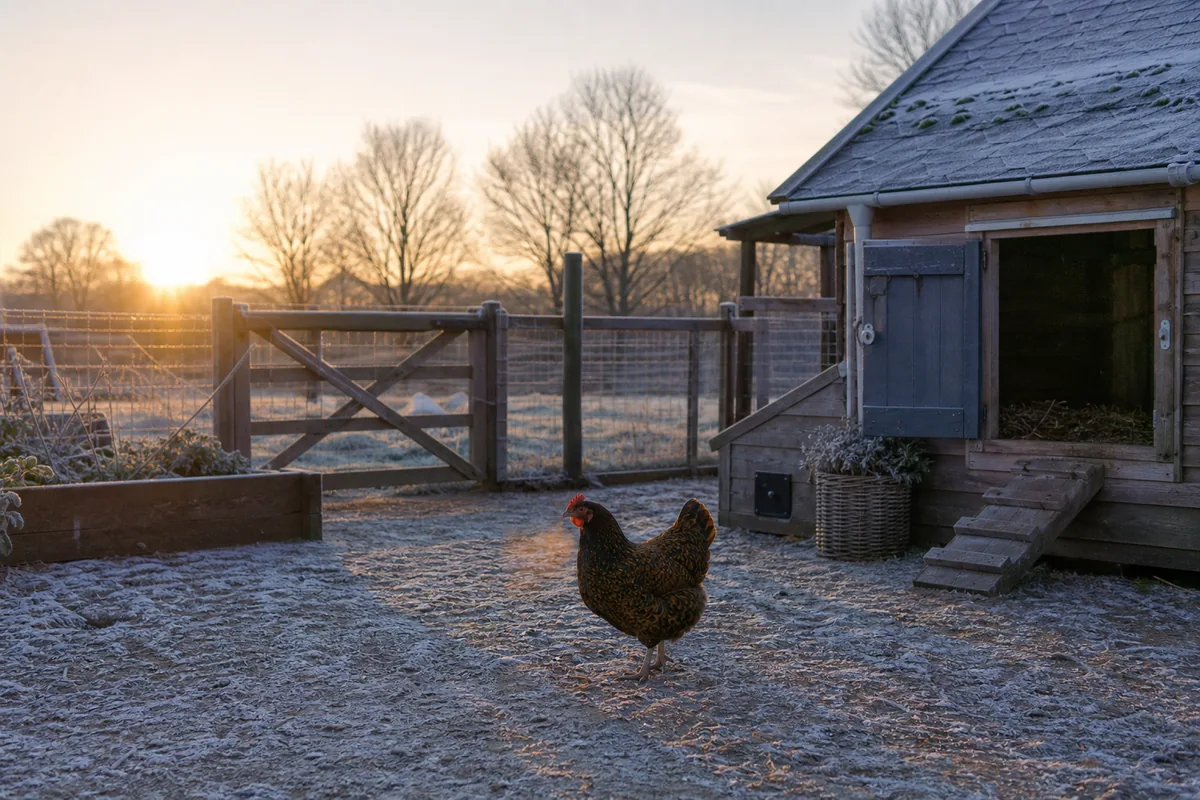
Cochins arrived in the United States from China in the 1840s and caused what historians literally call "Hen Fever," a craze that spread across England and America because nobody had seen anything like them. The profuse soft feathering that covers their legs and feet down to the toes, the round silhouette, the calm disposition: it was something genuinely new.
Today the Cochin sits in a clear category: ornamental and pet chicken, not a production layer. If you want maximum eggs, look elsewhere.
If you want a calm, cold -hardy bird that will hatch any egg you put under her and charm every person who meets her, the Cochin is the right call.
Key facts
- Eggs/Yr
- 150-180
- Hen Weight
- 8.5 lbs
- Rooster Weight
- 11 lbs
- Cold Hardy
- Excellent
- Lay Age
- 7-8 months
- Temperament
- Calm, gentle
Those numbers tell the essential story. A Cochin hen lays 150-180 medium brown eggs per year starting at 7-8 months, which is slower than most production breeds.
She weighs 8.5 lbs as a hen with a rooster reaching 11 lbs, making this a genuinely large bird. Cold hardiness is exceptional due to the density of her feathering.
The temperament is among the calmest of any chicken breed.
The Bantam Cochin deserves its own mention here before we go further. Bantam Cochins are one of the most popular show breeds in North America, with the same round silhouette and feathered feet scaled down to a fraction of the size.
Everything in this guide applies to both standard and bantam unless specifically noted.
Cochin Chicken Appearance: The Feathered Basketball
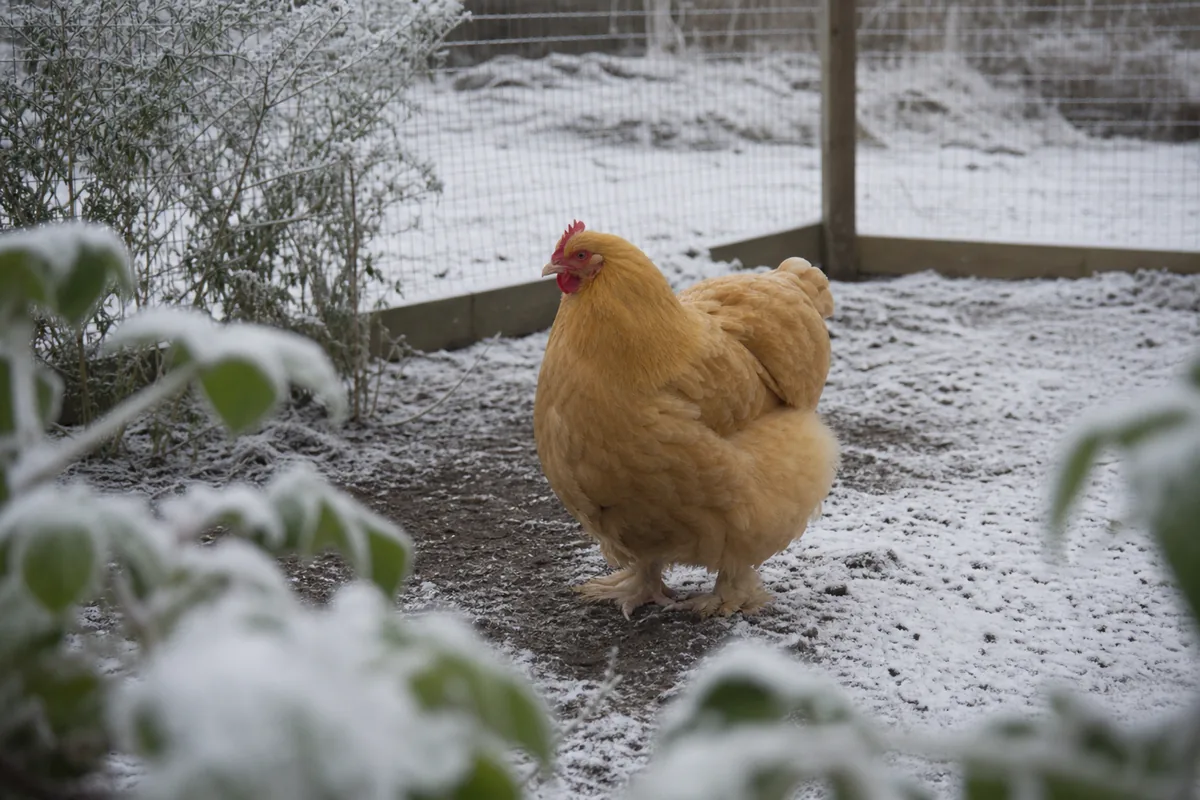
The phrase "feathered basketball" is not an exaggeration. A well-feathered standard Cochin hen is nearly round in profile, with soft plumage so profuse that it completely obscures the bird's actual body shape, legs, and feet.
You cannot see where the body ends and the legs begin. The feathering on the legs and feet is full and extends down to the toes.
The head is small relative to the body, which amplifies the round impression. The comb is single, small, and sits low.
The tail is short and held nearly flat, which adds to the ball-like silhouette. The eyes are orange-red, the beak is yellow, and the skin and legs are also yellow under all that feathering.
Recognized standard color varieties include:
- Buff: The most common and recognizable variety. Warm golden-tan plumage across the entire body.
- Black: Solid black with a green sheen in direct sunlight. Striking against the round silhouette.
- White: Pure white feathering. Shows dirt easily but visually dramatic.
- Partridge: Complex penciling pattern. Hens show rich brown with dark lacing; roosters are dramatically different with a bright red-orange hackle.
- Blue: Slate blue-grey plumage with darker lacing on each feather.
- Birchen, Brown, Barred, Silver Laced: Additional APA-recognized varieties with show populations.
Bantam Cochins carry all the same variety colors and the same silhouette in miniature. A Bantam Cochin typically weighs 26-30 oz for a hen and 30-34 oz for a rooster.
They are fully proportional scaled-down versions of the standard, not just smaller birds.
Egg Production: What 150-180 Eggs Per Year Actually Means
A Cochin hen at her peak lays roughly three eggs per week, reaching 150-180 medium brown eggs per year. That places her well below production breeds like Rhode Island Reds (250-300) or Australorps (250+).
For a keeper whose primary goal is egg production, the Cochin is the wrong choice.
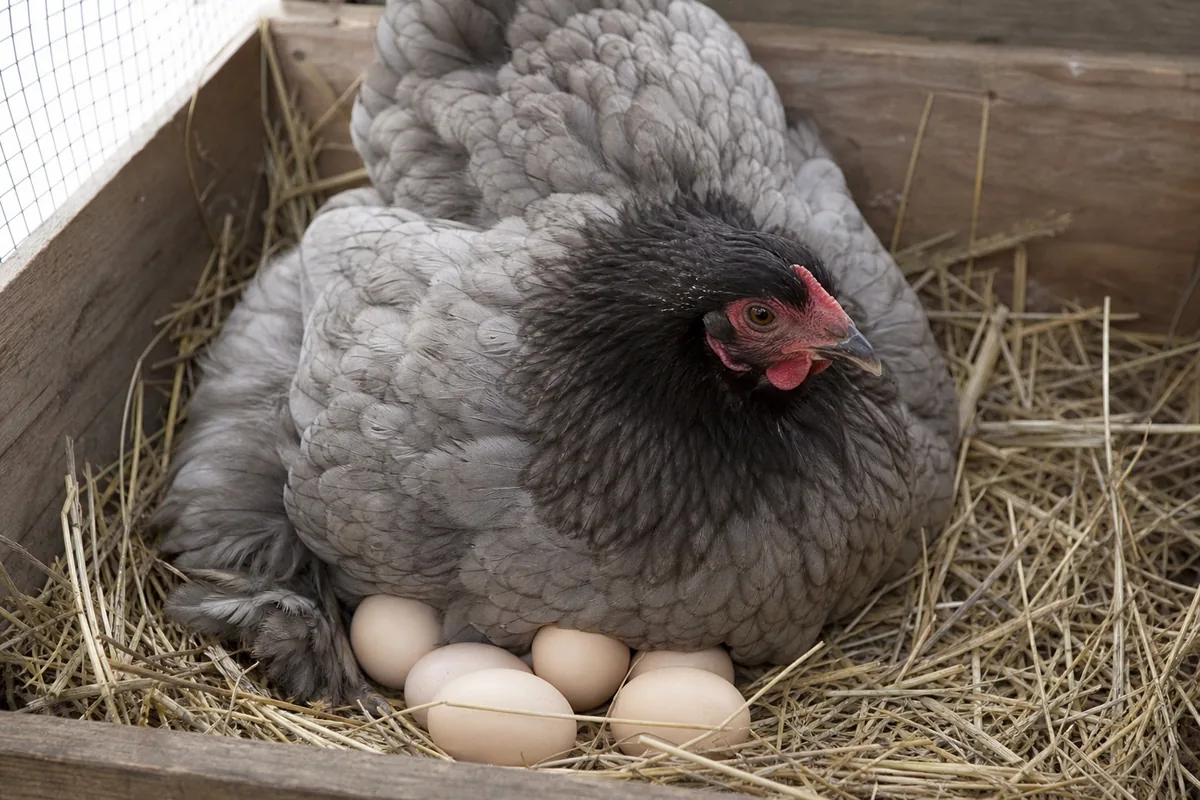
For a keeper who wants a calm yard bird and doesn't mind moderate egg numbers, or who needs a reliable broody hen to hatch other eggs, the Cochin makes complete sense. broodiness is the real asset here, and it's one the Cochin delivers more consistently than almost any other breed.
Cochins are among the broodiest chicken breeds. A Cochin hen in laying season will go broody repeatedly, sometimes several times per year.
She will sit diligently on any eggs placed under her, whether her own or from another species entirely. Keepers use Cochins as surrogate mothers for duck eggs, turkey eggs, and guinea fowl eggs because the Cochin does not discriminate.
She sits, she incubates, and she raises the resulting chicks with the same attentiveness regardless of species.
The trade-off is straightforward: broodiness stops egg production. Each broody cycle takes the hen out of laying for three weeks of incubation plus several more weeks of mothering.
A Cochin who goes broody twice in a season will produce noticeably fewer eggs than the 150-180 annual figure suggests. If you need eggs and not a surrogate, break broodiness early using a wire-bottomed cage with airflow underneath for two to three days.
For a ranked comparison of annual egg output across popular backyard breeds, see our egg-laying breed comparison covering the top producers by volume and reliability.
Temperament: Calm, Gentle, and Good With Children
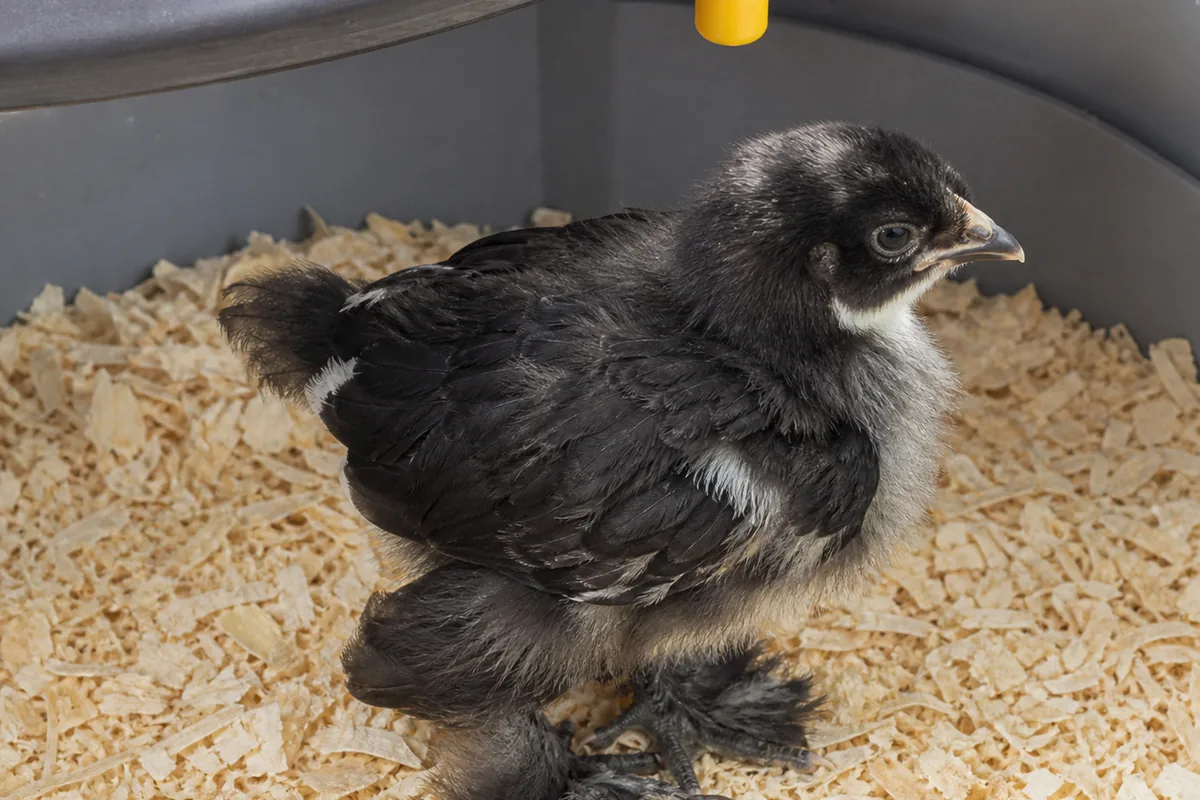
The Cochin's temperament is one of the most consistent traits across the breed. Hens are calm to the point of passivity.
They do not startle easily, they tolerate handling from a young age, and they show almost no aggression toward other flock members or toward humans. Roosters are generally more relaxed than roosters of production breeds, though individual variation exists.
This temperament makes Cochins one of the best chicken breeds for children. The hens move slowly due to their size and feathering, they rarely peck when picked up, and they often become genuinely tame with regular handling.
They are not shy birds: a well-socialized Cochin hen will follow her keeper around the yard and accept treats from the hand without hesitation.
The calm disposition has one practical implication for flock planning. Cochins rank low in pecking order assertiveness.
In a mixed flock with aggressive breeds like Rhode Island Reds or New Hampshire Reds, Cochins will consistently lose access to food and water if not given separate feeding stations. They will not defend themselves adequately and will show feather damage over time.
Best flock pairings for Cochins are other large, calm breeds:
- Brahma: The other great Asiatic heavy breed. Similar size and calm disposition. A natural pairing. See our guide to the a similar Asiatic breed.
- Orpington: Fluffy, docile, large. Integrates well with Cochins without dominance problems. Our Orpington breed guide covers the overlap in detail.
- Silkie: Smaller but equally calm. The feathering mismatch creates some social confusion, but temperament-wise they're compatible. See as another pet breed for a full comparison.
- Marans, Dominique, Sussex: Mid-assertiveness breeds that don't bully Cochins but provide enough flock energy to keep things active.
Avoid pairing Cochins with aggressive high-energy breeds in confined runs. Leghorns, Rhode Island Reds, and New Hampshires will claim feed priority and cause chronic stress in Cochin flocks that lack sufficient space.
Coop Requirements: Special Considerations for Feathered Feet
Cochins have two housing requirements that differ from standard breeds: low roost bars and dry conditions. Both are non-negotiable for keeping this breed without chronic health problems.
The feathering on Cochin legs and feet is the breed's signature feature and its greatest vulnerability. Mud, wet bedding, and standing water saturate the leg feathering and hold moisture against the skin.
Sustained moisture causes feather loss, skin irritation, and creates entry points for bacterial and fungal infections. A Cochin in a muddy run or a damp coop will develop leg problems within weeks.
Roost height is the second critical difference. Standard chickens roost at 18-30 inches without problems.
A Cochin hen at 8.5 lbs, with reduced visibility to the floor through her own feathering, lands from height with more force than lighter breeds and cannot see her landing zone clearly. Roost bars above 12-18 inches create landing injuries and bumblefoot from repeated impact.
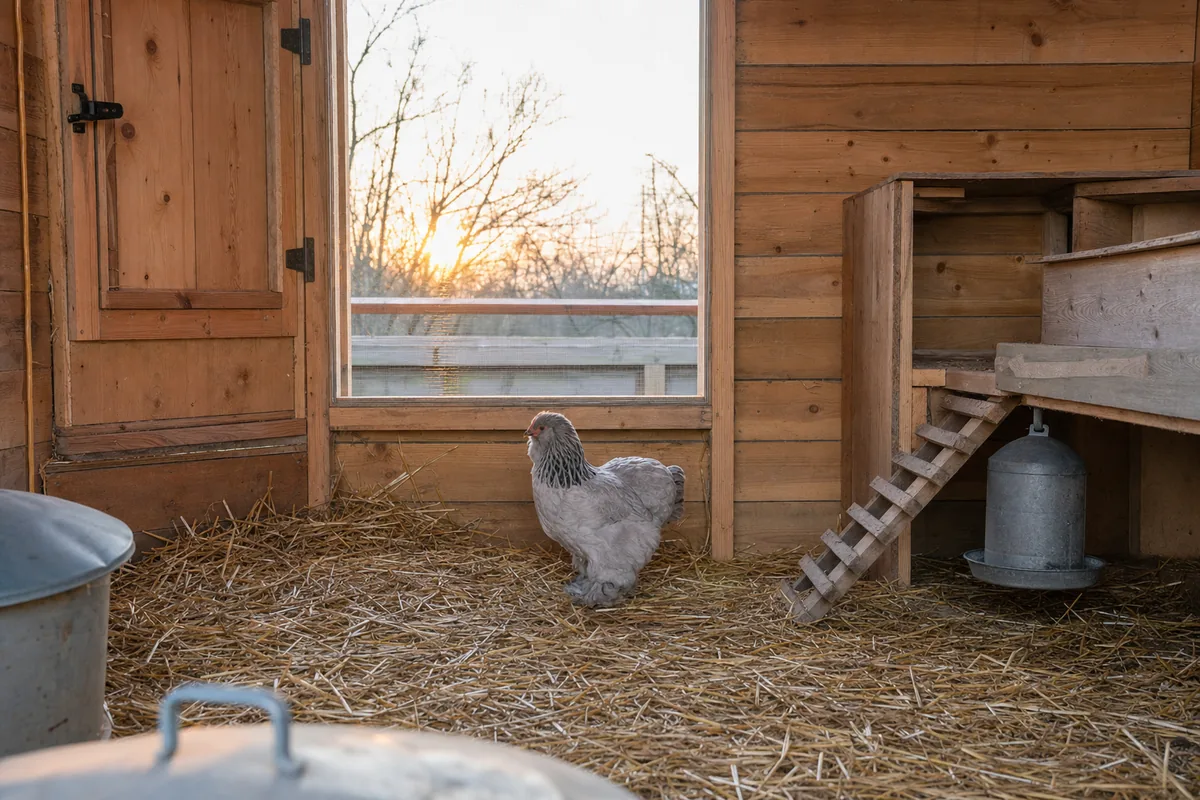
Keep roost bars at 12 inches for standard Cochins and 8-10 inches for bantams.
Nest boxes should be lower to the floor as well and sized generously. A Cochin hen sitting on eggs takes up considerable space.
Use a minimum 14x14x14 inches for standard hens, with a low entry bar so she can step in and out without difficulty.
| Requirement | Standard Cochin | Bantam Cochin |
|---|---|---|
| Indoor floor space (min) | 5 sqft per bird | 2 sqft per bird |
| Outdoor run space (min) | 15 sqft per bird | 5 sqft per bird |
| Roost bar height | 12-18 inches | 8-12 inches |
| Nest box size (min) | 14x14x14 inches | 10x10x10 inches |
| Roost bar width | 3-4 inches (flat board) | 2-3 inches (flat board) |
| Bedding depth (min) | 5-6 inches (dry pine shavings) | 3-4 inches (dry pine shavings) |
| Muddy run tolerance | None | None |
Standard Cochins need more floor space than their weight category would suggest because their feathering effectively increases their footprint. A Cochin hen in full feather takes up more lateral space than an 8.5 lb production bird would.
Plan space based on that visual footprint, not just weight.
Cold and Heat Hardiness: Where This Breed Excels and Fails
Cold hardiness in Cochins is exceptional. The same profuse feathering that causes mud problems is also the most effective natural insulation of any chicken breed.
A Cochin in a dry, ventilated coop handles temperatures well below freezing without supplemental heat. The small single comb reduces frostbite risk compared to large-combed breeds.
In genuinely cold climates with hard winters, the Cochin is one of the best-adapted breeds available.
Heat tolerance is the opposite. Cochins struggle in sustained heat above 85-90°F because that dense feathering traps body heat with no way to release it.
In hot climates, or during heat waves in otherwise moderate climates, Cochins require active management:
- Shade access: Cochins must have shade covering at least half the run area in summer. They will not seek water if they cannot get out of direct sun first.
- Multiple water stations: Place waterers in the shadiest part of the run. Refresh with cool water twice daily above 85°F. Add ice during heat waves.
- Air movement: A box fan drawing air through the coop is more effective than frozen treats. Cochins panting in a hot, still coop are in real distress.
- Limited afternoon activity: If possible, confine Cochins to a shaded covered run during peak heat hours (12pm-4pm) in summer.
- Feather trimming: Some keepers trim the feathering around the vent area in summer to improve heat release. This is optional but helps in climates above 90°F for extended periods.
If you are in a climate with both hard winters and hot summers (USDA zones 5-7), the Cochin performs well in winter and needs careful management in July and August. If you are in a consistently hot climate (zones 8-10), the Cochin is a poor fit and better replaced with heat-adapted breeds like the Leghorn or Egyptian Fayoumi.
Weight and Obesity Risk: Monitor Feed Carefully
Standard Cochins are heavy birds at 8.5-11 lbs, and the round silhouette makes it genuinely difficult to visually assess whether a bird is at a healthy weight or overweight. The feathering conceals body condition in a way that no other breed matches.
A Cochin hen can become significantly obese before it becomes visible.
Obesity in Cochins reduces egg production, causes leg joint stress, and shortens the bird's life. The breed already has a tendency toward weight gain when given free-choice access to high-calorie feeds or unlimited scratch grains.
This is not a minor concern: manage the diet actively, not passively.
Body condition scoring a Cochin requires hands-on assessment. Run your hand along the keel (breastbone): a healthy bird should have the keel bone palpable with moderate flesh on either side.
If you cannot feel the keel bone at all, the bird is overweight. If the keel is sharp and prominent with no covering flesh, she is underweight.
Pros
- Exceptional cold hardiness due to dense feathering
- Calm, gentle temperament suitable for children and new keepers
- Outstanding broodiness: hatches and raises any eggs placed under her
- Visually striking: one of the most recognizable breeds in the world
- Bantam variety is among the top show breeds in North America
- Good with docile flock mates, rarely aggressive
- Bears confinement better than active breeds
Cons
- Poor egg production: 150-180/yr, 7-8 months to first egg
- Cannot tolerate sustained heat above 85-90°F
- Feathered feet require dry conditions: mud causes chronic leg problems
- Strong tendency toward obesity: feed must be actively managed
- Low roost bars required: standard heights cause landing injuries
- Loses feed competition in mixed flocks with assertive breeds
- Not a dual-purpose breed: minimal meat utility at table weight
The practical solution for Cochin weight management is structured feeding rather than free-choice layer pellets. Feed a measured amount twice daily, watch how quickly the flock cleans up the feed, and adjust accordingly.
Scratch grains should be a treat only, no more than a tablespoon per bird per day. High-fiber greens like kale, cabbage, and dandelion are good volume foods that satisfy foraging instincts without adding significant calories.
Health: Feathered-Foot Problems and Common Issues
Cochins are generally hardy birds when kept in appropriate conditions. Most health problems in this breed trace back to two root causes: wet feathered feet and obesity.
Both are preventable with correct management.
Scaly leg mites are more common in Cochins than in clean-legged breeds because the leg feathering provides ideal shelter for mites to hide. Check under the leg feathering monthly by parting the feathers and examining the leg scales.
Healthy scales lie flat and are uniform in color. Scaly leg mites cause scales to lift, thicken, and become crusty.
Treat early cases with petroleum jelly applied directly to the leg scales weekly for four to six weeks, which suffocates the mites by blocking their breathing. Severe cases require veterinary ivermectin.
Bumblefoot is elevated risk in Cochins for the same reason it is in any heavy bird: body weight on landing creates micro-abrasions on the foot pad, and those abrasions get infected by Staphylococcus aureus bacteria in the coop environment. Low roost bars reduce landing impact.
Dry bedding reduces pathogen load. Check foot pads monthly: a black scab on the bottom of the foot pad is bumblefoot and should be treated before it progresses.
Beyond those two breed-specific concerns, standard poultry health protocols apply:
- Marek's disease: Vaccinate at hatch or purchase pre-vaccinated chicks from NPIP-certified hatcheries. Marek's is endemic in most backyard poultry environments and spreads through feather dander. There is no treatment, only prevention.
- Coccidiosis: Bloody or watery droppings in chicks 3-6 weeks old. Use medicated chick starter or vaccinate at hatch. Treat active cases with amprolium.
- External parasites (lice and mites): Check under wings and around the vent weekly. The Cochin's dense feathering can harbor large parasite populations before symptoms become obvious. Treat coop and birds simultaneously with permethrin.
- Respiratory illness: Rattling breath or nasal discharge means immediate quarantine. Identify the pathogen before treating. Mycoplasma gallisepticum is common in backyard flocks and persists as a chronic carrier state even after recovery.
Quarantine all new birds for 30 days before introducing them to an established Cochin flock. The breed's calm temperament means sick birds may not show obvious behavioral distress until an illness is already advanced.
Weekly hands-on health checks are more important in Cochins than in active, high-energy breeds where sick birds are quickly noticeable by their change in behavior.
Cochin vs Brahma: Choosing Between the Two Great Asiatic Breeds
The Cochin and the Brahma are the two defining Asiatic heavy breeds, and keepers frequently compare them directly. Both are large, calm, cold-hardy, and feathered-legged.
The differences matter for specific management situations.
| Trait | Cochin | Brahma |
|---|---|---|
| Hen weight | 8.5 lbs | 9.5-10 lbs |
| Rooster weight | 11 lbs | 12 lbs |
| Eggs per year | 150-180 | 150-180 |
| Lay start age | 7-8 months | 6-7 months |
| Broodiness | Very high | Low to moderate |
| Cold hardiness | Excellent | Excellent |
| Heat tolerance | Poor | Poor |
| Feathered feet | Yes, profuse | Yes, moderate |
| Comb type | Single, small | Pea (lowest frostbite risk) |
| Meat utility | Low (too much feathering) | Moderate (more breast meat) |
| Show popularity | Very high (especially bantam) | High (standard size) |
The decision is usually simple: if you need a broody hen to hatch eggs from other breeds or species, choose the Cochin. If you want slightly better egg production with less broodiness and marginally more meat utility, the the similar Asiatic breed to consider.
Both are excellent choices for cold climates and both fail in sustained heat.
Before choosing between them, review our coop setup guide to confirm your housing meets the low-roost and dry-bedding requirements both feathered-legged breeds demand.
If you want a third option in the large, calm breed category, our Jersey Giant breed guide covers the American alternative with clean legs and stronger egg production than either Asiatic breed.
Sources and references
- Cochin breed history, APA variety standards, and Asiatic class classificationAmerican Poultry Association: Standard of Perfection
- Broodiness frequency and incubation behavior in heritage chicken breedsPoultry Science, Vol. 98, Issue 9, 2019
- Feathered-leg breed management: leg mite prevention, bumblefoot risk, and housing requirements for heavy breedsof Kentucky Cooperative Extension: Poultry Science
- Body condition scoring and obesity prevention in backyard poultryMerck Veterinary Manual: Poultry Nutrition