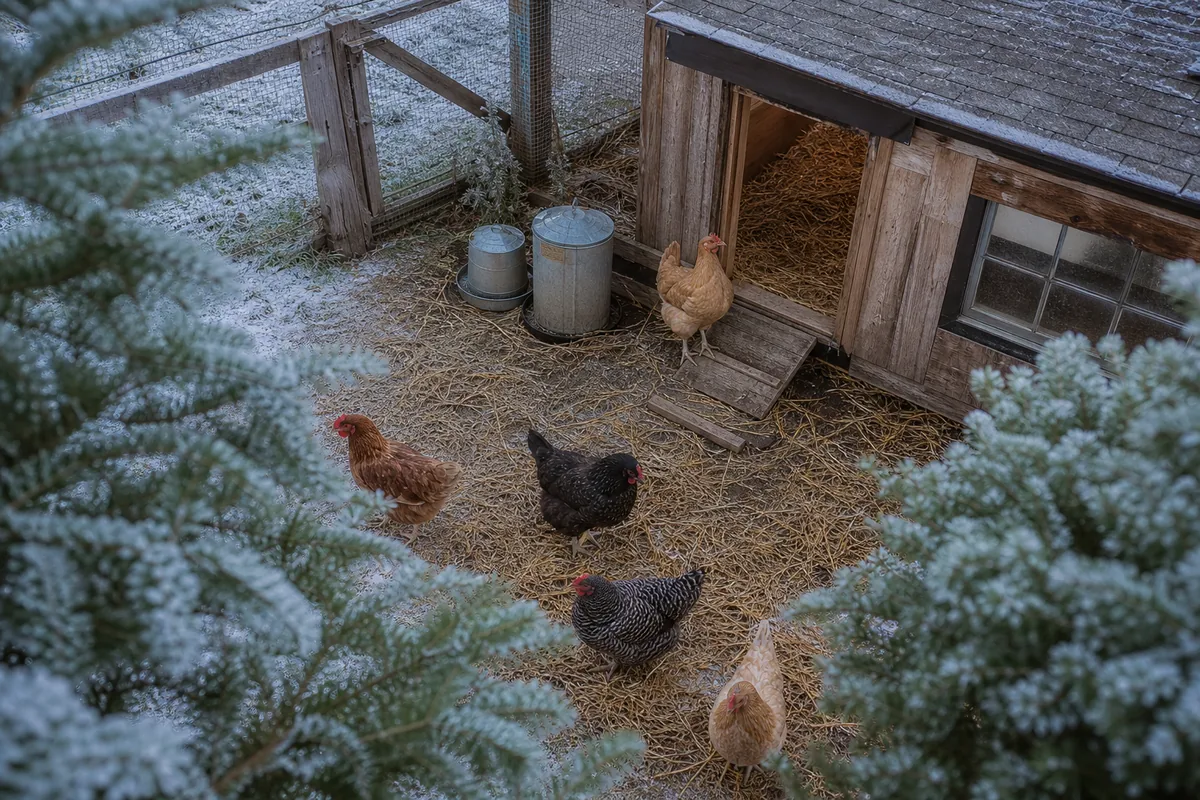
If you keep a cold climate flock, breed selection is not optional. it is the difference between birds that thrive through a Minnesota January and birds that lose comb tips to frostbite in November. We ranked 10 breeds on four cold-weather criteria: comb type, feather density, winter laying continuity, and body mass.
The number-one factor is comb type.
A large single comb carries blood to 8-12 exposed points, every one of which can freeze at 20°F.
A rose or pea comb sits flat against the skull with almost no exposed tissue. That single trait matters more than body size, breed origin, or any supplement you can add to the water.
What Makes a Chicken Cold-Hardy in Winter
Cold hardiness is not one trait. it is a combination of four physical characteristics that work together.
Comb type: Rose and pea combs sit close to the skull with minimal exposed tissue. Single combs have tall, upright points that are highly susceptible to frostbite at temperatures below 20°F. This is the single most important trait for cold-climate selection.
Feather density and coverage: Heavier feathering across the body, breast, and thighs creates natural insulation. Some breeds also have feathered feet, which adds protection but requires cleaner bedding to prevent ice ball buildup.
Body mass: Larger birds retain body heat more efficiently than lightweight breeds. A 9 lb Brahma loses heat far more slowly than a 4.5 lb Leghorn in the same ambient temperature.
Wattle size: Small, compact wattles have less exposed tissue than long, pendulous ones. Breeds with large wattles need more active protection in deep cold even if their comb type is favorable.
The breeds that score well on all four of these traits are consistently the ones keepers in cold climates report the fewest winter problems with.
1. Wyandotte. Best Overall for Cold Weather
- Comb
- Rose
- Eggs/year
- 200-240
- Weight
- 6.5-8.5 lbs
- Origin
- United States (developed for northern winters)
Wyandottes were bred specifically for cold American winters and show it in every physical detail. Their rose comb lies flat with almost no exposed tissue, giving them near-immunity to frostbite even in sustained subzero temperatures.
Dense, tightly-laced feathering covers the body from neck to tail with no thin spots. They are calm, manageable birds that continue laying through winter far better than most breeds.
Read our full rose comb advantage breakdown.
Pros
- Rose comb: near-zero frostbite risk
- Dense feathering handles deep cold
- Reliable winter egg production
- Calm temperament, easy to manage
- Multiple color varieties available
Cons
- Lower egg output than RIR or Plymouth Rock
- Independent personality, not lap birds
- Slightly harder to source than common breeds
2. Plymouth Rock (Barred Rock). Best Budget Cold-Hardy Breed
- Comb
- Single (moderate size)
- Eggs/year
- 250-280
- Weight
- 7-9 lbs
- Origin
- United States
Plymouth Rocks are one of the most cold-tolerant single-comb breeds available, and they earn that reputation through body mass and dense feathering rather than comb type alone. Their single comb is moderate in size compared to Leghorns, and most keepers in cold climates manage it fine with routine petroleum jelly application.
They are widely available, relatively inexpensive, and lay reliably through winter.
Learn more about this classic hardy breed.
Pros
- Very hardy despite single comb
- High egg production year-round
- Excellent temperament, easy to handle
- Widely available and affordable
- Large body mass retains heat well
Cons
- Single comb needs winter maintenance
- Not as frostbite-resistant as rose comb breeds
- Moderate wattle size requires monitoring
3. Orpington (Buff). Best for Extreme Insulation
- Comb
- Single (medium)
- Eggs/year
- 200-250
- Weight
- 7-10 lbs
- Origin
- England
Orpingtons carry more feather volume per square inch than almost any other production breed. That extreme density creates a natural down coat that keeps body temperature stable well below freezing.
Their British breeding prepared them for cold, wet winters. a climate that punishes poorly-feathered birds fast.
The tradeoff is a single comb that needs attention in deep cold. Their insulated feathering is genuinely unmatched among dual-purpose breeds.
Pros
- Exceptional feather insulation
- Large body mass handles sustained cold
- Docile, easy to manage and inspect
- Good egg production for a cold-hardy breed
- Handles cold wet winters well
Cons
- Single comb requires frostbite prevention
- Dense feathers mat when wet. needs dry housing
- Heat stress risk above 85°F in summer
4. Brahma. Best for Extreme Cold Body Mass
- Comb
- Pea
- Eggs/year
- 150-200
- Weight
- 9.5-12 lbs
- Origin
- United States (Asian heritage)
Brahmas give you pea combs and the largest body mass of any breed on this list.
A 12 lb Brahma hen loses heat at a fraction of the rate of a standard dual-purpose bird. Their pea comb is nearly frostbite-proof.
The feathered feet are an asset in the cold but require clean, dry bedding. packed ice or frozen mud between the foot feathers causes serious problems. This giant cold-hardy breed is the top pick for keepers dealing with extended winters below 0°F.
Pros
- Pea comb: near-zero frostbite risk
- Massive body mass: best heat retention
- Calm, docile temperament
- Handles extended subzero temperatures
- Impressive appearance
Cons
- Lower egg production than most breeds
- Feathered feet require dry bedding management
- Slow to mature, heavy feed consumption
- Takes up more coop space per bird
5. Australorp. Best Productive Cold-Hardy Breed
- Comb
- Single (medium)
- Eggs/year
- 250-300
- Weight
- 6.5-8 lbs
- Origin
- Australia
Australorps were developed from Orpington stock selected for production rather than show, and they inherited both the feather density and the cold tolerance of their British ancestors. They hold the world record for egg production and maintain strong winter laying even without supplemental lighting.
The single comb needs basic care below 20°F, but otherwise these are low-maintenance cold-weather birds.
Our Australorp breed guide covers the full care profile, egg production data, and comb management steps for keepers adding this breed to a cold-climate flock.
6. Rhode Island Red. Most Adaptable Cold-Hardy Breed
- Comb
- Single (medium-large)
- Eggs/year
- 250-300
- Weight
- 6.5-8.5 lbs
- Origin
- United States
Rhode Island Reds are tough across all conditions, including cold. Their body mass and dense red feathering provide solid insulation, and they are far more cold-tolerant than their single comb might suggest.
In climates that regularly drop below 10°F, the comb requires active management.
In zones where winters stay mostly above 20°F, they handle it without intervention. They are the most forgiving overall. cold or warm.
7. Sussex. Best British Cold-Weather Heritage Breed
- Comb
- Single (medium)
- Eggs/year
- 250-275
- Weight
- 7-9 lbs
- Origin
- England
Sussex chickens were developed in the cold, wet English countryside and carry that tolerance in their genetics. They forage actively in cold weather when other breeds huddle inside, supplementing their own diet even in winter.
The speckled variety is the most common and visually striking.
Cold-climate keepers in the Pacific Northwest and maritime climates consistently report Sussex as one of their best performers.
8. Cochin. Best Feather Coverage for Cold
- Comb
- Single (small)
- Eggs/year
- 150-180
- Weight
- 8-11 lbs
- Origin
- China
Cochins are covered in feathers from beak to toenail. Their single comb is small by comparison, and the overall feather volume is the most dramatic on this list after Silkies.
They are not production birds. egg output is low and they go broody frequently. But for keepers in extreme cold who want hardy, ornamental birds that handle subzero temperatures without supplemental heat, Cochins are a serious option.
9. Dominique. Best Rose Comb Heritage American Breed
- Comb
- Rose
- Eggs/year
- 180-230
- Weight
- 5-7 lbs
- Origin
- United States (oldest American breed)
The Dominique is the oldest American chicken breed, and its rose comb is a defining characteristic bred specifically for northeastern winters. They are smaller than Wyandottes but carry the same comb advantage with a lower feed requirement per bird.
Dominiques are active foragers that handle cold better than their modest size suggests.
A solid choice for smaller flocks in cold climates where feed efficiency matters.
10. New Hampshire Red. Most Rugged Cold-Climate Dual-Purpose Bird
- Comb
- Single (medium)
- Eggs/year
- 200-250
- Weight
- 6.5-8 lbs
- Origin
- United States (New Hampshire)
New Hampshire Reds were developed from Rhode Island Red stock specifically for New England winters, selecting for faster maturity, heavier body condition, and cold tolerance. They are slightly less prolific than RIRs but bred specifically for cold-climate performance.
Their single comb is medium-sized and needs the same petroleum jelly treatment as other single-comb breeds, but their body mass and feathering are notably better suited to sustained cold than the average dual -purpose bird.
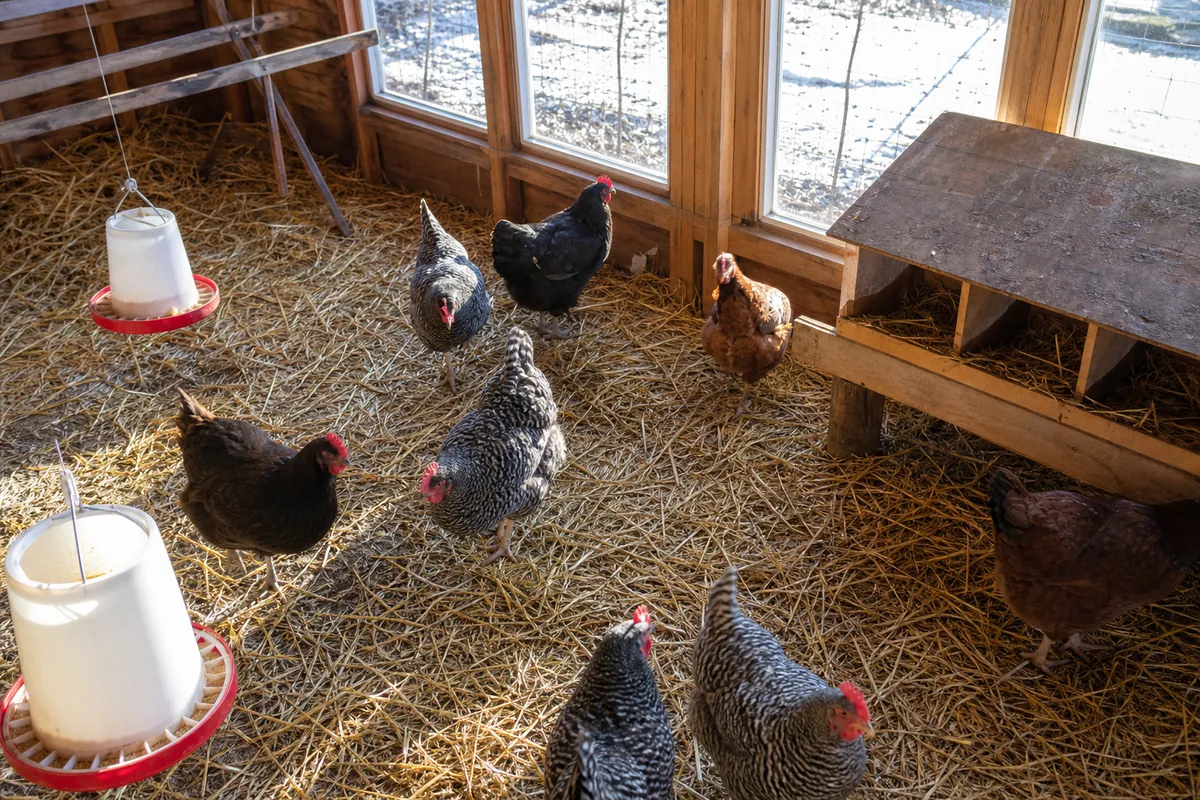
Cold-Weather Breed Comparison
| Breed | Comb Type | Winter Eggs | Frostbite Risk | Best For |
|---|---|---|---|---|
| Wyandotte | Rose | Good (200-240) | Very Low | Best overall cold pick |
| Plymouth Rock | Single | Excellent (250-280) | Low-Medium | Budget cold-hardy |
| Orpington | Single | Good (200-250) | Low-Medium | Maximum insulation |
| Brahma | Pea | Moderate (150-200) | Very Low | Extreme cold, large body |
| Australorp | Single | Excellent (250-300) | Low-Medium | Best production + cold |
| Rhode Island Red | Single | Excellent (250-300) | Medium | All-around adaptability |
| Sussex | Single | Very good (250-275) | Low-Medium | British cold tolerance |
| Cochin | Single (small) | Low (150-180) | Low | Ornamental cold-hardy |
| Dominique | Rose | Good (180-230) | Very Low | Heritage rose comb |
| New Hampshire Red | Single | Good (200-250) | Medium | Rugged dual-purpose |
Breeds to Avoid in Cold Climates
Not all chickens belong in cold-weather flocks. These four breeds have physical traits that make cold-climate keeping genuinely difficult.
Leghorn (White): Leghorns have the largest single combs on any production breed. tall, upright, and with multiple exposed points. They also carry minimal body mass (4.5-6 lbs) and lean feathering. In sustained cold below 25°F, comb frostbite is nearly inevitable without daily intervention. They are a warm-climate breed.
Polish: The crest of feathers on a Polish chicken collects moisture, snow, and ice. A wet frozen crest sits against the skull and causes serious cold injury. Polish birds in cold climates need their crests trimmed for winter, which defeats much of their visual appeal and still doesn't fully solve the problem.
Silkie: Silkies have non-waterproof feathers. Where standard chicken feathers shed rain and snow, Silkie feathers absorb it. A wet Silkie in 25°F temperatures loses body heat rapidly and can go hypothermic in conditions that leave hardier breeds completely comfortable. They need enclosed, draft-free housing with dry bedding year-round in cold climates.
Naked Neck (Turken): The exposed neck skin that gives this breed its distinctive appearance is a significant liability in cold. Without feather coverage on the neck and upper chest, heat loss is accelerated and frostbite risk is real. They are hardy in other respects but the neck anatomy is a cold-weather problem that cannot be managed out.
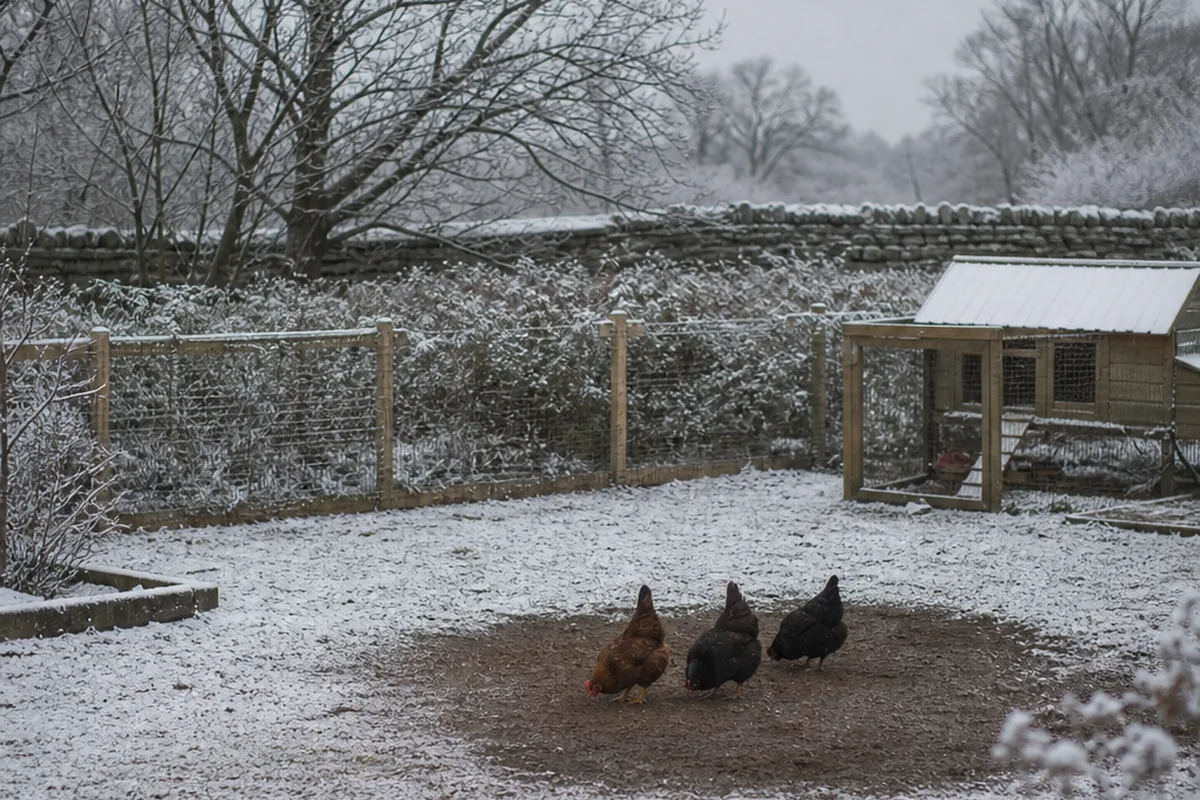
Cold-Weather Flock Management Basics
Breed selection handles the biology.
The rest is management. These are the practices that make a cold-hardy flock actually perform through winter.
Good cold-weather coop management includes:
- Ventilation over insulation: Moisture kills cold-climate flocks faster than cold does. Ammonia buildup and wet litter cause respiratory disease at any temperature. Keep ventilation open at the roofline, not at bird level, to exhaust moisture without creating drafts.
- Wide roost bars: Flat 2x4 roost bars (wide side up) allow birds to sit on their feet, keeping toes covered by belly feathers. Round dowels force birds to grip and expose toes to cold air.
- Deep litter: A 6-8 inch layer of dry bedding generates composting heat at the floor level and gives birds warm material to scratch in. Add fresh bedding on top, never remove the entire base in winter.
- Heated waterers: Hydration is the primary winter egg-production limiter. Birds that won't drink won't lay. A heated base or submersible heater keeps water liquid below freezing.
- Extra calories in deep cold: Scratch grains fed in the evening before roosting give birds calories to burn through the night. Corn scratch is the standard choice.
For a full guide on these practices, see our winter management guide.
Sources and references
- Frostbite prevention and comb type variation in domestic poultry under cold-climate conditionsof Applied Poultry Research, Vol. 29, 2020
- Cold weather management for backyard poultry flocksof Minnesota Extension. Poultry Science
- Heritage breed cold-hardiness: breed characteristics and winter performancePenn State Extension. Small Flock Management