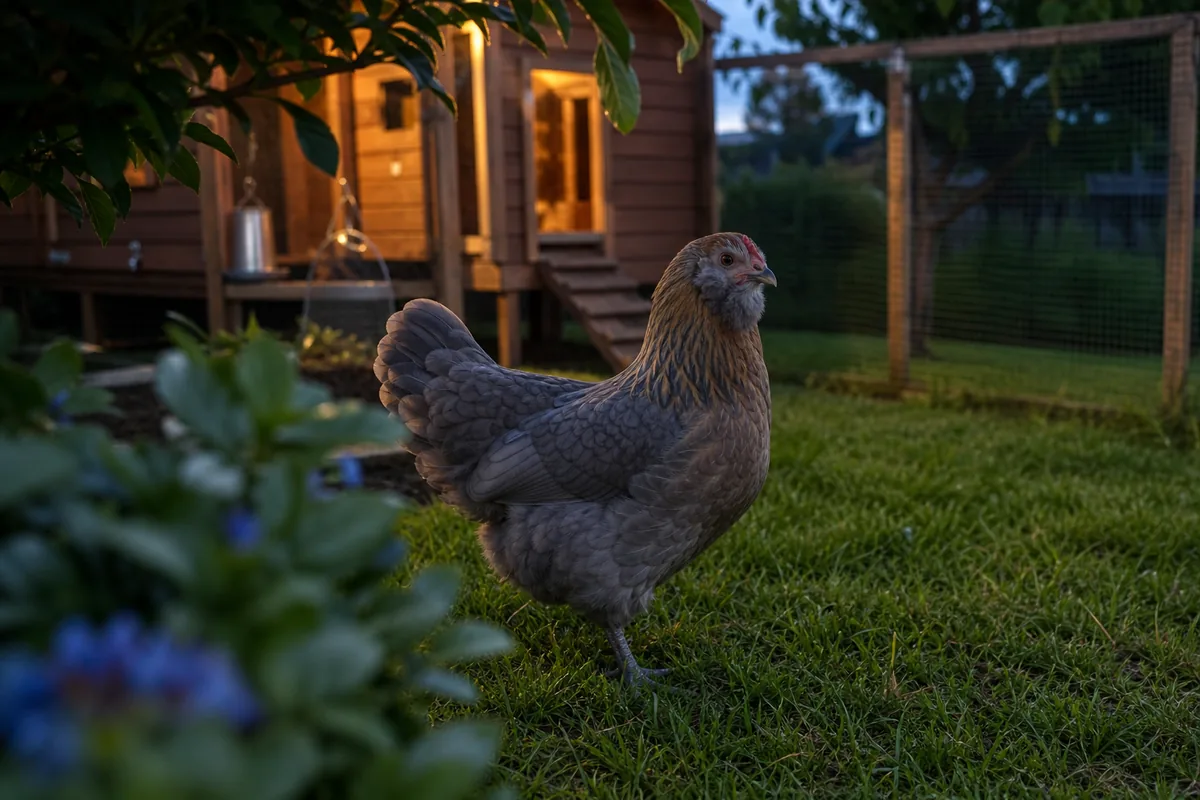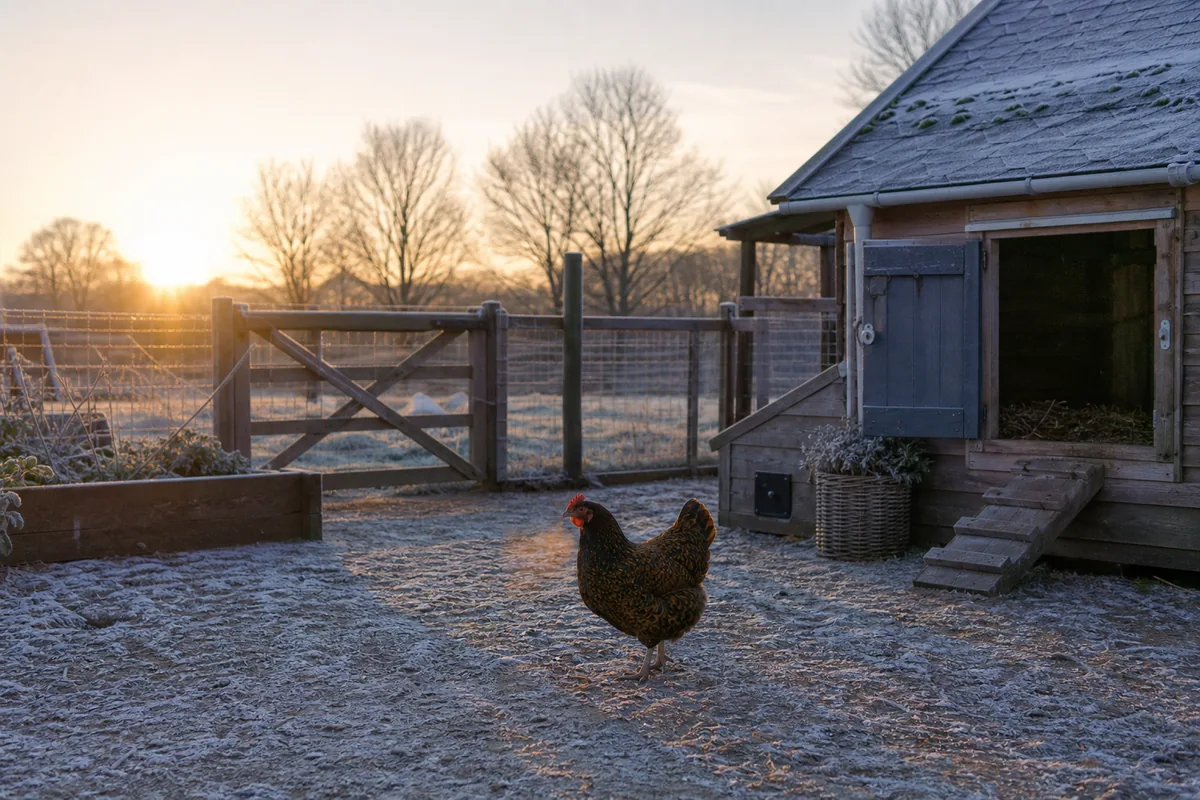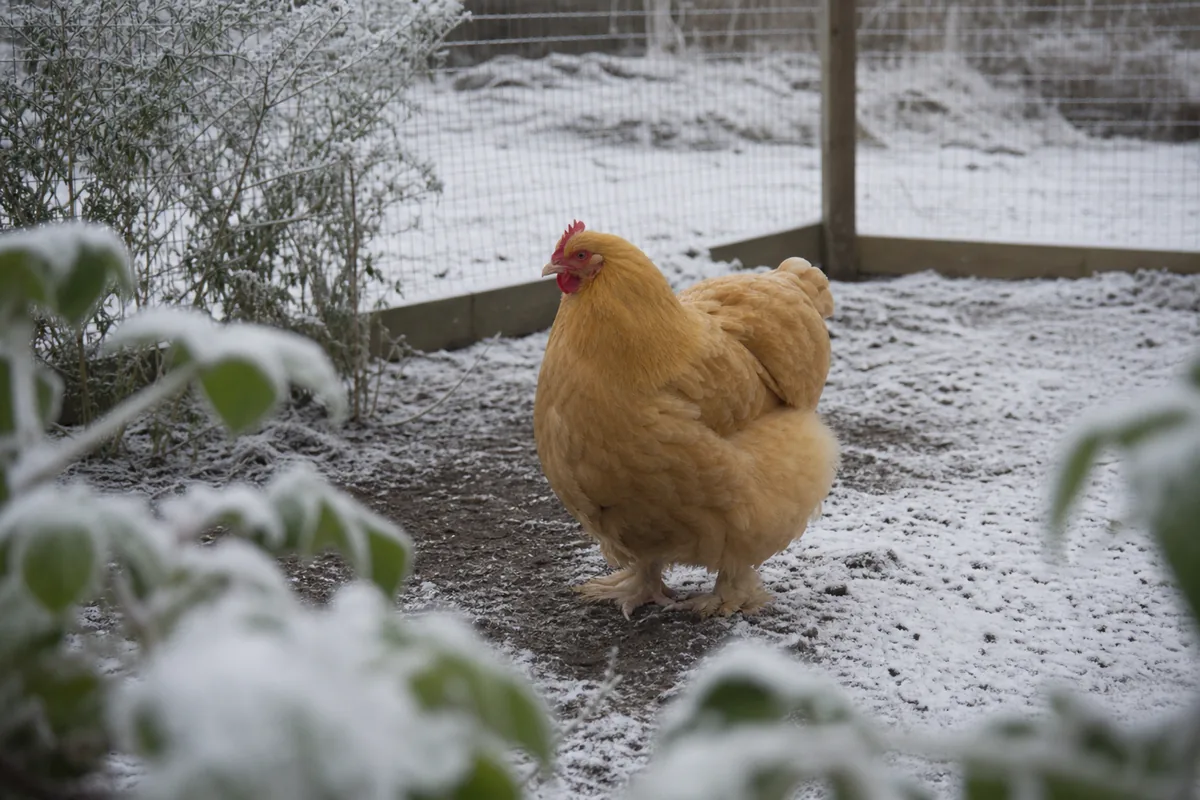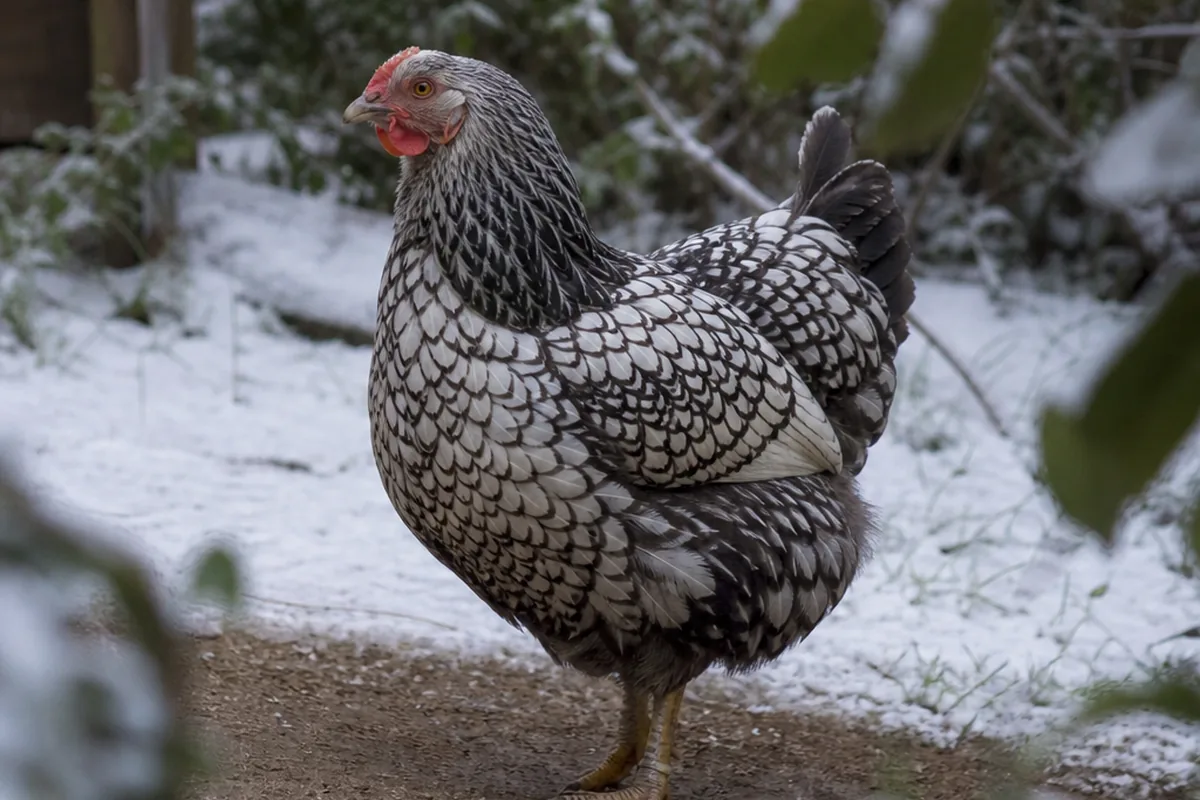
Most keepers who lose winter production are running single-comb breeds in unheated coops. The Wyandotte was designed to solve that problem.
Developed in New York State in the 1870s, the Wyandotte was the first American breed to combine a rose comb with a large, productive frame. The Silver Laced variety was recognized by the American Poultry Association in 1883, and the breed has been a cold-climate standard since.
Key facts
- Annual Eggs
- 200-240
- Hen Weight
- 6.5-8.5 lb
- Cold Hardiness
- Excellent
- Temperament
- Calm, assertive
Wyandotte Egg Production: 200-240 Brown Eggs with Winter Consistency
A Wyandotte hen in her first two years lays 200-240 brown eggs per year. That is four to five eggs per week.
Not the highest output in the breed world, but delivered with unusual consistency through the cold and short-day conditions that reduce or halt laying in single-comb breeds.
The rose comb is the structural reason. Single combs project above the skull, cool rapidly in freezing air, and freeze when temperatures drop below 20°F.
That frostbite triggers a stress response that suppresses the reproductive hormones controlling egg production.
The Wyandotte's rose comb sits nearly flush against the skull and retains warmth from the bird's own body heat. The stress response never starts, and laying continues.
Production does slow in the first winter after the fall molt. First-year pullets often do not complete molt and resume laying until January or February.
That is normal, not a health issue. Egg size is medium to large.
Shell color is a consistent medium brown across the laying season.
Wyandottes are not record-setters by raw count. They are reliable producers, and in cold climates, reliability beats peak numbers when temperatures drop below freezing for months at a time.
For a breed with higher raw output, production Red hens reach 250-300 eggs per year. The tradeoff is single-comb cold sensitivity that the Wyandotte avoids by design.
Our full breakdown of top egg-laying breed numbers shows how the Wyandotte stacks up against Leghorns, ISA Browns, and other high-count breeds.
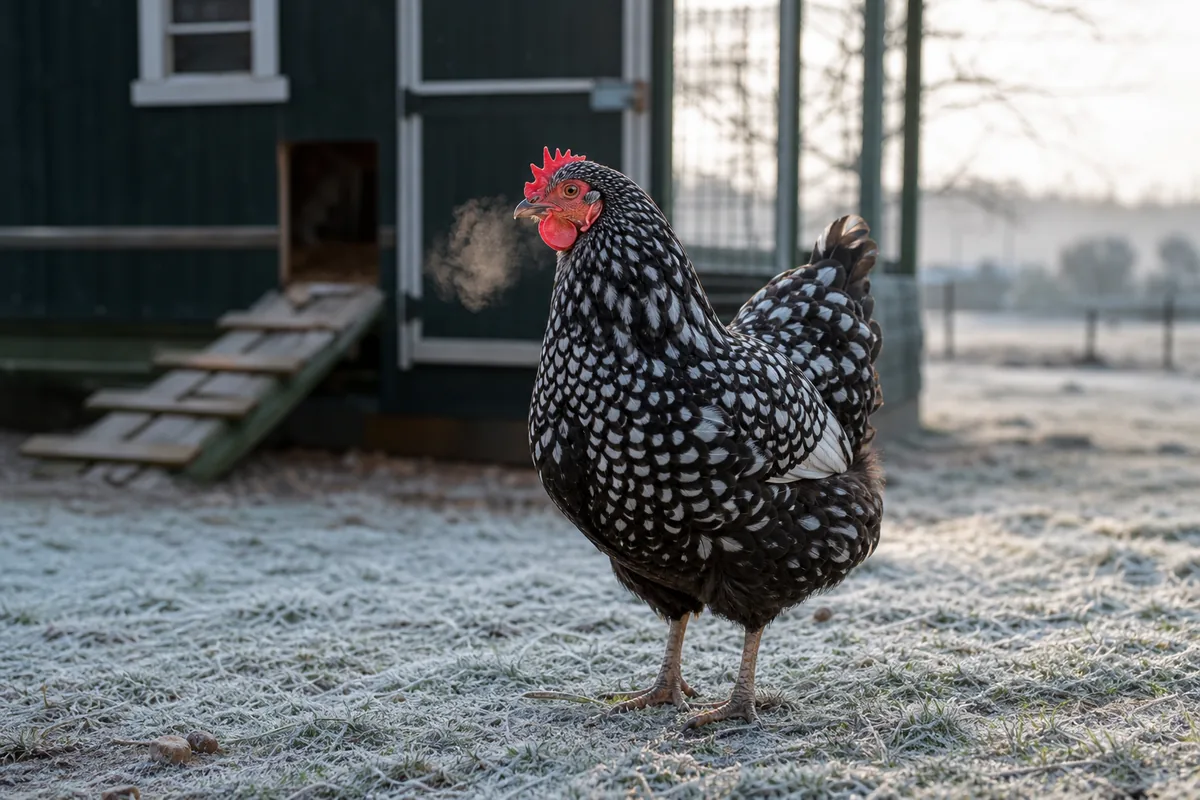
What Does a Wyandotte Look Like? Laced Feathers and a Rose Comb
The Silver Laced Wyandotte is one of the most visually striking birds in backyard poultry. Each feather carries a dark center bordered by a clean white edge.
That lacing pattern repeats across the entire body and defines the breed's signature look.
Nine APA-recognized color varieties give keepers a wide range of visual options while maintaining the same breed structure and productivity under different plumage.
| Variety | APA Recognition | Pattern Description |
|---|---|---|
| Silver Laced | 1883 | White feathers with black lacing. The original and most common variety in US hatcheries. |
| Gold Laced | 1888 | Golden-bay feathers with black lacing. Slightly warmer coloring than Silver. |
| White | 1888 | Pure white plumage. Popular in show birds and small production flocks. |
| Black | 1893 | Solid black with green sheen. Rose comb distinguishes it from the Australorp. |
| Buff | 1893 | Even golden-buff plumage. Less common, sought by collectors. |
| Partridge | 1893 | Penciled brown pattern in hens, dark mahogany in roosters. |
| Silver Penciled | 1902 | White base with fine black penciling across each feather. Rare at commercial hatcheries. |
| Columbian | 1905 | White body with black neck hackle and tail. Clean, high-contrast pattern. |
| Blue | 1977 | Blue-gray plumage with lacing. The most recently recognized APA variety. |
Outside APA recognition, breeders produce Splash, Lavender, and Blue Laced Red varieties popular with exhibition keepers.
The Wyandotte body is notably round and wide. Dense feathering adds to the visual bulk and contributes directly to the breed's cold tolerance.
More feathers means more insulation, and the Wyandotte carries more than most dual-purpose breeds.
Hen weight runs 6.5-8.5 lb at maturity. Roosters reach 8.5-9.5 lb.
Both sexes share the same round, broad silhouette with yellow skin and legs and a red or bay eye color.
Temperament: Assertive and Flock-Ready
Wyandottes are calm but not passive. They hold their position in a mixed flock without backing down from more dominant breeds, and they will not be pushed around by assertive hens.
That makes them reliable additions to established flocks where pecking order stability matters.
They are not known for seeking out human contact. Wyandottes tolerate handling and are rarely aggressive toward keepers, but they do not pursue attention the way gentle Australorps or Orpington breeds do.
Pros
- Reliable winter production from rose comb advantage
- Nine color varieties for flock aesthetics
- Holds pecking order in mixed flocks without aggression
- Tolerates confinement reasonably well
- Calm and manageable around keepers and children
Cons
- Can bully docile breeds like Silkies and Cochins
- Less affectionate than Orpington or Australorp
- Heavier build needs adequate roost width
- Slower to mature than production breeds
- Peak egg output lower than Rhode Island Reds
The assertiveness becomes a management issue when mixing with very docile breeds. Wyandottes will establish dominance over Silkies, Polish, or Cochins, sometimes causing feather damage or feed competition that reduces output in the subordinate birds.
If you are building a mixed flock, evaluate assertive breed pairings before selecting your combination. Wyandottes work well alongside compare Plymouth Rock temperaments, which share a similar assertive-but-manageable profile.
They also pair cleanly with Sussex dual-purpose breeds, which hold their own in pecking order without escalating.
Roosters are typically even-tempered by heavy-breed standards. Aggression toward keepers is uncommon but varies by individual.
Handle cockerels frequently during the first six months to reinforce calm behavior.
Cold Hardiness: The Rose Comb Eliminates Frostbite Risk
The rose comb is the single most important cold-weather adaptation available in domestic poultry. Single combs project above the head, cool rapidly in freezing air, and freeze when temperatures drop below 20°F.
That happens even in a dry, draft-free coop.
The Wyandotte's rose comb sits nearly flush against the skull and retains warmth from the bird's own body heat.
Rose combs nearly eliminate frostbite risk in all but the harshest sustained conditions. For most keepers in cold-climate zones, this means consistent production through winters that sideline single-comb breeds entirely.
In climates with mild winters, the rose comb advantage is less decisive. In USDA zones 7-9, Wyandottes perform well but do not hold a structural edge over single-comb breeds at temperatures that rarely reach freezing.
Their value is most visible in zones 4-6, where sustained sub-freezing temperatures are common from November through March.
Heat tolerance is moderate. Dense feathering insulates in both directions.
Warmth is retained in cold but also builds in heat. Shade and fresh water are necessary above 85°F.
For summer hydration strategies that keep heavy-feathered breeds comfortable, our guide to cooling treat options covers frozen and high-moisture foods that help.
Coop Setup: Wide Roosts and 4 Sqft Per Bird
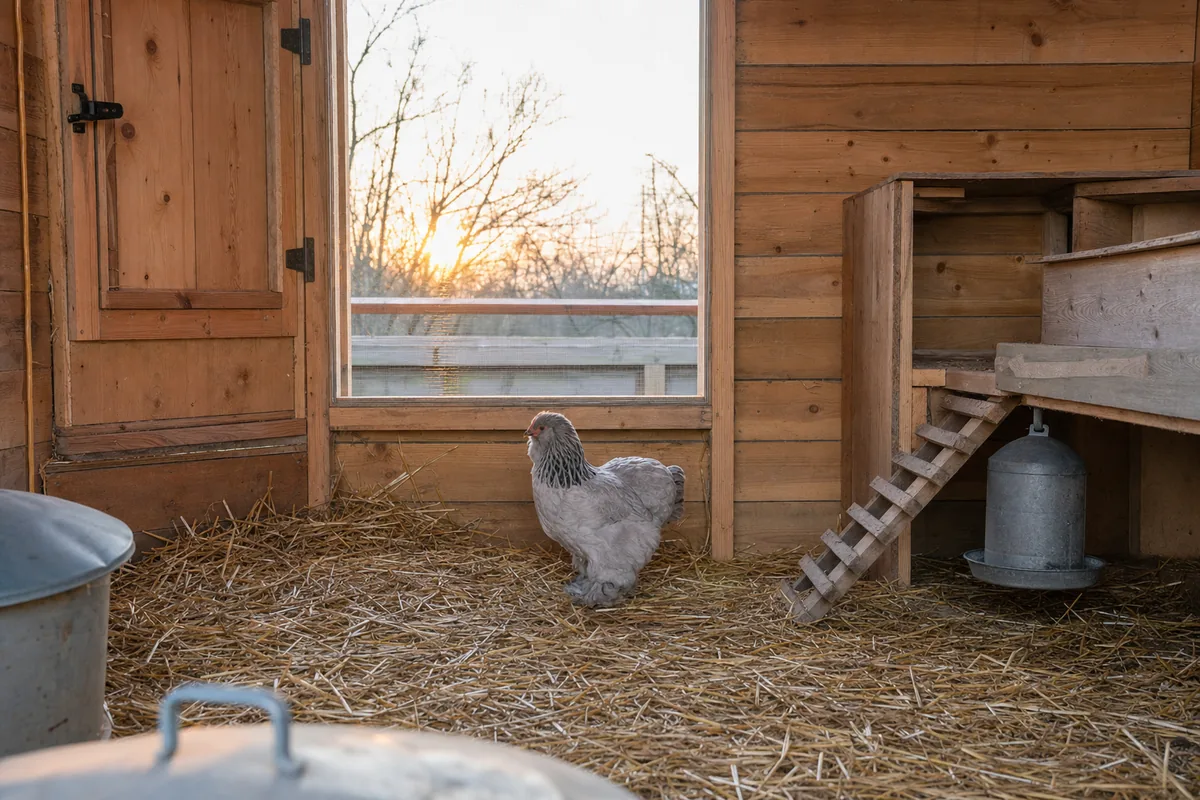
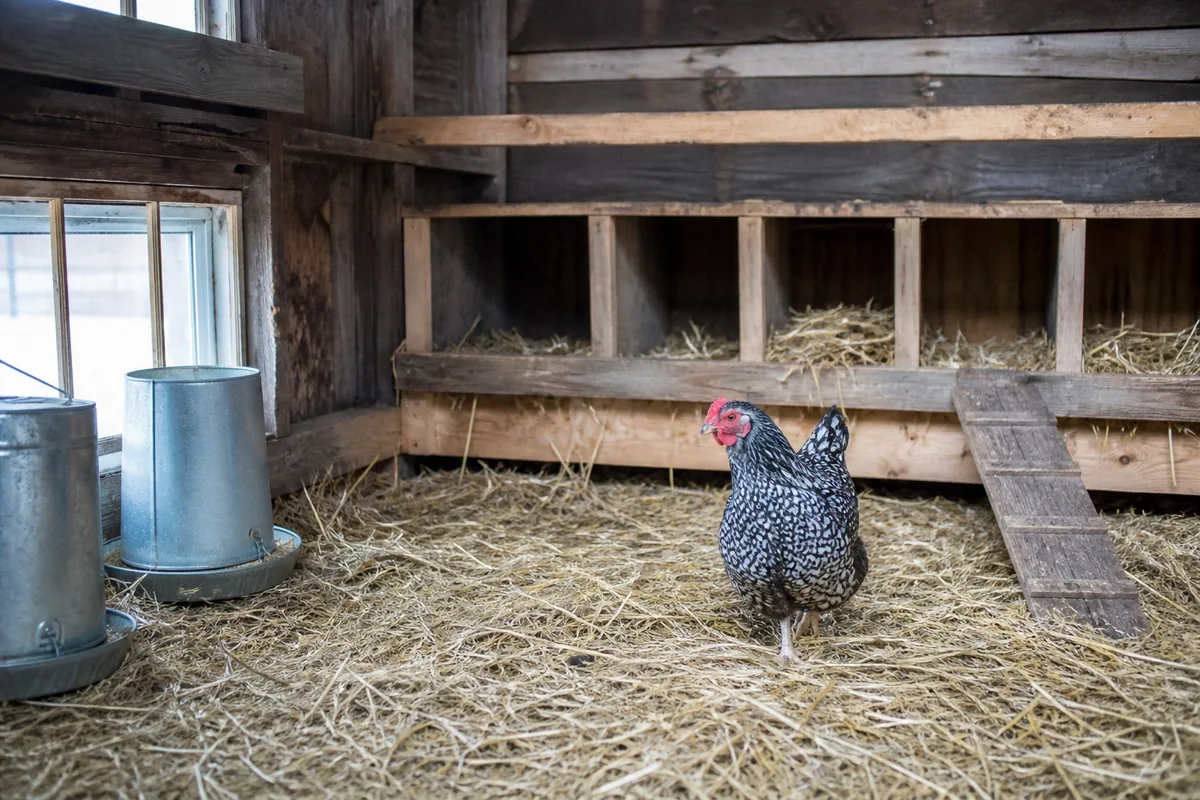
Wyandottes are wide-bodied birds. The standard 4 sq ft per bird applies, but roost bar width deserves specific attention.
These hens need 12-14 inches of linear roost space per bird to land, balance, and sleep without crowding.
Roost height should stay between 18-30 inches. Wyandottes are capable of handling moderate heights, but higher roosts increase the landing impact force on joints over time.
Wyandottes adapt to confinement but benefit from run access. They are moderate foragers.
Not as relentless as Leghorns, but active enough that outdoor time reduces boredom-related pecking during long winter confinement periods.
For a full coop build with materials, dimensions, and ventilation specifications, build your coop correctly from the start. Wyandottes reward the investment in proper setup with years of consistent production.
Feeding Wyandottes: Watch Weight Under Dense Plumage
The Wyandotte's dense plumage makes body condition hard to assess by eye. You cannot easily tell whether a hen is lean or overweight under all those feathers.
Handle your birds regularly and assess keel bone prominence by feel.
A keel bone you can barely feel indicates good weight. One buried under fat padding signals overconsumption.
Standard layer pellets at 16-18% protein cover daily needs for laying hens. Provide free-choice oyster shell in a separate container to maintain shell quality.
During molt, increase protein to 20% or higher. Wyandottes carry more feathers than most dual-purpose breeds, and feather regrowth after a full molt is nutritionally demanding.
Inadequate molt-period protein extends the off-lay period into winter.
- Layer feed at 16-18% protein: base diet from point of lay through the productive season
- Oyster shell free-choice: maintains shell quality without over-calcifying the diet
- Protein booster at 20%+ during molt: supports feather regrowth and faster return to laying
- Scratch and corn at 10% maximum: treat only, never as a diet supplement
For seasonal treat rotation, garden vegetable safety covers solanine-containing plants to avoid. Wyandottes can eat a wide range of kitchen scraps safely within that 10% treat limit.
Health: Hardy, Long-Lived, and Parasite-Prone Under Feathers
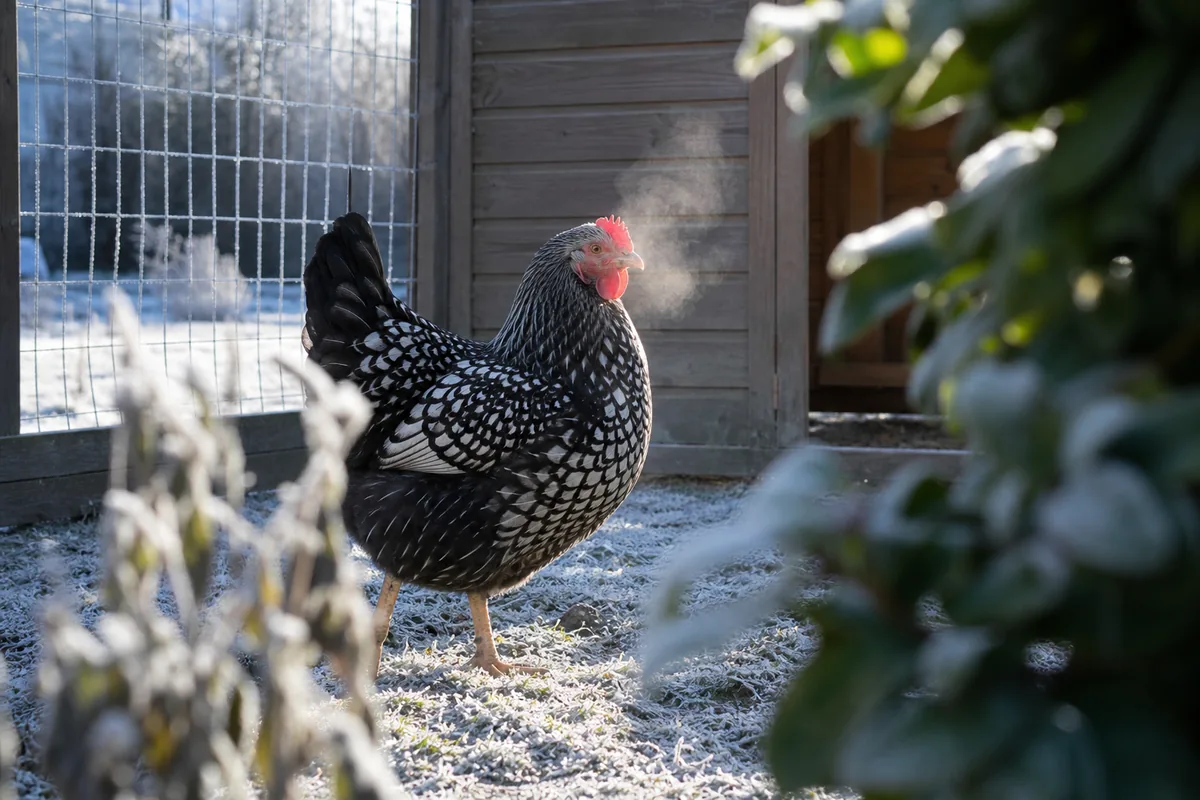
Wyandottes are a hardy, long-lived breed with an expected lifespan of 6-8 years. Most productive hens remain active layers into years four and five.
The breed has no known genetic conditions tied to its conformation.
Dense feathering is both the breed's greatest asset and its primary management challenge. Mites and lice hide easily under thick plumage and can reach high populations before visible symptoms appear.
- External parasite checks monthly at minimum: part feathers around the vent, under the wings, and along the keel
- Signs of mite infestation: pale comb, reduced laying, weight loss, feathers looking rough despite no molt
- Dust bath access year-round: sand with wood ash or diatomaceous earth reduces mite and lice loads
- Marek's disease vaccination at hatch: standard practice for all new stock
- New bird quarantine for 30 days: prevents respiratory illness introduction from purchased or traded stock
Respiratory infections are the main flock-level health risk outside of parasites. Wet, poorly ventilated coops in winter create the conditions that favor Mycoplasma and other respiratory pathogens.
Biosecurity, specifically a strict 30-day quarantine for all incoming birds, prevents most disease introductions. This applies whether you are purchasing from a breeder, a swap, or a neighbor's flock.
Wyandotte Color Varieties: Full APA Recognition History
The American Poultry Association has recognized nine Wyandotte varieties since 1883. Each variety carries identical breed structure, temperament, and production characteristics under different plumage genetics. Silver Laced (1883): The original variety. White feathers with black lacing across the entire body. The most available at US commercial hatcheries. Gold Laced (1888): Golden-bay base feather with black lacing. Warmer visual tone than Silver. Recognized the same year as White. White (1888): Pure white plumage. Popular in show classes and small production flocks where visual consistency across the flock is desired. Black (1893): Solid black with green iridescent sheen. Distinguished from the Australorp by its rose comb and yellow legs. Buff (1893): Even golden-buff plumage with no lacing or pattern. Less common and sought by collectors and exhibition keepers. Partridge (1893): Complex penciled brown pattern in hens, dark mahogany with black in roosters. One of the more difficult patterns to produce to exhibition standard. Silver Penciled (1902): White base with fine black penciling across each feather. Rare in commercial catalogs, available from specialty breeders. Columbian (1905): White body with black neck hackle and tail. The same color restriction pattern found in Columbian Plymouth Rocks and Sussex. Blue (1977): Blue-gray plumage with lacing visible in good light. The most recently recognized variety. Blue genetics produce variable offspring colors from blue x blue pairings. Non-APA varieties including Splash, Lavender, and Blue Laced Red exist among specialty and exhibition breeders. These carry the same breed characteristics but are not eligible for APA sanctioned shows.
Bumblefoot is a secondary concern for heavier breeds. Keep roost heights at 18-30 inches and litter dry to reduce the landing impact and ground moisture that favor this condition.
Inspect foot pads monthly and address any small dark scabs before they progress to swollen, warm infections that require veterinary drainage.
Sources and references
- Wyandotte breed profile, history, and conservation statusThe Livestock Conservancy
- Rose comb genetics, frostbite physiology, and cold hardiness in domestic poultryPoultry Science, Vol. 87, Issue 4, 2008
- Cold-weather poultry management: supplemental lighting, ventilation, and frostbite preventionPenn State Extension, Poultry Science
- Body condition scoring in laying hens: keel bone assessment and obesity preventionUC Cooperative Extension
- Standard of Perfection: Wyandotte breed standards and variety recognition historyAmerican Poultry Association