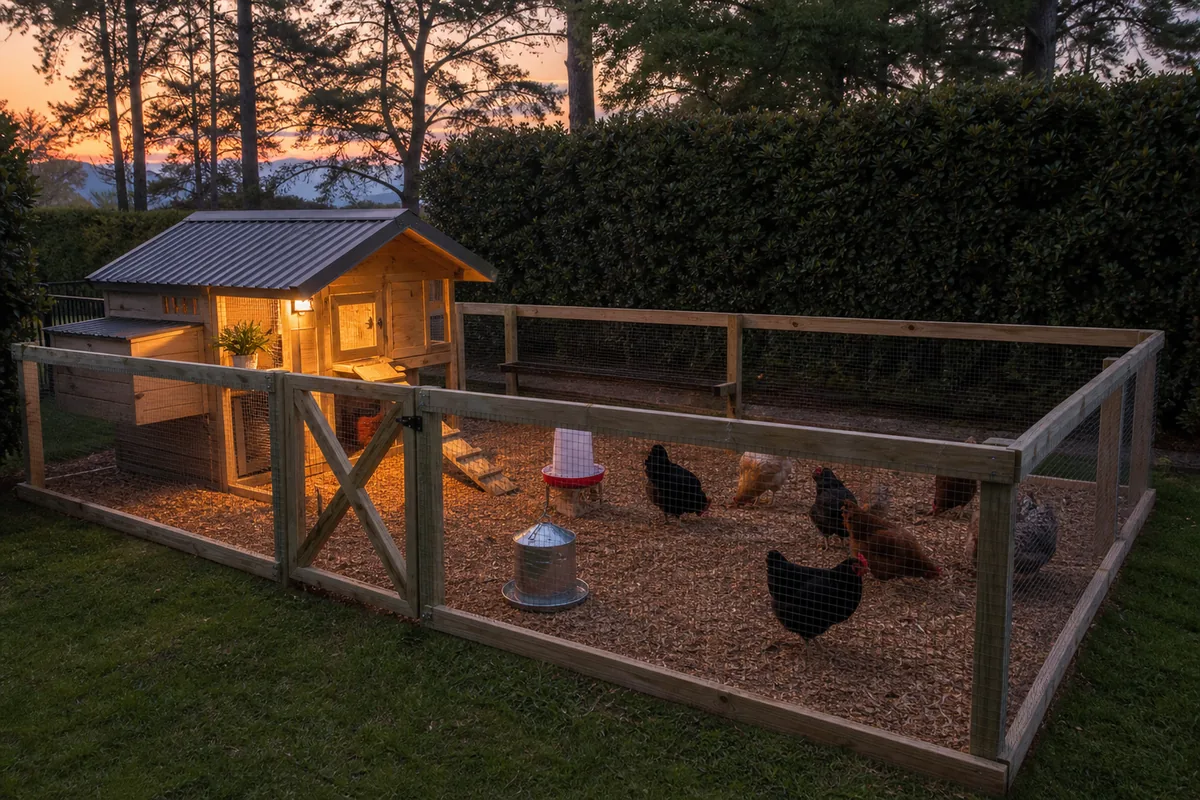
A chicken coop works when it stays dry, airy, and secure for the flock you actually plan to keep. Airflow matters more than insulation.
Start your backyard flock care plan with 3 to 4 square feet inside the coop. Keep 8 to 10 square feet in the run for most hens, then add shade, drainage, and strong latches.
Chicken Coop Space Starts at 3 to 4 Square Feet Per Bird Inside
Space planning comes first because every other choice depends on it. If the floor area is too small, you lose bedding depth, feeder room, and calm roosting behavior at the same time.
Most backyard builds work best at the safer end of extension guidance. Keep the higher end when you raise heavy birds, expect muddy seasons, or know your flock will spend long stretches inside the run.
| Flock size | Indoor coop space | Run space | Nest boxes | Total roost length |
|---|---|---|---|---|
| 4 hens | 12 to 16 sq ft | 32 to 40 sq ft | 1 to 2 | 32 to 40 in |
| 6 hens | 18 to 24 sq ft | 48 to 60 sq ft | 2 | 48 to 60 in |
| 8 hens | 24 to 32 sq ft | 64 to 80 sq ft | 2 to 3 | 64 to 80 in |
| 10 hens | 30 to 40 sq ft | 80 to 100 sq ft | 3 | 80 to 100 in |
If you are still choosing birds, match the floor plan to the flock you can manage rather than to a box label. Our starter flock picks are easier to size correctly than a mixed flock of heavy hens and fast, flighty layers.
Large birds like heavy Orpington hens still follow the same space math, but they need lower roosts and wider landing room. Lighter birds expose weak fencing and open-top runs faster, so the layout pressure just shifts instead of disappearing.
Which Materials Prevent Rebuilds in the First 12 Months?
A strong coop fails at the hardware level before it fails at the framing level. Thin wire, weak latches, and short roof overhangs are what turn a decent shed into a predator breach or an ammonia trap.
Put your money into the base, roofing, mesh, and latches first. Decorative trim and extra doors can wait until the structure stays dry through its first storm season.
Expect a practical 6 to 8 hen coop and run to land around $350 to $700 once you count hardware cloth, real latches, and bedding. Cheap kits usually reach the actual safety standard only after those upgrades are added.
How Do You Build a Chicken Coop in 6 Steps Without Trapping Moisture?
Build order matters because one rushed shortcut creates three later repairs. A crooked base leads to warped walls, leaking roof lines, and doors that never latch cleanly.
Start with drainage and level ground, then protect airflow and access before you think about looks. The coop should be easy to clean with a bucket in one hand and a feed scoop in the other.
- Choose the driest site firstPick a spot that sheds water naturally and gives you room for the full coop plus run. Afternoon shade helps in hot weather, but avoid a low pocket that stays damp after every storm.
- Build a level baseSet the frame on stable ground, skids, or blocks and confirm it is square before you fasten the walls. A level base keeps doors aligned and stops pooling inside the coop later.
- Frame walls and roof with airflow in mindLeave room for high vents, roof overhangs, and a human access door you can actually use. Roof lines should move rain away from the vents instead of into them.
- Install vents before birds ever move inCut ventilation high in the walls or gables and cover every opening with hardware cloth. Air should exchange above roost height, not blow across the birds while they sleep.
- Place roosts, boxes, feeders, and waterers by zoneKeep roosts higher than nest boxes, place boxes in a dim dry corner, and leave a clean walking lane to the feeder and waterer. Good zones reduce crowding better than extra gadgets do.
- Finish the run like a real barrierWrap the run with hardware cloth, secure the top when predators are a risk, and add a buried skirt or apron where digging is common. Test every latch with one hand in the dark because that is how you will use it on winter evenings.
If you keep standard layers such as Rhode Island Reds, build full human access into the coop from the start. A setup that is awkward for you to rake, scrub, or latch will never stay as clean as it should.
How Much Ventilation and Shade Does It Need Above 90 Degrees F or Below Freezing?
Ventilation should move moisture out without blowing cold air directly across the roost. That balance matters in summer and winter because damp air, heat stress, and ammonia all punish hens faster than a plain cold snap.
Oregon State Extension's coop design guidance, reviewed in 2023, stresses draft-free air exchange. Arkansas poultry guidance in 2024 repeated the same point for winter cold.
A sealed coop feels warmer to you, but it traps the moisture your flock creates all night. Wet air is what turns a cold snap into a respiratory and litter problem.
- High vents only: Place openings in the top third of the wall or gable so air moves above the birds instead of across their backs.
- Summer shade: Shade cloth, trees, or a roofed run section matter once the coop sits in full afternoon sun.
- Dry bedding depth: Keep enough bedding to absorb splash and droppings, then replace wet spots before ammonia builds.
- Two water points: In hot weather, a second shaded waterer reduces crowding and keeps one container cooler.
- Storm overhangs: Roof overhangs and covered vents stop windblown rain from soaking the litter under the roosts.
Fancy feathered birds foul damp litter faster and handle sloppy landings worse than smooth-footed hens. If you keep Silkie flocks, lower the roosts and watch bedding condition closely because wet feathering turns into skin and foot trouble fast.
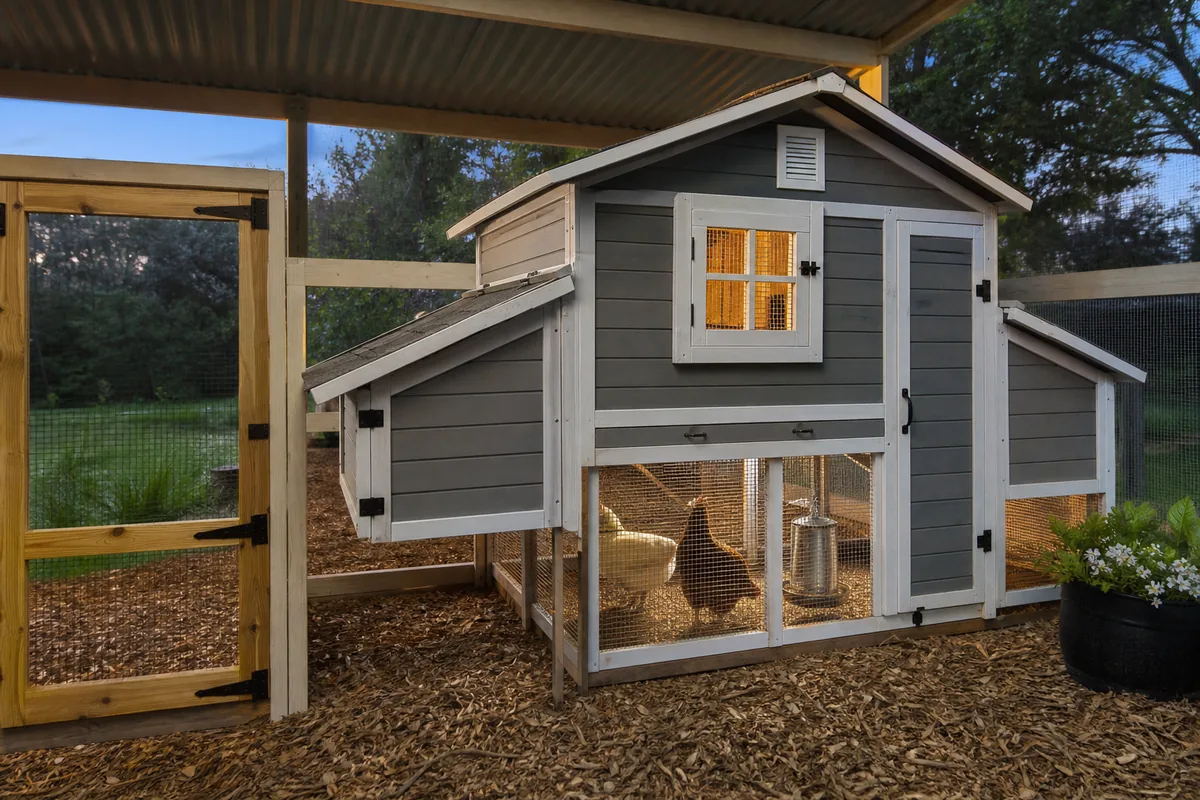
How Should a Chicken Coop Run, Roosts, and Nest Boxes Be Laid Out for 6 to 10 Hens?
The inside layout should let hens roost above the floor, lay in a darker corner, and reach feed without trampling the whole flock. Calm coop traffic comes from predictable zones, not from adding more accessories.
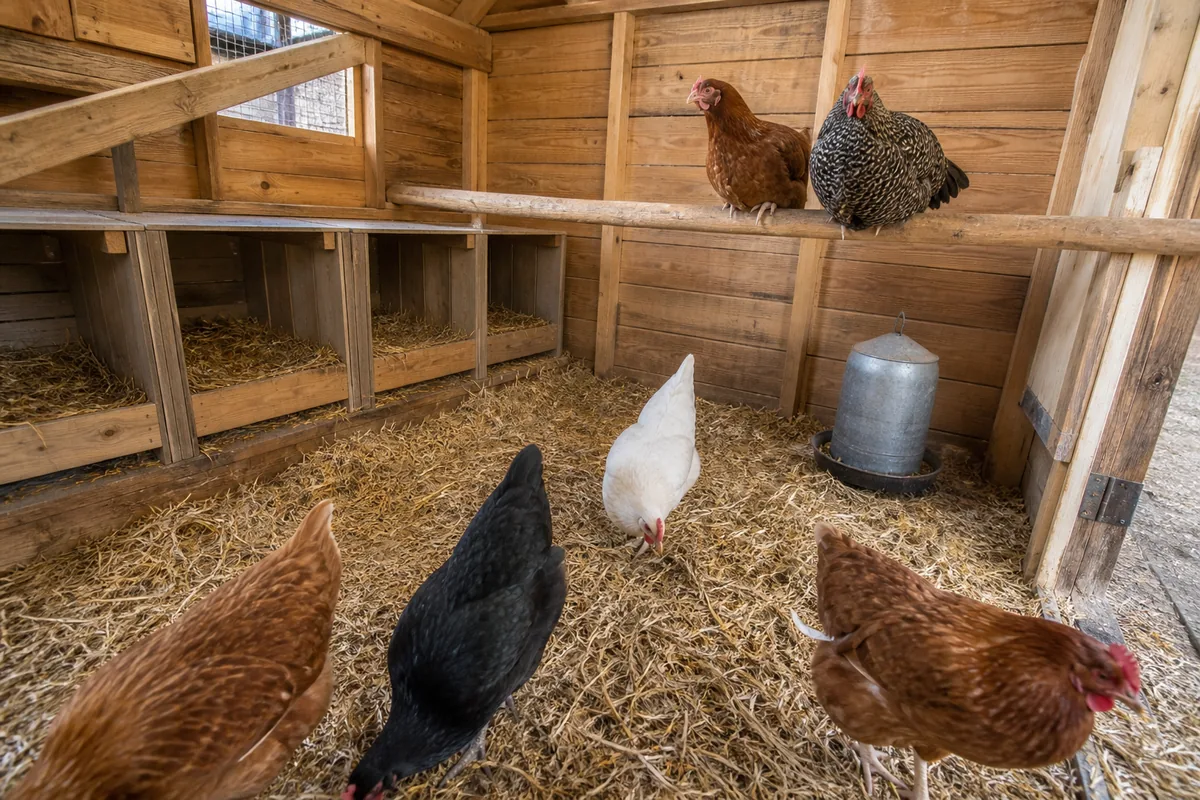
Most backyard setups work best with 1 nest box per 3 to 4 hens and 8 to 10 inches of roost space per standard hen. Keep nest boxes below roost height so birds sleep on the roost instead of soiling the laying area overnight.
- Roost height: Standard hens usually do well around 18 to 24 inches, but heavy birds and young pullets need lower landings.
- Roost shape: Flat 2x4 roosts let hens cover their toes in cold weather better than narrow round dowels.
- Nest box corner: Put boxes in the dimmest dry section so hens lay there instead of in the run or on the floor.
- Dust bath zone: A sheltered sand or soil corner in the run cuts boredom and keeps birds from turning the whole yard into one crater.
- Feed path: Leave a clean lane so you can refill feeders and remove wet bedding without pushing through the roost area.
Breed choice changes layout pressure more than many keepers expect. Our guide to egg-heavy breeds helps you spot when high-output hens need calmer box traffic and more predictable access to the laying corner.
Which Mistakes Attract Predators or Cause Problems in the First 7 Days?
Predator problems and respiratory problems usually show up at the first weak corner of the build. For most coops, that means loose mesh, single-step latches, soggy bedding under the waterer, or a run that turns to mud after one hard rain.
Raccoons work latches, foxes dig at fence lines, and wet litter turns waste into ammonia. The birds feel those mistakes long before the coop looks obviously dirty to you.
- Tiny kit claims: A coop marketed for 8 hens often fits only 4 to 6 once you measure the usable floor space.
- Ground contact: Water wicks into low untreated base rails and shortens the life of the whole structure.
- Feed scraps: Sweet leftovers and spilled grain keep rodents, flies, and nighttime predators returning to the run.
- Open-top run: Hawks, climbing predators, and escape-prone hens take advantage of it fast.
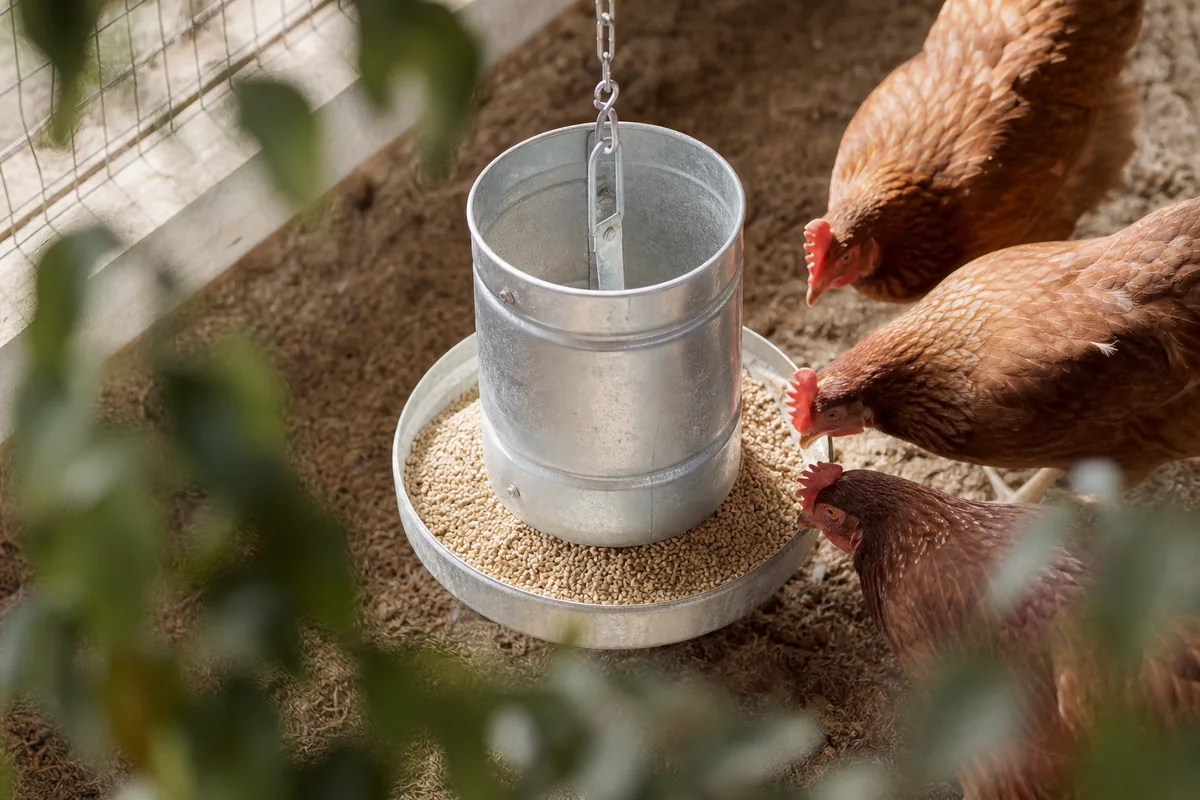
Feed management is part of predator management. A solid daily feed routine keeps most calories in the feeder instead of scattered through the run.
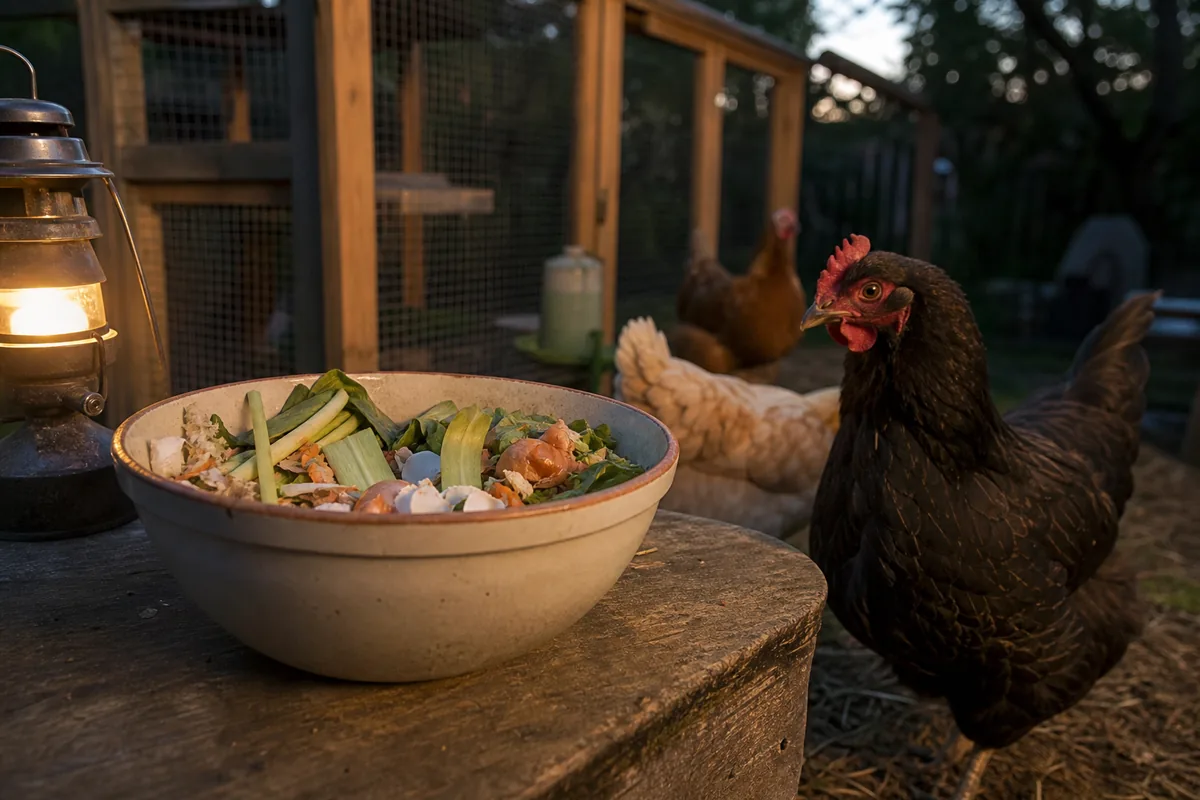
Messy treats need even more control. Wet leftovers such as tomato scraps should be removed before dusk so the run does not stay sticky, sweet, and attractive to pests.
How Often Should You Clean and Adjust a Chicken Coop Through the Seasons?
A coop stays healthy when small chores happen on schedule instead of in crisis mode. Spot cleaning, latch checks, and water resets prevent the big odor and fly problems that make keepers think the whole layout is failing.
Delaware Extension noted in 2025 that bedding and moisture control matter as much as raw square footage. Dry litter, clean boxes, and working waterers are what make a good layout keep working after the first month.
- Weekly reset: Scrape droppings boards, replace wet bedding, and rinse waterers before odor builds.
- Storm check: Walk the run for sagging mesh, pooled water, and any gap a bird or predator can use.
- Heat prep: Add shade, refill both water points, and clear mud around the feeder path before a hot spell.
Summer treat planning should match the cleanup plan. Our grape treat limits help when fruit scraps would otherwise sit in the shade and draw flies.
Sources and references
- Living on the land: Backyard chicken coop designOregon State Extension, reviewed 2023
- Steam Team: Chicken Housing and Coop Maintenanceof Delaware Cooperative Extension, May 2025
- Backyard poultry coops prepped for cold still require good ventilationof Arkansas System Division of Agriculture, 2024