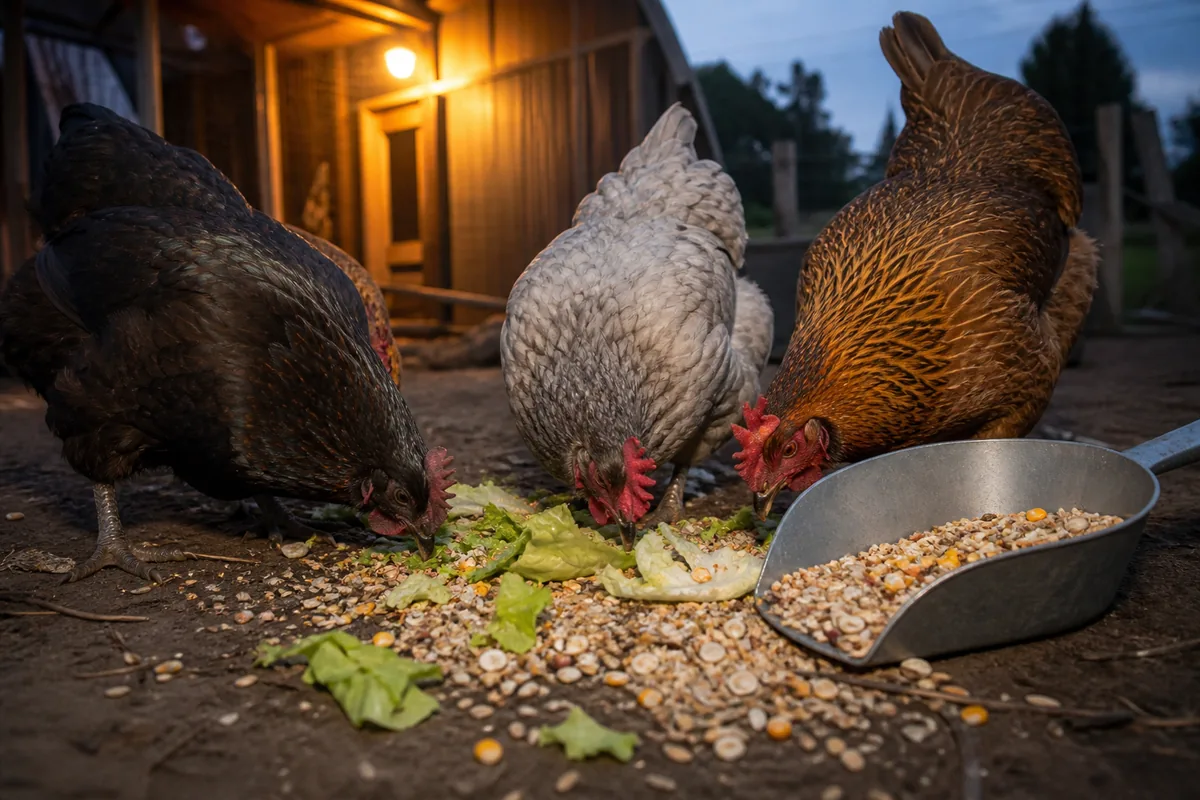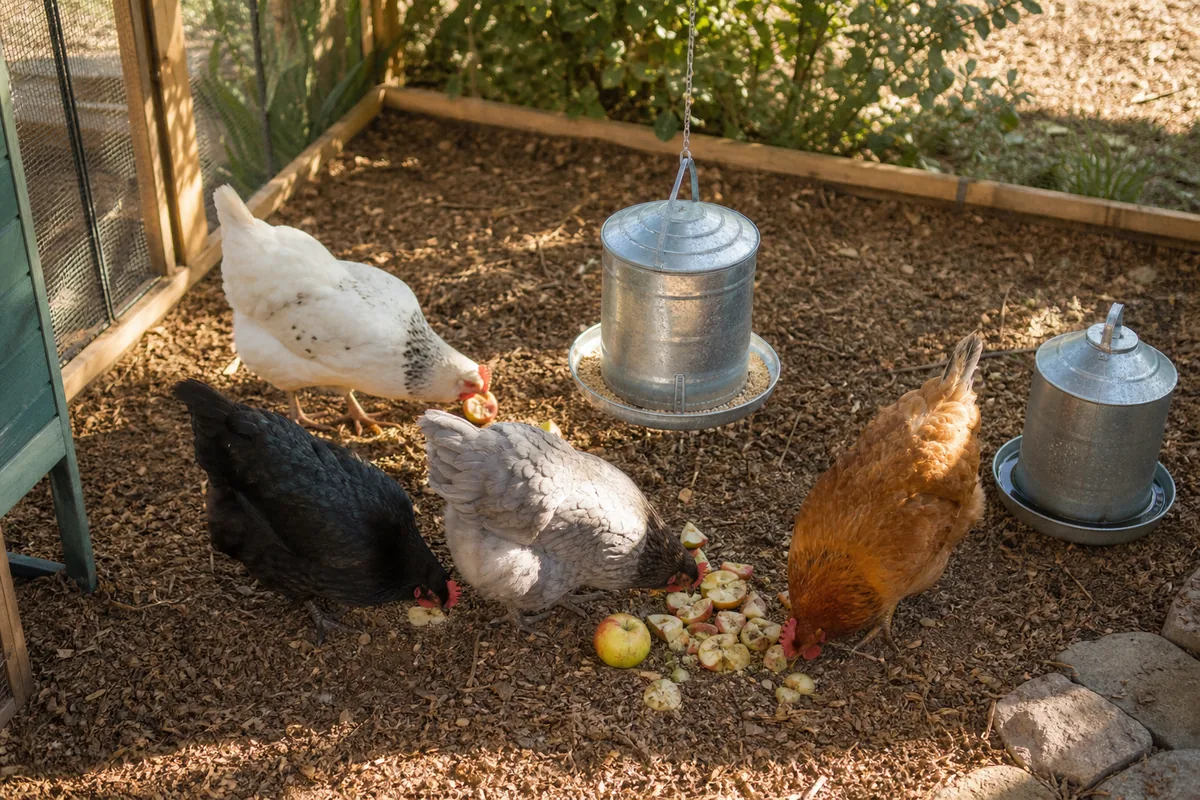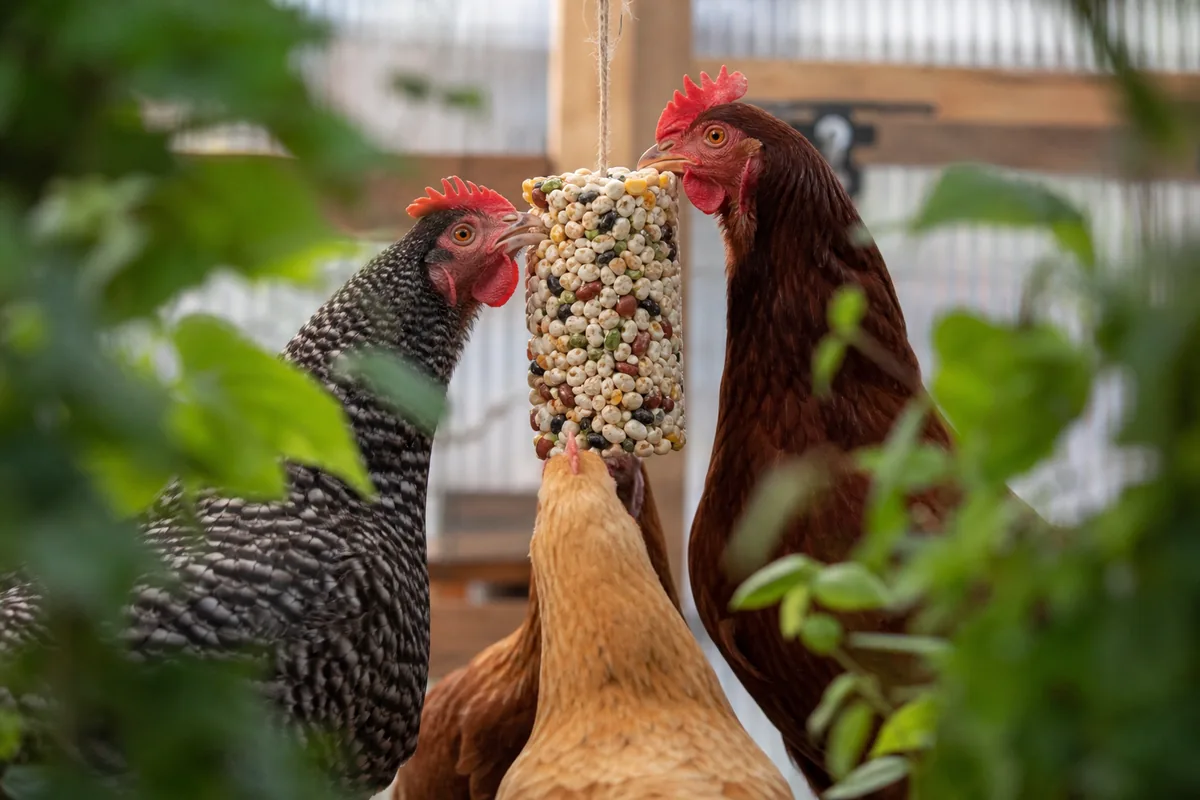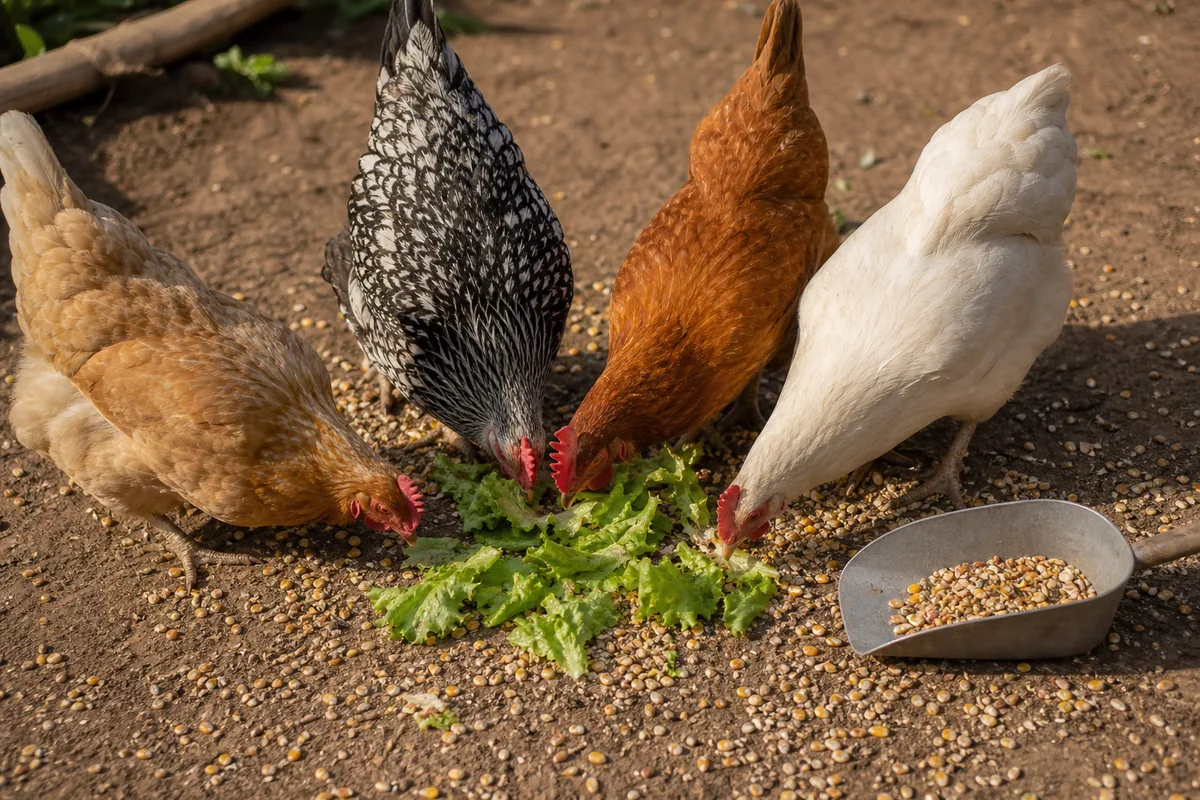
Chickens can eat lettuce, and most flocks take to it immediately. Whether you are clearing out the crisper drawer or growing greens in the garden, lettuce is one of the safest, most available treats you can offer.
Our flock greens guide covers the full picture of what chickens can eat from the garden. This article focuses specifically on lettuce: which varieties deliver real nutritional value, how to serve it, and when to skip it.
Lettuce for Chickens
- All leaf varieties: romaineSafe
- red leafSafe
- butterSafe
- green leafSafe
- mixed greensSafe
- icebergSafe
- None. Wilted or slimy lettuce should be discarded (bacterial riskUnsafe
- not toxicity)Unsafe
Prep: Wash thoroughly. Tear into strips or hang whole heads. No cooking needed. Freq: Daily, as part of a greens rotation Amount: Up to 10% of total daily intake combined with other treats. No strict per-bird cap on lettuce alone.
Below: how each major lettuce variety stacks up nutritionally, how to serve it for maximum engagement and enrichment, and which greens are worth feeding alongside or instead of lettuce.
Lettuce Nutrition for Chickens: Romaine Wins, Iceberg Lags
Not all lettuce is equal. The nutritional difference between romaine and iceberg is large enough to affect your decision about which to buy specifically for the flock.
Romaine is the best option by a significant margin. At 17 calories per 100g, it delivers 102mcg of vitamin K, 436mcg of vitamin A (as beta-carotene), and 136mcg of folate.
Those numbers matter for egg yolk color, immune function, and blood clotting in laying hens.
Key facts
- Romaine Calories
- 17 kcal / 100g
- Vitamin A (Romaine)
- 436 mcg / 100g
- Vitamin K (Romaine)
- 102 mcg / 100g
- Folate (Romaine)
- 136 mcg / 100g
- Water Content (Iceberg)
- ~96%
- Treat Cap (All Treats)
- 10% of daily intake
Iceberg lettuce is nearly all water, around 96% by weight, with trace amounts of vitamins and minerals. It does not harm chickens but, but it also contributes almost nothing nutritionally.
In summer, its high water content makes it marginally useful as a hydration boost, but hydrating summer food like watermelon provides far more water alongside actual nutrients.
Red leaf, butter, and green leaf varieties fall between romaine and iceberg. They are all safe and worth feeding when available, but romaine is the one worth seeking out specifically for the flock.
| Variety | Water Content | Key Nutrients | Feeding Value | Verdict |
|---|---|---|---|---|
| Romaine | ~94% | Vitamin A (436mcg), Vitamin K (102mcg), Folate (136mcg) | High | Best choice |
| Red Leaf | ~94% | Vitamin A, Vitamin K, antioxidants | Good | Recommended |
| Butter / Bibb | ~95% | Vitamin A, Folate, Vitamin C | Good | Recommended |
| Green Leaf | ~95% | Vitamin K, Vitamin C | Moderate | Feed freely |
| Mixed Greens | Varies | Depends on blend | Moderate | Feed freely |
| Iceberg | ~96% | Minimal | Low | Hydration only |
If you are buying lettuce specifically as a chicken treat, romaine is the only variety worth the extra trip. If you are clearing out mixed greens from the fridge before they turn, feed all of them without concern.
How to Serve Lettuce to Chickens: Whole Heads, Strips, and Enrichment
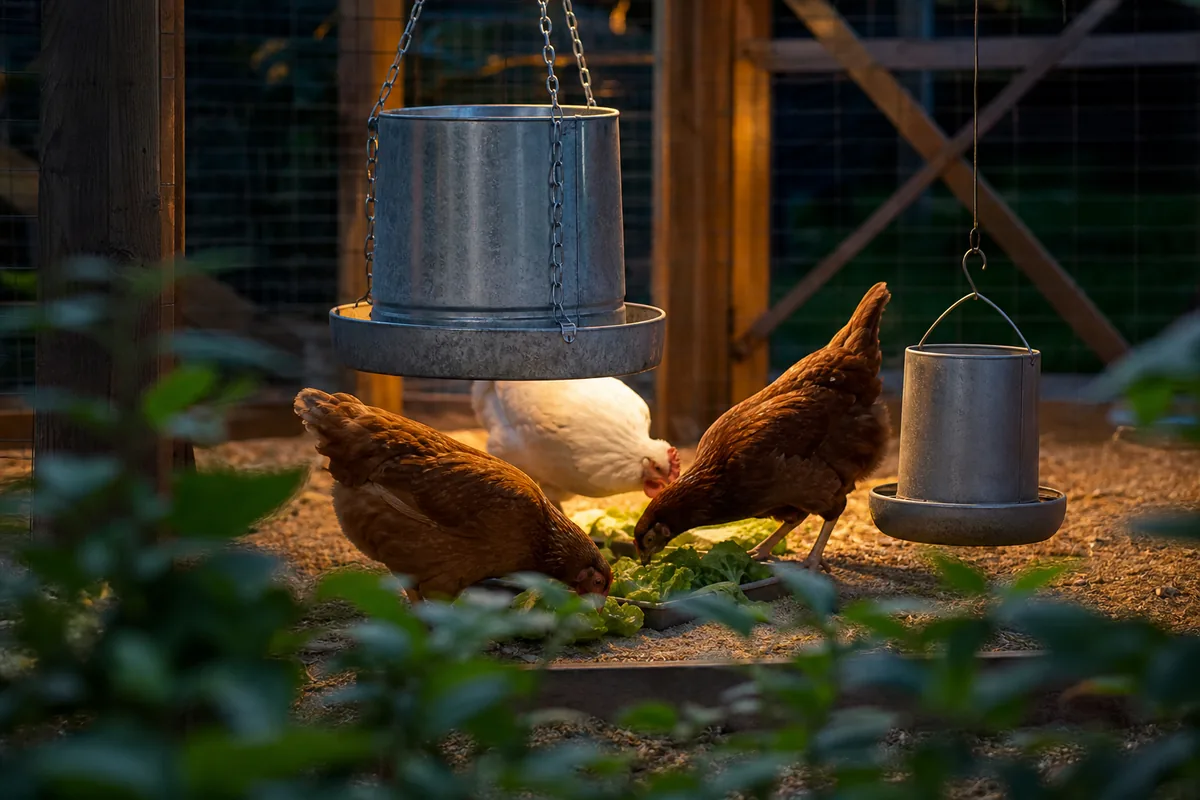
Lettuce requires minimal prep. Wash it under running water to remove pesticide residue and surface bacteria, then decide how you want to serve it based on what you are trying to accomplish.
For basic treat feeding, tear leaves into strips and scatter them across the run. Chickens will sort through them quickly.
Strips reduce the likelihood of one dominant bird monopolizing a single large leaf.
No cooking is needed. Raw lettuce retains all its vitamins in intact form.
Heat does not improve palatability for chickens and causes vitamin A to degrade.
Chickens in permanent runs without access to grass benefit the most from leafy greens. The Leghorn foraging instinct is strong in this breed specifically, and confined Leghorns without enrichment show higher rates of feather pecking.
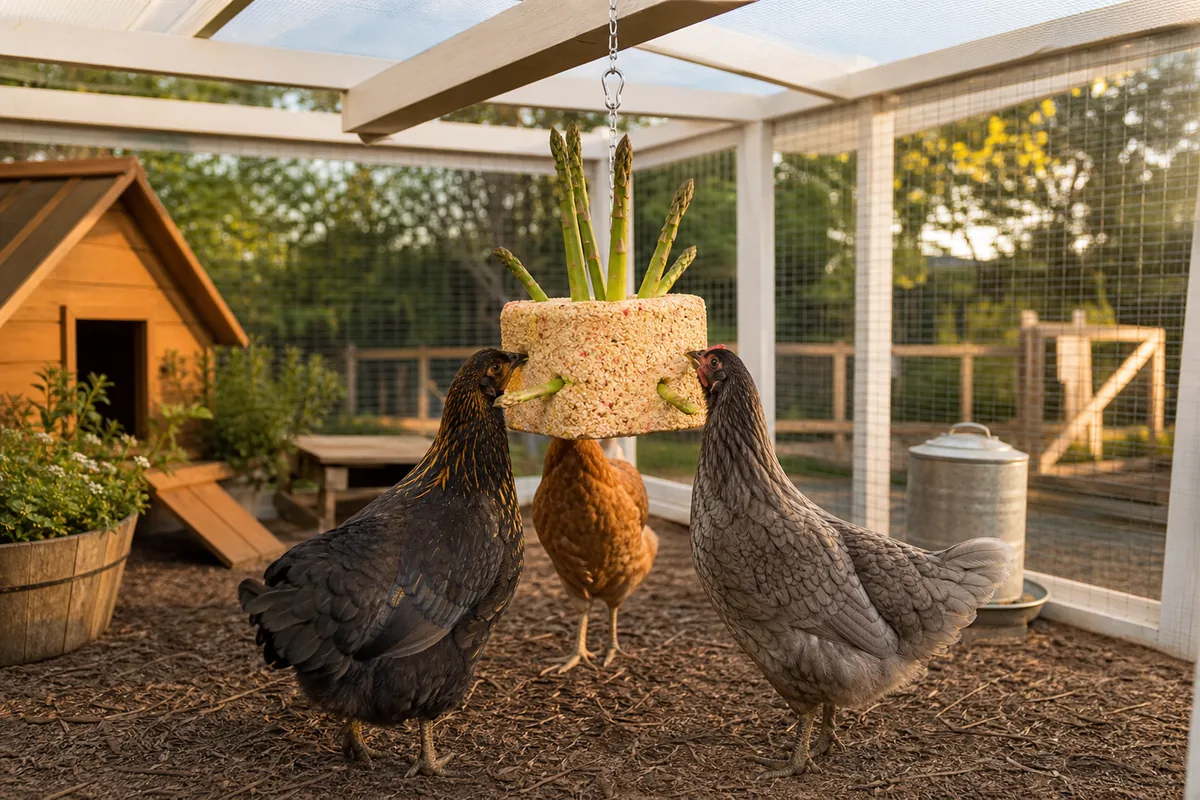
A hanging romaine head addresses that behavioral need directly.
- Whole heads hung: Best for enrichment, keeps birds active and occupied for extended periods
- Torn strips scattered: Best for fast distribution across the whole flock, reduces dominant-bird hoarding
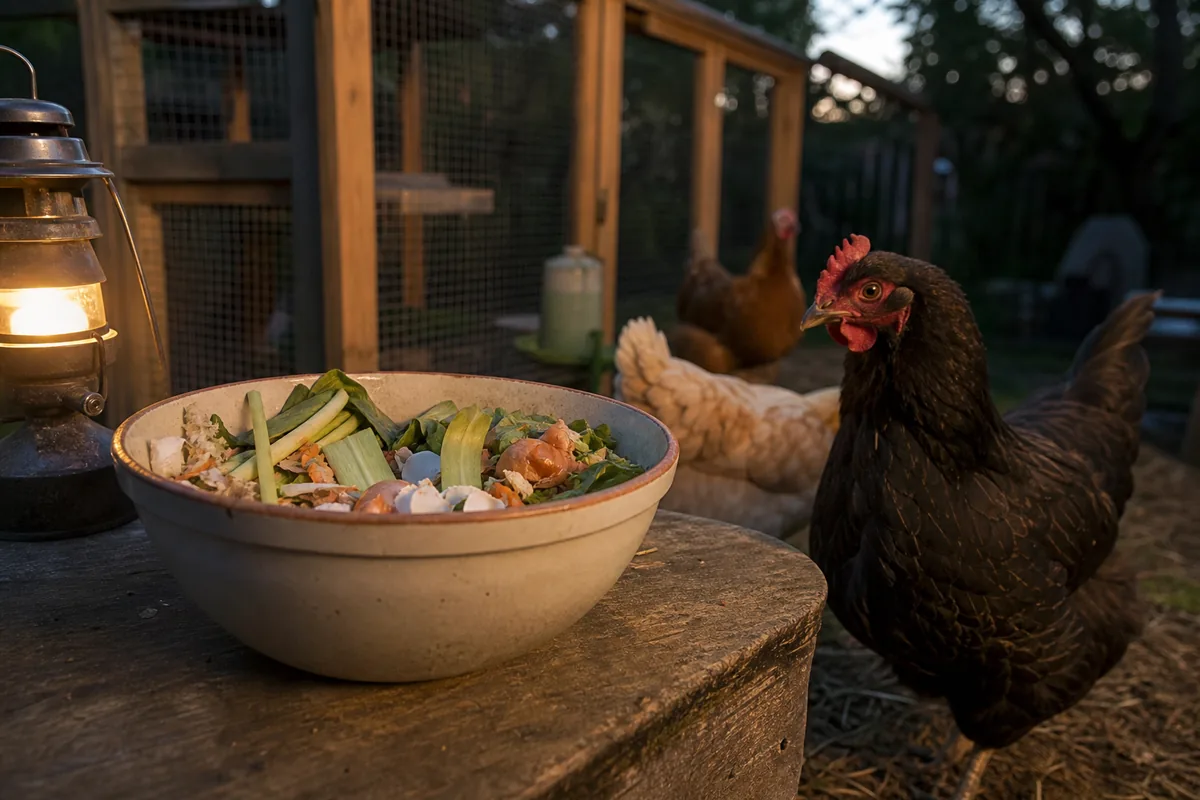
- Mixed into a treat bowl: Combine with root veggie options like carrots for a varied greens-and-crunch combo
- Frozen lettuce leaves: A viable summer option. Freeze romaine leaves flat and drop them in the run on hot days
Feed lettuce alongside crunchy green treats like celery to provide textural variety. Chickens habituate to single-treat feeding quickly, and rotating textures keeps engagement high.
When to Skip Lettuce: The One Rule That Matters
Lettuce becomes a problem only when it has gone bad. Wilted lettuce is not immediately dangerous, but slimy, decomposing lettuce carries bacterial contamination risk, specifically Salmonella and E. coli strains that thrive in decomposing plant material.
Fresh, store-bought lettuce that is past its best-by date but still firm and green is fine to feed. The standard is appearance and smell, not the date on the bag.
Lettuce that has been sitting in water in the crisper for more than a week, or pre-washed bagged greens that have turned, should go in the bin. The nutritional contribution of lettuce is not significant enough to justify any bacterial risk.
- Firm and green: Safe to feed regardless of date. Wash first.
- Wilted but not slimy: Safe. Chickens will eat wilted leaves without issue.
- Slimy or discolored: Discard. Bacterial contamination risk outweighs any treat value.
- Moldy: Discard. Mold on leafy greens produces mycotoxins. Do not feed any part of a moldy head.
In hot weather, lettuce left in a sunny run breaks down within a few hours. Serve smaller portions more frequently rather than leaving a large pile to sit.
How Lettuce Compares to Other Leafy Greens: 4 More Nutrient-Dense Options
Lettuce is the most available and most affordable leafy green on the market. That accessibility is its primary advantage.
On raw nutrient density, several other greens outperform it.
If you have access to them, rotating these into your greens schedule gives your flock a broader micronutrient profile than lettuce alone provides.
- Kale: 150mcg of vitamin K per 100g, nearly 50% more than romaine. Also higher in calcium and vitamin C. Chickens tend to eat it more slowly than lettuce but will work through it consistently.
- Swiss chard: High in vitamin K, magnesium, and potassium. The stems are tougher but edible. Chop into smaller pieces for easier handling.
- Dandelion greens: Foraged or store-bought, both are safe. High in vitamins A, C, and K. A strong bitter flavor that most chickens ignore at first, then acquire a taste for.
- Spinach: Nutrient-dense but contains oxalic acid, which binds calcium. Feed in moderation, not as a daily staple, particularly in heavy-laying hens where calcium metabolism matters most.
Lettuce does not need to compete with these options. The practical approach is to use romaine as the everyday green and rotate kale, chard, or dandelion through when available.
Of those rotation options, kale delivers the highest calcium among common leafy greens at 150mg per 100g, making it the strongest complement to romaine for laying hens who need bioavailable calcium between oyster shell top-ups.
The variety benefits gut microbiome diversity as much as it benefits nutrition.
The 10% rule applies across all treats combined. Even nutrient-dense greens cannot replace layer feed as the primary protein and calcium source for laying hens.
Sixteen percent protein layer pellets remain the foundation of a production flock diet.
Sources and references
- Nutritional composition of romaine and leaf lettuce varietiesUSDA FoodData Central, Lactuca sativa nutritional profiles
- Backyard poultry feeding guidelines: vegetables, fruits, and treatsPenn State Extension, Poultry Production and Management
- Vitamin A and K requirements in commercial laying hensPoultry Science, Vol. 99, No. 3, 2020