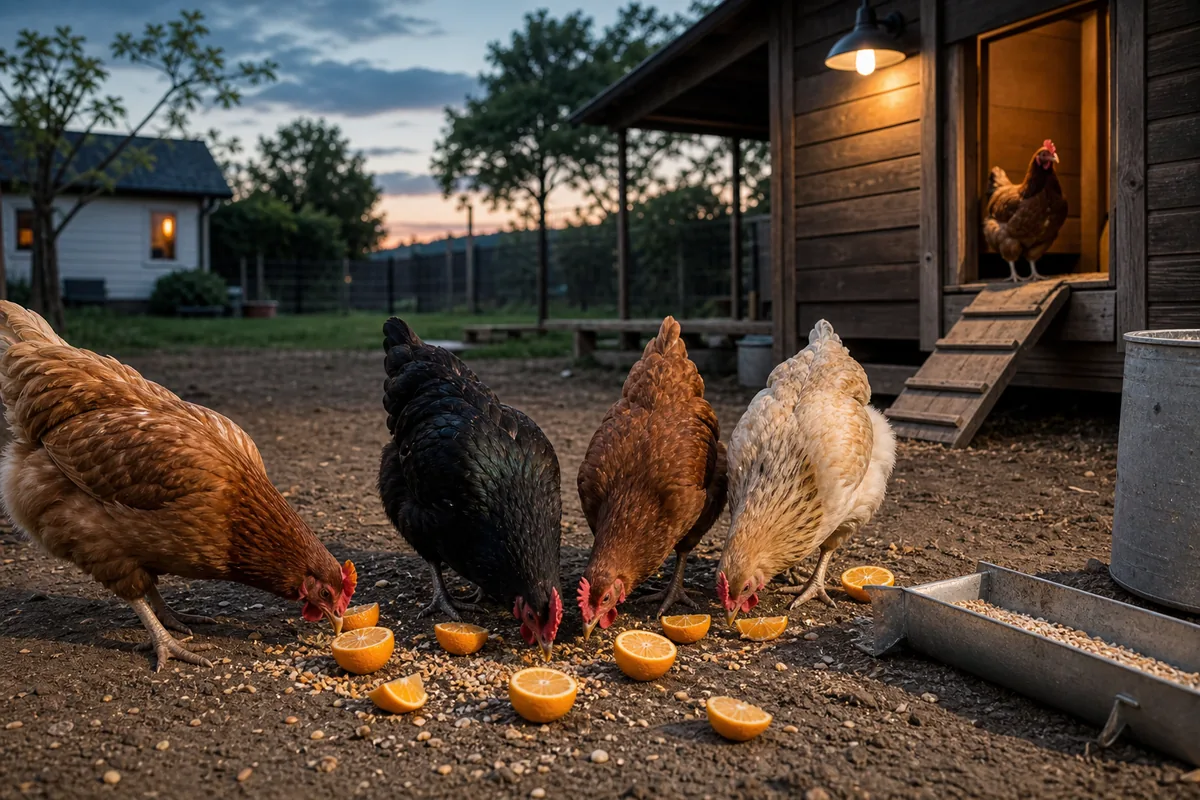
Oranges sit in an unusual position in the chicken-keeping world. They are not toxic, but they carry a genuine nutritional tradeoff that makes moderation genuinely important, not just a precaution tacked on for safety's sake.
For a grounded overview of what your flock can and cannot eat, start with our citrus flock safety guide before working through individual foods.
Oranges for Chickens
- FleshSafe
- segmentsSafe
- seedsSafe
- peel (if hens will eat it)Safe
- None confirmed toxicUnsafe
Prep: Peel optional; remove from coop when done. Feed outdoors, not in an enclosed space. Freq: Once per week maximum Amount: 1-2 small segments per hen per session
Below: the calcium interference mechanism, which citrus varieties to avoid, how to serve oranges without raising shell quality issues, and what to feed instead when you want a vitamin-rich treat.
Why Oranges Are Conditional: Citric Acid and Orange Calcium Absorption
The "citrus is toxic to chickens" claim circulates widely in backyard keeping communities. It is a myth.
No peer-reviewed veterinary source classifies citrus fruit as toxic to poultry.
The real issue is more specific and more manageable. Citric acid, in excess, can reduce the efficiency of calcium absorption in the digestive tract.
For laying hens whose calcium demand is already high, a diet with too much citric acid can gradually shift shell quality downward.
The word "excess" matters here. A single segment of orange once a week does not constitute excess.
A hen eating three oranges a day across the laying season is a different picture entirely.
At 47 calories per 100g, oranges are a low-calorie, high-moisture treat. The nutritional profile is genuinely positive at appropriate amounts.
Key facts
- Calories
- 47 kcal
- Vitamin C
- 53.2mg (59% of human DV, chickens synthesize their own but benefit from dietary sources during heat stress)
- Potassium
- 181mg
- Natural sugar
- 9.4g
- Water content
- ~87%
- Citric acid
- ~1.2g per 100g (the compound requiring moderation)
The vitamin C content is the most relevant benefit. Chickens under heat stress or illness benefit from additional vitamin C in their diet.
An orange segment in summer heat is a practical, low-effort way to deliver it.
Do Chickens Even Like Oranges? The Orange Taste Preference Reality
Before working out how often to feed oranges, it is worth knowing that many chickens will simply walk away from them. Chickens have limited taste receptors compared to mammals, but they are sensitive to bitter and sour notes.
Citrus acidity often reads as unappealing to hens.
The practical outcome: if you offer orange segments and your flock ignores them, that is normal behavior. Do not try to encourage consumption by adding sugar or mixing citrus into feed.
Let the flock vote with their feet.
Hens that do eat oranges tend to peck at the flesh and leave the peel. Some will eat peel.
Some will eat segments enthusiastically. Individual preference varies as much as it does with any other treat.
Orange Peel, Seeds, and Pith: Which Parts Are Safe for Chickens
All parts of the orange are non-toxic. The question is what your hens will actually eat and whether any part adds a specific concern worth noting.
| Orange Part | Safe to Feed | Will Hens Eat It | Notes |
|---|---|---|---|
| Flesh / segments | Yes | Often | Primary edible portion. Limit to 1-2 segments per hen per session. |
| Seeds / pips | Yes | Sometimes | Non-toxic. Hens may peck at them or ignore them entirely. |
| Peel / zest | Yes | Rarely | Safe but most hens refuse it. Higher essential oil concentration in the peel (see below). |
| Pith (white layer) | Yes | Rarely | Bitter taste, most hens avoid it without encouragement. |
| Dried peel | Yes (not in coop) | N/A | Repels some pests in nesting boxes. Do not feed; use as a deterrent only. |
One nuance on the peel: orange essential oils are concentrated in the outer zest layer. In an enclosed coop, strong citrus oils can be mildly irritating to respiratory systems when the concentration builds up.
This is not a toxicity concern. It is a comfort concern.
Dried orange peel placed in nesting boxes is a different application entirely. Scattered around nest material at low quantities, citrus peel deters certain mites and pests without the concentrated exposure that comes from fresh peel in an enclosed space.
This is a commonly reported practice among backyard keepers and carries no meaningful respiratory risk at the quantities used.
How Much Is Too Much: Orange Serving Frequency and the 10% Rule
The 10% rule is the standard for all chicken treats: treats combined should not exceed 10% of total daily feed intake. For a standard hen eating roughly 120g of layer feed per day, that means about 12g of treats total.
One small orange segment weighs approximately 15 to 20g. That already meets or slightly exceeds the daily treat allocation for a single hen eating a full ration of layer feed.
Our recommended protocol for oranges:
- Frequency: Once per week maximum for laying hens. Non-layers have less calcium pressure and can handle slightly more frequent offerings.
- Amount: 1 to 2 small segments per hen per session. If you are feeding a flock, cut a single orange into segments and let the birds share rather than giving each hen a whole fruit.
- Timing: After the flock has eaten their morning layer feed, not as a first-thing treat before they have consumed adequate calcium.
- Format: Fresh segments served outdoors. No juicing, no mixing with feed, no citrus-based treats stacked on top of whole fruit on the same day.
Breeds bred for high egg production have the most to lose from calcium disruption. Plymouth Rocks lay around 200 eggs per year and maintain strong immune function partly through solid calcium metabolism.
Consistent overfeeding of citrus to heavy layers is the one scenario where the calcium concern becomes practically relevant rather than theoretical.
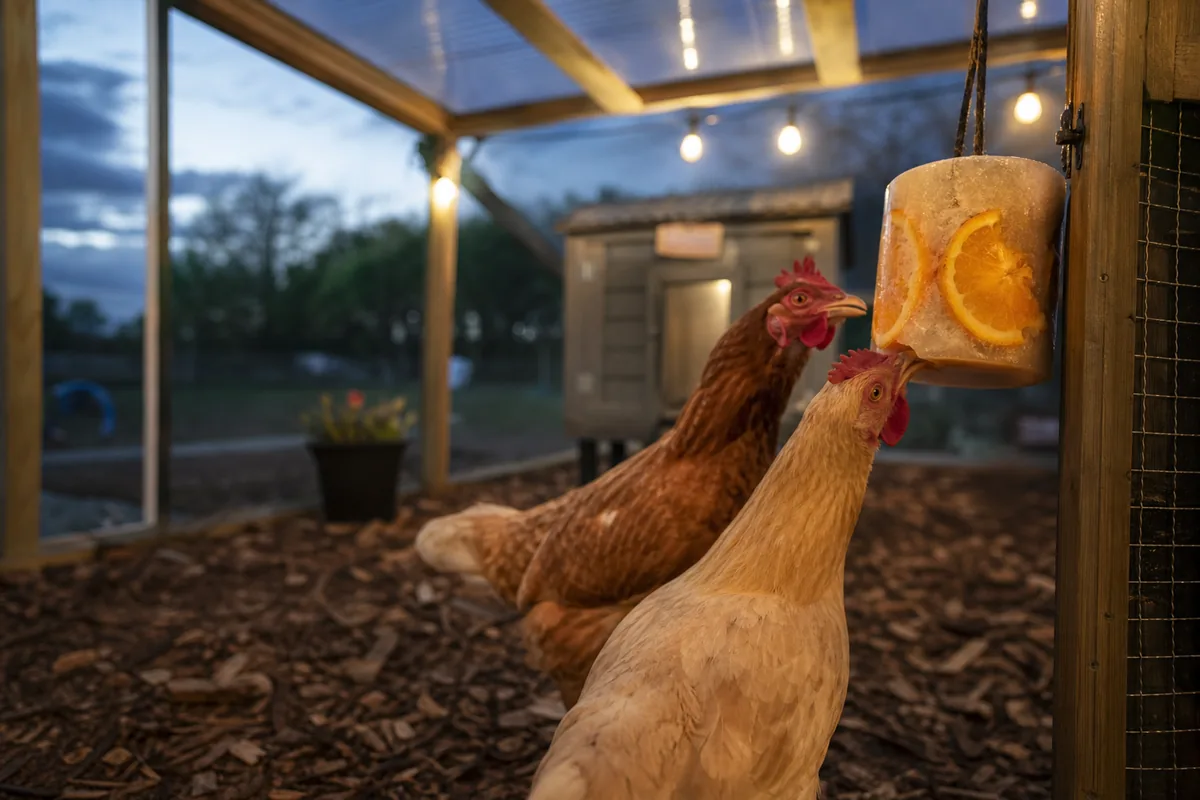
Which Citrus Fruits Are Safe and Which to Avoid
Not all citrus is equivalent. The rules that apply to oranges do not apply uniformly across the citrus family.
- Mandarins, tangerines, clementines: Follow the same rules as oranges. Lower acidity than navel oranges in most cases. Safe in the same serving sizes and frequency.
- Grapefruit: More acidic than standard oranges. The calcium interference concern is higher per gram. Avoid grapefruit as a flock treat.
- Lemon and lime: Too sour for most hens. Most flocks will refuse both entirely without prompting. If a hen does eat lemon or lime flesh, the acidity is higher than orange and should be counted against the same citrus budget.
- Orange juice: Skip it. Concentrated juice delivers far more citric acid and sugar than whole segments without the water bulk that slows intake. No benefit over whole fruit.
For hens that enjoy a juicy treat without the citrus question, a hydrating watermelon alternative delivers comparable moisture and natural sugar at near-zero acidity. It is a cleaner choice for hens showing any shell quality concerns.
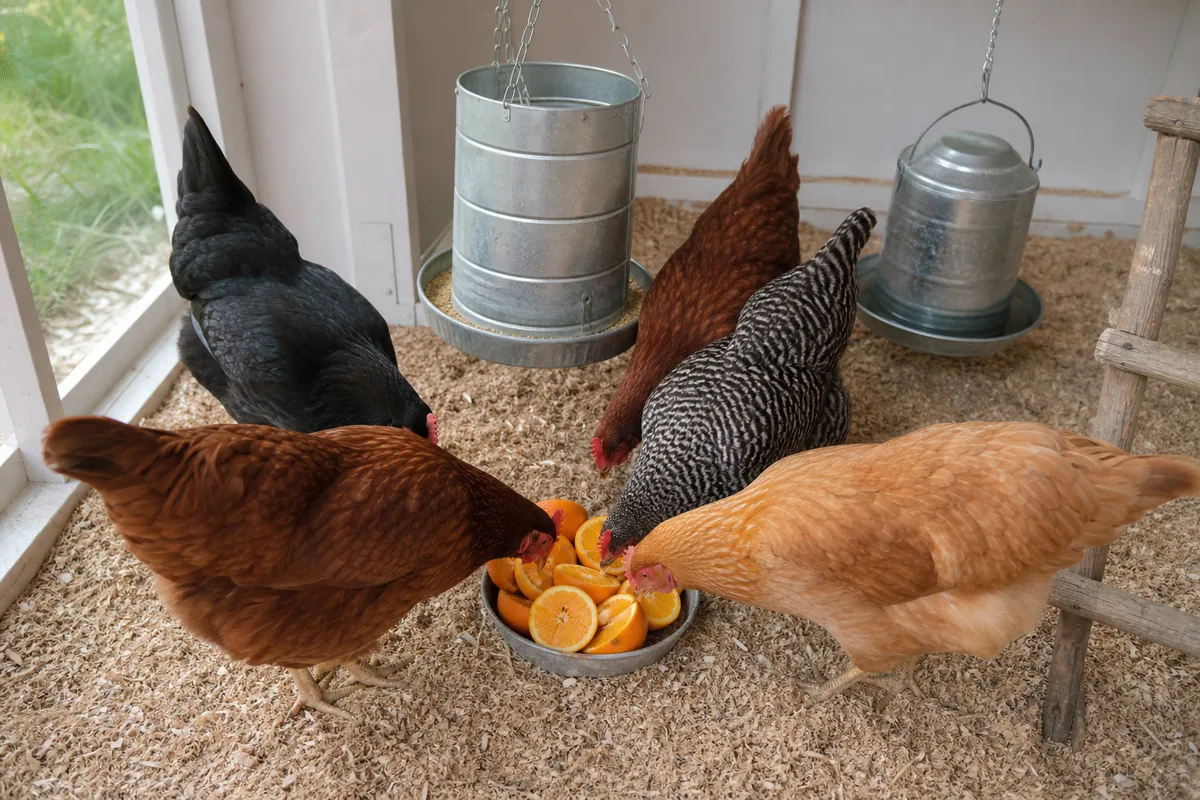
Comparing Oranges to Other Fruit Treats for Chickens
Vitamin C is the main nutritional argument for oranges. But chickens synthesize their own vitamin C under normal conditions.
Dietary vitamin C from fruit only becomes meaningfully important during heat stress or illness, when synthesis capacity drops.
If you are looking for a vitamin C source without the citric acid tradeoff, strawberries carry 58.8mg of vitamin C per 100g at far lower acidity than oranges, and most flocks eat them eagerly.
For general variety in the treat rotation:
- Oranges: Good for heat stress vitamin C. Conditional due to citric acid. Once a week maximum.
- Strawberries: Similar vitamin C, lower acidity, nearly universally accepted by hens. A cleaner everyday vitamin C source.
- Watermelon: High hydration, low acidity, excellent summer treat. No calcium concerns.
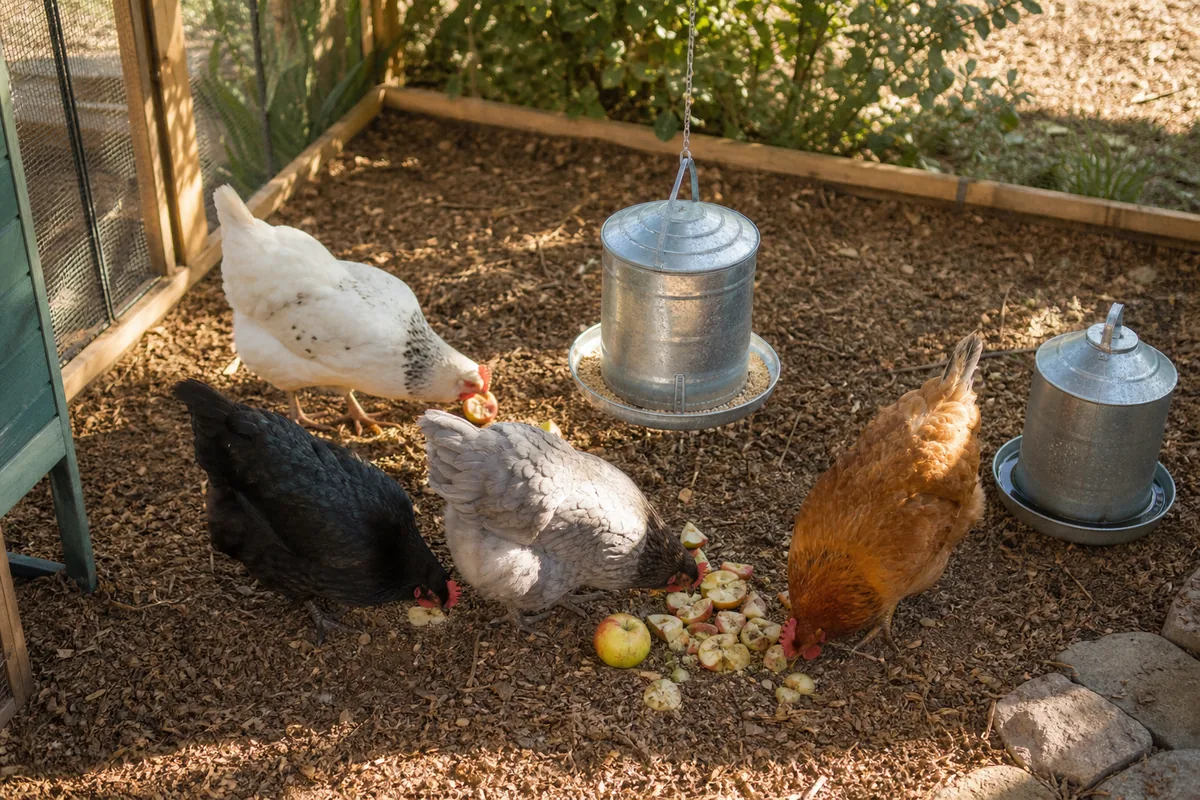
- Apples: A low-acid fruit option with good palatability. Remove seeds (contain trace amygdalin). Safe for regular rotation.
- Blueberries: High antioxidant load, low acidity, no prep required for standard hens. Feed 10 to 15 per bird twice weekly.
Of those alternatives, blueberries deliver antioxidants and vitamin C with negligible acidity, making them the safest direct swap when you want a vitamin-rich fruit treat without any calcium-interference concern.
Orange is not the best vitamin C source, not the best hydration treat, and not the most palatable citrus for most flocks. Its strongest case is novelty and the fact that most keepers already have oranges in the house without needing a separate purchase.
Sources and references
- Nutritional composition of citrus fruits: vitamin C, sugar, and organic acid profilesUSDA FoodData Central, FDC ID 169097: Oranges, raw, navels
- Calcium metabolism and eggshell formation in laying hens: dietary interference factorsPoultry Science, Vol. 83, Issue 1, 2004: Eggshell quality and bone strength in commercial layers
- Backyard poultry nutrition: safe and unsafe foods for laying hensof California Agriculture and Natural Resources: Poultry Fact Sheet