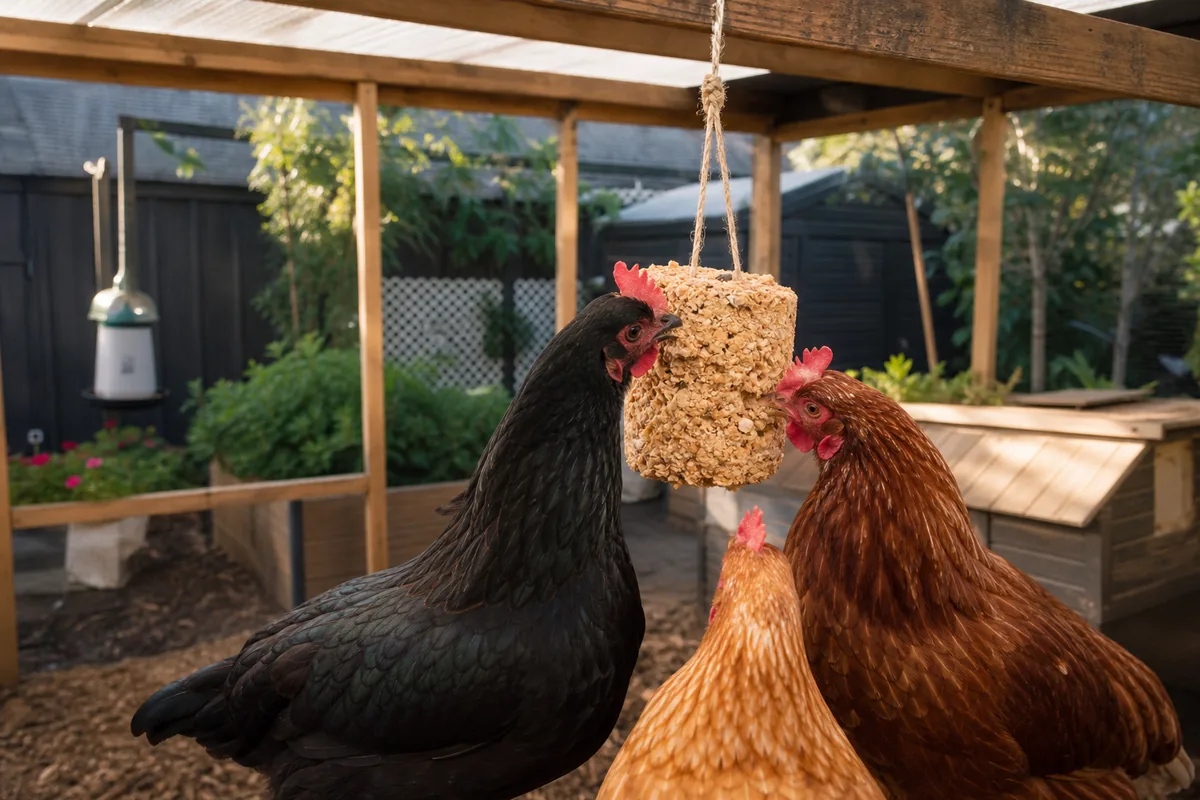
Peanut butter sits in a small category of treats that are fine when prepared correctly and a real risk when served carelessly. We cover it in our flock protein treats guide because the preparation rules matter more than the ingredient itself.
The two things that make peanut butter dangerous for chickens have nothing to do with the peanut and everything to do with how you serve it and what's in the jar you grab off the shelf.
Peanut Butter for Chickens
- Natural peanut butter (no xylitolSafe
- no added sugar)Safe
- thinned with water or mixed into oatsSafe
- Any peanut butter containing xylitol (sugar-free varieties). xylitol is acutely toxicUnsafe
Prep: Thin with water or mix into oats before feeding. Never serve in thick globs. Smear a thin layer on a pine cone for enrichment. Freq: Once per week maximum Amount: 1 teaspoon per hen per serving
Below: the crop impaction risk explained, the xylitol problem, how to prep it correctly, and when peanut butter actually earns its place in the feed rotation.
Key facts
- Calories
- 588 kcal / 100g
- Protein
- 25g / 100g
- Fat
- 50g / 100g
- Safe Verdict
- Conditional
- Max Frequency
- Once per week
- Max Serving
- 1 teaspoon per hen
Why Peanut Butter Crop Impaction Risks Outweigh the Protein Benefits When Fed Wrong
The crop is the first storage organ in a chicken's digestive tract. Feed enters the crop, softens, and moves to the proventriculus and gizzard in a steady flow.
Sticky foods disrupt that flow.
Peanut butter at full jar consistency is dense enough to compact in the crop, particularly when a hen eats more than a teaspoon in one go. The mass does not break down easily with normal water intake, and a compacted crop does not empty overnight the way a healthy crop does.
Signs of crop impaction include a crop that feels hard, full, and unchanged from the previous evening, a bird that is off feed, and visible discomfort or lethargy. A healthy crop empties overnight and feels soft by morning.
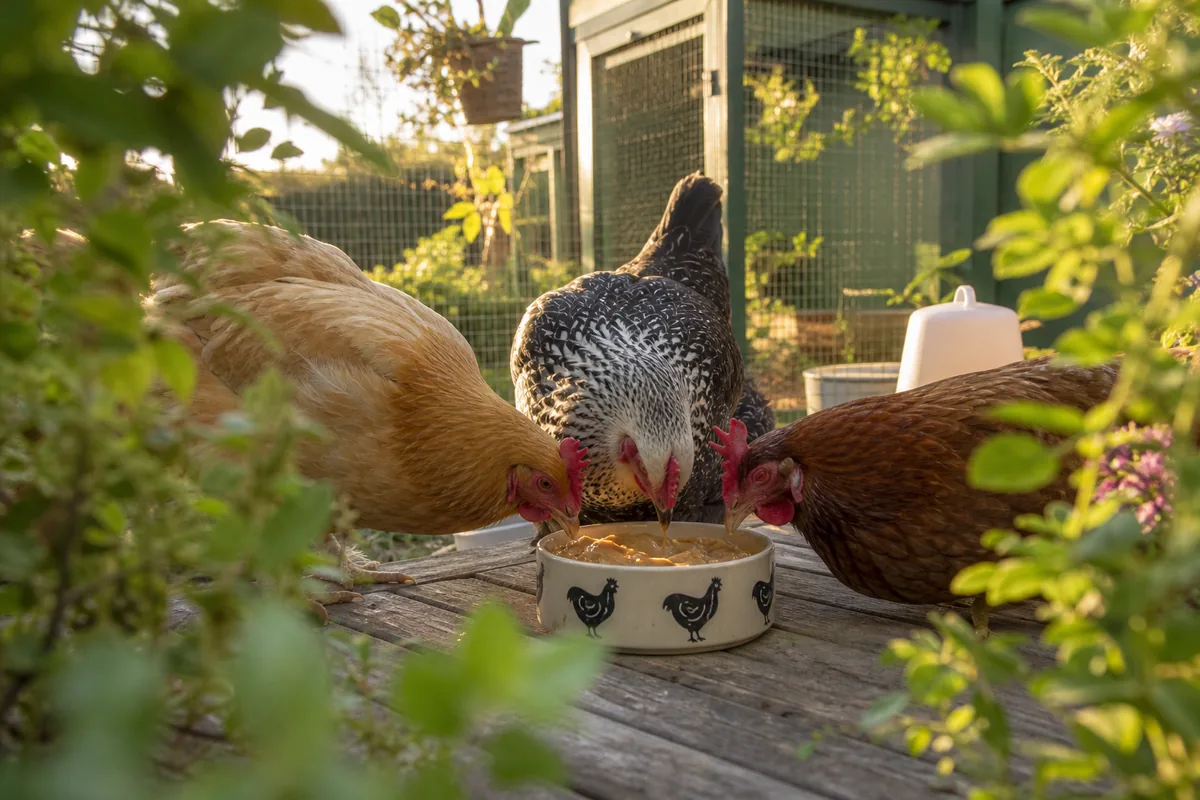
The prep solution is straightforward. Mix 1 teaspoon of peanut butter with 2-3 teaspoons of warm water until it reaches a loose, runny consistency.
Alternatively, stir it into cooked oats. The oat-PB mix recipe is the most forgiving format because the oats absorb the fat and break up the stickiness naturally.
- Thinned with water: Mix 1 teaspoon peanut butter with 2-3 teaspoon warm water. It should pour off the spoon, not stick to it.
- Mixed into oats: Stir into a small portion of cooked, cooled oats. The fiber in oats helps regulate digestion alongside the fat.
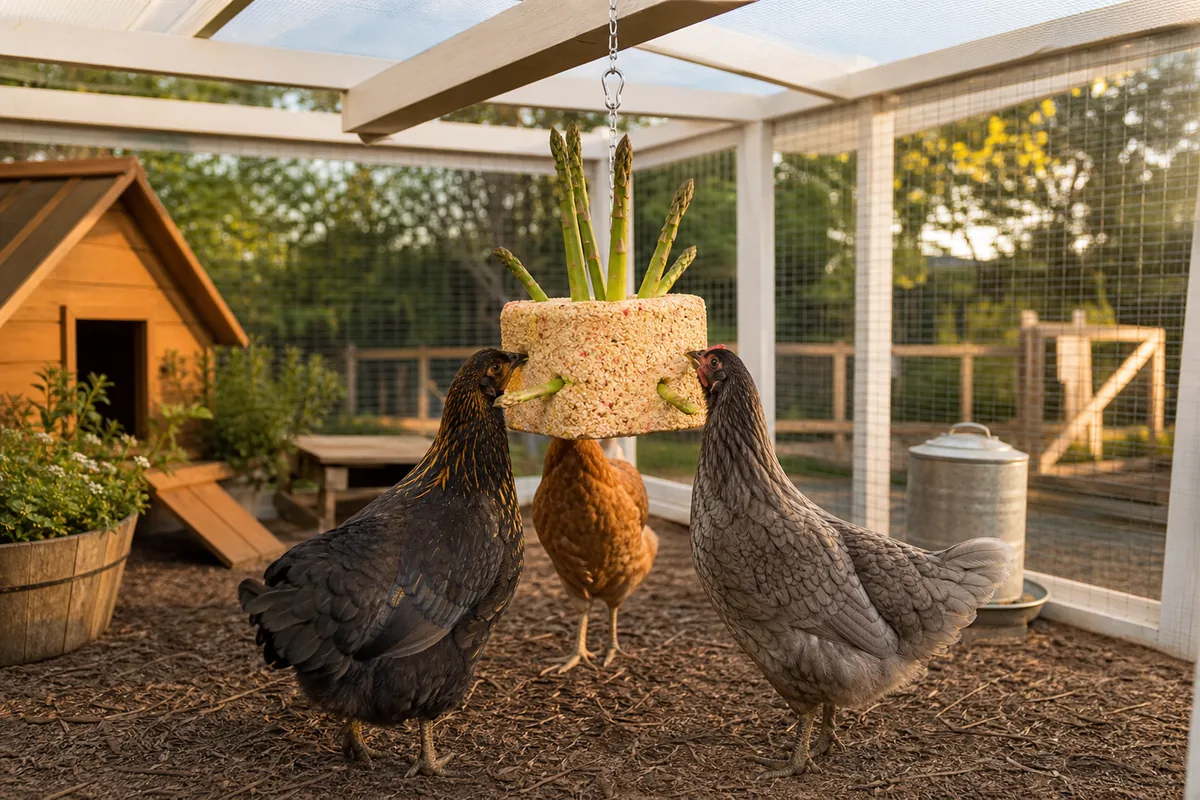
- Pine cone enrichment: Smear a thin layer on a pine cone and freeze it. Hens work at it slowly, which distributes intake over time and prevents gorging.
- Never from a jar directly: Chickens can get their beaks stuck in a jar and eat far more than a safe serving in one session.
Always provide fresh water near the feeding area when serving any sticky food. Peanut butter at even a thinned consistency requires more water than standard feed to move through the digestive tract efficiently.
Xylitol in Peanut Butter Is Acutely Toxic: How to Check Every Label
Xylitol is a sugar alcohol used as a sweetener in sugar-free and "reduced sugar" peanut butter products. It is acutely toxic to many animals, and while the specific lethal dose in chickens is not as well-documented as it is in dogs, no controlled study has established a safe level for poultry.
We apply the same precaution.
Natural peanut butter contains two ingredients: peanuts and salt (sometimes just peanuts). The oil separates to the top and requires stirring.
That separation is the sign you have the right product.
Commercial peanut butter brands frequently add palm oil, sugar, and emulsifiers to prevent separation. These are not toxic in trace amounts but add unnecessary sugar and fat to what is already a calorie-dense treat.
Natural peanut butter removes the ambiguity.
| Type | Common Additives | Xylitol Risk | Verdict for Chickens |
|---|---|---|---|
| Natural (peanuts + salt only) | None | None | Safe. use this |
| Commercial smooth/crunchy | Palm oil, sugar, emulsifiers | None (check label) | Acceptable, not ideal |
| Reduced fat peanut butter | Added sugars or maltodextrin | Low (check label) | Avoid. higher sugar, not safer |
| Sugar-free / "no sugar added" | Xylitol or other sugar alcohols | HIGH | Never feed |
| Flavored (chocolate, honey roast) | Cocoa, added sugars | Varies | Never feed. cocoa is toxic |
Chunky versus smooth is irrelevant to safety. Both work equally well thinned with water.
Smooth is easier to mix to a runny consistency, so it is the practical default for most keepers.
Peanut Butter Nutritional Value for Chickens: When the 25g Protein Matters Most
At 25g of protein per 100g, peanut butter has a protein density that rivals most commercial layer feed (16-18g per 100g). The fat content at 50g per 100g is the reason you cannot use it as a protein staple, but that same fat content becomes a specific advantage in two situations.
Molt is the first. When a hen drops her feathers and regrows them, feathers are approximately 85% protein by composition.
The metabolic demand during a heavy molt pulls protein away from egg production and into feather synthesis. A weekly peanut butter supplement during this period provides a concentrated protein hit without requiring a full feed swap.
A teaspoon per hen per week is a modest addition to the overall protein budget.
The second situation is cold weather more broadly. High-fat foods generate more metabolic heat during digestion than carbohydrates.
For any breed in a cold climate, a small peanut butter supplement in the late afternoon gives hens a mild thermogenic boost before overnight roosting.
Outside of molt and cold weather, peanut butter competes with better-balanced options. Mealworms as an insect protein option deliver 48-53g of protein per 100g dry weight with far less fat and no sticky texture hazard.
For protein supplementation as a general practice, mealworms or sunflower seeds are more practical day-to-day choices.
Whole Peanuts vs Peanut Butter: Which Is Safer for Your Flock
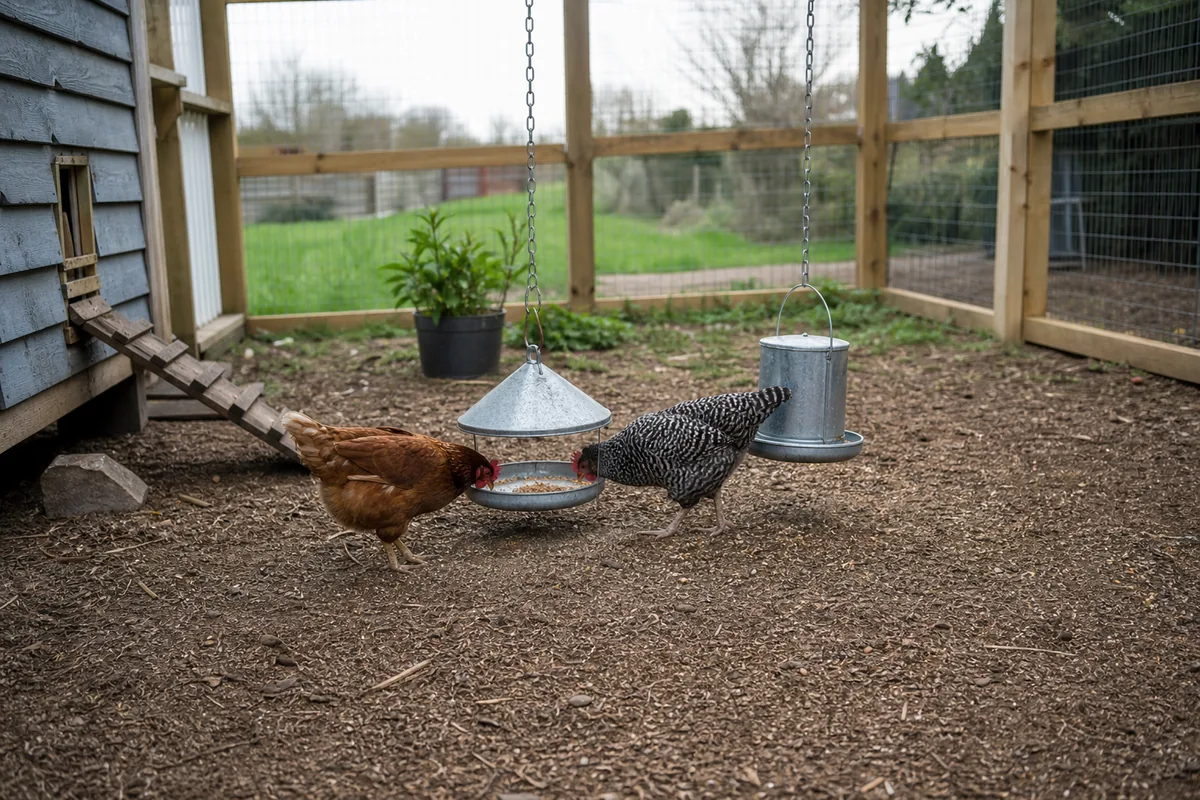
Whole peanuts in the shell are the safer default if you want to give your flock a peanut-based treat. Chickens crack the shells themselves, which slows intake, distributes feeding over time, and produces natural enrichment behavior.
The shell prevents any one bird from consuming a large amount quickly.
Rules for whole peanuts apply the same way. Unsalted only.
Raw or dry-roasted, never flavored. No added coatings.
The unsalted, unshelled peanut in its natural state is the lowest-risk peanut format you can offer.
- Unsalted, unshelled peanuts: Lowest risk. Chickens crack the shell, which paces intake. Scatter them in the run for enrichment.
- Unsalted, shelled peanuts: Fine in small amounts. Remove shells first. Limit to a small handful per bird, twice a week at most.
- Salted peanuts (any form): Avoid. Excess sodium disrupts electrolyte balance and increases water demand. A single salted peanut will not harm a hen, but regular feeding builds sodium load over time.
- Flavored or seasoned peanuts: Never feed. Spices, garlic powder, onion powder, and chili coatings are all problematic for poultry.
Peanut allergy is a human immune response. Chickens do not have the immune architecture for IgE-mediated allergic reactions, so peanut allergy is not a concern in your flock.
For keepers who want a nut-based protein treat with even simpler prep, sunflower seeds in the shell deliver a comparable enrichment behavior without the sticky texture risk of peanut butter.
Aflatoxin in Peanuts: Why Brand Quality Matters
Aflatoxin is a mycotoxin produced by Aspergillus molds that grow on peanuts stored in warm, humid conditions. It is one of the most potent naturally occurring carcinogens and is acutely toxic to poultry at high doses.
Commercial peanut butter from established brands is tested for aflatoxin levels under FDA guidelines (20 ppb limit for human food). Bulk bins, discount store peanut butter, or generic store brands without a track record carry higher risk because quality control and testing rigor varies.
Never use peanut butter from a jar that smells off, shows any mold, or has been open for an extended period at room temperature. Refrigerate natural peanut butter after opening, as it lacks the preservatives that stabilize commercial formulas at room temperature.
Sources and references
- Crop impaction in backyard poultry: causes, diagnosis, and managementMerck Veterinary Manual, Poultry: Digestive Disorders
- Aflatoxin contamination in peanuts and peanut products: regulatory standards and risk assessmentU.S. Food and Drug Administration, Compliance Policy Guides, CPG Sec. 683.100
- Protein requirements and feather regeneration during induced molt in laying hensPoultry Science, Vol. 89, No. 5, 2010, pp. 1041-1047