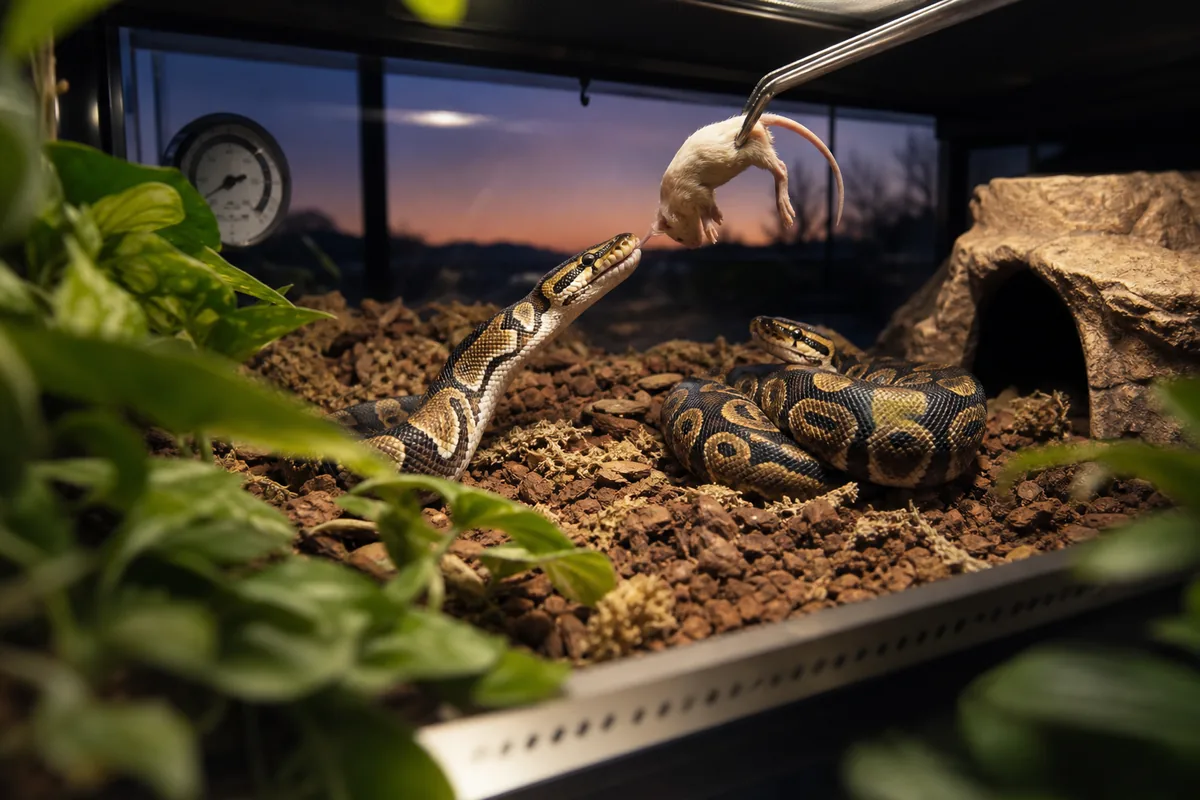
Eggs occupy an unusual position in ball python feeding discussions.
Some wild ball pythons do raid bird nests and consume eggs opportunistically. That behavior is real, but it does not map cleanly to captive conditions, where diet precision defines long-term health across every reptile species we keep.
That fact gets used to justify feeding eggs in captivity, but ball python dietary needs in captivity are met by a consistent whole-prey rodent diet, not occasional wild foraging behavior.
The biology here matters.
An egg is not equivalent to a whole prey item, and the differences have consequences for a snake fed eggs repeatedly.
The full ball python care framework covers diet, enclosure, and the prey rotation that keeps adults healthy long-term.
Eggs for Ball Pythons
- Cooked whole egg (yolk and white together)Safe
- quail eggs occasionallySafe
- Raw egg white fed alone (avidin blocks biotin)Unsafe
Prep: If offered, use whole egg at room temperature, never raw white alone Freq: Occasional only, never as a staple Amount: One appropriately sized egg matched to snake size, infrequently
What Eggs Provide and What They Miss
Eggs contain high-quality protein, fat, and several vitamins including B12, riboflavin, and vitamin D in the yolk. The fat-soluble vitamin content in the yolk is truly useful, and the protein profile is complete in terms of amino acids.
What eggs do not contain: bones (no dietary calcium), fur or feathers (no mechanical gut fiber), organ tissue variety, or the hormones and enzymes present in fresh whole prey. The calcium-to-phosphorus ratio in eggs is skewed heavily toward phosphorus, which worsens the already challenging calcium balance of a captive snake diet.
- Protein: complete amino acid profile, equivalent to meat quality
- Fat: yolk provides useful fat-soluble vitamins A, D, E, K
- Calcium: negligible in the egg itself, shell not typically consumed
- Fiber: none, no mechanical gut transit support
- Whole-prey matrix: absent, no organ variety, no bone mineral content
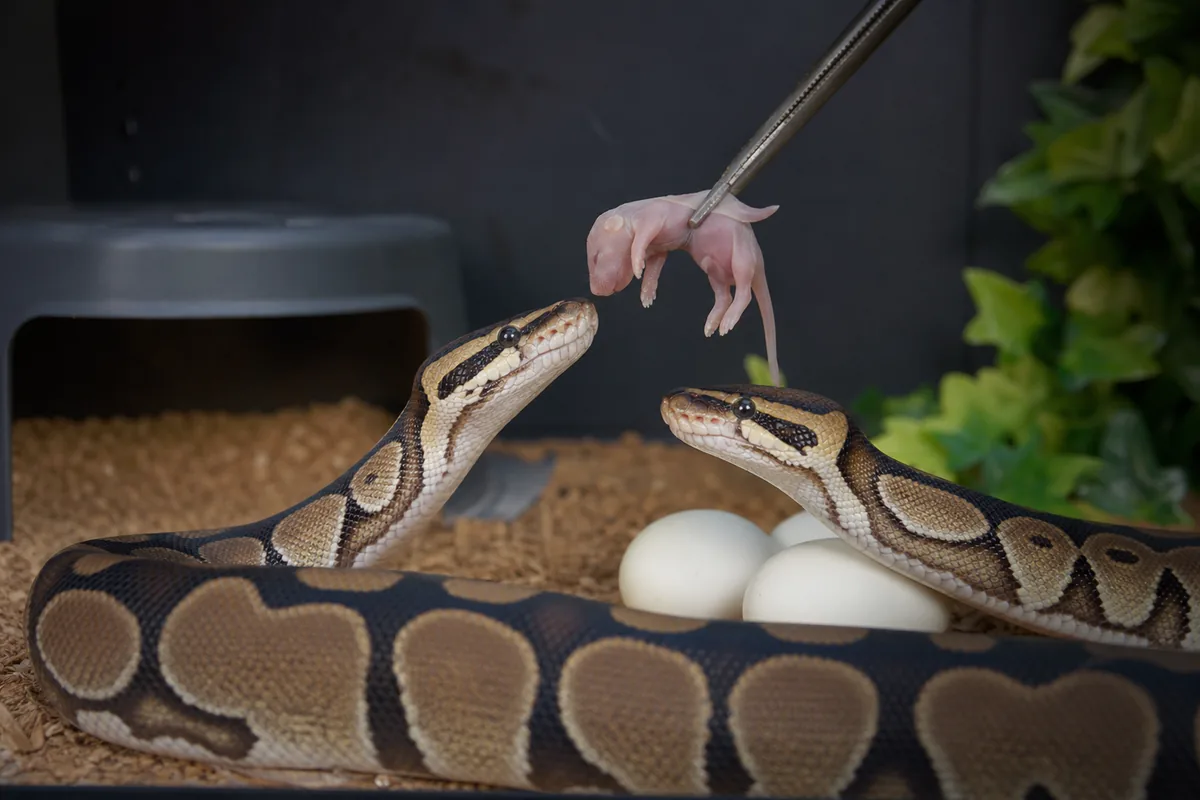
When Eggs Might Be Justified
There are two legitimate scenarios where eggs enter the conversation. The first is a severe feeding strike in a snake that has not eaten for 6 to 8 weeks and is losing body condition.
The second is a keeper who cannot access frozen rodents due to supply issues and needs a short-term bridge food.
In both cases, eggs are a temporary tool, not a solution.
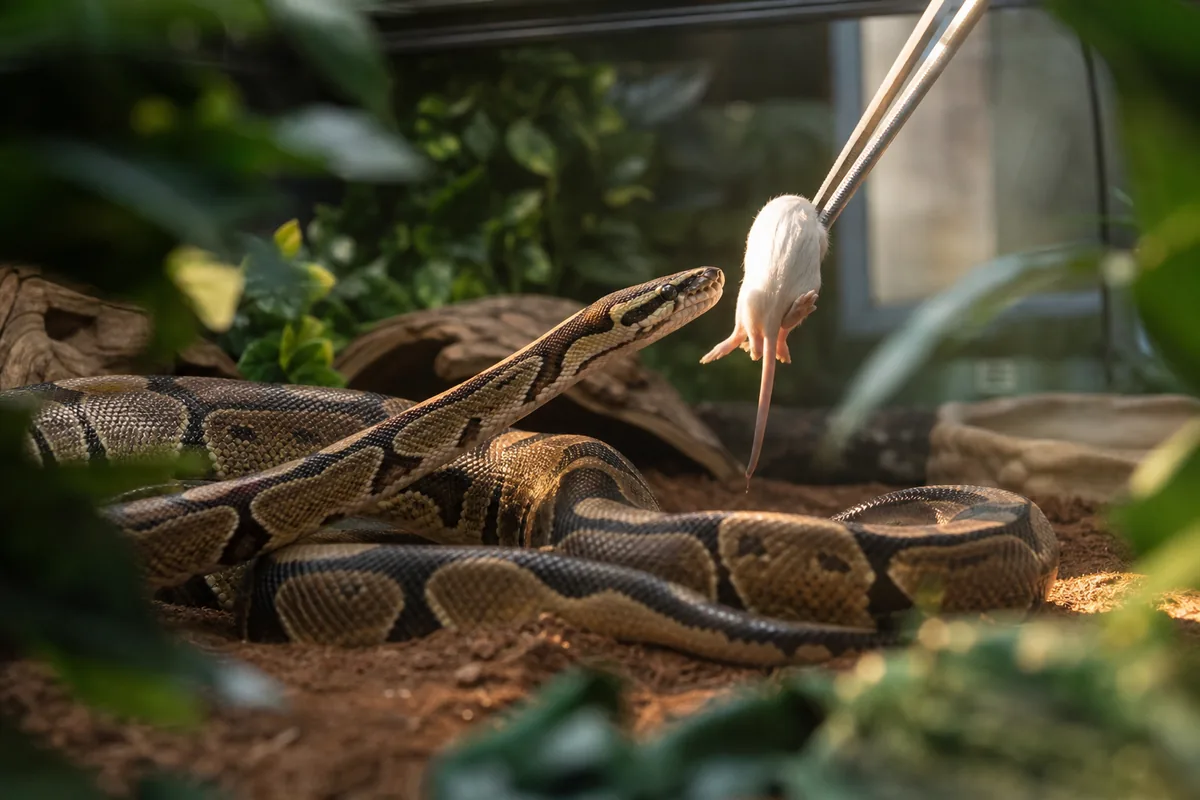
The goal is always to return to appropriately sized frozen-thawed rodents as quickly as possible.
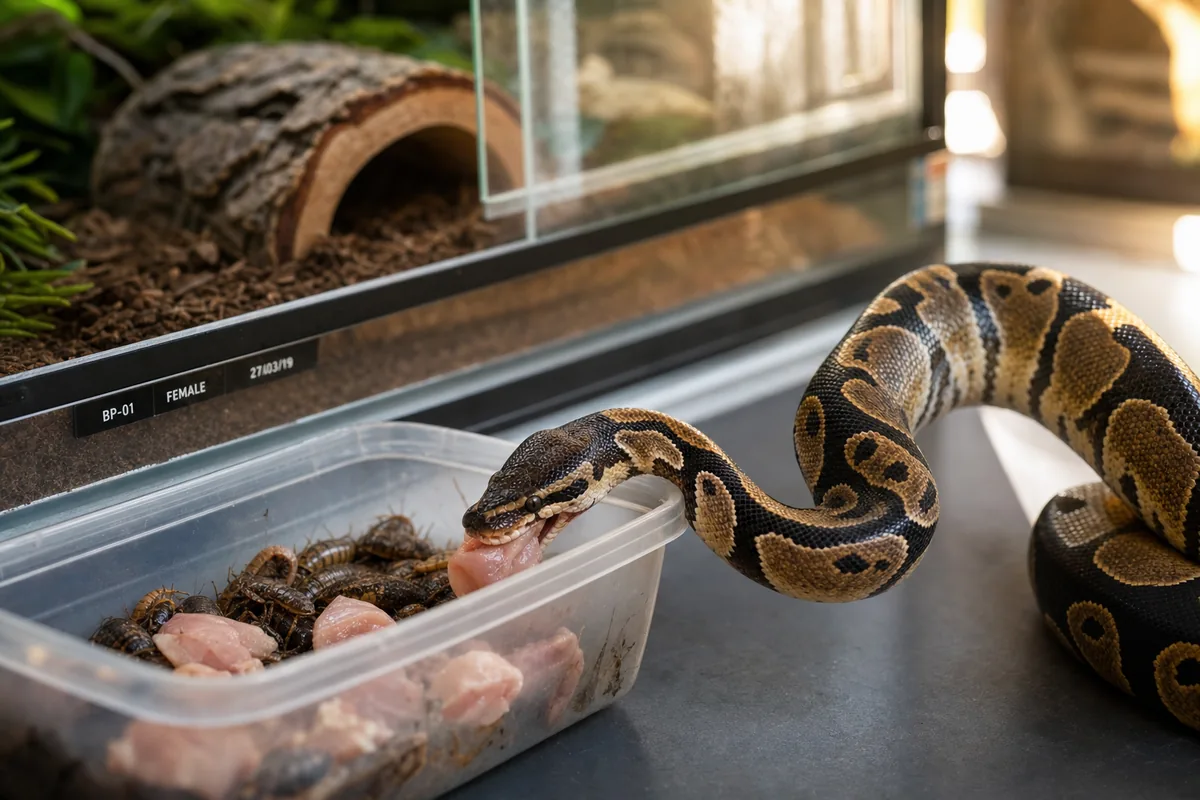
Chicken is another food sometimes considered in a supply gap, but feeding chicken to ball pythons carries Salmonella risks and nutritional deficiencies that make it unsuitable even as an emergency option.
Egg Size Matching and Preparation
If eggs are offered, size matters as much as it does with rodent prey. A chicken egg is too large for most ball pythons under 1.5 kilograms.
Quail eggs are a better fit for sub-adult animals because the diameter more closely matches a prey item the snake can comfortably swallow. For snakes that accept quail eggs, whole frozen quail is a nutritionally complete prey option worth knowing, as it offers the whole-prey structure that eggs fundamentally lack.
Offer eggs at room temperature or slightly warm, around 90 to 95°F surface temperature. Cold eggs trigger the same feeding reluctance as cold rodents.
Most ball pythons that accept eggs at all will constrict them briefly before swallowing, which is normal behavior.
| Snake Size | Egg Type | Verdict |
|---|---|---|
| Under 500g | Quail egg | Better fit, still not ideal |
| 500g to 1.5kg | Quail egg | Acceptable short-term bridge only |
| 1.5kg+ | Small chicken egg | Emergency bridge only, not staple |
| Any size | Raw egg white alone | Never appropriate |
Long-Term Risks of Regular Egg Feeding
A ball python fed eggs as a significant portion of its diet over months develops nutritional deficiencies that are slow to appear and difficult to reverse. The calcium deficit accumulates silently in bone tissue before showing external signs.
The absence of mechanical fiber also affects gut motility. Snakes that eat whole prey process bones, fur, and connective tissue in ways that regulate gut transit.
An egg-based diet removes all of that regulatory material.
- Metabolic bone disease: gradual calcium depletion causes jaw softening and spinal deformity
- Biotin deficiency: from repeated raw egg white exposure, causes skin and neurological symptoms
- Gut stasis risk: reduced fiber intake slows gut motility and increases regurgitation events
- Prey fixation: snakes that repeatedly eat eggs may begin refusing rodents, creating a harder problem
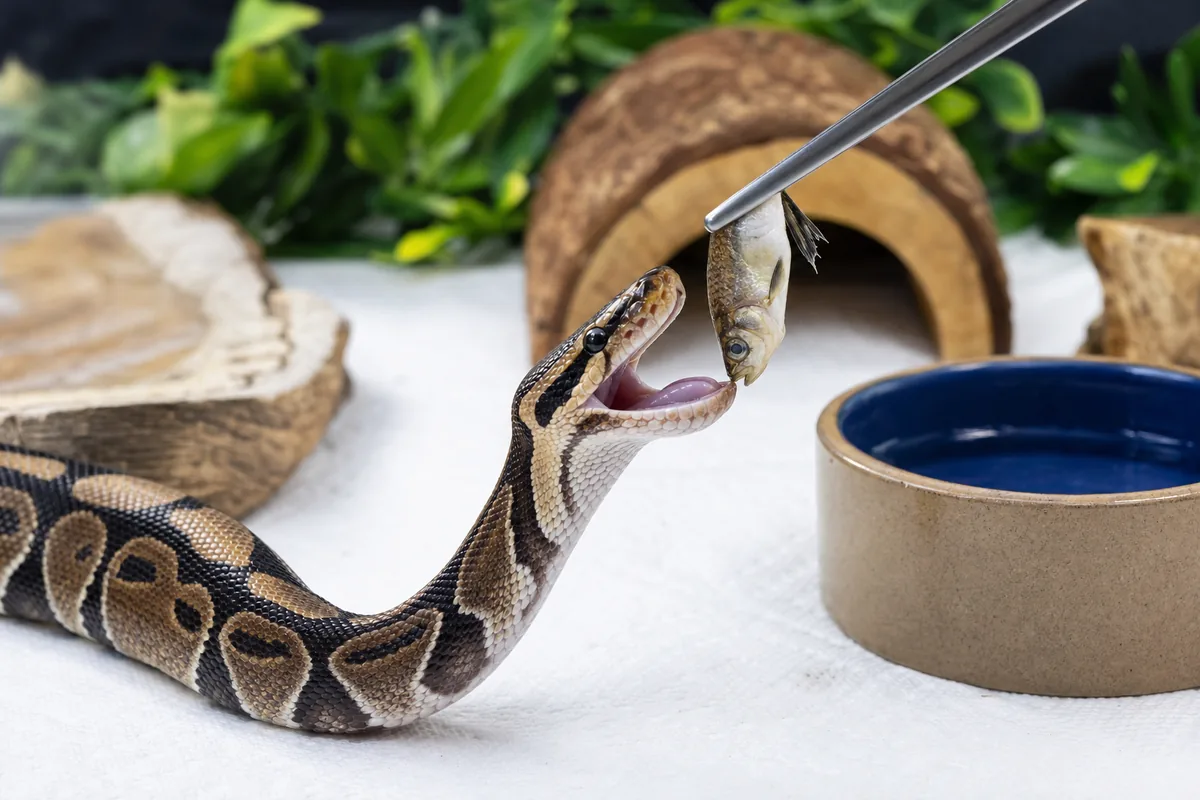
Fish are another food sometimes considered as a bridge, but thiaminase in most fish species causes neurological damage faster than eggs deplete calcium. Neither is a safe long-term alternative to frozen-thawed rats, and hamsters introduce disease transmission risks that make them equally unsuitable as a regular food source.
Ball pythons are strict obligate carnivores, which sets them apart from species like blue tongue skinks, true omnivores where dietary variety is built into proper care. Corn snakes are the closest parallel: same whole-prey rodent diet, same rule against food substitution, and a similar risk profile when non-prey foods enter the picture.
Sources and references
- Biotin Deficiency in Reptiles Fed Raw Egg Dietsof Herpetological Medicine and Surgery, 2011
- Ball Python Feeding and NutritionMerck Veterinary Manual, 2023
- Calcium Metabolism and Metabolic Bone Disease in Captive ReptilesZoo Biology, 2014