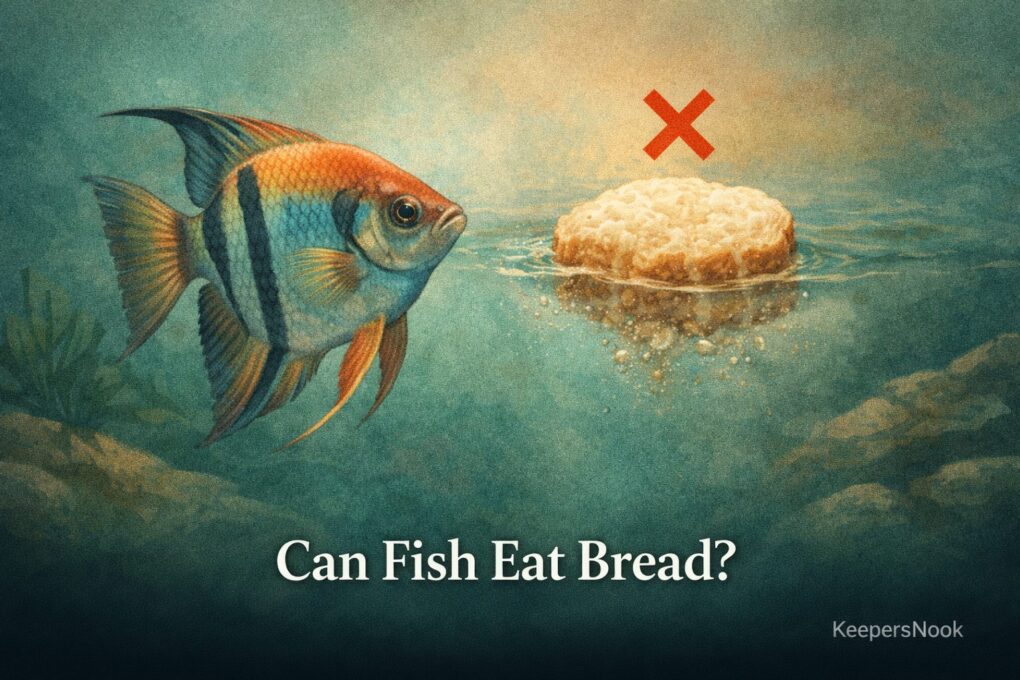
Bread is a common household staple that fish keepers sometimes reach for when their regular food runs out. We cover this in our complete aquarium feeding guide, and the answer is the same across every species: bread causes more harm than a skipped meal ever will.
The problem is not just one mechanism. Bread attacks fish health from two directions simultaneously.
It destroys the fish from the inside and poisons the water around them.
Why Bread Swells in Fish Guts and Causes Blockages Within Hours
Bread is designed to absorb liquid and expand. A single piece of white bread can swell to 3 times its original volume when wet.
Remember it later
Planning to try this recipe soon? Save it for a quick find later!
Inside a fish's small digestive tract, that expansion has nowhere to go.
Fish digestive systems are built for protein and fat from insects, plant matter, and smaller organisms. They have none of the enzymes required to break down yeast or gluten, the two structural components of bread.
- Refined starch: Ferments rapidly in warm water, producing gas that accelerates bloating.
- Gluten: Forms an elastic gel in the stomach that fish enzymes cannot dissolve.
- Salt and preservatives: In commercial bread disrupt the fish's ability to regulate body fluid.
- Yeast: Continues to ferment inside the gut, creating internal pressure and pain.
- Swollen bread mass: Blocks the intestinal tract, leading to constipation and organ damage.
The blockage issue is not limited to bettas or goldfish. It applies across all freshwater species.
Corydoras kept on bread show the same internal swelling because the biochemistry of bread is incompatible with fish digestion at a fundamental level.
How Bread Ruins Fish Tank Water Chemistry Within 24 Hours
Even if a fish ate bread without choking, the water would still kill it. Bread does not stay solid in an aquarium.
It dissolves into a starchy cloud within minutes of hitting the water.
That dissolved starch is an immediate food source for the bacteria living in your tank's biological filter. The bacteria population spikes, and so does their waste output: ammonia and nitrite.
- Dissolved starch: Clouds water and blocks light to live plants within 30 minutes.
- Bacterial bloom: Consumes available oxygen, stressing fish that breathe through gills.
- Ammonia buildup: Burns gill tissue and causes hemorrhaging at 2.0 ppm.
- Nitrite spike: Follows within hours, blocking red blood cells from carrying oxygen.
- pH crash: Can occur as organic acids accumulate, compounding gill damage.
Goldfish, which are frequently fed bread by people feeding pond fish, are particularly at risk. A in a clouded tank from bread will show signs of ammonia stress, clamped fins, gasping at the surface, within 6 to 8 hours.
All 4 Bread Types Are Equally Dangerous for Fish: A Breakdown
A common belief is that whole wheat bread or gluten-free bread might be safer than white bread. This is not accurate.
The harm from bread comes from multiple components, not just refined white flour.
| Bread Type | Primary Danger | Secondary Danger | Danger Level |
|---|---|---|---|
| White bread | Rapid starch dissolve, ammonia spike | Gut blockage from gluten swelling | Lethal |
| Whole wheat | Gluten swelling, gut blockage | Bran irritation of digestive lining | Lethal |
| Sourdough | Live yeast cultures fermenting in gut | Acidity disrupting digestive pH | Lethal |
| Gluten-free | Alternative starch dissolve in water | Salt and preservative toxicity | Lethal |
The verdict is the same regardless of brand, thickness, or whether the bread is toasted. All bread is harmful to aquarium fish without exception.
Guppies, which people often attempt to feed with bread crumbs, are no safer than larger fish. A guppy's digestive tract is proportionally smaller, meaning blockage and internal pressure build faster.
8 Safe Fish Foods to Replace Bread: Matching Natural Diet
If you ran out of fish food, the correct answer is to skip a feeding. Healthy adult fish can go 3 to 5 days without food without any harm.
Fasting is far safer than reaching for a human food substitute.
When you do feed, the options below match what freshwater fish actually evolved to eat. Quality betta food choices show the range of what constitutes appropriate nutrition.
accept a wide range of foods and do well on a rotation of quality flakes, blanched vegetables, and frozen foods. Bottom feeders like plecos need algae wafers and wood for rasping.
Betta fish: Carnivores. Primary food is high-protein pellets (2-3 pellets, twice daily).
Supplement with frozen bloodworms 2-3 times per week. Complete betta care covers full feeding schedules.
Goldfish: Omnivores with large appetites. Feed goldfish-specific pellets, not tropical fish food.
Supplement with blanched peas to prevent constipation.
Neon tetras: Small-mouthed omnivores. Require micro-pellets or finely crushed flakes.
Neon tetra feeding details cover portion sizing.
Corydoras: Bottom feeders. Sinking pellets or wafers that reach the substrate.
Feed in the evening when corydoras are most active.
Mollies: Omnivores that need plant matter. Quality flakes with spirulina, plus blanched greens.
A molly's dietary balance between protein and plant material prevents disease.
- Small tanks (5-gallon): Stocking and feeding volume matter together. See our 5-gallon stocking guide.
- Medium tanks (10-gallon): Wider species range with higher total food volume. The 10-gallon stocking guide pairs species with feeding strategies.