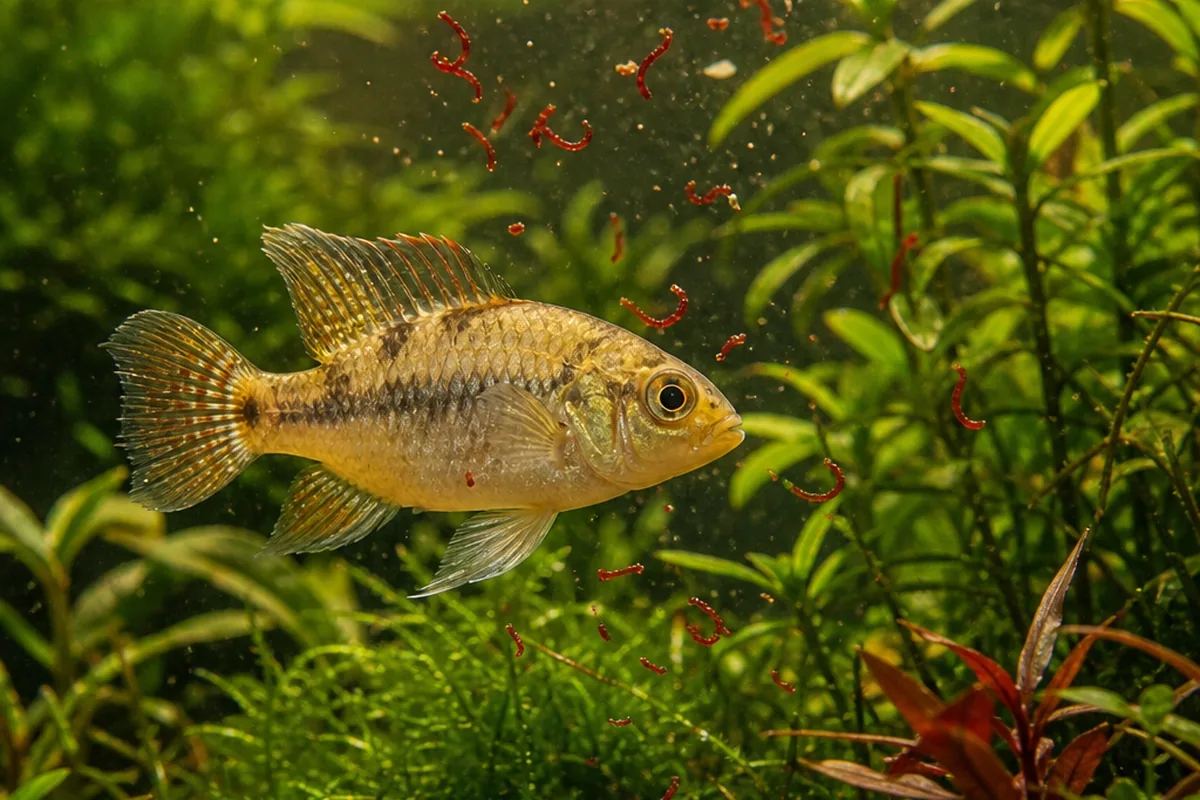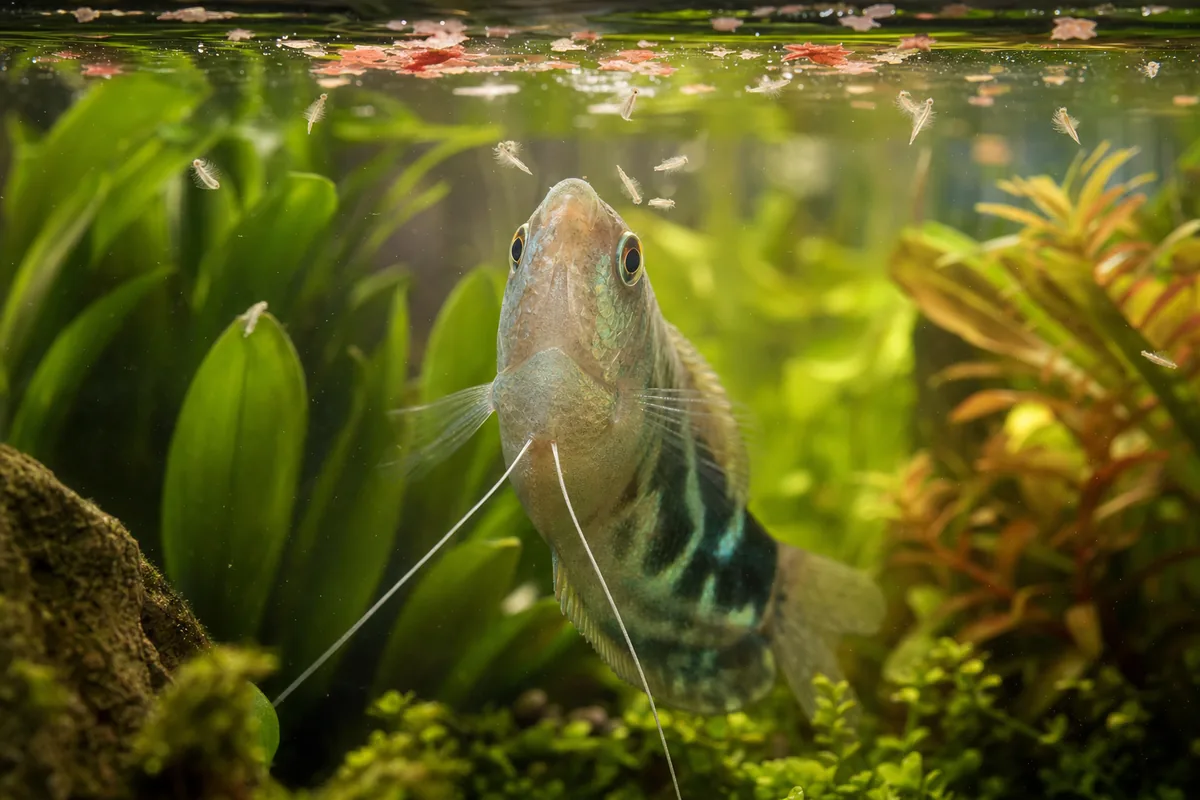
Brine shrimp belong at the top of any list of aquarium protein foods. They trigger strong feeding responses across virtually every freshwater species, from nano fish to large cichlids, and their nutritional profile is a near-perfect match for what carnivorous and omnivorous fish need from a live or frozen supplement.
The real question is not whether your fish can eat them. It is which size and form to use, how often to feed them, and whether live, frozen, or freeze-dried fits your setup best.
Brine Shrimp for Freshwater Fish
- Live adult brine shrimpSafe
- live baby brine shrimp (nauplii)Safe
- frozen brine shrimp cubesSafe
- freeze-dried brine shrimp (pre-soaked)Safe
- gut-loaded live brine shrimpSafe
- None. Brine shrimp are non-toxic to all freshwater fish species. Saltwater brine shrimp die in freshwater within minutes but are consumed safely before any osmotic stress reaches the fishUnsafe
Prep: Frozen: thaw one cube in a cup of tank water for 2-3 minutes, drain the salt-laden thaw water, add worms only. Freeze-dried: soak in tank water 60 seconds before feeding. Live: feed directly or gut-load first with spirulina for 1-2 hours. Freq: 2-4 times per week as a supplement alongside a quality staple food Amount: Feed only what your fish consume within 3-5 minutes. Remove any uneaten brine shrimp promptly.
Brine shrimp are crustaceans in the genus Artemia, native to saltwater lakes and coastal brine pools across the world. The San Francisco Bay and Great Salt Lake populations are the most commercially harvested.
Despite their saltwater origin, they are the go-to live food for freshwater aquariums because freshwater fish eat them immediately, long before any salt diffusion occurs.
Key facts
- Protein Content
- ~60% protein on a dry-matter basis, one of the highest among natural aquarium live foods
- Fat Content
- ~10% fat, rich in unsaturated fatty acids including omega-3s
- Fry Food
- Artemia nauplii (newly hatched) are the number one fry food used in hatcheries worldwide
- Feeding Frequency
- 2-4 times per week for adults, daily for fry during early life stages
- Gut-Loading
- Feeding live brine shrimp spirulina 1-2 hours before offering them to fish significantly boosts nutritional value
The fat profile deserves attention. Adult brine shrimp contain omega-3 fatty acids including EPA and DHA, which support immune function, fin development, and coloration.
Nauplii are slightly lower in fat but still highly nutritious and sized perfectly for fry and nano fish whose mouths cannot accept anything larger.
One important note on nutritional completeness: brine shrimp are low in certain vitamins, particularly fat-soluble vitamins A and D. Gut-loading live brine shrimp with spirulina before feeding closes this gap and turns a good food into an excellent one.
Baby Brine Shrimp vs. Adult Brine Shrimp: Which Size Is Right for Your Fish
Size is the most important variable when choosing which form of brine shrimp to feed. The right size depends entirely on the mouth size of the fish you are feeding.
Baby brine shrimp nauplii are newly hatched Artemia, typically 400-500 micrometers in length. That puts them within reach of fish fry as small as 48 hours old and nano species like chili rasboras and ember tetras.
Adult brine shrimp are substantially larger, around 8-10mm, and suit standard community fish, cichlids, and most medium-to-large species.
| Fish Size / Life Stage | Recommended Form | Why It Works |
|---|---|---|
| Fry (under 10mm) | Live baby brine shrimp (nauplii) | Perfect first food. High protein, moving target triggers feeding instinct |
| Nano fish (ember tetra, chili rasbora) | Baby brine shrimp or finely chopped frozen adult | Small mouth opening requires nauplii-sized food |
| Small community (betta, guppy, neon tetra) | Adult brine shrimp: frozen or freeze-dried | Adult size matches mouth width; frozen is most practical |
| Medium fish (angelfish, gouramis) | Adult brine shrimp: live or frozen | Live adults trigger active hunting; excellent conditioning food |
| Large fish (oscars, large cichlids) | Adult brine shrimp in quantity, or as variety treat | Large fish can consume many adults per feeding; nutritious treat alongside meatier foods |
For guppy fry nutrition, baby brine shrimp are virtually irreplaceable during the first two weeks of life. Newly hatched guppy fry are too small for most commercial fry foods, but nauplii are the right size and stimulate the instinctive feeding response that gets fry eating quickly.
Growth rates in fry fed baby brine shrimp consistently outperform those raised on powdered foods alone.
How to Hatch Baby Brine Shrimp at Home: The Brine Shrimp Hatchery Method
Hatching your own baby brine shrimp at home is straightforward and costs a fraction of what frozen nauplii cost per feeding. The equipment required is minimal and the process takes 24-48 hours depending on temperature.
- Container: A clean 500ml to 1L plastic bottle or purpose-built hatchery cone
- Saltwater: Mix 1 tablespoon of non-iodized salt per 500ml of dechlorinated water (roughly 1.7% salinity)
- Eggs: Add a quarter teaspoon of Artemia cysts (eggs). San Francisco Bay Brand and Brine Shrimp Direct are reliable sources
- Aeration: Connect a small air pump via airline tubing to keep the eggs suspended and oxygenated
- Light: Position a lamp or LED near the container. Light accelerates hatching and attracts nauplii for easier harvesting
- Temperature: 26-28°C (78-82°F) produces nauplii in 24 hours. Cooler temperatures extend hatch time to 36-48 hours
To harvest, turn off the air pump and let the container sit for 5 minutes. Empty shells float to the top, unhatched eggs sink, and live nauplii concentrate in the middle.
Use a pipette or turkey baster to draw nauplii from the midpoint and strain through a fine brine shrimp net before adding to the tank. Rinsing with fresh water removes excess salt.
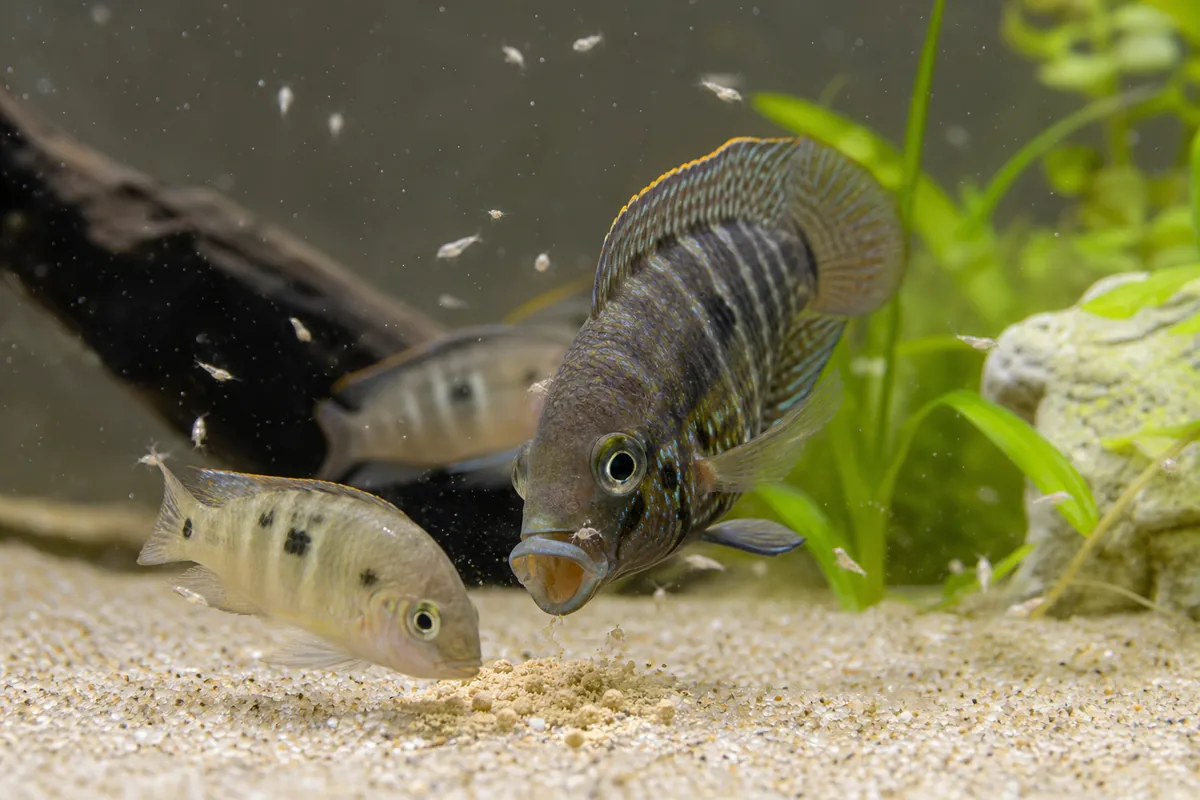
Frozen Brine Shrimp: The Safest Everyday Form for Community Tanks
For keepers who do not want to maintain a hatchery, frozen brine shrimp are the most practical everyday option. San Francisco Bay Brand and Hikari are the two most established brands, both available in flat packs and portioned cubes.
Quality is consistent between them.
Frozen brine shrimp retain the nutritional profile of live adults without any of the parasite or contamination risk. The freezing process is the primary safety factor: it eliminates any pathogens present in wild-harvested populations.
- Thaw first: Drop one cube into a small cup of tank water and let it thaw for 2-3 minutes. Never drop a frozen cube directly into the tank
- Drain the thaw water: The liquid that accumulates during thawing is high in salt and can contain protein waste. Strain the brine shrimp through a fine net and add only the shrimp to the tank
- Feed immediately: Once thawed, brine shrimp should be fed right away. Do not refreeze partially thawed portions
- Storage: Keeps for 6-12 months in the freezer at -18°C. Break individual cubes from the sheet as needed and reseal the pack
The salt-drain step is one most keepers skip, and it matters. Repeated addition of thaw brine to a freshwater tank gradually raises conductivity and can stress sensitive species like tetra school feeding candidates that prefer soft, slightly acidic water.
For variety in the live food rotation, daphnia as a supplement pair well with brine shrimp: their chitin fiber addresses the gut-health angle that brine shrimp alone does not cover, and the two foods together produce a more complete nutritional profile than either provides solo.
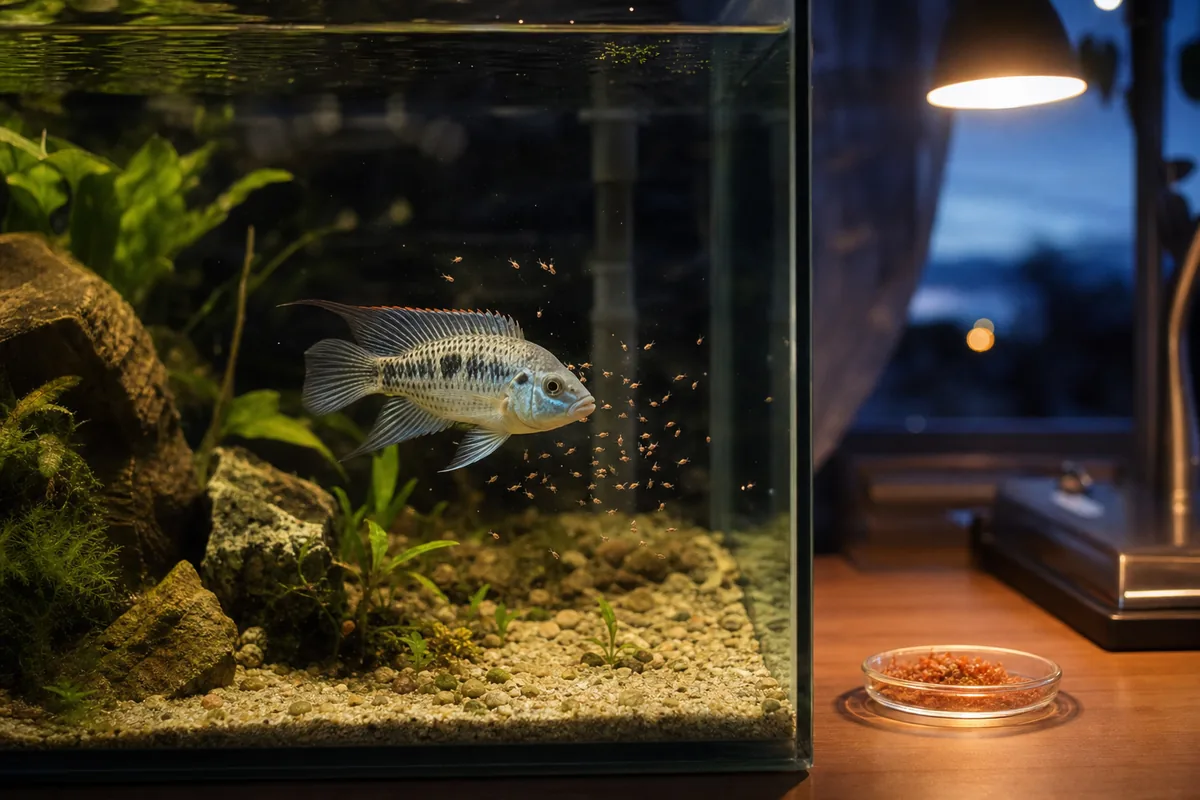
Feeding Brine Shrimp to Specific Freshwater Fish: Bettas, Angelfish, and Tetras
Brine shrimp work across the entire spectrum of freshwater community fish, but the ideal form and frequency differ by species.
For betta enrichment diet, adult frozen brine shrimp are one of the best supplements available. Bettas are obligate carnivores with short digestive tracts that process animal protein efficiently.
Three to four frozen brine shrimp two to three times per week alongside a high-quality carnivore pellet covers their protein and fat needs without the bloating risk associated with freeze-dried foods.
For angelfish live food feeding, live adult brine shrimp trigger the most visible hunting behavior. Angelfish are active mid-water hunters, and watching them pursue live brine shrimp across the tank also serves as an enrichment activity that reduces stress behaviors.
- Bettas: Frozen adults, 3-4 shrimp per feeding, 2-3 times per week. Pre-soak freeze-dried if used
- Angelfish: Live or frozen adults, 2-3 times per week. Live adults preferred for conditioning before breeding
- Neon tetras and other small tetras: Baby brine shrimp or finely broken frozen adult pieces, 2-3 times per week in small amounts
- Guppies: Baby brine shrimp for fry, frozen adults for adult fish. Daily nauplii feeding for first 2 weeks of fry life
- Corydoras and bottom feeders: Allow frozen brine shrimp to sink to the substrate or use a feeding dish. Bottom feeders often miss mid-water feedings entirely
- Rotation tip: Alternate brine shrimp with bloodworms in the feeding schedule to vary the fat-to-protein ratio across the week, since bloodworms are leaner and brine shrimp carry more omega-3s.
- Cichlids: Live or frozen adults in quantity, 2-3 times per week as a supplement to a meatier primary diet
Freeze-Dried Brine Shrimp: Convenient but Requires One Extra Step
Freeze-dried brine shrimp are the shelf-stable format found in virtually every pet store. They are a reliable backup option and work well when stored frozen or refrigerated brine shrimp are unavailable.
The critical preparation step is pre-soaking. Freeze-dried brine shrimp absorb water rapidly when they hit the fish's stomach, and if fed dry they continue expanding after ingestion.
This causes bloating and buoyancy problems, most visibly in bettas and other small carnivores with compact digestive tracts.
Soak freeze-dried brine shrimp in a small amount of tank water for 60 seconds before feeding. The shrimp will rehydrate visibly.
This eliminates the bloating risk while retaining all the practical advantages of the freeze-dried format, including long shelf life and easy portioning.
Sources and references
- Artemia as live food in aquaculture: nutritional profile, hatching protocols, and gut-loading strategiesSorgeloos, P. et al., Aquaculture, 2001
- Fatty acid composition of Artemia nauplii and adults: implications for larval fish nutrition in freshwater hatcheriesNavarro, J.C. et al., Aquaculture, 1999
- Nutritional composition of live and processed aquatic invertebrates used as fish feed: bloodworm and brine shrimp analysisAquaculture Nutrition, Vol. 24(4), 2018