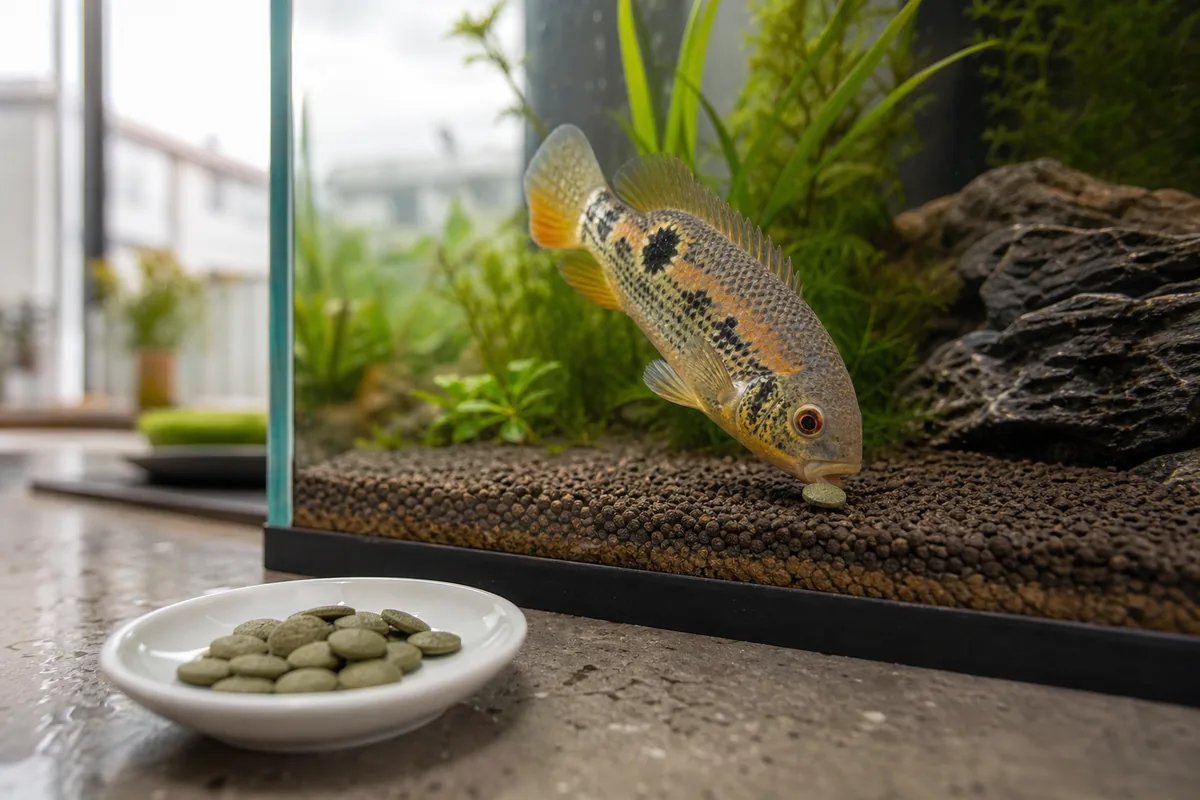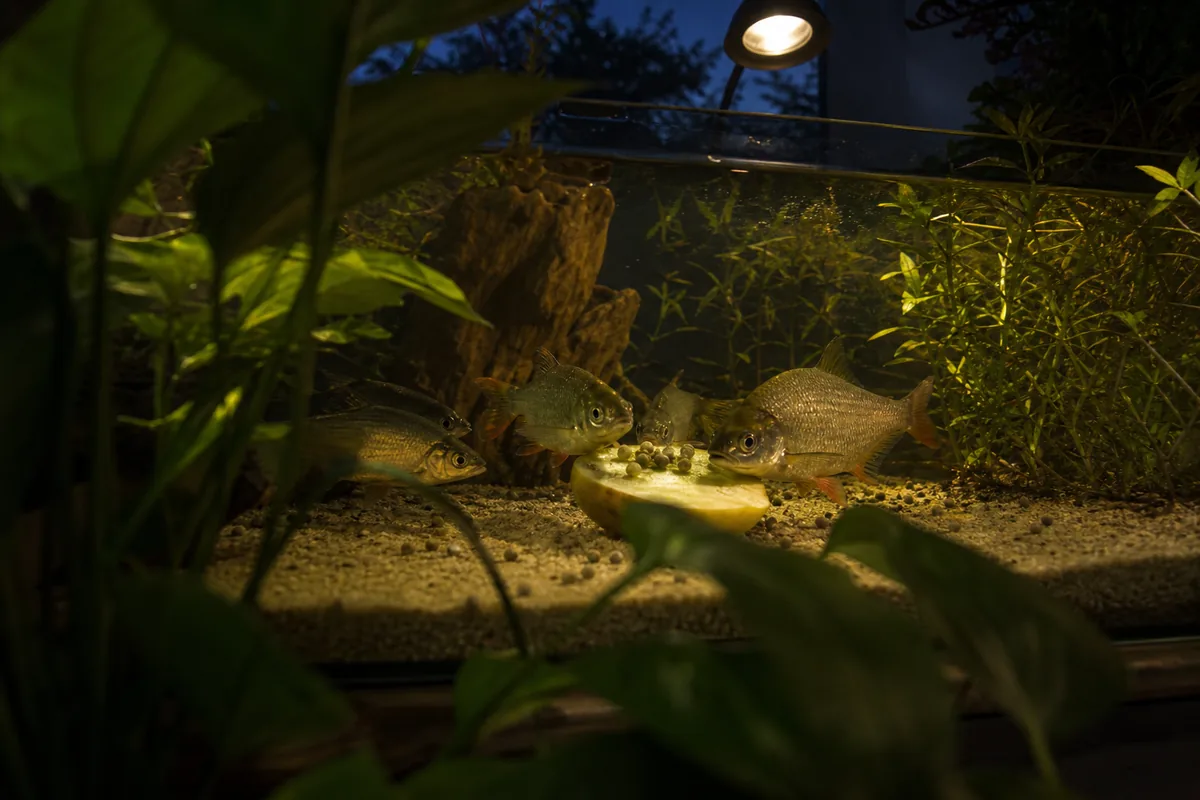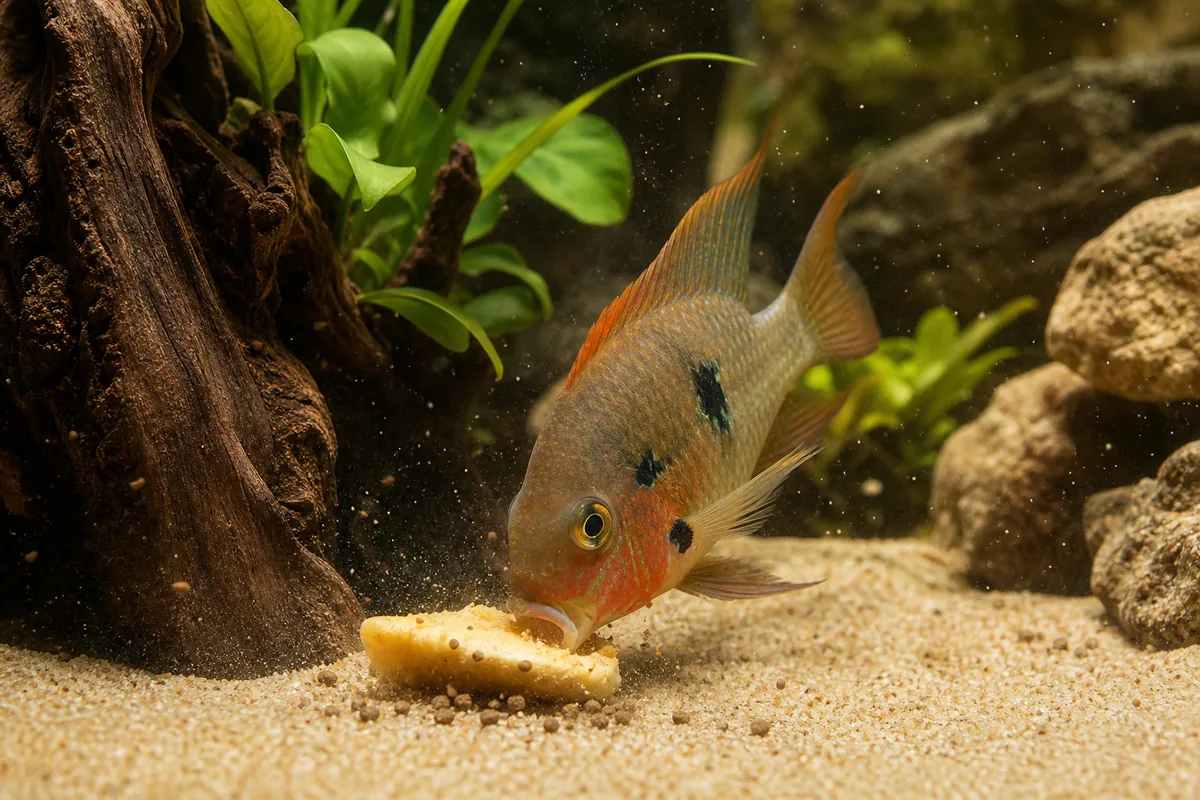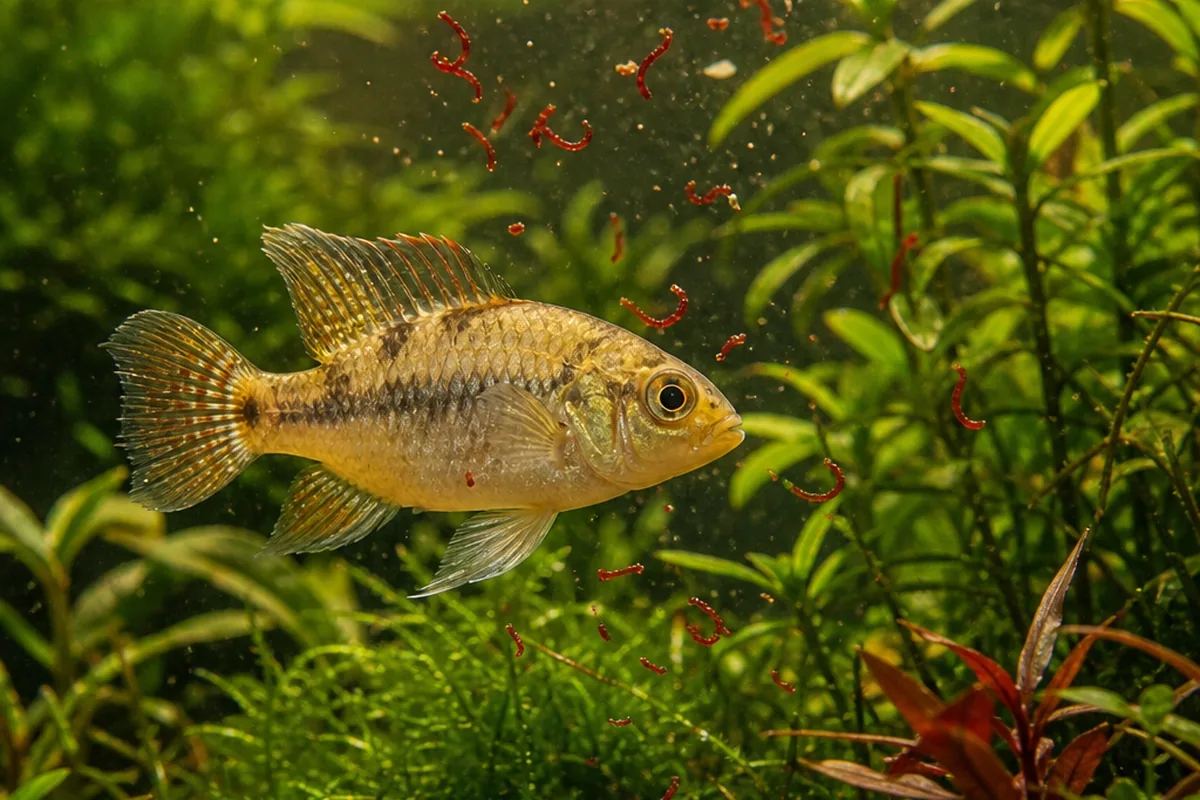
Shrimp sits at the top of the list for natural fish protein sources, and for good reason. It closely mirrors what many freshwater species eat in the wild.
The key is preparation: the right form, the right size, and the right frequency.
This guide covers every shrimp type your fish can safely eat, the ones to avoid, and how to prep and portion them correctly. We also break down the shrimp forms that belong nowhere near an aquarium, because the line between a beneficial supplement and a tank-fouling mistake is thinner than most keepers realize.
Key facts
- Calories
- 99 kcal per 100g (fresh raw shrimp)
- Protein
- 24g per 100g, an exceptional protein density for aquarium feeding
- Fat
- 0.3g per 100g, very lean with minimal risk of fatty liver in fish
- Astaxanthin
- A natural carotenoid pigment in shrimp shells that enhances red, orange, and pink coloration in fish
- Chitin
- Found in shells, aids digestive motility in small amounts when present in the diet
- Shelf life (frozen)
- Up to 6 months when vacuum-sealed and kept at -18°C
Those numbers tell you why shrimp belongs in your feeding rotation. A protein density of 24g per 100g outperforms most flake and pellet foods on a gram-for-gram basis, and the near-zero fat content means you are not adding empty calories to your fish's diet.
Shrimp for Freshwater Fish
- Raw fleshSafe
- frozen raw shrimpSafe
- brine shrimp (live and freeze-dried)Safe
- ghost shrimpSafe
- cherry shrimpSafe
- Seasoned shrimpUnsafe
- salted shrimpUnsafe
- breaded shrimpUnsafe
- shrimp cooked with garlicUnsafe
- butterUnsafe
- or oilUnsafe
- preserved or pickled shrimpUnsafe
Prep: Remove shells for small fish. De-vein and chop into tiny pieces sized to match the fish's mouth width. Thaw frozen shrimp fully before feeding. Never add seasoning. Freq: 2-3 times per week as a supplement, not a daily staple Amount: Feed only what your fish can consume in 2-3 minutes. Remove uneaten portions immediately.
Which Shrimp Types Are Safe: 4 Forms Fish Can Eat
Not all shrimp products are created equal. Each form has a different use case depending on your fish species and tank size.
- Fresh or frozen raw shrimp: The most nutritious option. Thaw fully, remove the shell, de-vein, and chop into pieces no larger than the fish's eye. Rinse before feeding to remove any surface residue.
- Brine shrimp (Artemia): A staple live food for aquarium fish across all experience levels. Baby brine shrimp nauplii are ideal for fry and small species. Adult brine shrimp suit medium and large fish.
- Freeze-dried brine shrimp: Widely available at every pet store. Rehydrate in a small cup of tank water for 60 seconds before feeding to prevent gut bloat. A reliable and convenient option for everyday use.
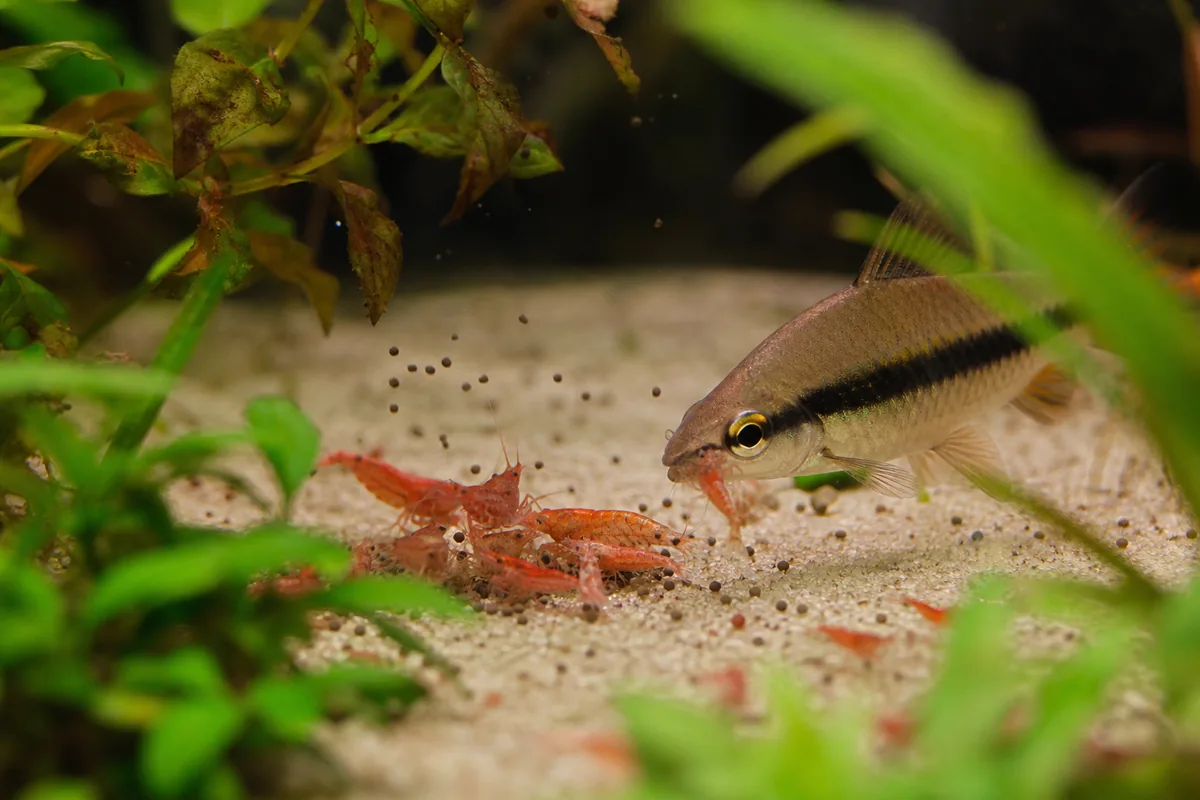
- Ghost shrimp and cherry shrimp: Commonly kept alongside fish, but larger predatory species will eat them readily. They serve as a natural, enrichment-style live food for oscar predator feeding and similar carnivores.
How Shrimp Nutrition Benefits Fish: Color, Growth, and Digestion
The nutritional profile of shrimp addresses three areas where many commercial foods fall short.
Astaxanthin, the pigment responsible for the pink-red color in shrimp flesh, is a powerful carotenoid that fish cannot synthesize on their own. Regular feeding enhances coloration in species with red, orange, or gold tones, including bettas, cichlids, and gouramis.
This is why many premium commercial foods list astaxanthin as an added ingredient: shrimp delivers it in its natural form.
The high protein density supports faster growth in juvenile fish and maintains muscle mass in adults. This makes shrimp particularly valuable for angelfish protein needs during their growth phase, when a protein-rich diet drives fin development and body depth.
Chitin from shells, when present in small quantities, also stimulates gut motility and helps keep the digestive tract moving efficiently.
Preparation by Fish Size: How to Chop and Portion Correctly
Size matching is the most common mistake keepers make with shrimp. A piece too large will be ignored or, worse, swallowed whole and cause a blockage.
| Fish Size | Recommended Shrimp Form | Piece Size | Shell Removed? |
|---|---|---|---|
| Under 2 inches (fry, nano fish) | Baby brine shrimp (live or frozen) | Nauplii whole | N/A |
| 2-3 inches (betta, dwarf gourami) | Freeze-dried brine shrimp or finely chopped raw | 1-2mm pieces | Yes |
| 3-5 inches (angelfish, medium cichlids) | Chopped fresh or frozen raw shrimp, adult brine shrimp | 3-5mm pieces | Yes |
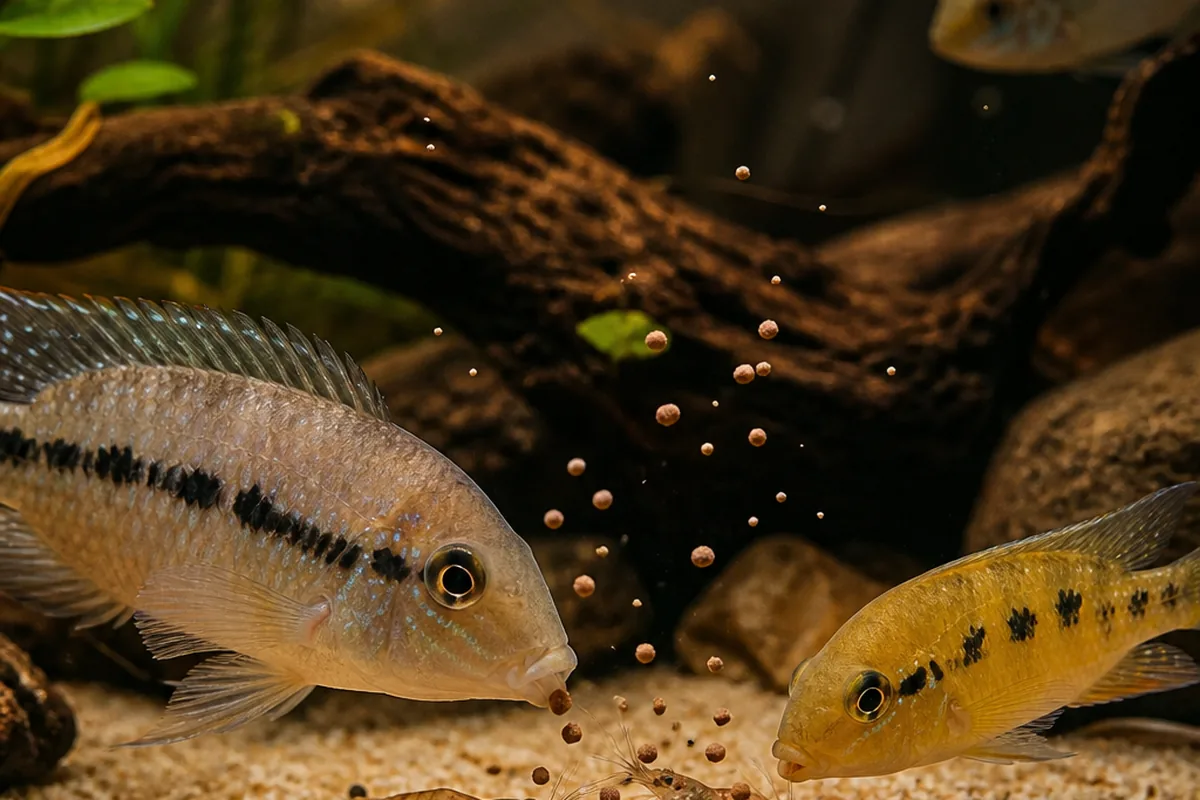
| 5+ inches (oscar, large cichlids) | Halved or quartered raw shrimp, ghost shrimp whole | Match mouth width | Optional |
For betta live food, baby brine shrimp are the gold standard. A betta's mouth is roughly 3mm wide and their digestive tract is short.
Small, pre-soaked pieces eliminate virtually all feeding risk while delivering the protein and pigment bettas need to maintain their vivid coloration.
Fish Should Never Eat: 4 Prepared Forms to Avoid
The shrimp on your dinner plate is not always safe for your aquarium. Several common preparation styles render shrimp harmful or outright toxic to to fish.
- Seasoned shrimp: Salt, garlic, onion, lemon, and spice blends all disrupt fish osmoregulation and damage gill tissue. Even a small residue coating is enough to cause visible stress within hours.
- Breaded or battered shrimp: Combines all the problems of bread with shrimp. The coating dissolves rapidly, clouds the water, spikes ammonia, and provides zero benefit. These rank alongside the most inferior protein sources for water quality impact.
- Preserved or pickled shrimp: Contain preservatives, vinegar, and salt levels far beyond what freshwater fish can tolerate. Even a small piece can alter tank pH and stress sensitive species.
- Shrimp cooked with butter or oil: Fat content far exceeds what fish can metabolize. Repeated exposure to high-fat human food preparations leads to fatty liver disease over time.
How Often to Feed Shrimp: Frequency and Amount That Keeps Water Clean
Shrimp is a supplement, not a complete diet. Overfeeding any single food, even a nutritious one, leads to nutritional imbalance and water quality problems.
Feed shrimp 2-3 times per week alongside a rotation of quality pellets or flakes. The two-to-three-minute rule applies: offer only what disappears within that window and remove anything left behind.
Uneaten raw shrimp breaks down quickly and will foul a tank within hours, producing an ammonia spike comparable to any other decaying organic matter.
Oscars, large cichlids, and other dedicated carnivores can tolerate shrimp as a larger share of their weekly diet. Smaller community fish like tetras, guppies, and rasboras do best with shrimp as one component in a varied rotation that also includes flakes and the occasional vegetable treat.
One practical approach: designate two feeding days per week as shrimp days and keep the remaining days for your staple pellet or flake. This prevents nutritional gaps while still giving your fish the protein boost and color enhancement that shrimp provides.
It also makes uneaten-food management far easier, since you know exactly which days to watch the tank closely after feeding.
Shrimp earns its place in any freshwater feeding rotation. The protein density, natural pigment content, and close match to wild prey make it a supplement worth keeping on hand.
Stick to plain raw or frozen shrimp and brine shrimp in the appropriate form for your fish, keep portions small, and remove uneaten pieces promptly.
Sources and references
- Nutritional composition of shrimp and applicability in aquaculture feedsTacon, A.G.J. and Metian, M., Aquaculture, 2008
- Artemia as a food source for larval fish: nutritional profile and feeding protocolsSorgeloos, P. et al., Aquaculture, 2001
- Carotenoid pigmentation in fish: astaxanthin sources and biological effectsTorrissen, O.J., Aquaculture, 1989