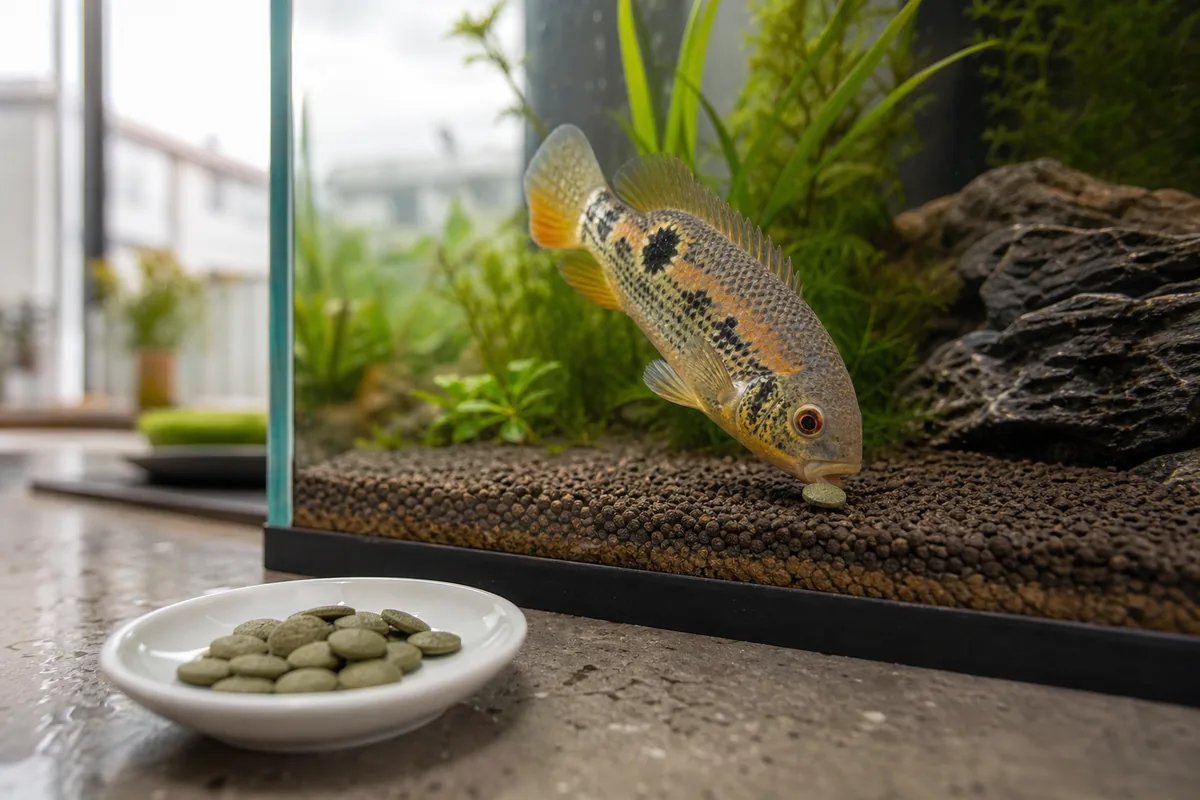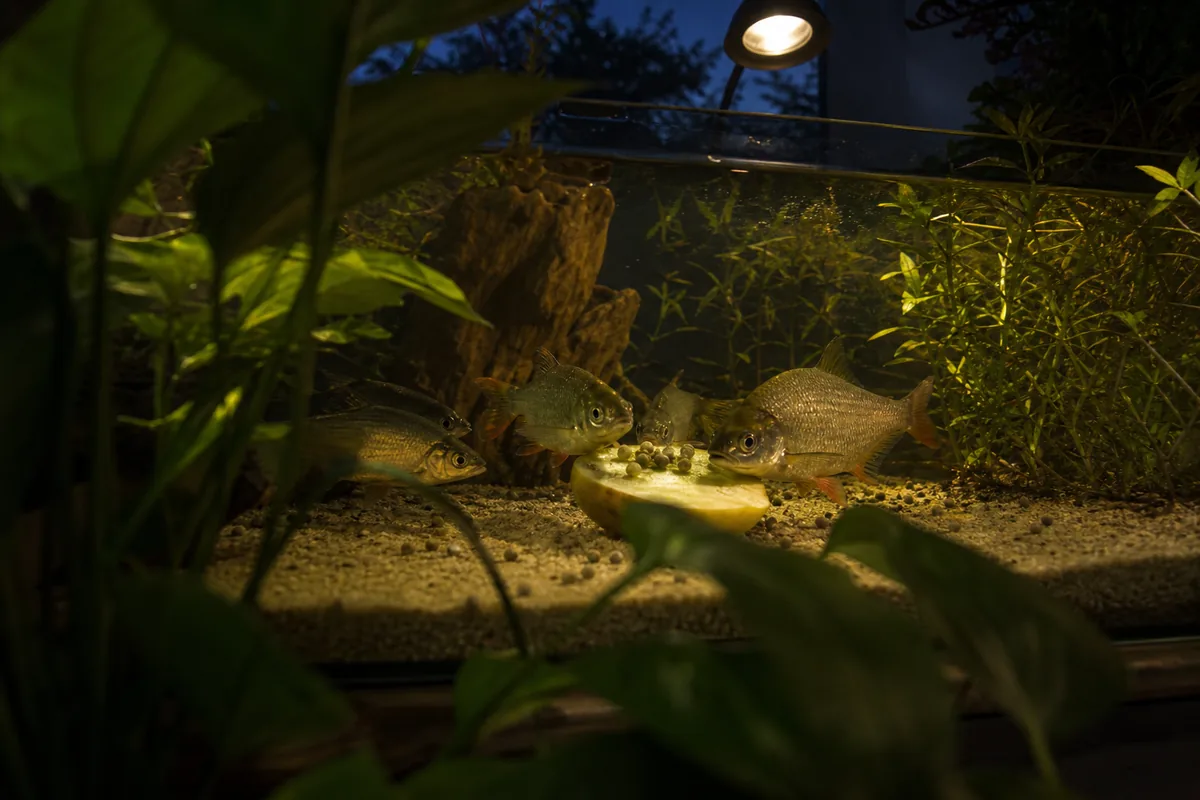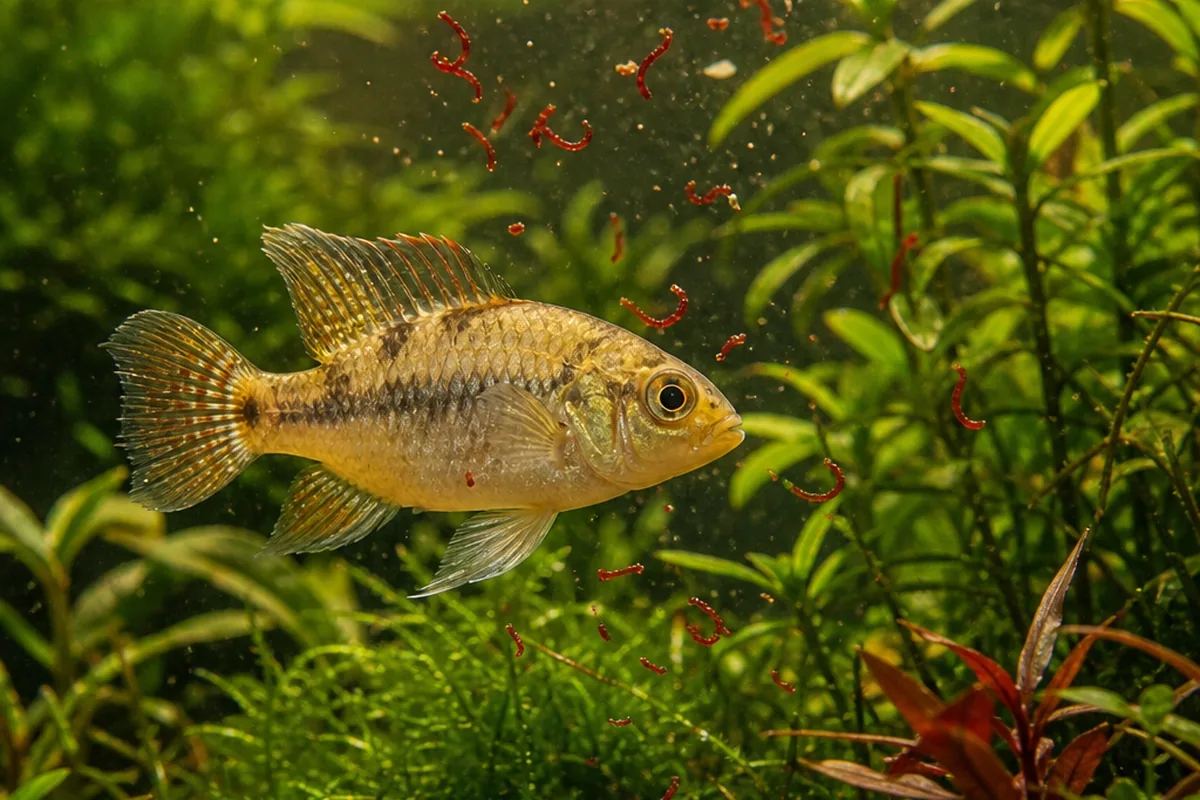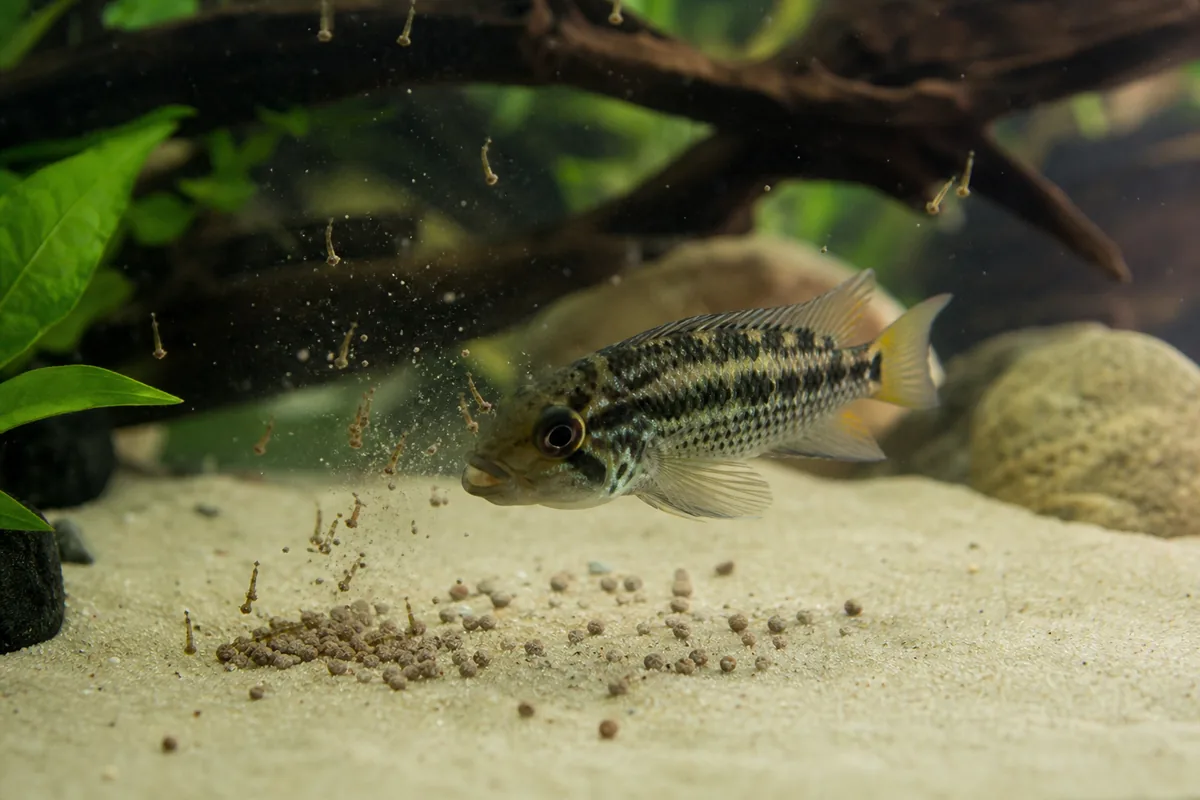
Few natural fish foods are as accessible or as nutritionally valuable as mosquito larvae. They cost nothing to collect, they match what tropical fish eat in the wild, and every freshwater species we have tested accepts them without hesitation.
The short answer is yes: fish can and should eat mosquito larvae when collected correctly. The longer answer covers where to find them, what to avoid, and how to handle them before they turn into a problem inside your home.
Mosquito Larvae for Freshwater Fish
- Fresh larvae (wrigglers) from cleanSafe
- untreated standing waterSafe
- frozen mosquito larvae stored after collectionSafe
- Larvae from chemically treated water (ponds dosed with larvicideUnsafe
- stagnant water near pesticide runoff). Pupae should not be collected indoors as they hatch into adults rapidlyUnsafe
Prep: Collect with a fine mesh net from rain barrels, birdbaths, or puddles. Rinse in a small container of dechlorinated water. Feed immediately or spread on a baking sheet to freeze, then store in a sealed bag Freq: As often as available; excellent as a weekly enrichment food or breeding conditioner Amount: Feed only what fish consume in 3-5 minutes. Remove any uneaten larvae promptly as they will begin to pupate in warm tank water
Mosquito larvae are the aquatic juvenile stage of mosquitoes. They live at the water surface, breathing through a siphon, and spend their time filter-feeding on algae and microorganisms.
That feeding behavior makes them nutrient-dense, and their near-constant movement at the surface makes them irresistible to fish that that hunt in the upper water column.
Several municipalities deliberately stock guppy mosquito control programs using live fish to eliminate larvae from standing water. That relationship between fish and mosquito larvae goes back millions of years, and it shows in how eagerly your fish will respond.
Among livebearers, guppy feeding behavior is the most studied in relation to mosquito larva consumption, with research confirming they can consume hundreds of larvae per day in natural pond settings.
Key facts
- Protein Content
- ~50% protein on a dry-matter basis, comparable to commercial high-protein pellets
- Fat Content
- Very low fat, making them an ideal enrichment food without the lipid load of bloodworms
- Collection Sources
- Rain barrels, birdbaths, buckets, puddles, and any untreated standing water outdoors
- Natural Predators
- Bettas, guppies, killifish, and gouramis evolved specifically to hunt mosquito larvae at the water surface
- Hatch Window
- Larvae become pupae in 4-14 days depending on temperature. Pupae hatch into adults within 24-48 hours
The nutritional profile is genuinely impressive for a food that is free to collect. At roughly 50% protein with minimal fat, mosquito larvae sit in a similar range to frozen bloodworms without the high lipid content that can cause digestive stress in smaller smaller fish.
Amino acid diversity is broad, and the larvae contain chitin from their exoskeleton, which acts as a dietary fiber and supports gut health in fish that eat invertebrates regularly in the wild.
How to Collect Mosquito Larvae Safely: Wrigglers vs. Pupae
Knowing the difference between larvae and pupae is the single most important skill for safe collection. Both look similar at a glance, but they behave very differently and require different handling.
Larvae, called wrigglers, hang just below the water surface at an angle with a siphon tube pointing up. They wriggle actively when disturbed, which is where the name comes from.
Pupae, called tumblers, are comma-shaped and tumble end-over-end when disturbed rather than wriggling in a straight line. Pupae are ready to hatch into adult mosquitoes within 24-48 hours and should not be brought indoors.
- Scoop larvae with a fine mesh net or a turkey baster from the top 2-3 cm of water where they congregate
- Transfer to a small container with some of the source water to inspect before rinsing
- Discard any comma-shaped pupae back outside before bringing larvae indoors
- Rinse larvae in a small container of dechlorinated tap water to remove debris and any surface bacteria
- Feed immediately or freeze within 30 minutes of collection
The rinse step matters. Source water from outdoor containers can carry algae, bacteria, and debris you do not want in your tank.
A quick rinse in clean dechlorinated water reduces that load without stressing the larvae before feeding.
Which Fish Eat Mosquito Larvae: Natural Predators and Surface Hunters
Every freshwater fish will eat mosquito larvae, but surface-oriented species respond with the most enthusiasm. Betta natural prey in the wild includes mosquito larvae as a primary food source in shallow rice paddies and slow-moving streams throughout Southeast Asia.
They are genuinely designed for this food.
Gouramis are another species where mosquito larvae produce an outsized response. Gourami surface feeding is a natural behavior, and live wrigglers at the surface activate hunting instincts in a way that pellets simply cannot replicate.
| Fish Species | Affinity for Mosquito Larvae | Notes |
|---|---|---|
| Betta | Excellent | Primary wild prey item. Surface hunters that target wrigglers instinctively |
| Guppy | Excellent | Used in biological mosquito control programs worldwide. Accepts eagerly |
| Killifish | Excellent | Apex mosquito predators. Some species are introduced specifically for control |
| Dwarf Gourami | Excellent | Strong surface feeding instinct. Larvae trigger active hunting behavior |
| Neon Tetra | Good | Smaller mouths may struggle with larger larvae. Chop or feed early-stage wrigglers |
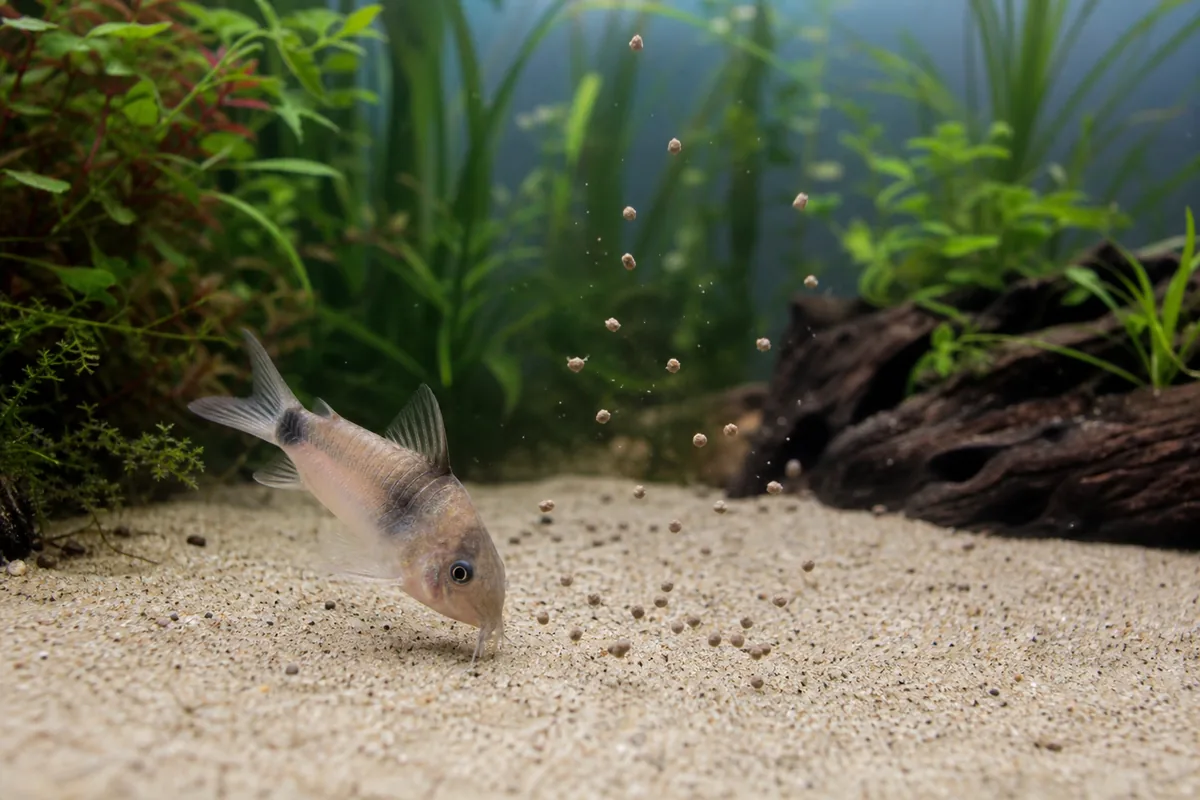
| Corydoras | Moderate | Bottom feeders will take sinking larvae. Less efficient than surface hunters |
| Goldfish | Good | Accept readily. Useful mosquito control in outdoor ponds |
| Oscar | Good | Larvae are small relative to body size. Best as enrichment alongside larger prey |
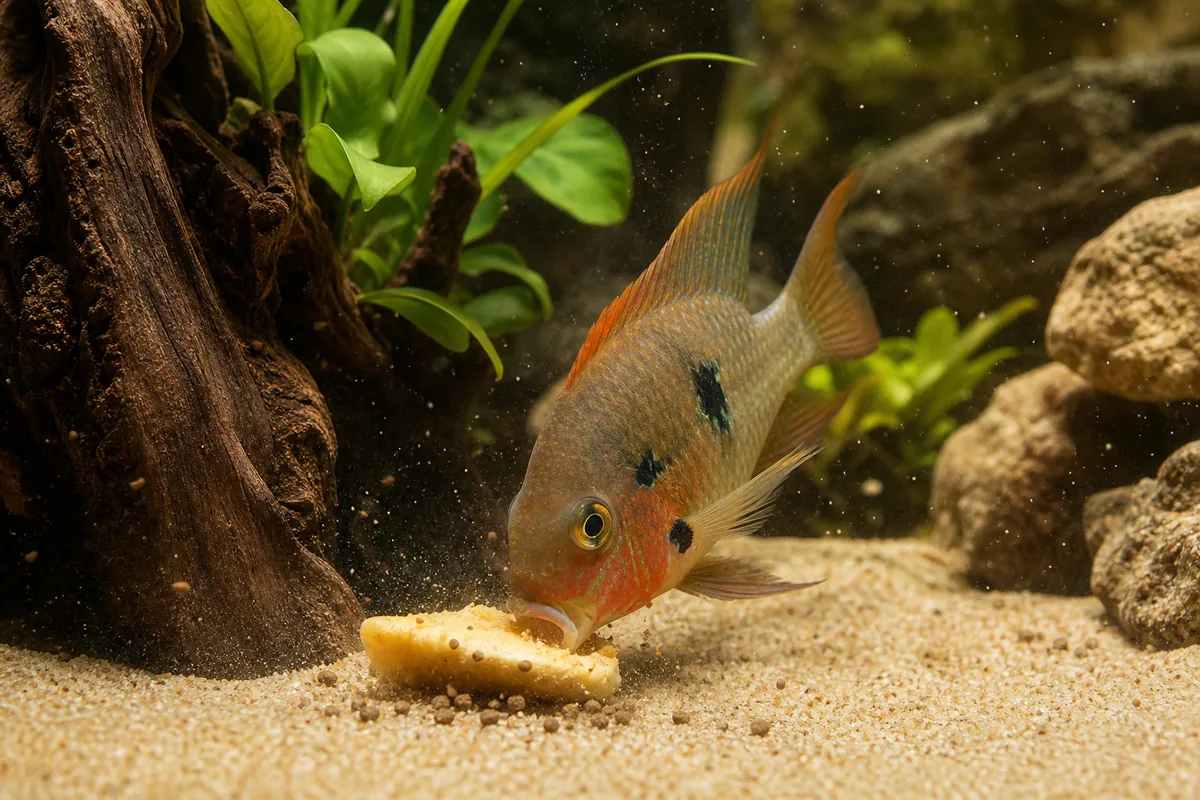
Contrast this with unnatural food risks like bread, which delivers no nutritional value and causes serious water quality problems. Mosquito larvae sit at the opposite extreme: biologically appropriate, nutritionally sound, and completely free.
Freezing Mosquito Larvae: How to Store Them for Later Feeding
If you collect more larvae than your fish can eat in one session, freezing is the right move. Freezing kills any pathogens and stops development instantly, giving you a shelf-stable supply that retains most of the nutritional value.
The process is straightforward. Spread rinsed larvae in a thin layer on a piece of plastic wrap or a silicone baking mat, freeze flat for 1-2 hours until solid, then break into portions and store in a sealed freezer bag.
This prevents them from clumping into an unusable block.
- Frozen mosquito larvae keep for 2-3 months without significant nutritional loss
- Thaw a small portion in a cup of tank water for 1-2 minutes before feeding
- Discard the thaw water rather than pouring it into the tank
- Do not refreeze thawed larvae
Frozen larvae lose some of the live feeding response. Fish will still eat them readily, but the movement cue that triggers active hunting is gone.
For enrichment and conditioning purposes, frozen larvae work well. For stimulating breeding behavior or rehabilitating a picky eater, live larvae are more effective.
When fresh larvae are unavailable, bloodworms as a live food alternative serve a similar nutritional role and trigger comparable hunting behavior in surface-oriented species like bettas and gouramis.
Mosquito Larvae as Breeding Conditioner and Behavioral Enrichment
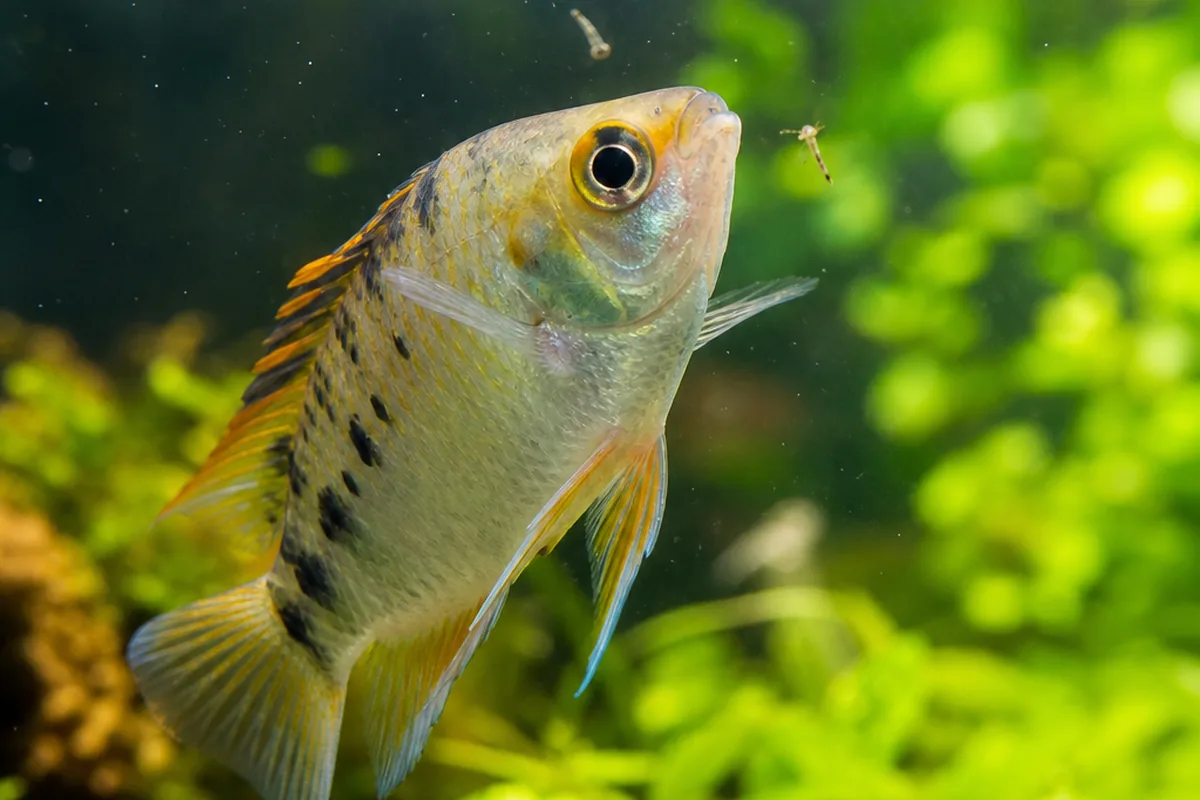
Beyond nutrition, mosquito larvae deliver something pellets cannot: genuine behavioral enrichment. The act of hunting a live, moving prey item activates instincts that remain largely dormant in fish fed only prepared foods.
For bettas specifically, live larvae sessions before breeding attempts are well-documented as a conditioning tool. The high protein intake combined with active hunting behavior signals resource abundance, which in the wild precedes spawning.
Many breeders feed live larvae daily for 7-10 days when conditioning a pair.
Gouramis, killifish, and surface-oriented tetras show similar responses. Even species not known as active hunters, like corydoras and mollies, display more active behavior during and after live mosquito larvae feedings compared to standard pellet sessions.
Sources and references
- Mosquitofish (Gambusia affinis) and guppies (Poecilia reticulata) as biological control agents: a review of efficacy and ecological impactBiological Control, Vol. 115, 2017
- Nutritional composition of mosquito larvae (Culex spp.) as a live food source for tropical ornamental fishof Applied Aquaculture, Vol. 29(2), 2017
- Biological control of mosquito larvae using native fish species: field evaluation and best practicesof Vector Ecology, Vol. 42(1), 2017