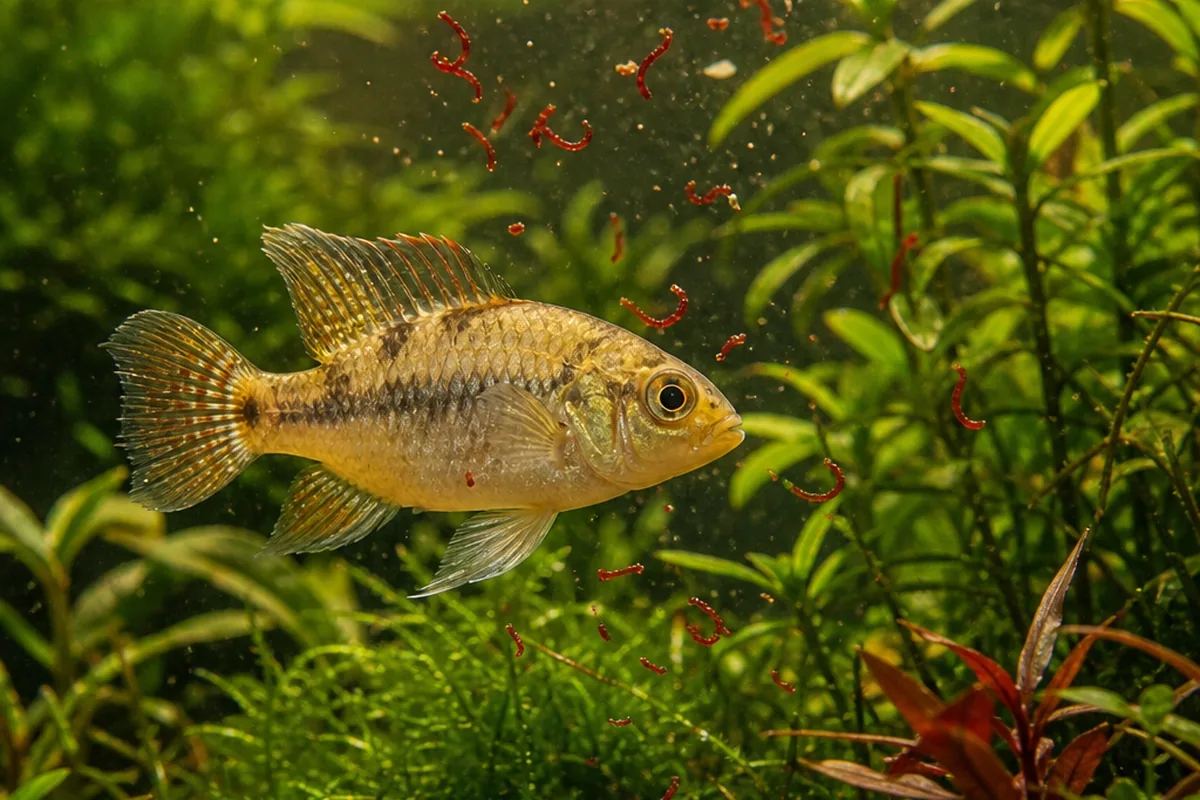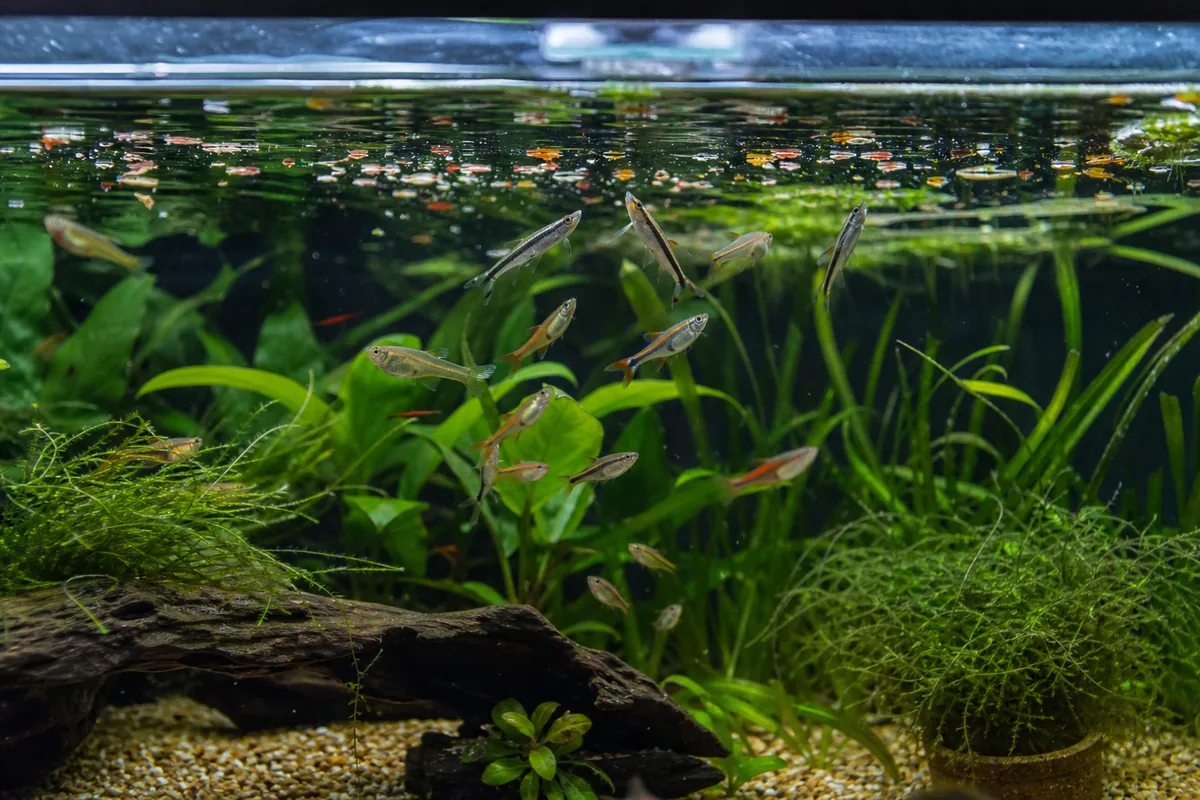
Tubifex worms are among the oldest live food for fish in the hobby, with a nutritional profile that genuinely benefits bettas, gouramis, angelfish, and discus. The challenge is that the same waterways that produce tubifex in abundance are also some of the most bacteria-laden environments these worms inhabit.
Whether tubifex are safe for your fish depends almost entirely on which form you buy and how you prepare it.
Tubifex Worms for Freshwater Fish
- Freeze-dried tubifex cubes (safestSafe
- parasite-free)Safe
- frozen tubifex (safer than liveSafe
- nutritionally superior to freeze-dried)Safe
- thoroughly rinsed live tubifex from reputable sourcesSafe
- No inherently toxic compounds. Live tubifex from sewage-adjacent waterways carry bacterial pathogens and internal parasites that can infect your tankUnsafe
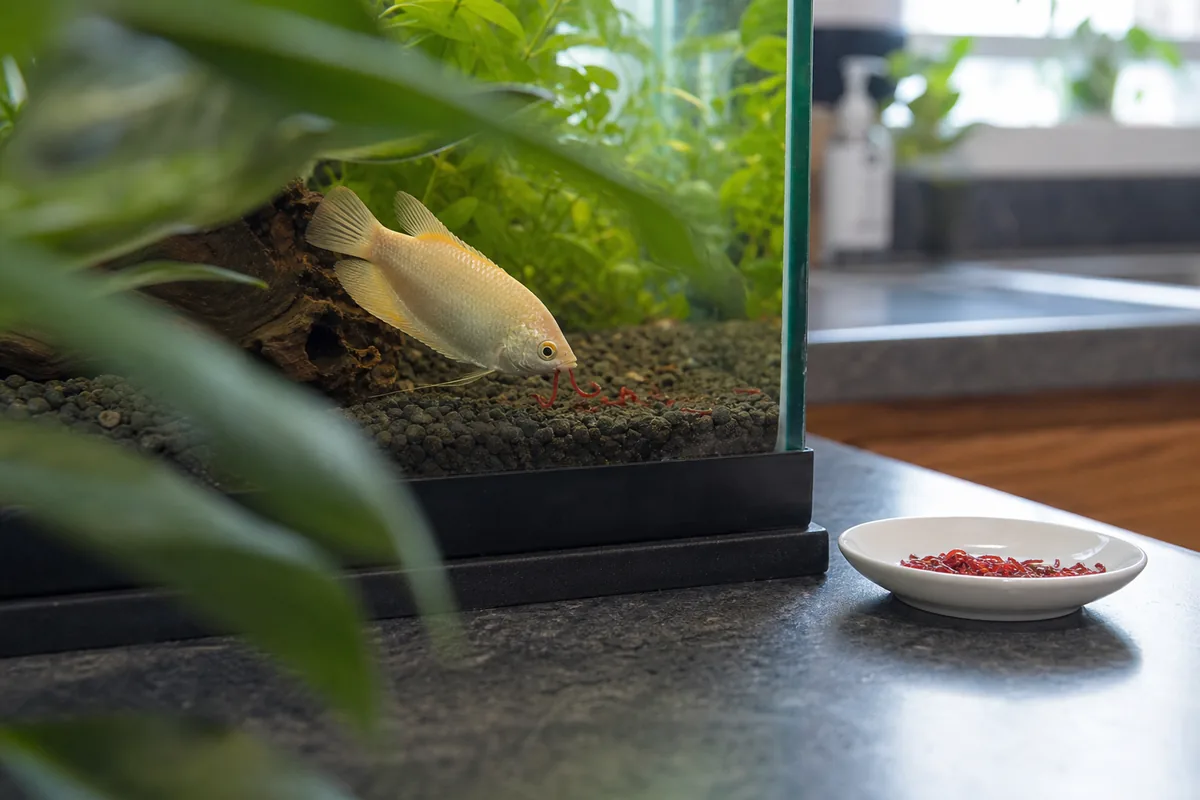
Prep: Freeze-dried: soak in tank water 60 seconds before feeding, press cube to glass above waterline and let fish pick at it. Frozen: thaw in a cup of tank water 2-3 minutes, discard thaw water, add worms only. Live: rinse under slow-running water for 24+ hours in a clean container before use Freq: 2-3 times per week as a protein supplement Amount: A small pinch per feeding session. Remove uneaten worms from the substrate within 10-15 minutes to prevent ammonia spikes
Tubifex is a species of oligochaete worm that lives in dense, reddish-brown clusters in the sediment of lakes, ponds, and slow rivers. They are naturally found in the murkiest parts of those waterways, including areas with high organic waste, which is both why fish love them and why live specimens carry risk.
At roughly 60% protein and 10% fat on a dry-matter basis, tubifex worms deliver a genuinely impressive nutritional punch for the fish that that eat them.
Key facts
- Protein Content
- ~60% protein on a dry-matter basis, one of the highest among common aquarium live foods
- Fat Content
- ~10% fat, providing energy for active species and conditioning breeding pairs
- Species
- Tubifex tubifex, an oligochaete worm native to the sediment of freshwater systems worldwide
- Best Form
- Frozen tubifex or freeze-dried cubes for home aquariums. Live tubifex is the riskiest option
- Key Risk
- Live tubifex are often harvested near sewage outflows and can carry Aeromonas, Pseudomonas, and internal parasites
Amino acid composition in tubifex worms is well-suited to carnivorous and omnivorous species. The protein profile supports muscle development, immune function, and reproductive conditioning.
The 10% fat content is higher than bloodworms, making tubifex a richer food. That richness is an asset when conditioning breeding pairs but warrants portion control during routine feeding.
Live Tubifex Worms: Why the Disease Risk Is Real
Live tubifex are harvested commercially from pond and river sediment, often near agricultural runoff or urban waterways. The same organic-rich environment that helps tubifex colonies thrive is hospitable to pathogenic bacteria including Aeromonas hydrophila and Pseudomonas fluorescens, both of which cause infections in freshwater freshwater fish.
Beyond bacterial contamination, live tubifex can carry internal parasites such as Myxozoa and Trematode cercariae that complete parts of their life cycles in oligochaete worms before infecting fish hosts.
The rinsing protocol for live tubifex is straightforward but time-intensive. Place the worms in a shallow container under a slow trickle of dechlorinated or tap water for 24 hours or more.
The flow flushes out waste and forces the worms to purge their gut contents, which is where most of the bacterial load concentrates.
Most experienced keepers skip live tubifex entirely. The disease risk is not theoretical: there are decades of documented cases of Aeromonas infections traced to live tubifex feedings in display tanks.
Frozen Tubifex: The Middle Ground Between Safety and Nutrition
Freezing kills the majority of parasites and pathogenic bacteria that live tubifex carry. Frozen tubifex retains a nutritional profile close to live, with protein and fat content largely intact after the freezing process.
This is why frozen tubifex is the preferred form for most keepers who want the benefits of tubifex feeding without the disease risk. It is available in flat packs or portion cubes and stores for months in the freezer.
- Frozen tubifex: Parasite risk eliminated by freezing, nutritional quality preserved, requires thawing before feeding, best overall balance of safety and nutrition
- Live tubifex: Strongest feeding response, highest disease risk, requires 24+ hour rinse protocol, not recommended for display tanks without quarantine procedures
- Freeze-dried tubifex cubes: Shelf-stable, parasite-free, convenient glass-sticking feeding method, must be pre-soaked to prevent bloating, some nutrient loss from drying process
When thawing frozen tubifex, use the same method as bloodworms: place the cube in a small cup of tank water for 2-3 minutes, then discard the thaw water and add only the worms. The thaw water often contains dissolved proteins and bacteria that can cloud the water or spike ammonia if added to the tank.
Which Fish Benefit Most from Tubifex Worms
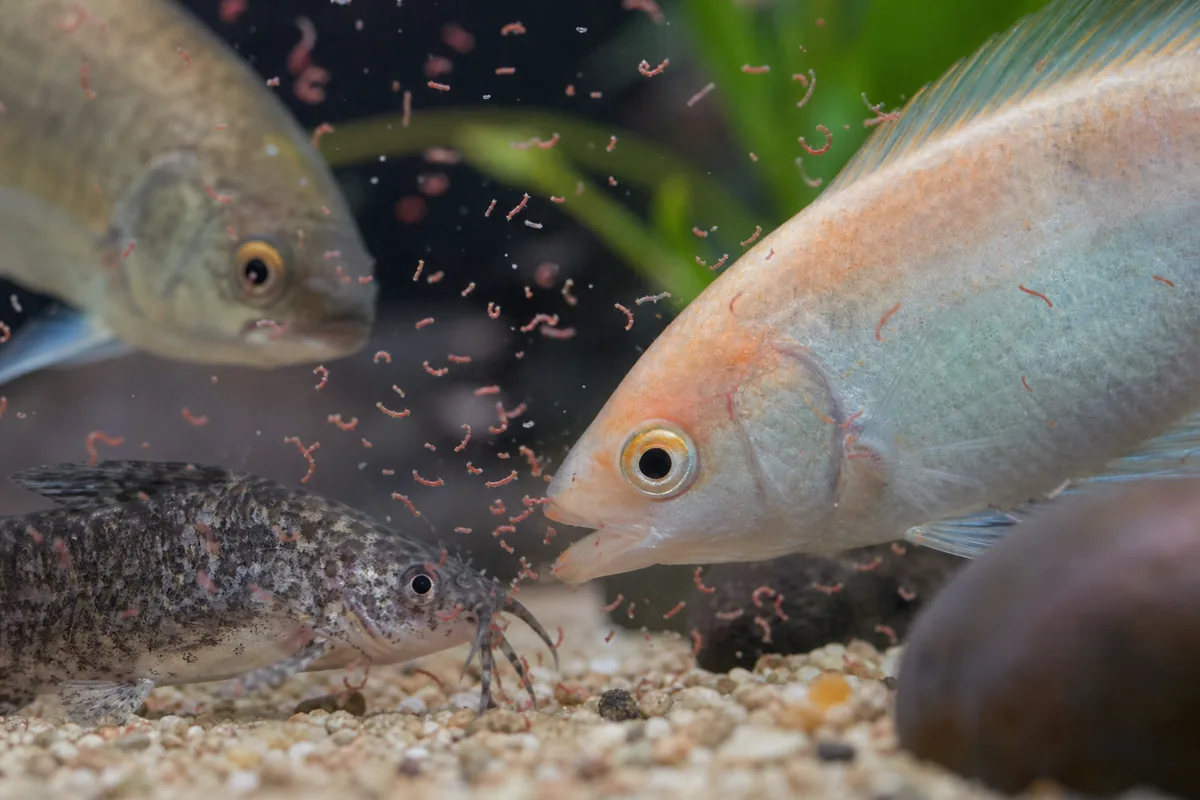
Tubifex worms are most useful for carnivorous and omnivorous species that need high-protein supplementation. They are a known staple of the live food rotation for betta protein sources, angelfish live feeding, and gourami enrichment food.
Discus keepers have used tubifex as a conditioning food for decades, and it remains a standard protein source for cichlid breeders who need to bring pairs into spawning condition quickly.
| Fish Species | Tubifex Suitability | Recommended Frequency | Notes |
|---|---|---|---|
| Betta | Excellent | 2-3x per week | High protein suits carnivore diet; use frozen or freeze-dried only |
| Dwarf Gourami | Excellent | 2-3x per week | Stimulates foraging behavior; rotate with other live foods |
| Angelfish | Excellent | 2-3x per week | Good conditioning food; frozen preferred for display tanks |
| Discus | Excellent | 2-3x per week | Long-used conditioning food for breeding pairs; always use frozen |
| Cichlids | Good | 2x per week | Larger species may ignore small portions; supplement with other proteins |
| Corydoras | Good | 1-2x per week | Sinking worms work well; avoid leaving uneaten pieces on substrate |
| Goldfish | Moderate | Once per week max | High fat content adds up quickly; use sparingly |
| Herbivores / Plecos | Poor | Avoid | Digestive system not suited to high animal protein loads |
Herbivorous species like plecos and many livebearers have digestive systems designed for plant matter. Offering tubifex to these fish regularly can cause digestive problems and does not support their dietary needs.
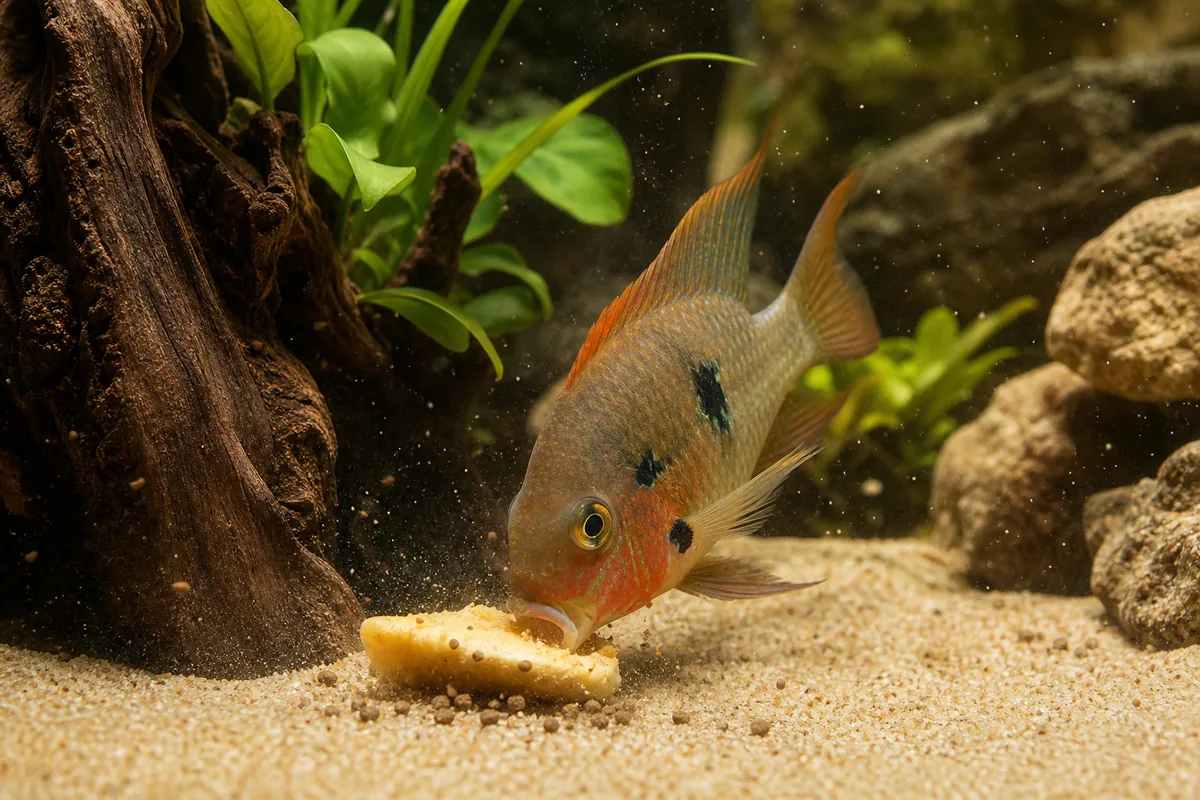
Compare the nutritional trade-offs to low-value food risks like bread, where there is no protein benefit and the carbohydrate load actively harms water quality.
How to Feed Tubifex Worms: Frequency, Portion Size, and Preparation
Two to three times per week at a small portion per fish is the standard feeding cadence for tubifex worms across carnivorous and omnivorous species. That frequency delivers conditioning benefits without overloading the tank with animal protein.
Tubifex worms at 10% fat are richer than bloodworms, so portion discipline matters more. A small pinch per fish per feeding session, with all uneaten worms removed from the substrate within 10-15 minutes, keeps water quality stable.
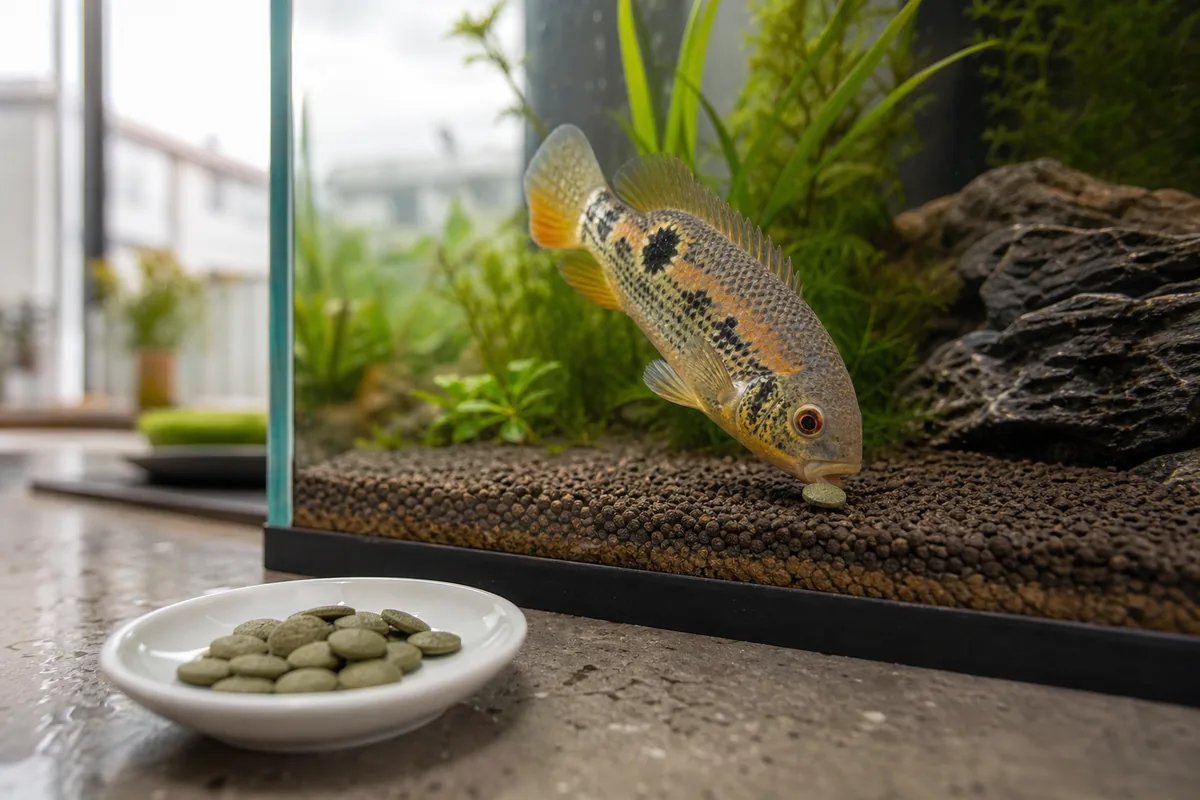
Pre-soaking freeze-dried tubifex cubes is not optional. Fed dry, they absorb water in the fish's stomach and expand, causing bloating and buoyancy problems.
Soak the cube in a small amount of tank water for at least 60 seconds before placing it against the glass or releasing it into the water column.
- Staple food: Species-appropriate pellet or flake fed daily, forms the nutritional base
- Tubifex worms: Frozen or freeze-dried, 2-3 times per week, never as the only protein source
- Variety rotation: Alternate tubifex with bloodworms, brine shrimp, or daphnia across the week
- Fasting: One day per week with no food clears the digestive tract and prevents organ fat accumulation
- Omnivore note: Guppy feeding schedules show how livebearers tolerate tubifex well as a 2x weekly supplement alongside their standard flake or micro-pellet staple.
Rotating tubifex with bloodworms and brine shrimp across the week gives fish a broader amino acid and micronutrient profile than any single live food can provide on its own.
When building a live food rotation, bloodworms as a comparison food are worth understanding: they sit at roughly 55% protein and 5% fat, making them leaner than tubifex and a useful alternating choice for species prone to fatty liver from rich diets.
Sources and references
- Bacterial contamination of commercially available live Tubifex worms and its implications for disease transmission in aquarium fishDiseases of Aquatic Organisms, Vol. 58(2-3), 2004
- Nutritional composition of oligochaete worms used in aquaculture and ornamental fish feeding: protein and lipid profiling of Tubifex tubifexAquaculture Research, Vol. 49(1), 2018
- Myxozoan parasites using oligochaete worms as intermediate hosts: infection dynamics and transmission risk in ornamental fish systemsInternational for Parasitology, Vol. 35(11-12), 2005