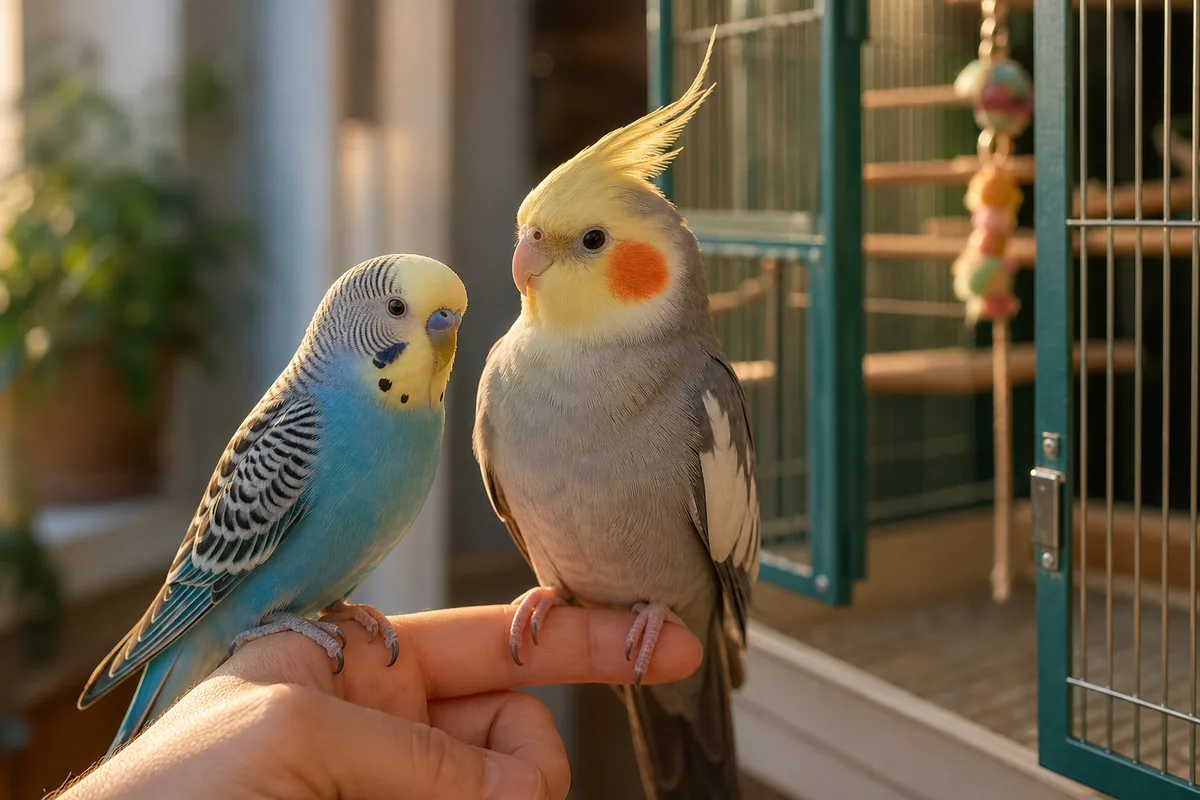
Budgies and cockatiels are the two most popular pet birds in the world, and they come up together constantly. Our pet bird care guides cover both in depth, but this comparison focuses on the practical differences that determine which bird fits your household.
Neither is objectively better. They are different birds with different strengths, and understanding those differences saves you from rehoming a bird that wasn't the right fit.
| Feature | Budgie (Budgerigar) | Cockatiel |
|---|---|---|
| Adult size | 7 inches, 1-1.4 oz | 12-13 inches, 2.8-4.2 oz |
| Lifespan | 7-15 years | 15-25 years |
| Minimum cage | 18×18×24 inches | 24×24×36 inches |
| Noise level | Moderate chattering | Moderate whistling/contact calls |
| Talking ability | Excellent (males) | Limited phrases, better whistlers |
| Handleability | Good with taming effort | Easier, naturally calmer |
| Purchase price | $20-$60 | $100-$250 |
| Diet | Pellets + greens + seeds | Pellets + greens + seeds |
| Powder down | Low | Moderate (allergen concern) |
| Best for | Talking, vocal enrichment | Handling, bonding, cuddling |
Budgie: Best Talking Small Bird, Highest Activity Level
The budgerigar is the most widely kept pet bird in the world, and it earns that position on vocal ability alone. Male budgies regularly develop vocabularies of 50-200 words.
The record holder, a budgie named Puck, learned over 1,700 words. No other small bird comes close to that ceiling.
Beyond talking, budgies are active, curious, and entertaining to watch. They forage constantly, check every inch of their environment, and interact with toys with more persistence than most larger parrots.
Pros
- Best talking ability of any small bird
- Lowest cost to purchase and maintain
- Takes up minimal cage space
- High energy and entertaining to watch
- Pairs well with a companion bird without dominating
Cons
- Requires more patient taming effort than cockatiels
- Hides illness until critical, needs attentive monitoring
- More fragile, needs more careful handling
- Shorter lifespan than cockatiels (7-15 vs 15-25 years)
- Males talk; females rarely develop vocabulary
Budgie Housing and Diet Basics
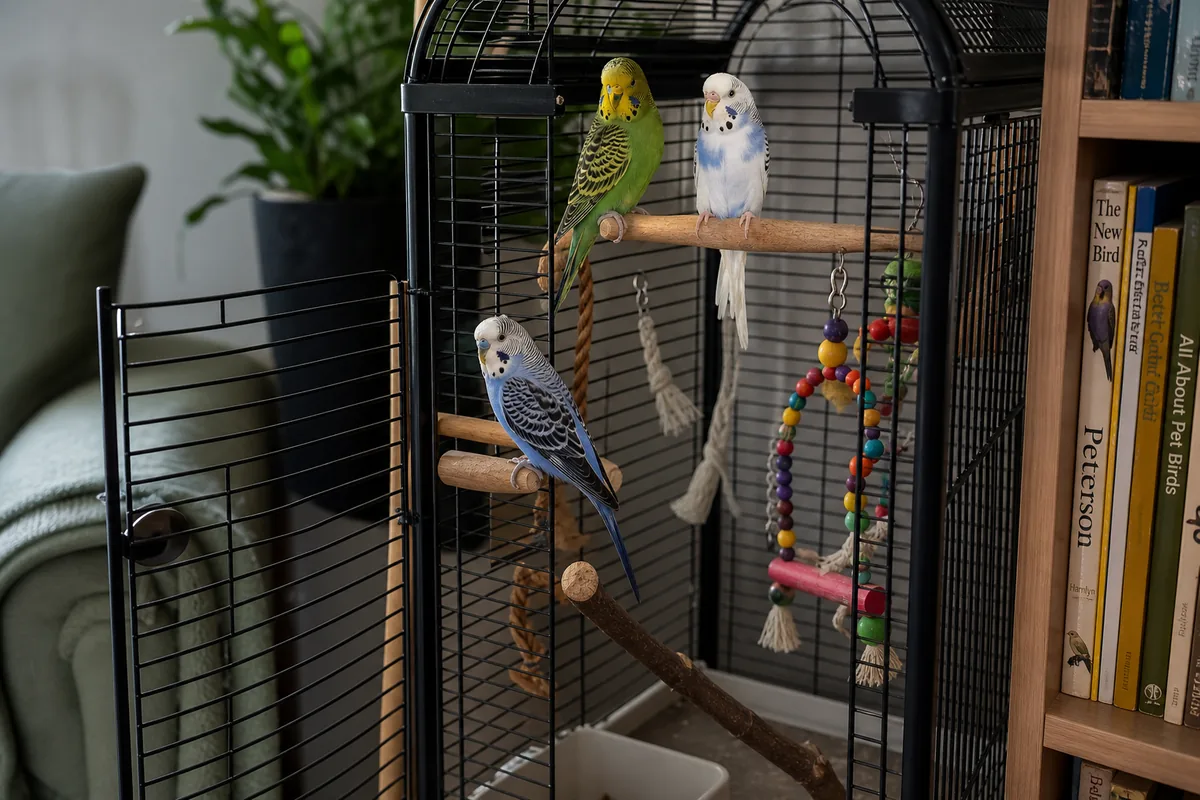
Budgies need a minimum 18×18×24 inch cage with 0.5-inch bar spacing. They fly horizontally, so width matters more than height.
Bar spacing wider than 0.5 inches creates entrapment risk for a 1-ounce bird.
Diet is 60-70% small pellets (Harrison's, Zupreem, or Roudybush), 20-25% fresh vegetables and leafy greens, and 5-10% seed and millet as training treats. The most common budgie health failure is a seed-only diet that leads to vitamin A deficiency over time.
For a full picture of what owning a budgie involves day to day, our dedicated budgie care guide covers housing, diet, training, and health in detail.
Parrotlets occupy a similar size range to budgies with a feistier personality, and our parrotlet care guide covers whether that trade-off suits your household.
Both species appear in our best talking birds guide, though budgies tend to build larger vocabularies while cockatiels excel at tune mimicry.
If the cockatiel feels too large but the budgie feels too small, our lovebird care guide explores another small parrot alternative worth considering.
- Daily flight time: 1-2 hours in a bird-safe room
- Perch variety: wood, rope, and concrete at different diameters
- Social needs: a bonded human companion or a cage mate, single birds alone all day develop behavioral problems
- Vet care: annual avian vet exam, weekly weight monitoring with a small scale
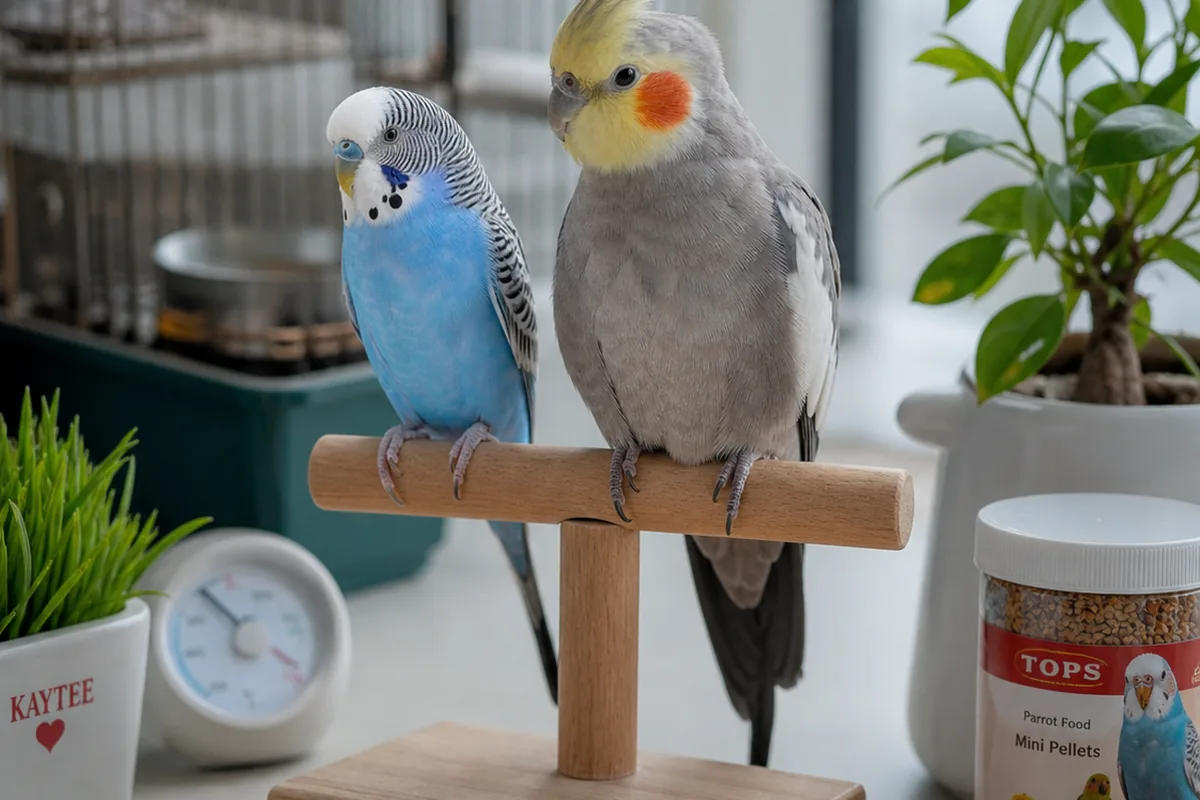
Cockatiel: Most Handleable Beginner Bird, Superior Bonding
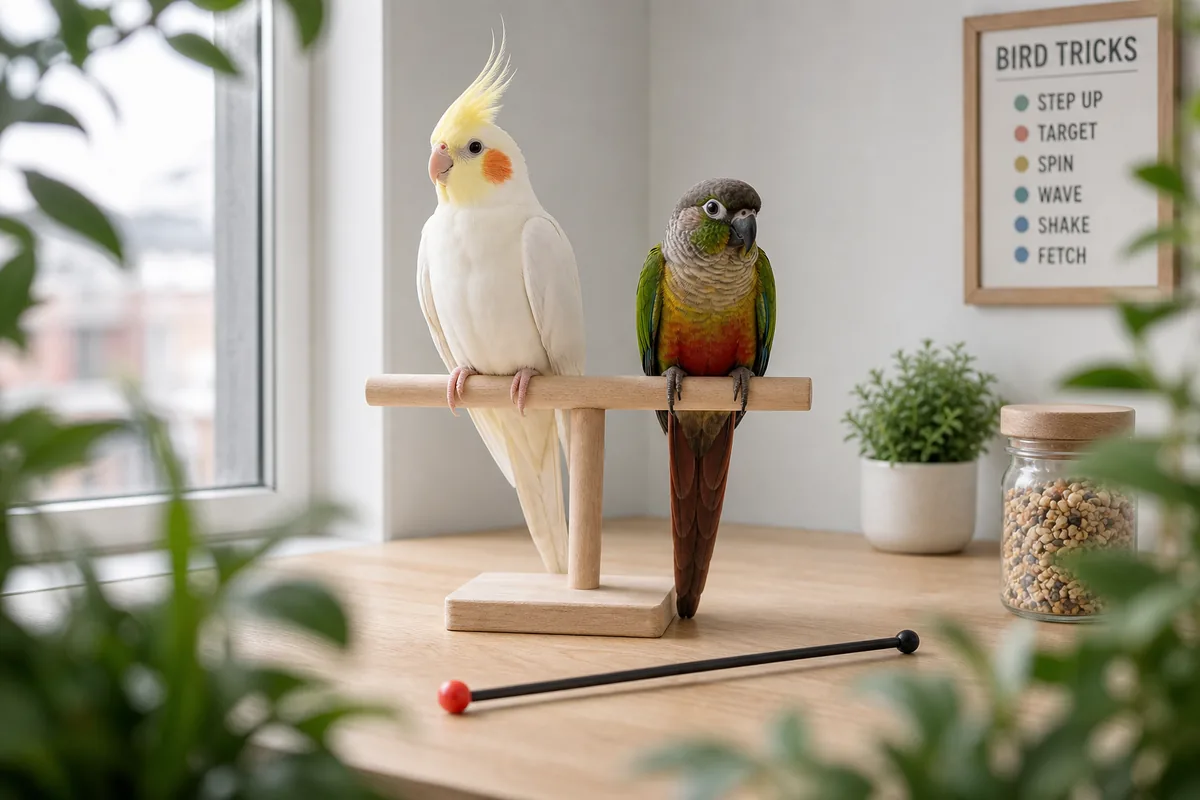
Cockatiels are the most naturally calm and handleable pet bird available to beginners. Where a budgie requires patient taming over weeks before tolerating handling, most hand-raised cockatiels step onto a finger from day one and seek out contact with their keeper.
Cockatiels whistle rather than talk. Males develop complex whistle tunes, contact calls, and occasionally short phrases, but their primary vocal expression is melodic rather than verbal.
If you want a bird that whistles back at you and sits on your shoulder while you work, a cockatiel fits that role better than any small bird available.
Pros
- Naturally calmer and easier to handle than budgies
- Longer lifespan (15-25 years) for a deeper long-term bond
- Expressive crest shows emotional state clearly
- Comfortable whistling contact makes for a companionable bird
- Tolerates a range of beginner mistakes better than smaller birds
Cons
- Moderate powder down can trigger allergies in sensitive keepers
- Contact calls can be persistent during dawn and dusk
- Purchase price is 3-5x higher than a budgie
- Less vocal vocabulary than male budgies
- Cage requirement is larger than for budgies
Cockatiel Housing and Diet Basics
Cockatiels need a minimum 24×24×36 inch cage with 0.5-0.75 inch bar spacing. They are larger, more active climbers than budgies and need vertical space as well as horizontal width.
Diet follows the same pellet-primary model: 60-70% pellets, 20-25% fresh vegetables, and 5-10% seeds and treats. Cockatiels are prone to vitamin A deficiency if kept on seed-only diets and susceptible to fatty liver disease from excess sunflower seed and fat intake.
Our complete cockatiel care guide covers the full husbandry picture for anyone leaning toward the larger bird in this comparison.
Both budgies and cockatiels accept apple slices and our guide on birds eating apple covers the seed-removal preparation that applies to both species.
Neither species is silent, but cockatiels are quieter than many parrots, and our quiet pet birds guide covers how both rank against noisier alternatives.
Soft fruit treats work for both species and our article on birds eating banana covers the correct serving size for birds in this size range.
- Daily out-of-cage time: 1-2 hours minimum, cockatiels benefit from supervised free flight
- Social needs: at least 1-2 hours of direct interaction daily for single birds
- Crest reading: crest flat against head = defensive or scared, crest raised high = excited or alarmed, crest relaxed at half-mast = content
- Powder down: run an air purifier with HEPA filtration, clean cage area weekly
Which Bird Fits Your Situation?
The choice almost always comes down to three factors: what you want from daily interaction, how much space you have, and your budget.
Households that want a bolder personality than either bird in this comparison should read our lovebird care guide before making a final decision.
Blueberries work equally well as enrichment for both species and our article on blueberries for pet birds explains how to make them a regular part of the diet.
Both species earn strong recommendations in our best birds for beginners guide, with each suited to slightly different keeper lifestyles.
Sources and references
- Comparative behavioral assessment of Melopsittacus undulatus and Nymphicus hollandicus in captivityof Avian Medicine and Surgery, Vol. 36, 2022
- Husbandry and common diseases of cockatiels and budgerigarsof Florida College of Veterinary Medicine, IFAS Extension
- Companion bird selection and beginner husbandryAssociation of Avian Veterinarians, Client Education Series