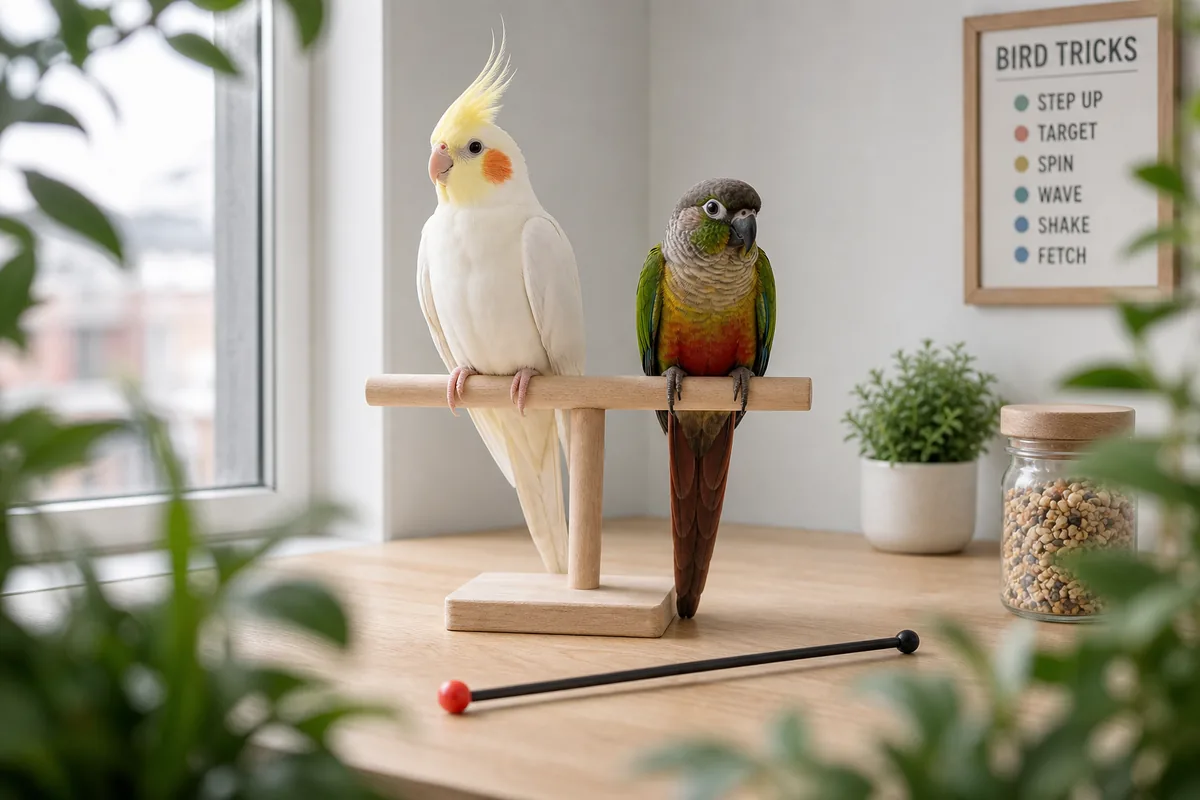
A good bird match depends more on noise, handling style, and routine than color or novelty. In this pet-bird comparison, the practical gap between a cockatiel and a conure matters more than which bird looks cuter in the pet store.
A typical cockatiel profile leans calmer and easier to read. A typical conure personality leans louder, busier, and more insistent about interaction.
Pros
- Cockatiels are usually quieter and easier for beginners
- Conures are playful and highly interactive
- Both birds can become strong companion pets with daily work
Cons
- Conures are louder and more demanding
- Cockatiels produce more feather dust
- Neither bird is a low-effort pet
| Factor | Cockatiel | Conure |
|---|---|---|
| Noise | Usually lower, with whistles and softer calls | Usually louder, sharper, and harder to ignore |
| Beginner fit | Safer first-bird choice for many homes | Better for owners expecting more intensity |
| Body language | Often easier to read before a bite | Can switch faster from play to overstimulation |
| Mess | More dust and dander | Less powder, but still messy and destructive |
| Play style | Gentler and more routine-based | Busier, louder, and more mischievous |
How Do Noise And Temperament Compare?
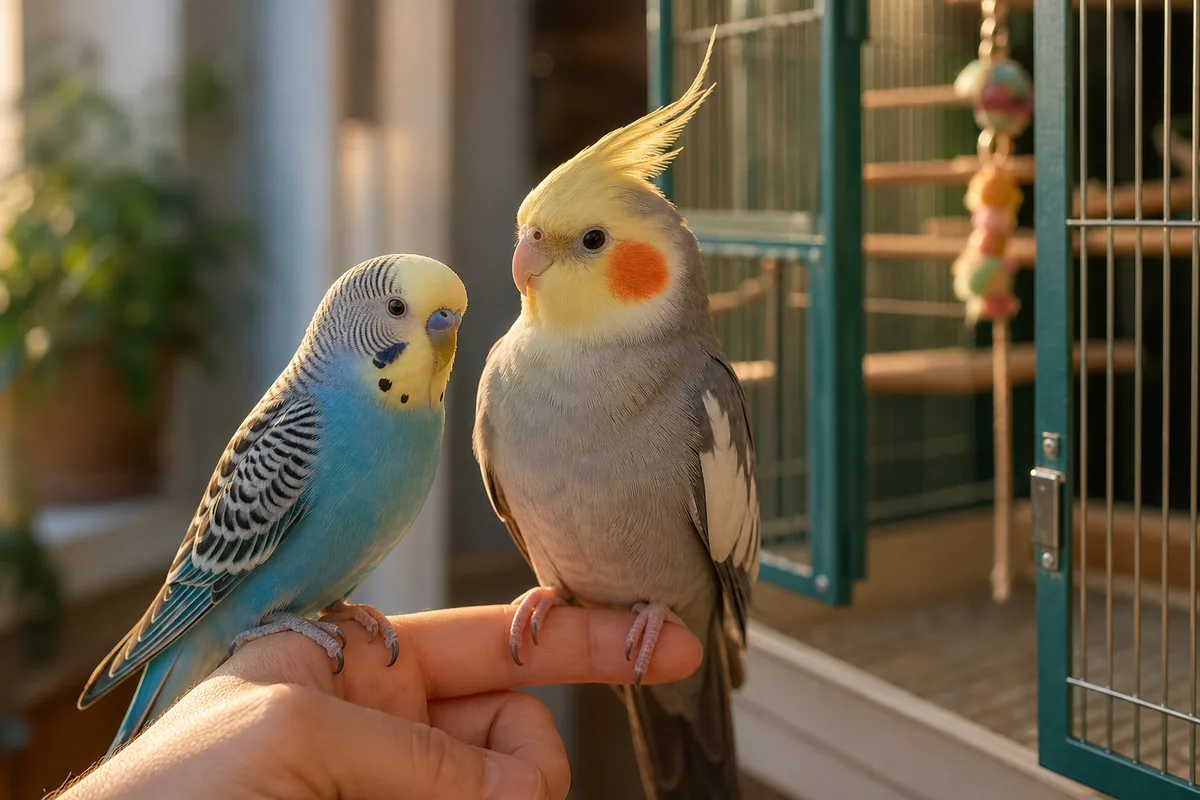
Cockatiels are not silent, but many homes find them easier to live with day after day. They whistle, chirp, and call out, yet their sound profile is usually softer and less piercing than a typical conure.
Conures are fun because they are bold and expressive. That same trait also means sharper calls, faster mood shifts, and a bird that can push for attention much harder when bored.
If quiet matters, that point alone can settle the decision. Homes already leaning toward quieter pet birds usually land much closer to cockatiels than conures.
Which Bird Is Easier For A Beginner?
Cockatiels are usually the safer beginner recommendation because they forgive mistakes better. They still need training and enrichment, but many owners find them less intense than a typical conure.
Conures are not bad beginner pets. They simply punish inconsistency faster with louder calling, more mouthy behavior, and stronger reactions when the routine slips.
- Cockatiel edge: calmer handling and easier-to-read body language in many homes
- Conure edge: stronger play drive and more obvious social engagement
- Shared rule: both birds still need daily interaction and steady training
If you are still choosing a first bird overall, the wider beginner bird list helps place this matchup in context. The cockatiel usually sits closer to the forgiving end of that spectrum.

How Do Cage Size And Daily Workload Compare?
Both birds need roomy cages, out-of-cage time, toy rotation, and daily cleanup. A cockatiel setup often feels simpler because the bird's behavior is steadier and the noise is easier to manage through normal household hours.
Conures need the same housing basics plus more attention to chewing, boredom, and loud protest behavior. A well-planned cockatiel cage setup usually looks calmer than the heavier enrichment routine many conures need.
That does not mean conures are worse pets. It means the right owner needs to enjoy more daily negotiation and more frequent behavior management.
Which Handles Family Life Better?
Cockatiels often fit calmer family homes better because their warning signs are easier to read. They can still hiss, lunge, or bite, but many owners find their body language clearer before things escalate.
Conures can be affectionate and deeply bonded pets, yet they are often louder, mouthier, and more intense with one chosen person. In a busy house, that can feel charming or exhausting depending on the expectations.
If you want the smaller-parrot look with a gentler daily pace, the cockatiel usually wins. If you want a bird with more comic energy and a bolder social style, the conure becomes more appealing.
Which Should You Choose?
Pick the cockatiel if you want a lower-noise first parrot with softer energy and clearer beginner handling. Pick the conure if you want a more animated bird and can tolerate more volume, stronger opinions, and a busier social routine.
Neither bird is low effort. The better choice is the one whose daily pattern still feels realistic in your home six months after the novelty wears off.
Sources and references
- Cockatiels - General InformationVCA Animal Hospitals
- Conures - GeneralVCA Animal Hospitals
- Conure Personality, Food & CareLafeber Pet Birds