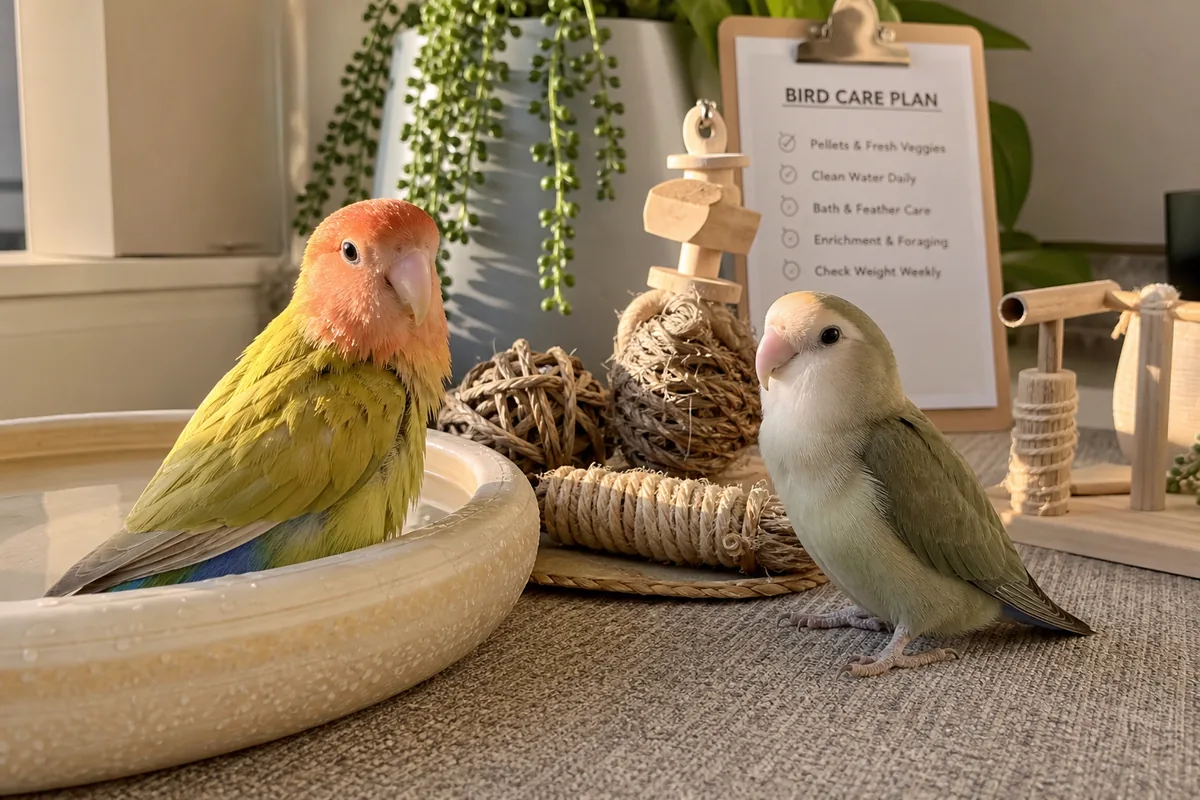
Birds stay healthier when the daily feeding routine starts with a balanced base diet instead of guessing from the snack drawer. Think pellets first, vegetables every day, and richer treats in very small portions.
That structure protects feather quality, liver health, and steady energy. It also makes it easier to spot when a bird is begging for favorites instead of eating what the body actually needs.
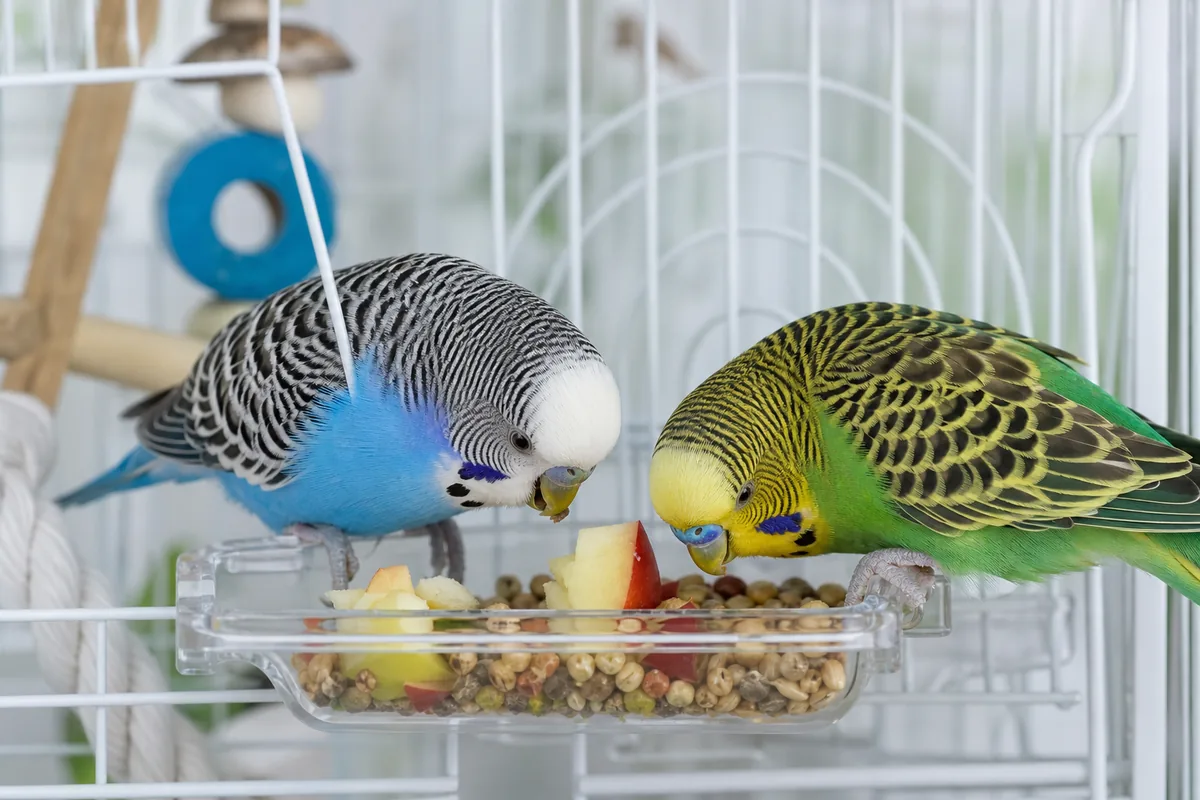
A healthy budgie setup and a healthy cockatiel setup still share the same rule here. The bowl should serve the bird's species needs, not just its ability to crack seeds all day.
Foods For Pet Birds
- species-appropriate pellets or balanced formulated dietSafe
- daily leafy greensSafe
- chopped vegetablesSafe
- small fruit portionsSafe
- measured seeds or nuts as treatsSafe
- cooked grains in moderationSafe
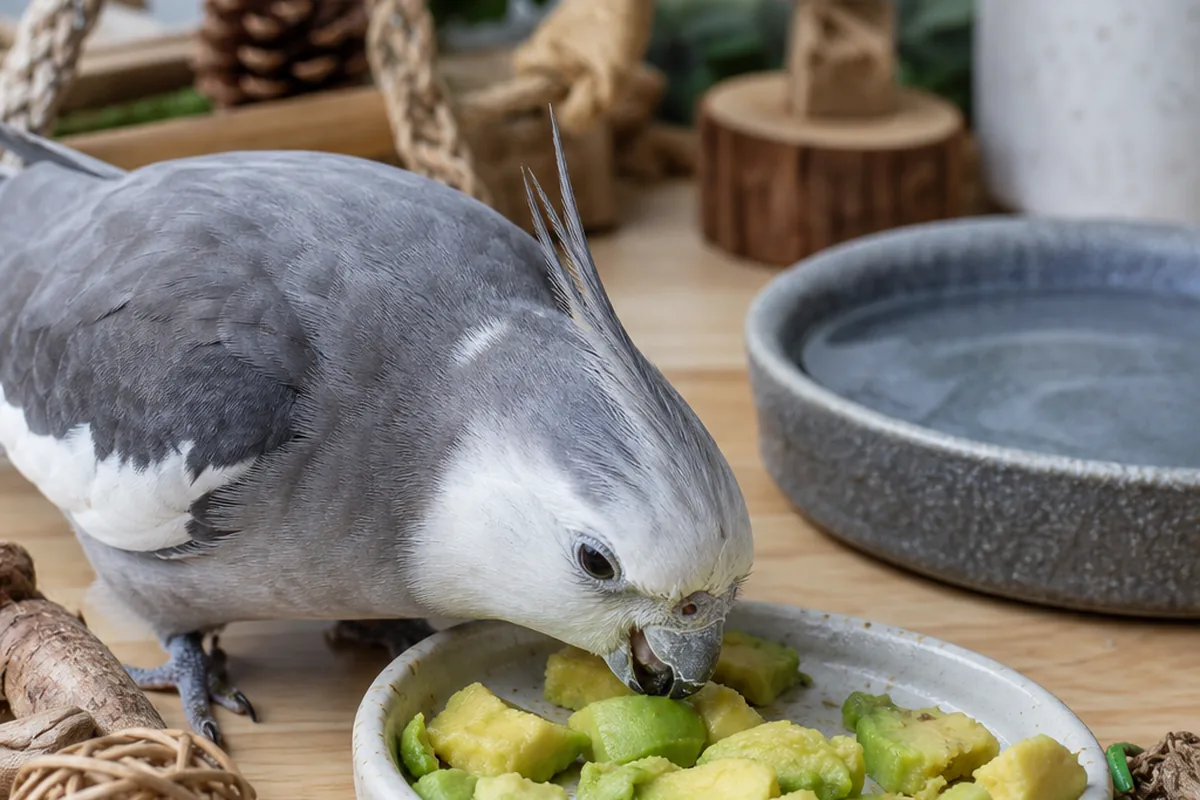
- avocadoUnsafe
- chocolateUnsafe
- caffeineUnsafe
- alcoholUnsafe
- onionUnsafe
- garlicUnsafe
- xylitolUnsafe
- salty processed snacksUnsafe
- spoiled produceUnsafe
Prep: Wash produce well, chop foods to bird-safe size, remove spoiled fresh food after a few hours, keep bowls and water clean, match portions to species size Freq: Balanced base diet daily, vegetables daily, fruit limited, seeds and nuts as occasional treats Amount: Use the balanced base diet for most intake, add vegetables daily, and keep sugary or fatty extras small
What Should Pet Birds Eat Every Day?
Most companion birds do best when pellets or another balanced formulated diet handle most of the work. Vegetables and leafy greens round out the bowl with texture, moisture, and fiber.
Fresh water belongs in the routine every day too. Dirty bowls and stale water undo good diet choices fast.
- Main diet: use pellets or a species-appropriate balanced base for most daily intake
- Daily fresh foods: add chopped greens and vegetables in bird-safe pieces
- Treat ceiling: keep fruit, seeds, and nuts in the small reward category
- Water rule: change water every day and wash the dish or bottle often
That daily pattern is easier to hold when the cage routine is organized well. A steady cockatiel cage layout or a clean smaller-bird setup makes feeding, cleanup, and bowl access much easier.
Why Should Pellets Or A Balanced Base Diet Come First?
Pellets are built to deliver a steadier mix of protein, fat, vitamins, and minerals than a loose seed bowl. They reduce selective feeding, which is one of the biggest long-term diet problems in pet birds.
Seed-heavy diets often look normal because birds love them and owners enjoy watching them crack shells. Over time, that pattern can drive obesity, vitamin A deficiency, and fatty liver disease.
Larger parrots such as an African grey can suffer badly from the same mistake, even though they look confident and active for a long time. The body may be paying the price before the feathers and droppings make it obvious.
Which Vegetables And Greens Work Best For Pet Birds?
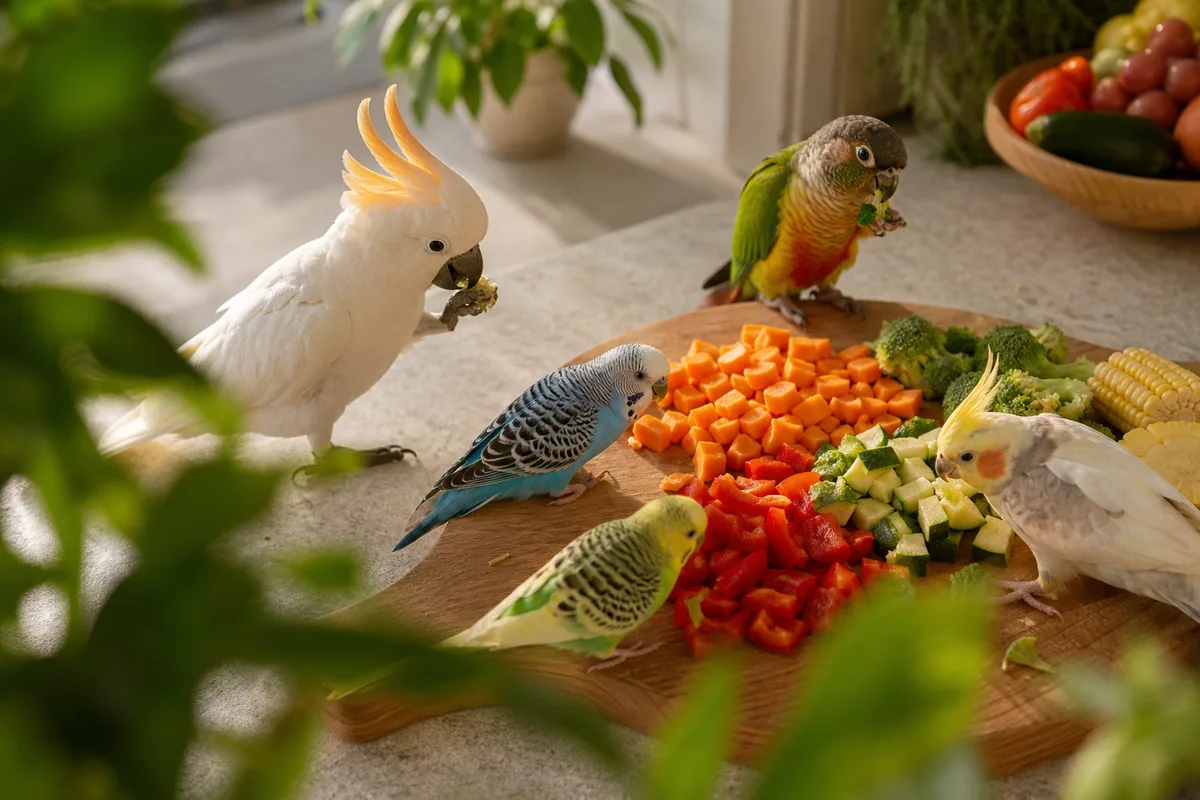
Leafy greens should make up a large share of the fresh-food rotation because they add fiber and micronutrients without a heavy sugar load. Romaine, kale, bok choy, cilantro, parsley, and collard greens all fit well for many species.
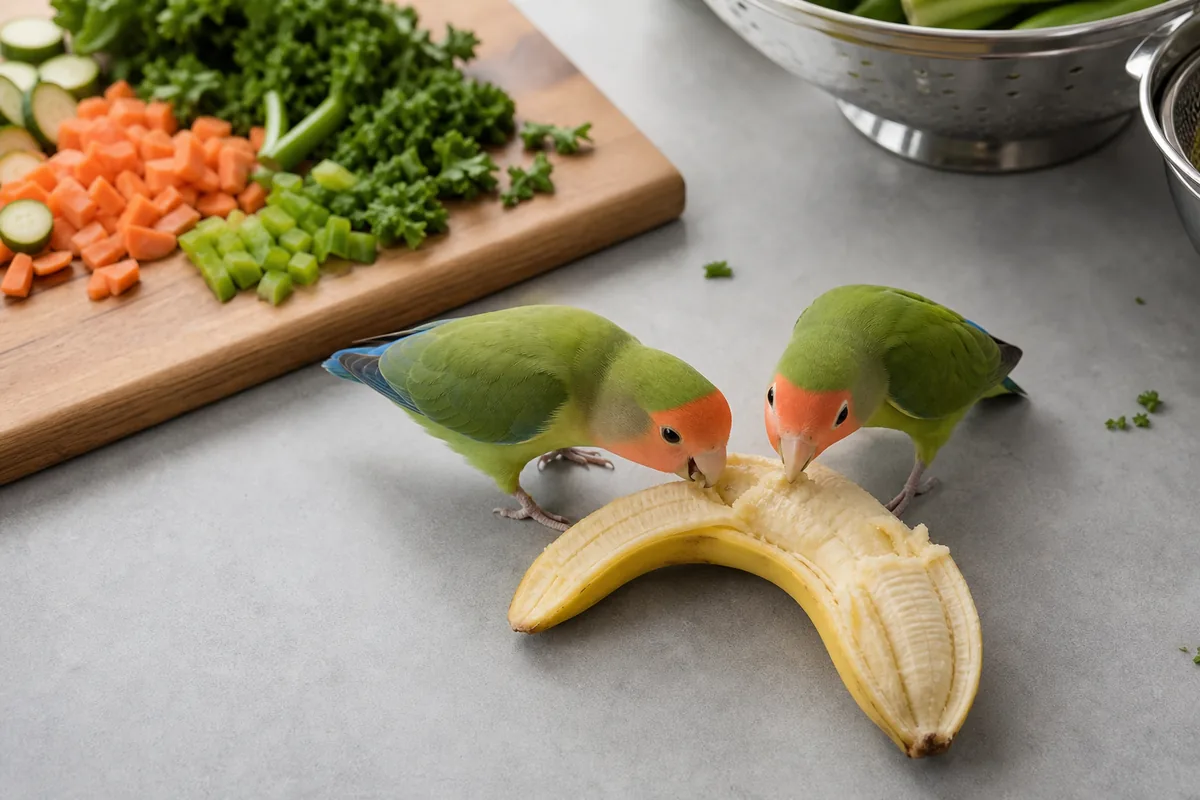
Other vegetables such as bell pepper, broccoli, carrot, squash, and cooked sweet potato also work well. Wash produce well, cut it to a safe size, and remove leftovers before they spoil.
| Group | Examples | Best Use |
|---|---|---|
| Leafy greens | Romaine, kale, bok choy, collards | Daily base for the fresh-food portion |
| Crunchy vegetables | Bell pepper, broccoli, snap peas | Texture variety and foraging interest |
| Cooked vegetables | Sweet potato, squash, carrot | Soft rotation foods in small portions |
| Never feed | Onion, garlic, avocado, spoiled produce | Keep out completely |
Texture matters because different birds approach food differently. An active conure diet routine often works better when the vegetables are crunchy and easy to hold, while smaller birds may prefer finer chopped pieces.
How Much Fruit, Seed, And Nuts Should Pet Birds Get?
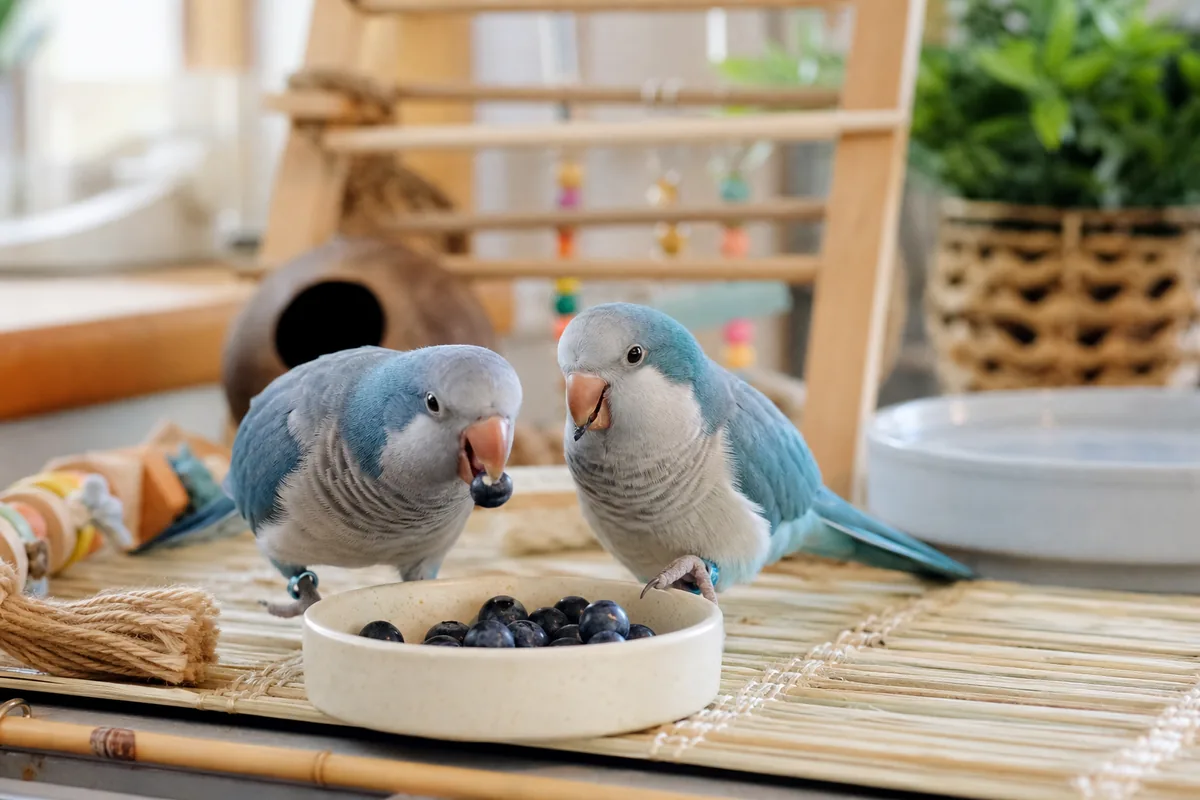
Fruit belongs in the treat category because the sugar climbs fast. A few small pieces of berries, melon, or apple without seeds usually goes farther than owners expect.
Seeds and nuts are richer still. Use them as rewards, training tools, or a measured supplement for species that need them, not as the whole diet.
- Fruit limit: keep fruit small and occasional instead of filling a whole side dish
- Seed use: measure seeds instead of free-pouring them into the bowl
- Nut use: give tiny unsalted pieces as rewards, not daily bulk food
- Behavior clue: a bird that screams for seeds has learned your routine, not proved the diet is healthy
The same pattern shows up when owners compare a cockatiel diet with a higher-energy conure routine. The species can differ, but treats still need boundaries in both cases.
Which Foods Are Toxic?
Avocado, chocolate, caffeine, alcohol, onion, garlic, and xylitol are among the most important no-feed items for pet birds. Small bodies handle these compounds badly, and the wrong bite can turn into an emergency quickly.
Salty processed snacks and spoiled produce are trouble too. A bird may look excited by chips, fried food, or leftover pizza crust, but that interest does not make the food safe.
Toxic food lists matter more than novelty diets. Even homes researching beginner pet birds still need the same strict no-feed list once the bird comes home.
How Do Species Differences Change A Pet Bird Diet?
The exact ratio of pellets, seeds, and richer foods changes by species, age, and activity level. Smaller seed-eaters and larger parrots do not use food the same way, even when the same kitchen ingredients look harmless.
That is why a diet plan should start with the species page, then branch into treats and variety. A canary feeding plan should not copy a conure bowl, and a larger parrot should not live on a finch-style mix.
If apartment noise and routine are part of the decision, homes looking at quieter pet birds still need to remember one thing. Quiet species can still become obese or deficient on a poor bowl.
What Does A Practical Daily Feeding Routine Look Like?
Start the day with clean water, a measured base diet, and fresh vegetables when the bird is alert and ready to eat. Remove old produce after a few hours so the cage does not become a warm bacteria tray.
Use seeds or nuts later as small rewards during training or interaction. That pattern keeps the best nutrition in the main bowl and leaves the richest foods in their proper place.
A good routine feels boring in the best way. The bowl stays consistent, the bird stays active, and appetite changes stand out quickly when something is wrong.
Sources and references
- Bird Food Guide: An Insider's Guide to the Ideal Avian DietLafeber Company
- Fruits and Vegetables in Birds' DietsVCA Animal Hospitals
- Cockatiels - FeedingVCA Animal Hospitals