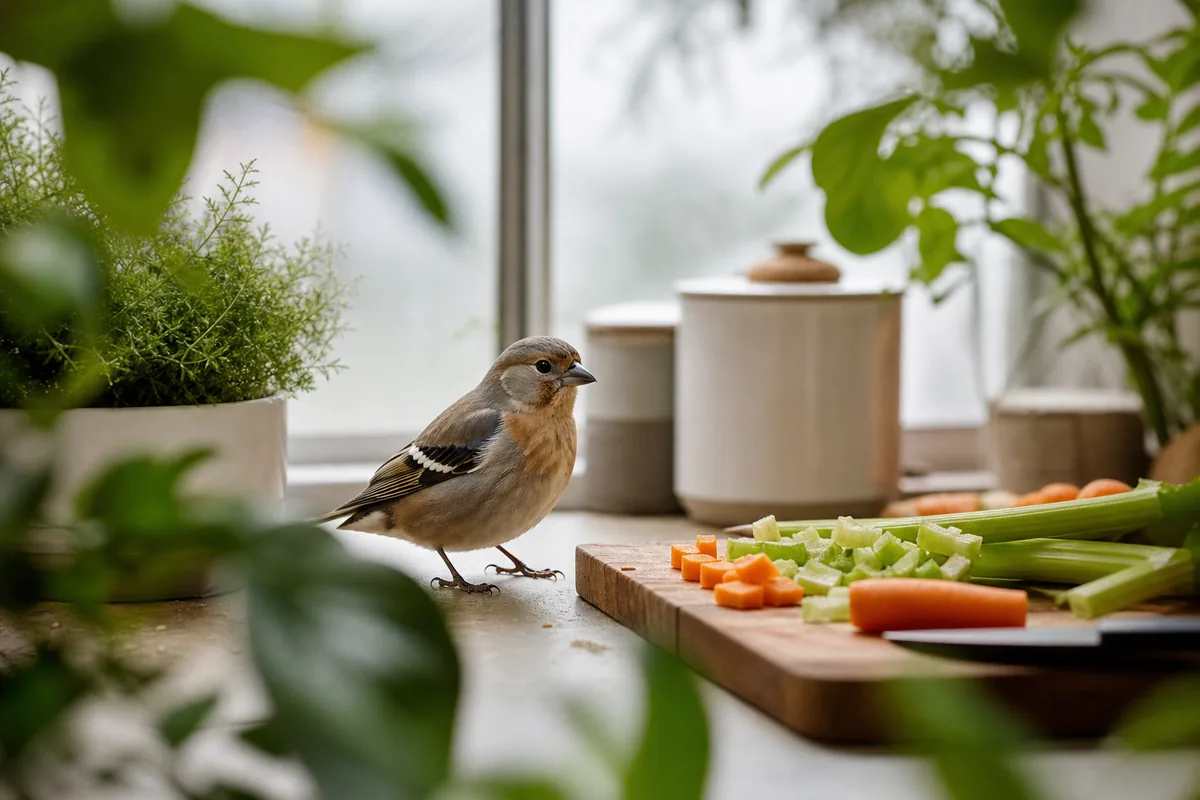
Finches are hands-off birds, and that's the point. They don't want to sit on your shoulder or learn to talk.
They want to fly, forage, sing, and interact with other finches. The zebra finch (Taeniopygia guttata) and society finch (Lonchura domestica) are the two species that dominate the hobby, and both are well-suited to beginner keepers.
Our pet bird guides cover parrots, softbills, and everything between, but finches deserve their own space as the low-maintenance option in companion bird keeping.
Zebra finches are the more active and vocal of the two, with the male's constant chatter providing pleasant background noise without ever reaching the volume of even the quietest parrot. Society finches are quieter and significantly more tolerant of other species, making them the better choice for mixed-finch flights.
Key facts
- Lifespan
- 5-10 years
- Length
- 4-5 inches
- Noise Level
- Very Low
- Talking
- None (males sing)
Finch Appearance: Zebra, Society, and Popular Species
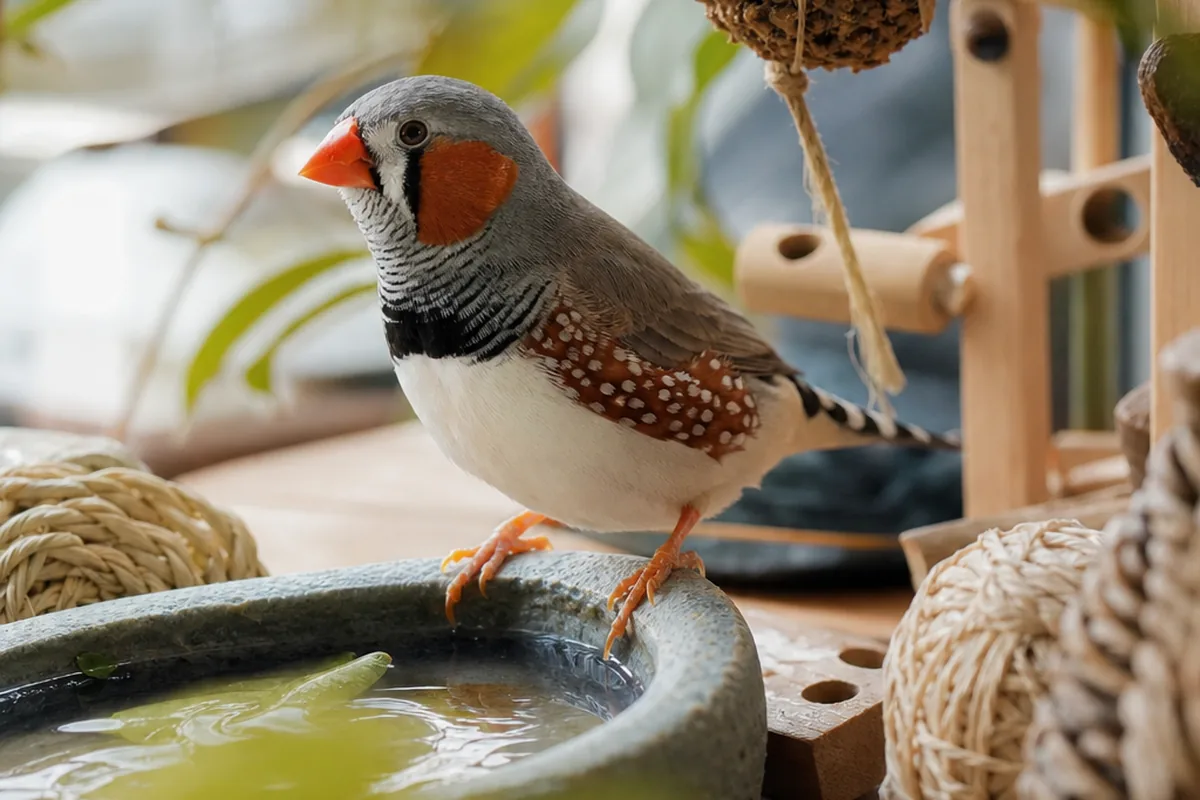
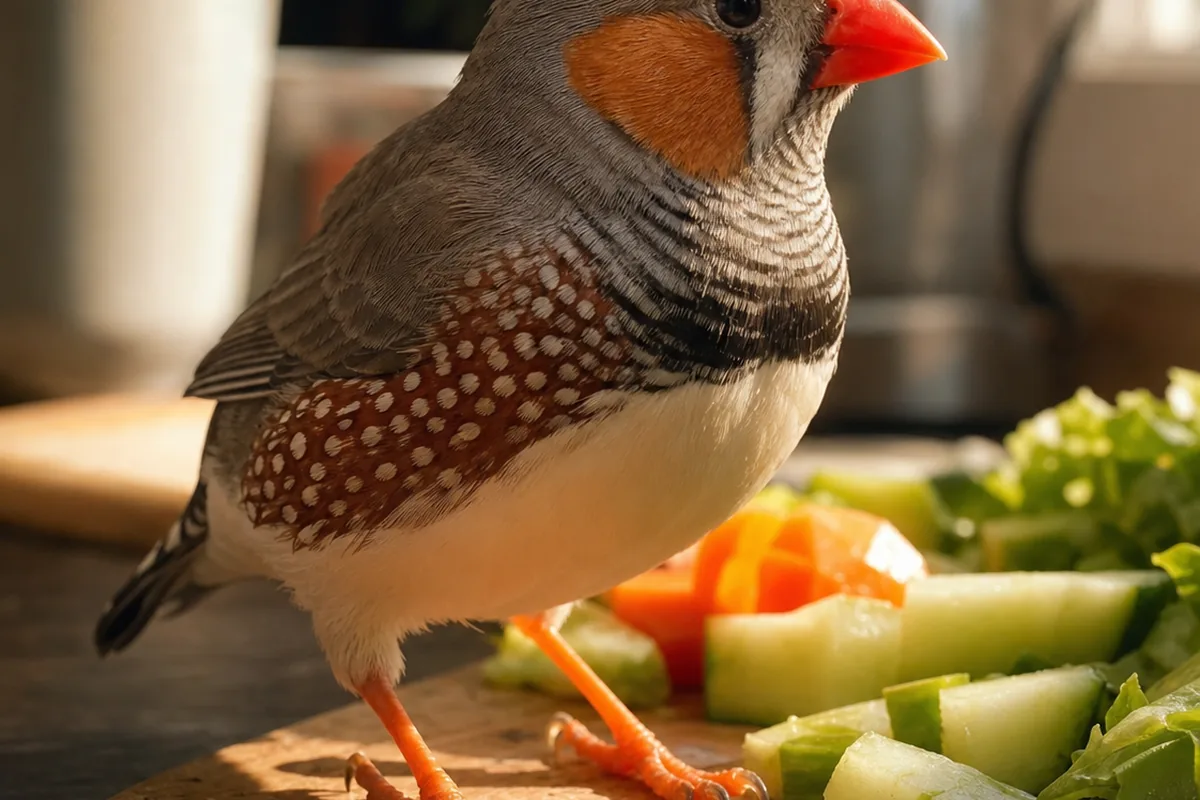
Zebra finches are 4 inches long with orange-red beaks, grey upper bodies, white bellies, and the signature "zebra" barring on the throat of males. Males also have bright orange cheek patches and chestnut flanks with white spots.
Females are plainer, with grey overall and the orange beak. Mutations include white, pied, fawn, cream, and black-cheeked, with dozens of combinations in show lines.
Society finches are solid brown-and-white in their basic form, plainer than zebra finches, but their calm temperament makes them exceptional foster parents for other finch species' eggs and chicks. Gouldian finches are the most visually spectacular finch available, with red, black, or orange heads and brilliant yellow and purple body markings, but they require more precise temperature and dietary management than zebra or society finches.
Finches and canaries share very similar husbandry requirements, and our canary bird care guide is worth reading if you want a second species in the same aviary.
Halved strawberries placed in the aviary encourage natural foraging behavior, and our guide on strawberries for birds confirms they are safe for finches.
- Zebra finch: Hardy, vocal, active, best starting species for finch keeping
- Society finch: Quieter, tolerant, excellent for mixed-species flights
- Gouldian finch: Visually stunning, more demanding temperature and diet needs
- Owl finch: Small, gentle, good in mixed flights with zebras and societies
- Canary-winged parakeet: Note this is a parrot, not a finch, despite common confusion
Personality: What Hands-Off Actually Means
Finches are observation birds. The pleasure of keeping them comes from watching them interact, build nests, court, sing, and work out the social dynamics of their small flock.
A pair of zebra finches in a well-planted flight cage holds your attention the way a well-designed aquarium does. The bird does its own thing, and you watch.
They can become comfortable with their keeper's presence and will often feed from a dish held inside the cage, but they don't seek contact and don't enjoy being held. Attempting to handle finches regularly stresses them and can cause heart failure in birds with underlying conditions.
Handle only when medically necessary.
Doves are another hands-off species that coexists well with finches in large flights, and our dove care guide covers the compatibility factors to check first.
Finches produce a soft, pleasant song rather than screaming calls, placing them high on our quiet pet birds list for apartment and townhouse keepers.
Pros
- Low maintenance, no daily handling required
- Very quiet, suitable for any living situation
- Inexpensive to purchase and keep
- Entertaining to observe in pairs or groups
- Minimal equipment cost compared to parrots
Cons
- Cannot be tamed to handle
- Social animals, need at least two birds
- Shorter lifespan than parrots (5-10 years)
- Males sing constantly (pleasant but nonstop)
- Breeding control required to prevent overcrowding
Housing: Flight Cages and Minimum Space Requirements
The most important housing rule for finches is horizontal space. Finches fly in straight lines, not up and down, so a wide cage beats a tall one every time.
The minimum for a pair of zebra finches is 30 x 18 x 18 inches. For a group of 4-6 birds, a flight cage of 48 x 24 x 24 inches is appropriate.
Live or artificial plants, multiple perch heights, and nest boxes for sleeping (not breeding) fill the space and make it actively enriching. Avoid overcrowding: more space per bird is always better, and a colony of 6 birds in a too-small cage will fight and stress constantly.
Keepers ready to move to an interactive parrot after keeping finches often start with budgies, and our budgie care guide explains what that transition involves.
The zebra finch in particular earns a strong recommendation in our best birds for beginners guide for its hardiness and low handling requirement.
Diet: Seeds, Live Food, and Sprouting
Finches eat primarily seeds, and unlike parrots, a seed-based diet is appropriate for them when the right seed variety is offered. A quality finch mix containing millet, canary seed, and a small proportion of hemp and linseed covers most nutritional needs.
Avoid mixes heavy in sunflower seeds, which are too high in fat for finches.
Egg food is an essential supplement for finches, especially during breeding and molting periods when protein demand increases significantly. Commercial egg food is available in dry and wet forms.
Offer it 3-4 times per week and remove it after 4 hours to prevent spoilage.
Soft fruits can supplement a finch seed diet and our article on banana for pet birds covers the small serving sizes appropriate for tiny species.
Grated apple works well as a finch treat and our guide on apple for birds confirms safe preparation and frequency for small birds.
- Base seed mix: Quality finch mix (millet, canary seed, small proportion of other seeds)
- Egg food: Commercial egg food 3-4x per week, especially during molt and breeding
- Sprouted seeds: Sprouted millet 3x per week, rinsed thoroughly before offering
- Greens: Chickweed, dandelion greens, kale, and seeding grasses when available
- Grit: Fine mineral grit in a separate dish helps finches digest seed hulls
Health: Respiratory Issues, Air Sac Mites, and Molting
Finches are small enough that illness progresses quickly and subtly. A finch sitting fluffed on the perch or on the cage floor is already seriously ill.
Daily observation of posture, droppings, and appetite catches problems early. Normal finch droppings are dark with a white urate cap; green, watery, or absent droppings indicate a problem.
Air sac mites (Sternostoma tracheacolum) are a serious and common parasite in finches, especially in birds purchased from crowded pet store conditions. Affected birds show clicking sounds when breathing, open-mouth breathing, and rapid deterioration.
Treatment with ivermectin from an avian vet is effective if caught early.
Small grapes cut into quarters work as a finch treat and our guide on grapes for birds covers safe serving sizes for small species.
Parakeets are sometimes kept in separate cages alongside finch aviaries by keepers who want both a hands-off and an interactive bird, and our parakeet care guide covers that species.
- Air sac mites: Clicking respirations, open-mouth breathing, tail bobbing
- Scaly face mites: Crusty buildup on beak and around eyes, treatable
- Egg binding: Female straining on cage floor, a medical emergency
- Mycoplasma: Respiratory infection causing wheezing and eye discharge
Breeding Finches: Managing Pairs and Preventing Overcrowding
Zebra finches breed readily and frequently given a nest box. A pair given no nest box will breed less often but may still produce eggs on perches or in corners.
If you don't want to breed, remove all nest boxes and keep pairs of the same sex. Zebra finches are prolific enough that a single mixed pair in a small cage can produce 20-30 birds in a year without intervention.
Society finches are exceptional foster parents and are used commercially to hatch and raise Gouldian finch eggs when Gouldian parents fail. A single society pair will readily accept and raise the eggs of almost any finch species placed in their nest.
Watermelon in tiny pieces provides hydration for finches during warm months and our guide on watermelon for birds confirms it is safe in small servings.
Sources and references
- Taeniopygia guttata (Zebra Finch) Biology and CareAnimal Diversity Web, of Michigan
- Air Sac Mites in Finches: Diagnosis and Treatmentof Avian Medicine and Surgery, 2019
- Estrildid Finch HusbandryMerck Veterinary Manual, 2023