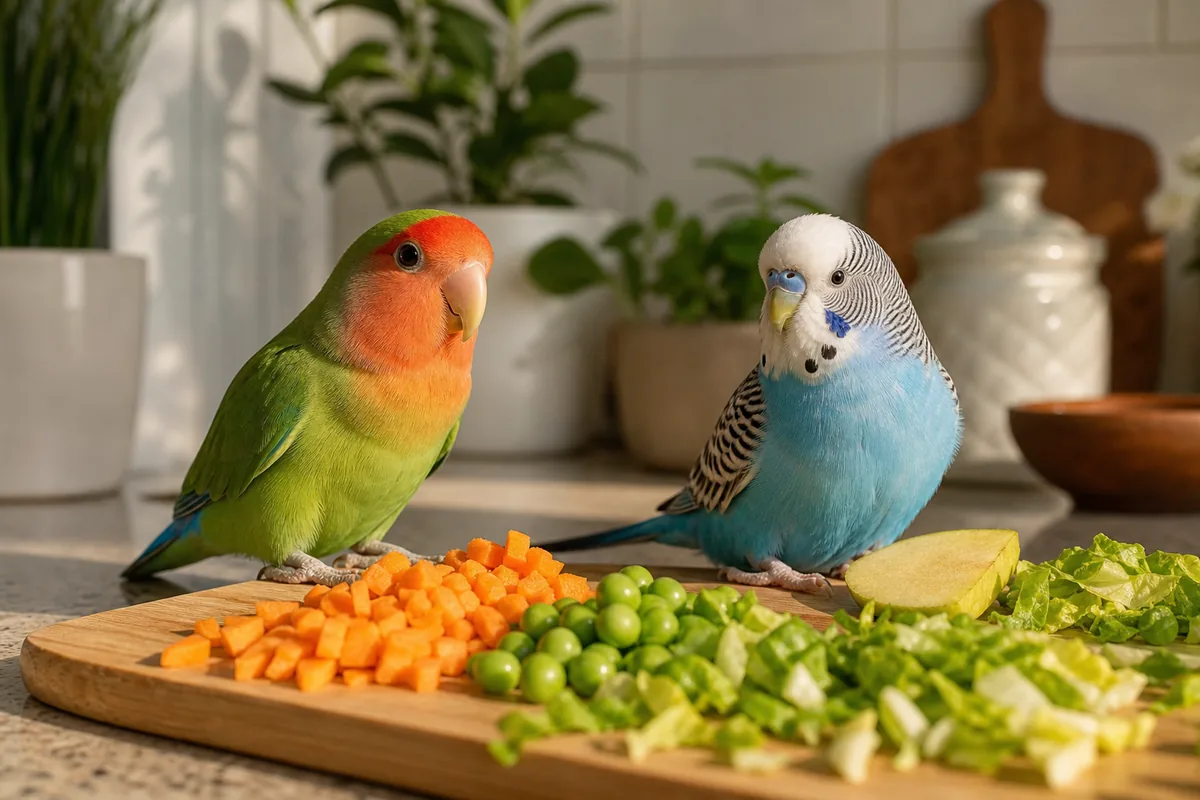
Lovebirds and budgies are both small, apartment-friendly pet bird species that get compared constantly by first-time buyers. Our pet bird care guides cover both species in depth, and this comparison cuts straight to the practical differences that determine which one fits your household.
They look similar in a pet store cage. They are meaningfully different birds to live with.
Budgerigar: The More Forgiving Beginner Bird
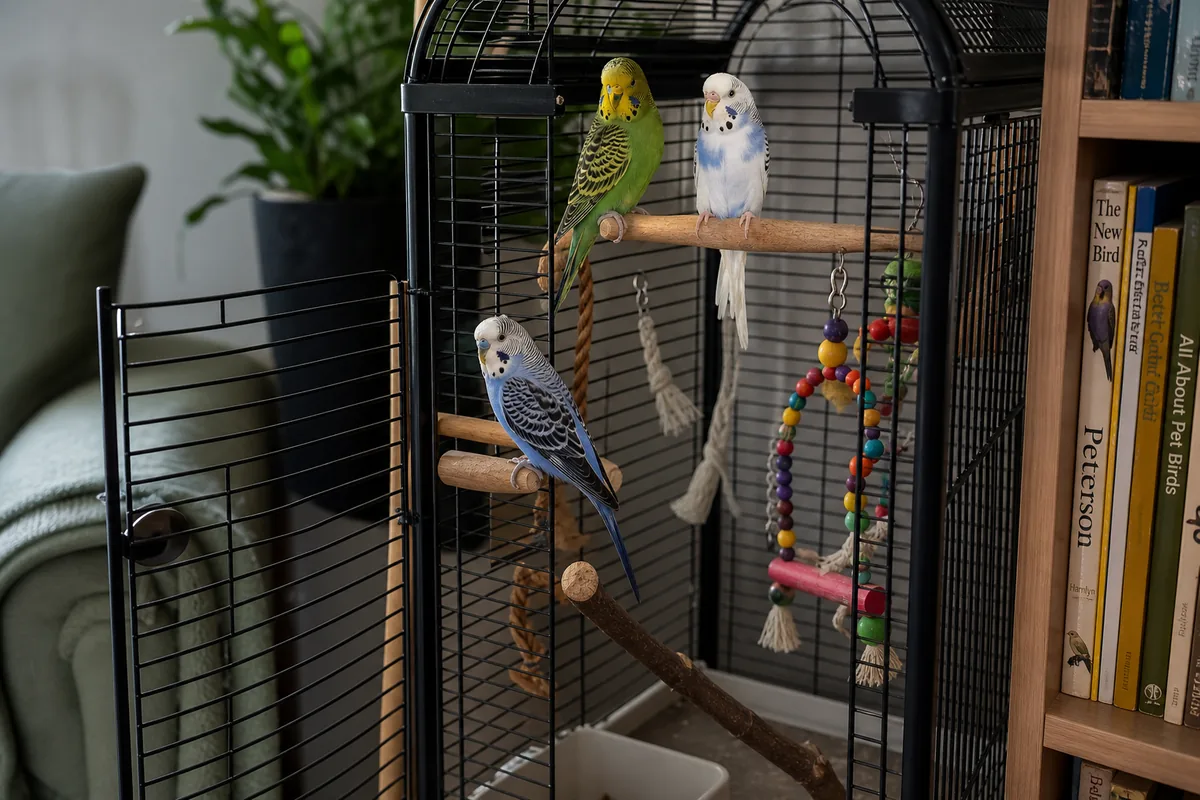
Budgies are the most widely kept pet bird in the world for practical reasons. They tolerate a wider range of beginner mistakes than lovebirds, cost less to purchase and maintain, and male budgies are truly exceptional talkers.
The record-holder, a budgie named Puck, was verified at 1,728 words, no lovebird has ever come close.
The budgie's personality is curious and energetic. They forage constantly, investigate every object in their environment, and interact with toys with more persistence than most larger parrots.
Their social drive makes them entertaining to watch even when they're not interacting with you.
Pros
- Best talking ability of any small parrot, males routinely develop 50-200 word vocabularies
- Lowest purchase cost ($20-$60)
- Most widely available species with the best breeder network
- More forgiving of inconsistent handling than lovebirds
- Moderate, continuous chatter rather than sharp call bursts
Cons
- Pet-store birds take 3-6 weeks of patient taming before tolerating regular handling
- Shorter lifespan (7-15 years) than lovebirds
- Fragile, requires careful, gentle handling especially by children
- Females rarely develop talking vocabulary
- Hides illness until critical, requires attentive observation
What Budgies Need Daily
Budgies need 1-2 hours of out-of-cage flight time in a bird-safe room daily. They are active birds that need to fly, not just sit on a perch.
A budgie confined entirely to its cage develops frustrated behaviors including feather chewing and excessive repetitive movements.
Diet is 60-70% small pellets, 20-25% fresh vegetables and greens, and 5-10% seeds and millet as training treats. The most common long-term health failure in budgies is vitamin A deficiency from seed-only diets, a problem entirely preventable with a pellet base and daily greens.
Our complete lovebird care guide covers the full husbandry picture for anyone leaning toward the more territorial bird in this comparison.
Both lovebirds and budgies accept apple slices and our article on birds eating apple covers the seed-removal preparation that applies equally to both species.
Neither species is silent, but budgies are quieter, which our quiet pet birds guide covers in context of apartment living and noise-sensitive households.
- Daily flight: 1-2 hours minimum in a safe, enclosed room
- Training approach: 5-10 minute sessions twice daily, millet as reward
- Health monitoring: weigh weekly, any loss over 2 grams without dietary change needs an avian vet
- Social needs: one bonded human companion or a cage mate, never isolated all day without either
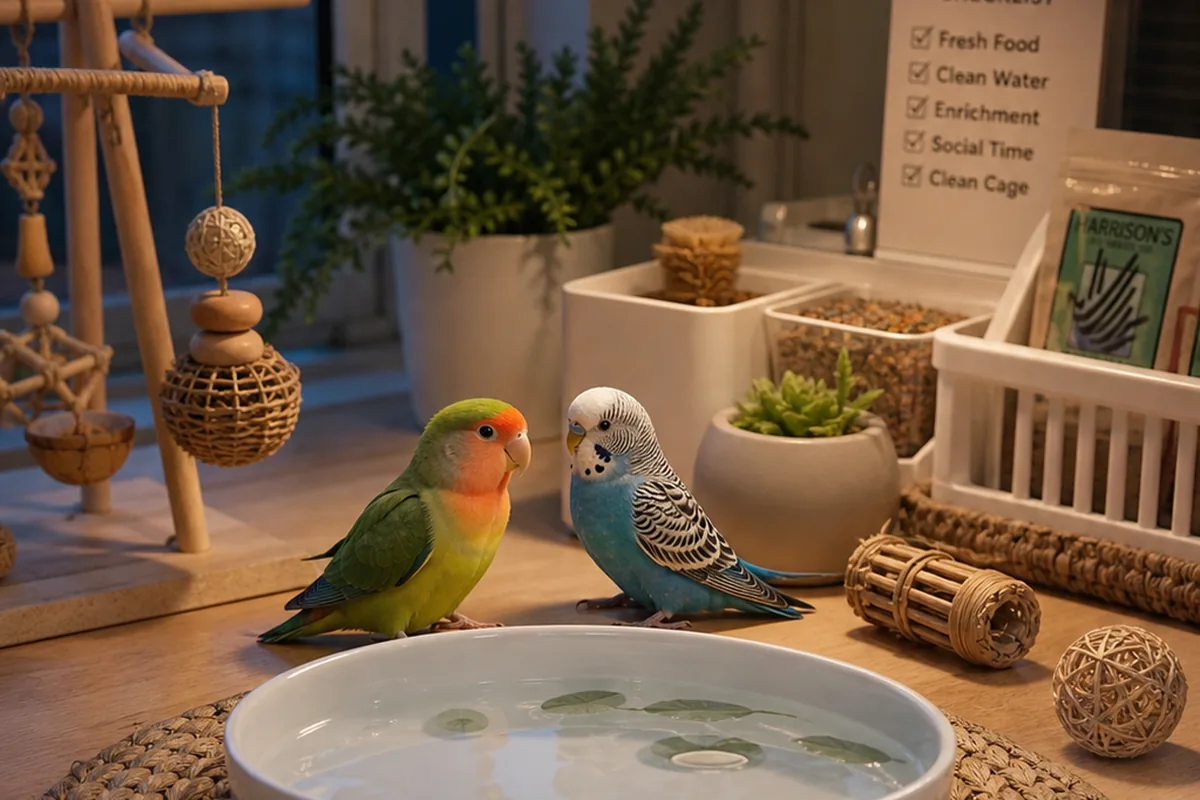
Lovebird: More Intense Bond, More Demanding Consistency
Lovebirds are small parrots with a personality that punches well above their weight. A hand-raised lovebird deeply bonded to its keeper is one of the most affectionate small birds available, perching on a finger for hours, preening their person's hair, and following them around a room.
The bonding intensity is truly higher than a budgie's.
The cost of that intensity: lovebirds require consistent daily handling to maintain tameness. A lovebird that misses a week of regular handling reverts toward defensiveness and biting.
This is the defining maintenance difference between the two species. Budgies tolerate a few days of lighter handling without losing progress.
Lovebirds do not.
Pros
- More intense and demonstrative bonding once tamed
- Bold, playful personality with high physical energy
- Longer lifespan (10-20 years) than budgies
- Multiple color mutations available, visually striking
- Enjoy foot toys, foraging, and active play more than budgies
Cons
- Require daily handling to maintain tameness, inconsistency causes regression
- Hormonal biting (spring and fall) even in tame individuals
- Rarely talk, not the right bird if speech is the priority
- More territorial than budgies, can be aggressive with other bird species
- $50-$200 purchase price, 2-4x more than budgies
What Lovebirds Need Daily
Lovebirds need daily, hands-on interaction to maintain their tame disposition. Unlike budgies where occasional breaks in the routine are manageable, lovebird tameness requires active maintenance.
The keeper who travels frequently for work or has truly unpredictable schedules will have repeated battles with a lovebird reverting to defensive behavior.
They also benefit from foraging enrichment. Lovebirds are active, problem-solving birds that become destructive or overly vocal when bored.
Paper shredding, foot toys, puzzle feeders, and regular cage rearrangement keep a lovebird occupied between interaction sessions.
The full budgie care guide covers housing, diet, training, and health for anyone who decides the budgerigar is the right fit after reading this comparison.
Banana works as a soft treat for both species in this comparison and our guide on birds eating banana covers portion guidance for birds in this size range.
Once you settle on the budgie, the next comparison most keepers reach is our budgie vs cockatiel guide, which weighs the ste