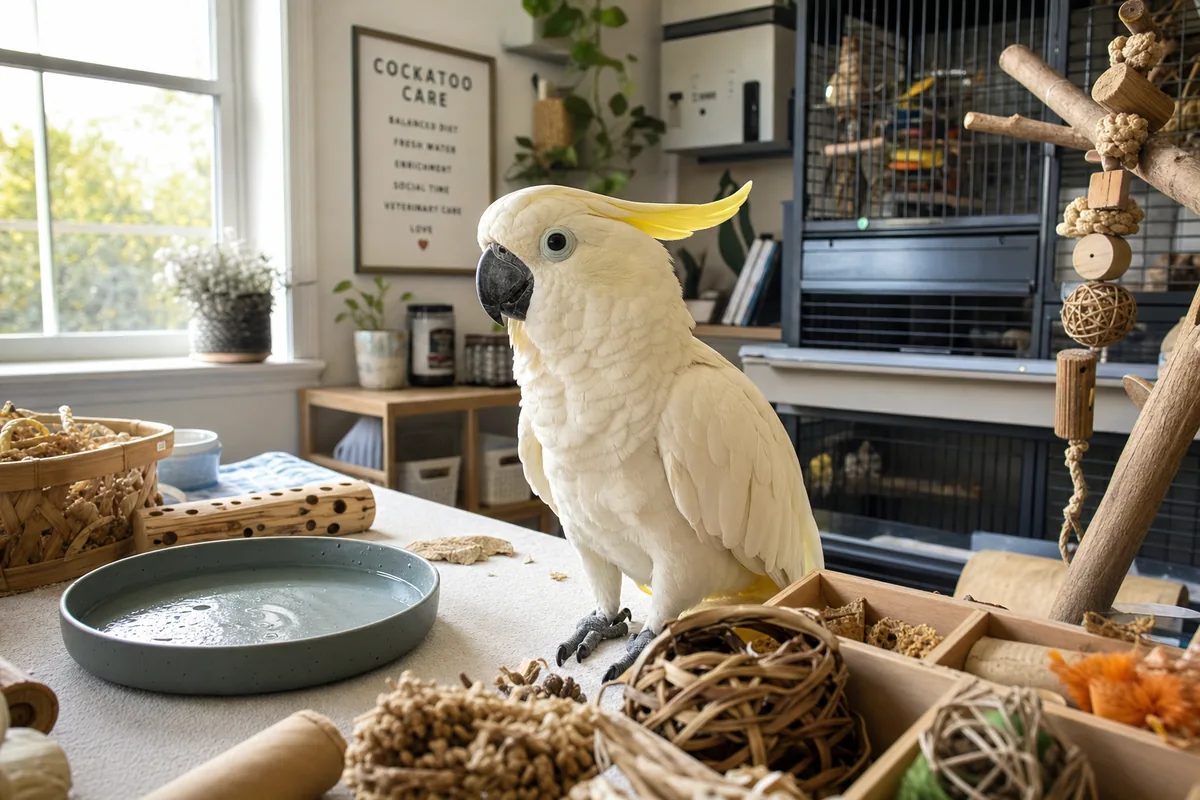
Cockatoos are the most emotionally intense parrots you can keep. Our pet bird care guides cover a wide range of species, but cockatoos stand apart for one reason: they need you more than any other bird.
That's not a selling point. It's a warning.
The same quality that makes a cockatoo striking to live with, deep, unwavering emotional attachment, becomes destructive when their social needs aren't met.
Key facts
- Cage Size
- 4×4×6 ft min
- Lifespan
- 40-70 years
- Interaction
- 3-4 hrs/day
- Weight
- 0.6-2.2 lbs
- Noise Level
- Extremely high
- Bond Level
- Maximum intensity
Cockatoo Species: 5 Common Pets and Their Demand Levels
Cockatoos vary significantly in size, volume, and intensity. Species selection is the most important decision you'll make, because their care requirements don't scale linearly with size.
- Umbrella Cockatoo: 18 inches, 0.9-1.3 lbs, the most affectionate and most commonly rehomed, needs 4+ hours interaction daily
- Moluccan (Salmon-crested): 20 inches, 1.6-2.2 lbs, the most emotionally intense cockatoo, can reach 129 decibels, not for most households
- Sulphur-crested: 20 inches, 1.5-2 lbs, highly intelligent, demands mental stimulation, screams when bored
- Goffin's Cockatoo: 12 inches, 0.6-0.9 lbs, smallest common pet cockatoo, more independent than larger species, problem-solving behavior is exceptional
- Citron-crested: 13 inches, 0.6 lbs, quieter than most cockatoos, calmer disposition, rare in the pet trade
For first-time cockatoo keepers, the Goffin's Cockatoo is the most manageable entry point. It's smaller, slightly less emotionally demanding, and its problem-solving intelligence makes training engaging rather than exhausting.
Macaws and cockatoos are the two most demanding large parrots and our macaw care guide helps you compare the space and time requirements before choosing.
Sunflower seeds are used sparingly as training treats for cockatoos and our sunflower seed fat-content limits guide explains the constraints for regular use.
Housing: Size, Material, and Why Stainless Steel Is Worth the Cost
Large cockatoos need a minimum 4 feet wide × 4 feet deep × 6 feet tall cage with bar spacing of 1 to 1.5 inches. Goffin's and Citron-crested require a minimum 3×3×4 ft.
Cockatoos are exceptional escape artists. They're curious, tool-using birds that will dismantle standard cage locks within hours.
Use stainless steel cages with cage-specific locks or padlocks. Powder-coated iron is acceptable but check for chipped areas weekly, exposed metal is a toxicity risk as birds chew constantly.
- Perch variety: Natural wood, rope, and concrete perches, all three textures for foot health
- Toy density: More toys than other parrots require, rotate every 3-4 days to maintain novelty
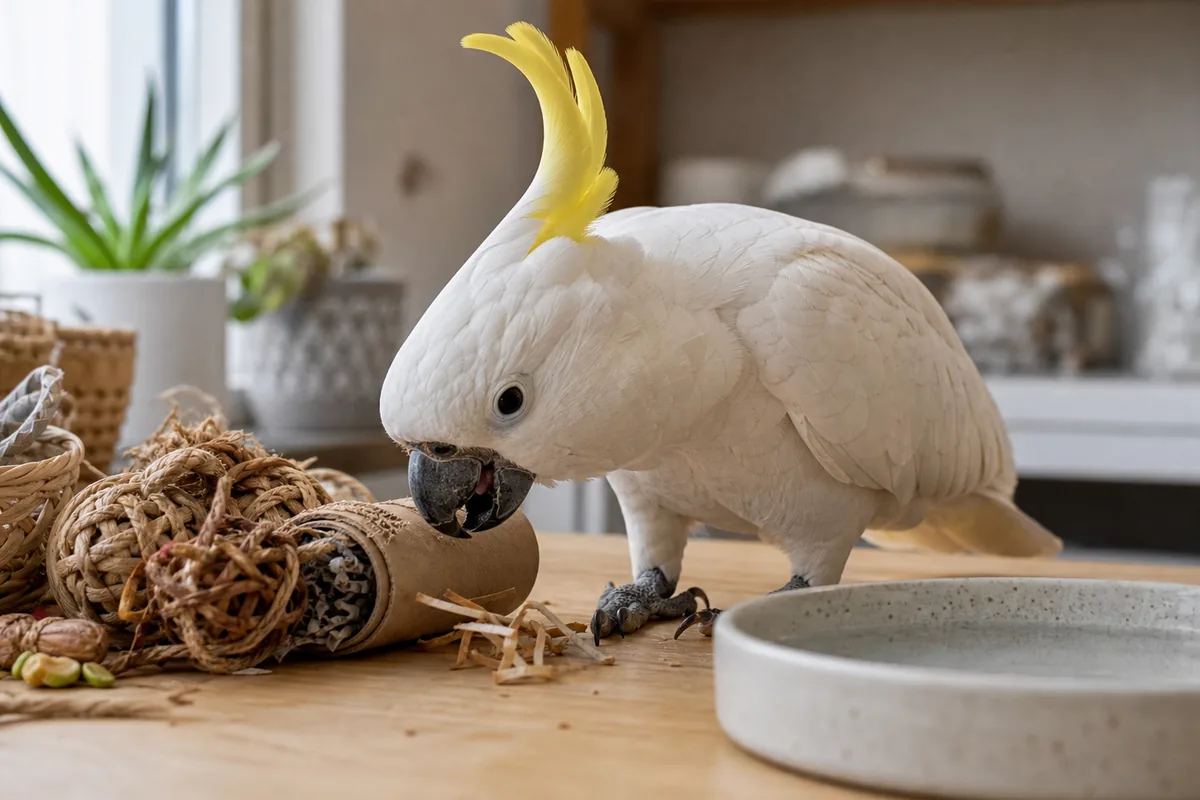
- Foraging setups: Paper cups, puzzle feeders, wrapped treats, cockatoos need to work for food mentally
- Cage cover: A partial cover at night signals sleep time and reduces early morning screaming
Cockatoos need 3-4 hours of out-of-cage interaction daily, not just supervised free time, but active engagement with you. A cockatoo alone in a room is not getting its social needs met.
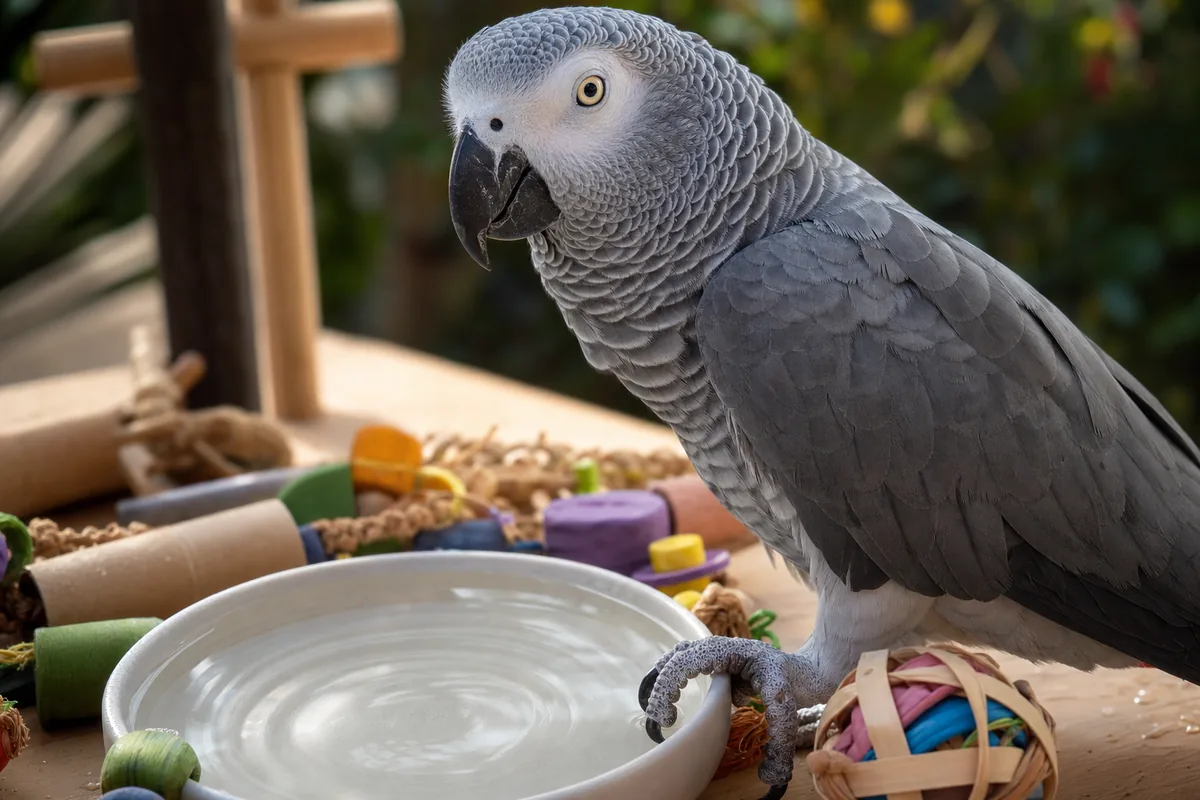
African greys are sometimes suggested as a calmer alternative for keepers drawn to cockatoos, and our african grey parrot guide explains what that trade-off looks like.
Cockatoos enjoy water-rich fruits and our watermelon mess-free serving guide covers how to offer it without cage cleanup problems.
Diet: Pellets, Produce, and Foraging Enrichment
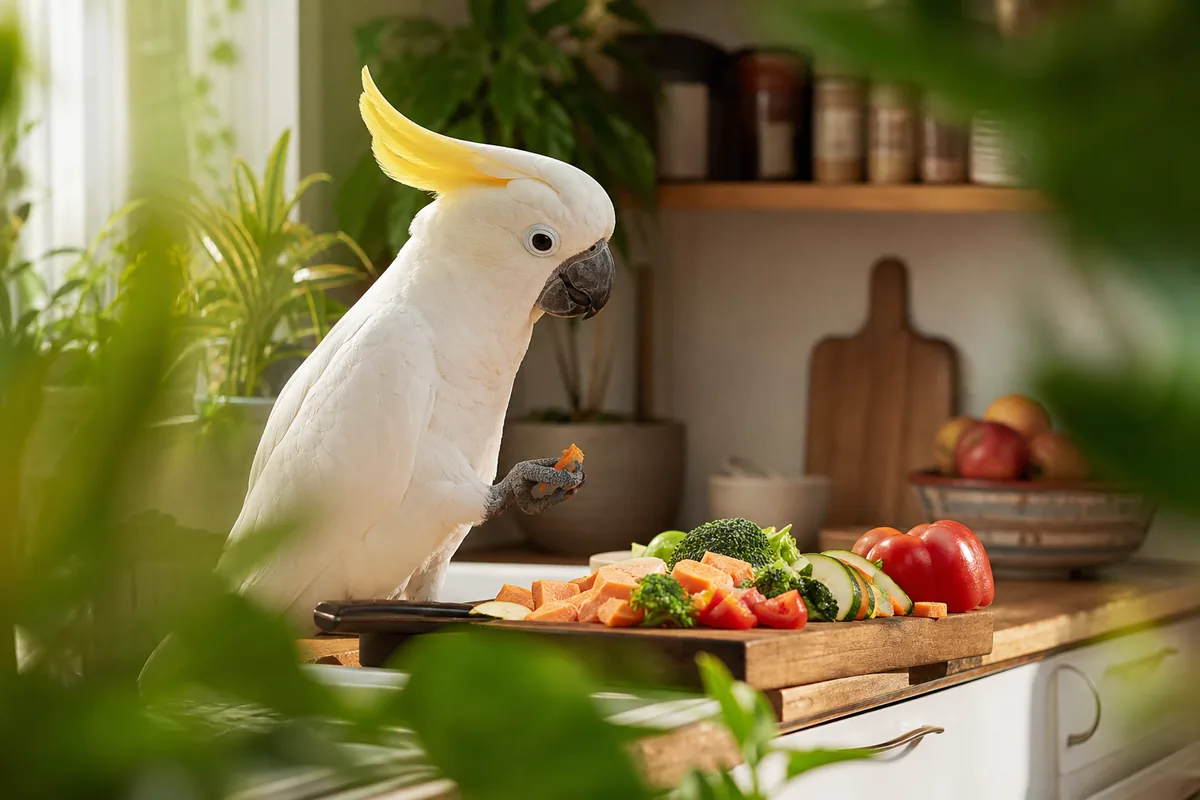
Cockatoos thrive on a diet of 70% high-quality pellets, 20-25% fresh vegetables and fruit, and 5-10% nuts and seeds as training rewards. Pure seed diets cause fatty liver disease, a leading killer of pet cockatoos.
Fresh vegetables should be offered twice daily: morning and early afternoon. Remove uneaten fresh food after 3-4 hours.
Dark leafy greens, bell peppers, squash, and cooked sweet potato are all excellent. Fruits are treats, not staples, limit to 10% of total diet due to sugar content.
Keepers wanting an affectionate medium parrot before committing to a cockatoo should read our conure care guide for a lower-intensity starting point.
Cockatoos are known more for their bonding intensity than talking skill, which is why our best talking birds guide ranks them below grey parrots and macaws for vocabulary.
- Excellent vegetables: Kale, Swiss chard, broccoli, carrot, bell pepper, snap peas
- Safe fruits: Blueberries, papaya, mango, apple (no seeds), banana in small amounts
- Protein additions: Cooked chicken (plain), hard-boiled egg, legumes, 1-2 times per week
- Foraging treats: Pine nuts, almonds, walnut pieces, 3-5 per day maximum
- Absolute no-list: Avocado, chocolate, onion, garlic, caffeine, alcohol, fruit pits
Health: 4 Conditions That Affect This Species Disproportionately
Cockatoos are prone to specific conditions that stem from their emotional sensitivity and physical biology. Annual avian vet visits are non-negotiable for a bird this long-lived.
Find an avian-certified veterinarian before you bring the bird home. Exotic animal vets who "also see birds" are not equivalent.
Cockatoos need specialists who understand their specific disease profile.
Banana is a soft, easy fruit for cockatoos to hold and our banana daily supplement guide confirms it is safe in regular rotation.
Cockatoos are consistently flagged in our best birds for beginners guide as unsuitable for first-time keepers due to their emotional needs and screaming potential.
- Psittacine Beak and Feather Disease (PBFD): viral, causes progressive feather and beak deformity, no cure, test all new birds before introduction
- Feather Destructive Behavior: over-preening to chest mutilation, driven by boredom, isolation, or unmet bonding needs, behavioral modification required
- Fatty Liver Disease: caused by seed-heavy diets, presents as lethargy and abdominal swelling, partially reversible with diet change
- Aspergillosis: fungal lung infection from dusty or damp environments, causes labored breathing and weight loss, antifungal treatment required
Training and Managing Emotional Intensity
Cockatoos learn quickly through positive reinforcement. The challenge isn't training the behavior, it's maintaining consistency across years and decades of the bird's emotional development.
Cockatoos go through hormonal surges annually (usually spring and fall) where previously calm birds become nippy, demanding, or screamy. This is normal and temporary.
Responding to screaming with attention teaches the bird that screaming works. Respond to quiet behavior instead.
Apple slices are a reliable fresh food for cockatoos and our apple seed-removal preparation guide covers the required steps before serving.
Grapes make excellent foraging enrichment for cockatoos and our grape prep for large parrots guide covers the correct preparation for this species.
What Ownership Actually Looks Like Long-Term
Umbrella cockatoos average 40-60 years in captivity. Moluccan cockatoos can reach 70.
Sulphur-crested cockatoos in the wild have documented ages over 100 years, though pet lifespans are typically shorter.
The bird will outlive your living situation, your relationship status, and possibly your ability to care for it physically. Estate planning for a cockatoo is not a joke, sanctuaries and rescues are overwhelmed with cockatoos whose original keepers didn't plan for this reality.
Strawberries are an antioxidant-rich treat cockatoos enjoy and our antioxidant fruit options guide covers safe serving sizes for large parrots.
Pros
- Unparalleled emotional bond with the right keeper
- Highly trainable and perceptive
- Dramatic visual presence and personality
- Capable of learning extensive tricks and speech
- Long-lived companions for dedicated keepers
Cons
- Screams loud enough to violate noise ordinances
- Requires 3-4 hours daily active interaction
- Powder down is an allergen for many people
- Emotional needs lead to severe pathology if unmet
- Costs $1,000-$4,000+ purchase price plus ongoing care
Sources and references
- Behavioral indicators of welfare in captive Cacatua speciesApplied Animal Behaviour Science, Vol. 238, 2021
- Psittacine beak and feather disease: diagnosis and managementof Melbourne Faculty of Veterinary and Agricultural Sciences
- Nutritional disorders in captive psittacinesAssociation of Avian Veterinarians, Clinical Manual