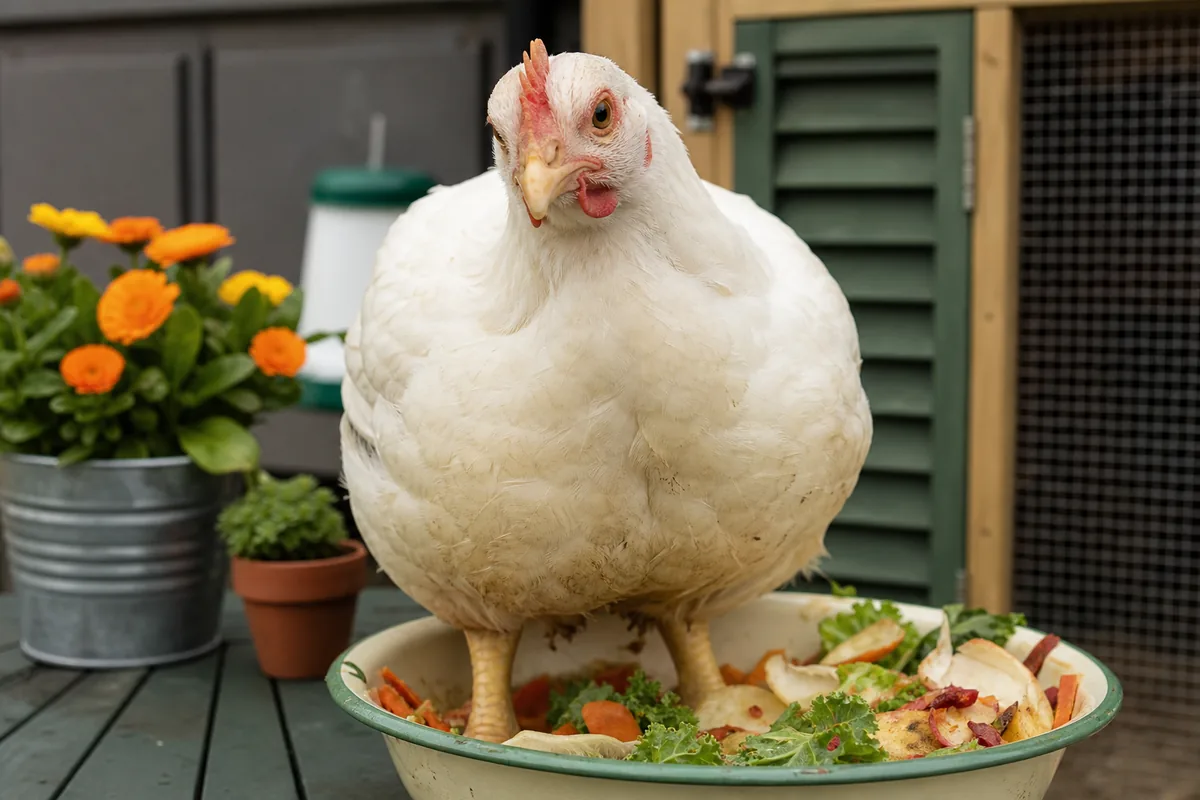
The Cornish Cross is a hybrid of the Cornish and the White Plymouth Rock. Commercial breeders refined that cross through decades of selection pressure to produce a bird that gains weight faster than any chicken in history.
The result reshaped the entire poultry industry and made chicken the cheapest meat protein in the American grocery store.
This guide covers the full picture: how fast they grow, what they eat, what kills them if you push them too long, how to manage a backyard flock humanely, and whether a slower-growing alternative makes more sense for your goals.
Key facts
- Market Weight
- 6-10 lbs
- Processing Age
- 6-8 weeks
- Eggs
- N/A: meat bird only
- Feed Conversion
- 2:1 (best of any chicken)
Cornish Cross Growth Rate: Market Weight in 6-8 Weeks
A Cornish Cross chick weighs roughly 1.5 oz at hatch. By week 6, it can reach 5-6 lbs.
By week 8, birds consistently hit 7-9 lbs live weight, with some roosters pushing 10-11 lbs. No heritage breed comes close to that timeline.
A Rhode Island Red takes 18-24 weeks to reach a processed weight of 4-5 lbs.
That speed is the entire point. Commercial operations produce a market-ready bird in 42 days.
At that scale, every additional day on feed is a cost, and the Cornish Cross eliminates more of those days than anything else available.
For backyard keepers, this means you can run multiple batches per season. Spring chicks ordered in April can be in the freezer by late May, with a second batch ready by late July.
The turnaround is faster than any vegetable garden.
The tradeoff is that growth this rapid stresses every system in the bird's body. The skeleton, heart, and lungs cannot keep pace with the muscle accumulating around them.
That biological tension creates a firm upper limit on how long you can safely keep these birds alive.
Feed Requirements: 20-22% Protein Broiler Ration
Cornish Cross birds need a broiler-specific starter feed at 20-22% protein from day one through processing. Standard layer feed at 16% protein is not sufficient.
It slows growth and can cause deficiencies that compound the breed's existing health vulnerabilities.
Feed options by phase:
- Weeks 1-3: 22% broiler starter crumble, fed free-choice around the clock
- Weeks 4-6: 20% broiler grower pellet or crumble, with feed restriction beginning at week 3-4
- Final week before processing: Withdraw feed 8-12 hours before slaughter to clear the digestive tract
Feed restriction is not optional. Starting at week 3 or 4, limit access to 12 hours on and 12 hours off per day.
Birds fed free-choice past this point gain weight faster than their cardiovascular systems can support, dramatically increasing the rate of sudden death syndrome and ascites.
Water access must remain unrestricted even during feed-off hours. Cornish Cross birds drink heavily, and any water restriction causes stress that accelerates health decline.
Place multiple waterers so dominant birds cannot block access.
For a detailed breakdown of feed options at each growth stage, see our guide to nutrition and feed selection.
| Week | Feed Type | Protein % | Schedule | Avg Weight |
|---|---|---|---|---|
| 1-2 | Broiler starter crumble | 22% | Free choice | 0.5-1 lb |
| 3-4 | Broiler grower crumble | 20% | 12 on / 12 off | 2-4 lbs |
| 5-6 | Broiler grower pellet | 20% | 12 on / 12 off | 4-7 lbs |
| 7-8 | Broiler finisher pellet | 18-20% | 12 on / 12 off | 7-10 lbs |
Health Problems: Why You Must Process by Week 8-10
This is the section most beginner guides skip, and it's the most important one for backyard keepers. The Cornish Cross was bred for one thing: rapid muscle mass accumulation.
Every other system in the body is secondary, and those systems fail under the load of that growth if the birds are not processed on schedule.
The three primary health failures that occur past week 8-10:
- Sudden death syndrome (flip over disease): The heart simply stops, usually in the heaviest, fastest-growing birds. Birds are found dead on their backs with no prior symptoms. This is a cardiovascular failure caused by the heart's inability to keep pace with body mass demands.
- Ascites (water belly): Fluid accumulates in the abdominal cavity when the right ventricle fails under pulmonary hypertension. Affected birds have a visibly swollen, fluid-filled belly and move with difficulty. There is no treatment. Affected birds must be culled.
- Leg failure: The skeleton, particularly the leg bones and joints, cannot support the bird's weight. Lameness begins as early as week 6 in fast-growing individuals. By week 10, a significant portion of an unprocessed flock will be unable to walk to feed and water.
These are not flaws that better husbandry corrects. They are built into the genetics.
The breed was optimized for a 6-8 week production window, and that window is non-negotiable.
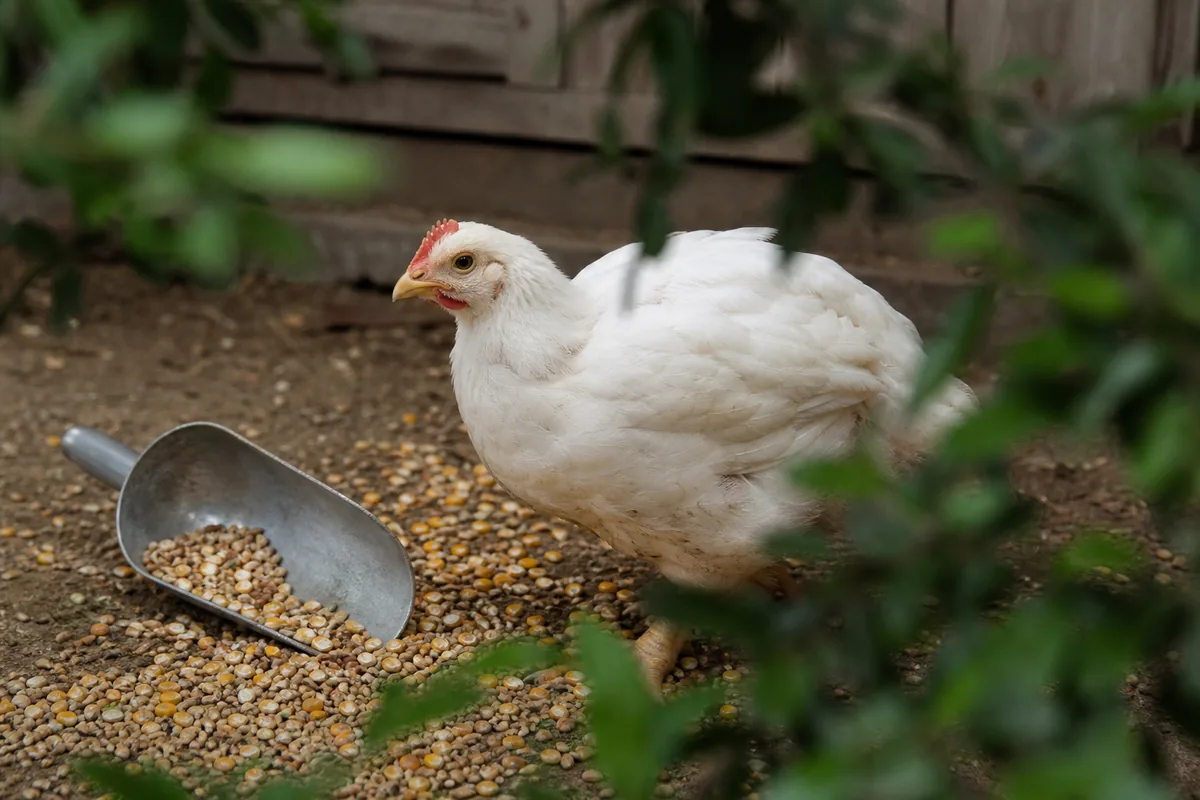
Housing and Space Requirements
Broiler management differs from laying hen management in almost every respect. Cornish Cross birds are largely sedentary, particularly after week 4.
They will not roost, rarely scratch, and spend most of their time near the feeder and waterer. Housing design should reflect that behavior.
Basic space and setup requirements:
- Brooder (weeks 1-3): 0.5 sq ft per chick, temperature starting at 95°F and dropping 5°F per week
- Grow-out pen (weeks 4-8): Minimum 1.5-2 sq ft per bird indoors, or 10+ sq ft per bird on pasture
- Bedding: Deep dry litter (4-6 inches of pine shavings) changed or turned frequently. Cornish Cross birds produce significantly more manure per bird than heritage breeds due to feed volume and growth rate. Wet litter causes hock burns and increases respiratory disease.
- Ventilation: Critical from week 1. These birds run hot. Poor airflow accelerates ascites development.
- Feeders and waterers: Place at chest height as birds grow. Low feeders cause neck strain and wet litter from spillage.
Pasture-raised Cornish Cross is possible and produces better-flavored meat with more yellow fat from grass pigments. Move a portable pen (chicken tractor) daily to fresh ground.
The birds will graze more than confinement-raised birds but still far less than heritage breeds. Count on them to follow the feeder rather than forage actively.
Our coop setup guide covers the ventilation and litter management basics that apply to broiler grow-out pens as well as permanent laying flocks.
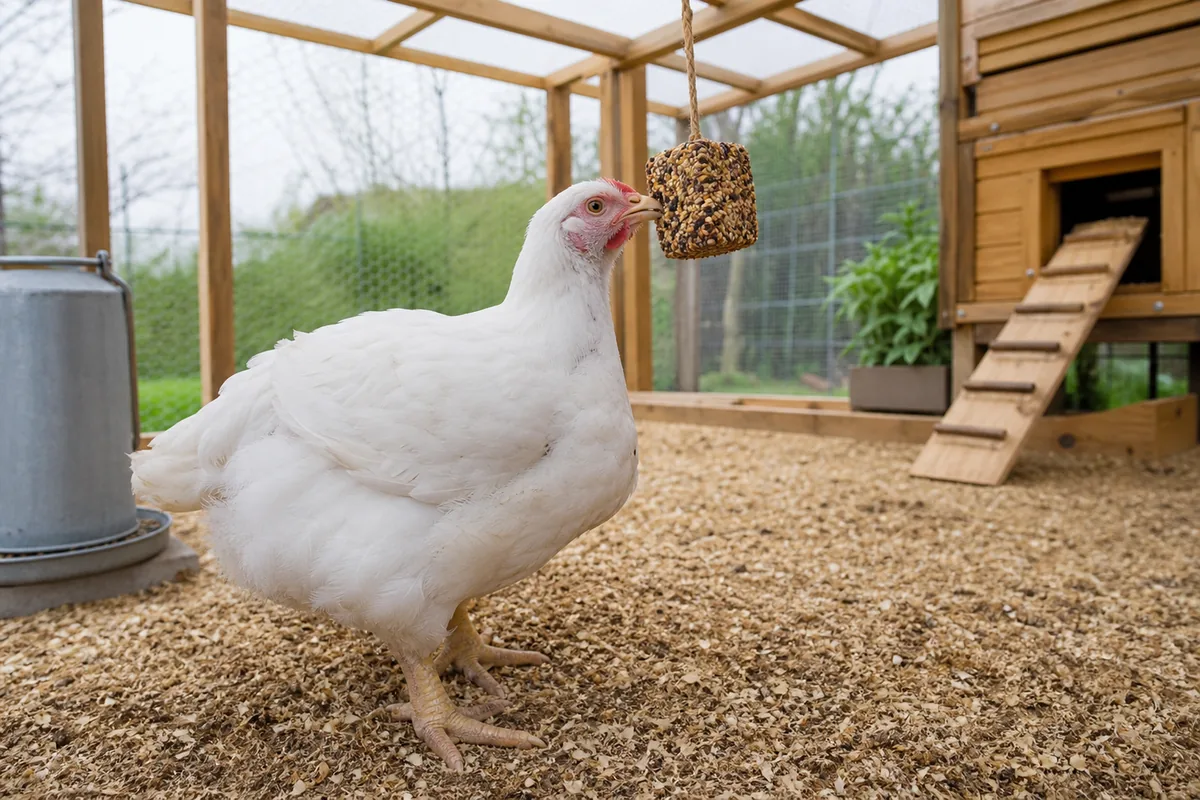
Vs Heritage Breeds: Feed Conversion and Meat Quality Compared
The Cornish Cross wins on every efficiency metric. No heritage breed converts feed to meat at a 2:1 ratio.
Most heritage breeds run 3:1 to 4:1 and take three to five times longer to reach a similar carcass weight.
| Breed | Processing Age | Live Weight | Feed Conversion | Meat Texture |
|---|---|---|---|---|
| Cornish Cross | 6-8 weeks | 7-10 lbs | 2:1 | Mild, tender, commercial |
| Freedom Ranger | 9-11 weeks | 5-6 lbs | 2.5-3:1 | Firmer, more flavor |
| Plymouth Rock | 16-20 weeks | 5-7 lbs | 3.5-4:1 | Firm, distinctly flavored |
| Rhode Island Red | 18-24 weeks | 4-5 lbs | 3.5-4:1 | Lean, firm, flavorful |
Where heritage breeds win is flavor and texture. A pasture-raised Plymouth Rock processed at 20 weeks has muscle fiber developed through months of actual movement.
The meat has a depth of flavor that a 6-week Cornish Cross raised in a barn cannot replicate. If you want something closer to that profile but faster than true heritage breeds, see our guide to a heritage meat option.
The right choice depends on your goal. If you want the most meat for the least feed cost in the shortest time, Cornish Cross is the answer.
If you want meat quality over efficiency and are willing to spend more on feed over more weeks, heritage breeds or the dual-purpose alternatives to broilers are worth considering.
Processing: Timing, Weight Targets, and Carcass Yield
Process at 6-8 weeks for the best combination of weight, tenderness, and manageability. Birds processed at 6 weeks yield a 4-5 lb dressed carcass.
Birds at 8 weeks yield 5-7 lbs dressed. Past week 8, weight continues to accumulate but health decline accelerates and the logistical difficulty of processing a 10-12 lb bird increases.
Carcass yield on a Cornish Cross runs approximately 70-75% of live weight after full processing. A 9 lb live bird yields roughly a 6.3-6.8 lb whole dressed carcass.
That ratio is significantly better than heritage breeds, which typically yield 65-70% due to their more active muscle development and smaller breast mass.
Processing checklist:
- Withhold feed 8-12 hours before processing. Water access stays open until 2 hours before.
- Chill birds in ice water immediately after evisceration. Target internal temp below 40°F within 4 hours.
- Rest carcasses in the refrigerator 24-48 hours before freezing. This allows rigor mortis to pass and improves texture significantly.
- Freeze in airtight vacuum bags if possible. Properly packed Cornish Cross will hold quality for 9-12 months at 0°F.
White feathers are a deliberate trait selection. Commercial processors chose Cornish Cross partly because white feathers leave no visible dark pin feather stubs on the skin after plucking, which improves shelf appearance.
For backyard processors, this means a cleaner-looking bird with less hand-finishing work.
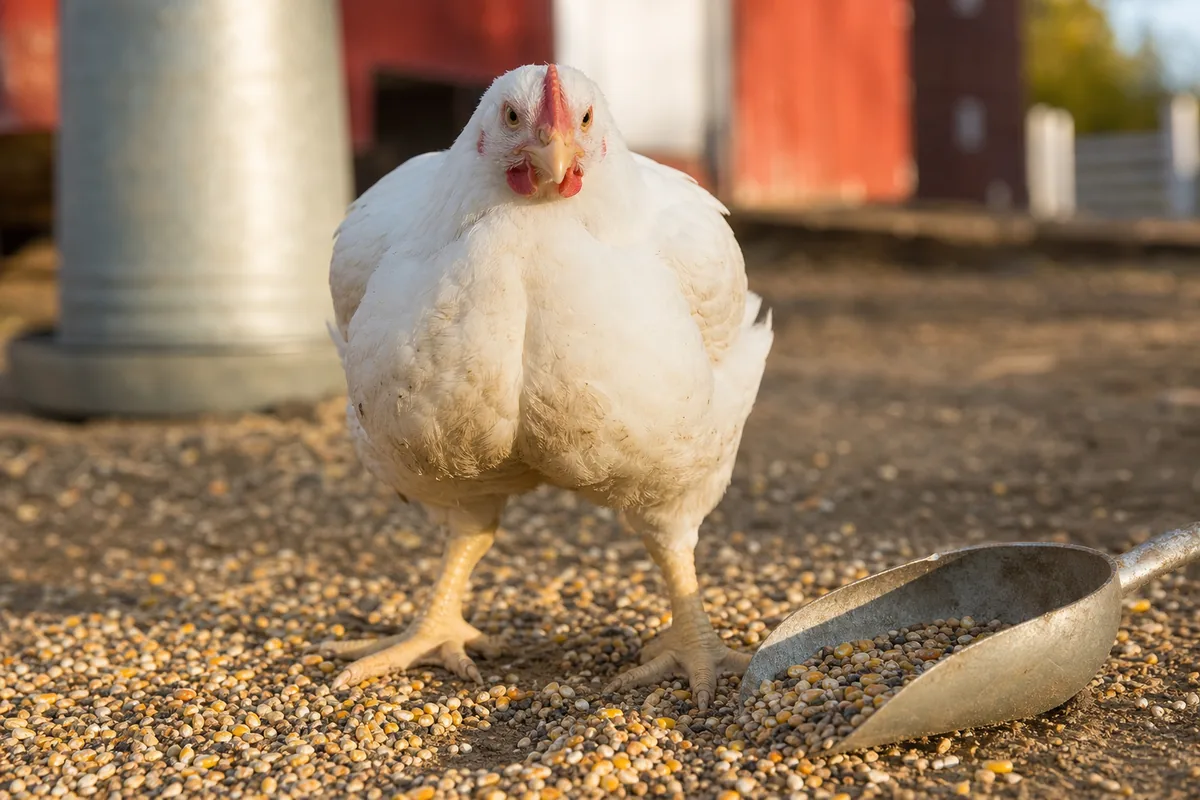
Ethical Considerations and Alternatives
The Cornish Cross sits at the center of ongoing debate in the backyard poultry community. The growth rate that makes the breed so efficient is also the source of its welfare problems.
Birds bred to gain this fast will always face cardiovascular and skeletal stress. That is not a husbandry failure.
It is a genetic outcome of the selection pressure that created the breed.
Good management narrows the gap. Feed restriction, adequate space, proper ventilation, and strict processing schedules dramatically reduce suffering compared to commercial confinement.
A well-managed backyard flock of Cornish Cross lives a better life than any commercially raised bird, even within the same genetic limitations.
If the ethical dimension is a dealbreaker, the Freedom Ranger is the most practical alternative. It is a slower-growing red-feathered hybrid that takes 9-11 weeks to reach market weight, forages more actively, and does not carry the same cardiovascular failure rates.
Meat flavor is widely considered superior. Feed cost per pound of gain is higher, and total carcass weight is lower.
Keepers who want a heritage breed with genuine table value alongside egg production should also read our Orpington guide, which covers one of the better dual-purpose options with a flavor profile that competes with slow-grown hybrids.
For keepers who want the dual-purpose option, a the Rhode Island Red gives you eggs from the hens and meat from the culled males, though the meat yield per bird is significantly less.