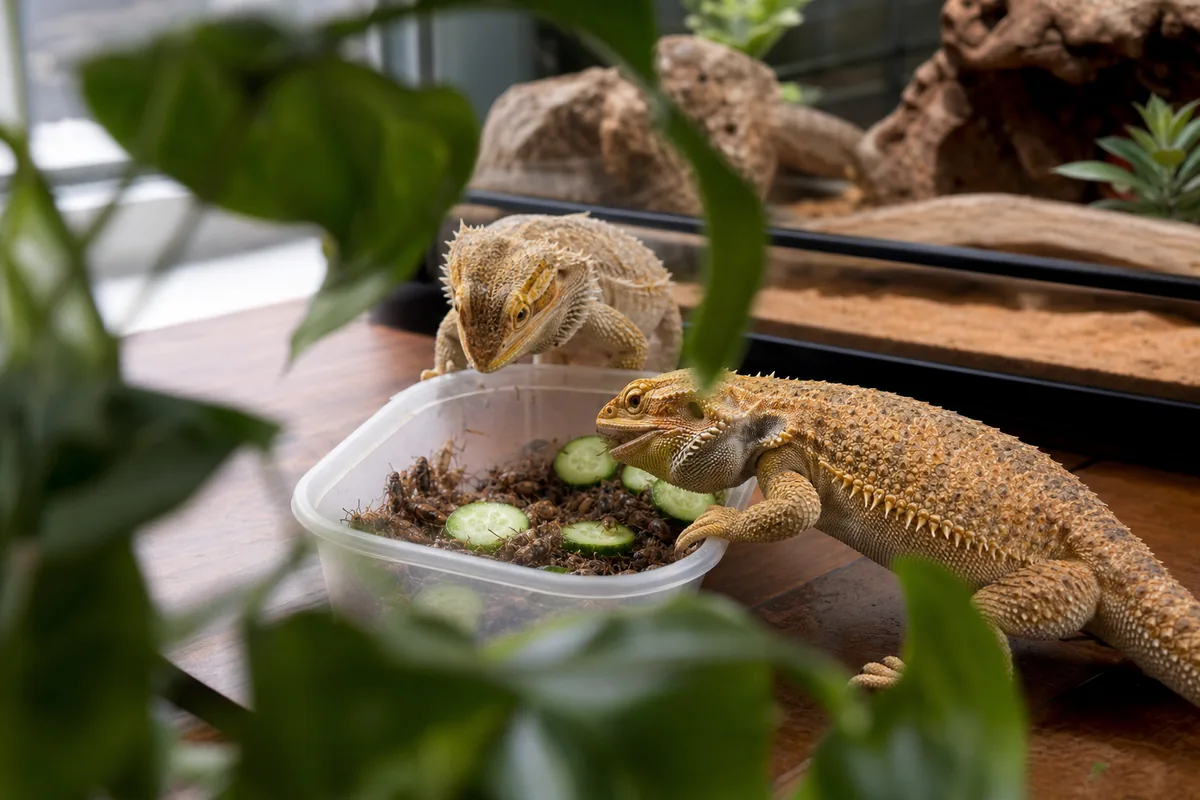
Cucumber passes the safety test easily for bearded dragon feeding. No citric acid, no oxalates, no harmful compounds , a clean profile that holds across most of the reptile species we cover.
What it lacks is nutritional substance: a 100g portion delivers less than 16 calories and negligible vitamins or minerals.
We offer cucumber to our own dragons during hot summer months as a hydration supplement. It is a tool with a specific job, not a staple green.
Cucumber for Bearded Dragons
- Flesh and inner seeds (softSafe
- small seeds pose no hazard)Safe
- cucumber skin is edible but some dragons reject the textureSafe
- NoneUnsafe
- the waxy coating on store-bought cucumbers may contain pesticide residueUnsafe
- so wash thoroughly or peelUnsafe
Prep: Wash thoroughly, peel if not organic, slice into rounds and quarter each round into bite-sized pieces Freq: Once or twice weekly as a hydration supplement; not a primary salad green Amount: 2-3 bite-sized pieces per feeding for adults; 1-2 pieces for juveniles
Cucumber Nutrition: Low Calories, Low Everything
A 100g cucumber serving contains 15.5 calories, 0.65g protein, 3.63g carbohydrates, and 0.11g fat. Vitamin and mineral content runs similarly sparse: 2.8mg vitamin C and 16mg calcium per 100g.
The calcium-to-phosphorus ratio is 1.3:1, which is below the ideal 2:1 but not as inverted as many other vegetables. Combined with the tiny amounts involved in a normal serving, Ca:P imbalance from cucumber is not a practical concern.
| Food | Calcium (mg) | Vitamin A (IU) | Protein (g) | Ca:P Ratio |
|---|---|---|---|---|
| Cucumber | 16 | 105 | 0.65 | 1.3:1 |
| Collard greens | 232 | 5019 | 3.02 | 14.5:1 |
| Mustard greens | 115 | 3024 | 2.86 | 2.4:1 |
| Dandelion greens | 187 | 10161 | 2.70 | 2.8:1 |
The table makes the comparison clear.
Cucumber belongs in the hydration column, not the nutrition column.
Hydration-forward lettuces like romaine fall into the same tier , useful for moisture, but weak on calcium and vitamins.
Collard greens deliver 14 times more calcium in the same serving size.
The Skin: Peel or Leave It?
Cucumber skin is physically safe for bearded dragons. The texture is slightly tougher, and some dragons chew it fine while others reject it outright.
The real concern is surface pesticide residue on conventionally grown cucumbers.
The waxy coating on store cucumbers often contains a food-grade wax applied after harvest, sometimes over pesticide residue. Washing with plain water removes surface debris but not wax-embedded residues.
Peeling is the cleaner option for non-organic cucumbers.
- Organic cucumber: skin safe to leave on after thorough washing
- Conventional cucumber: peel before feeding to eliminate wax and residue risk
- English cucumber: thinner skin, often unwaxed, generally safer unpeeled after washing
- Mini cucumbers: good size for single servings, low waste
How Much Is Too Much?
The primary overfeeding risk with cucumber is the water volume. Bearded dragons are desert animals adapted to low moisture intake.
Their kidneys process concentrated waste, and flooding the system with 96% water food causes runny stools and electrolyte dilution.
Two or three pieces twice a week is the ceiling. Dragons that fill up on low-nutrient cucumber will eat less of their calcium-rich staple greens, creating a nutritional gap over time.
Watermelon is even higher in water content at 92% and carries similar overfeeding risks , both belong in the once-or-twice-monthly treat category rather than weekly use. Spinach carries entirely different concerns: the oxalates in spinach bind calcium in the gut, suppressing absorption in a way that makes it a more serious issue despite its apparent nutritional value.
Serving Cucumber: Practical Tips
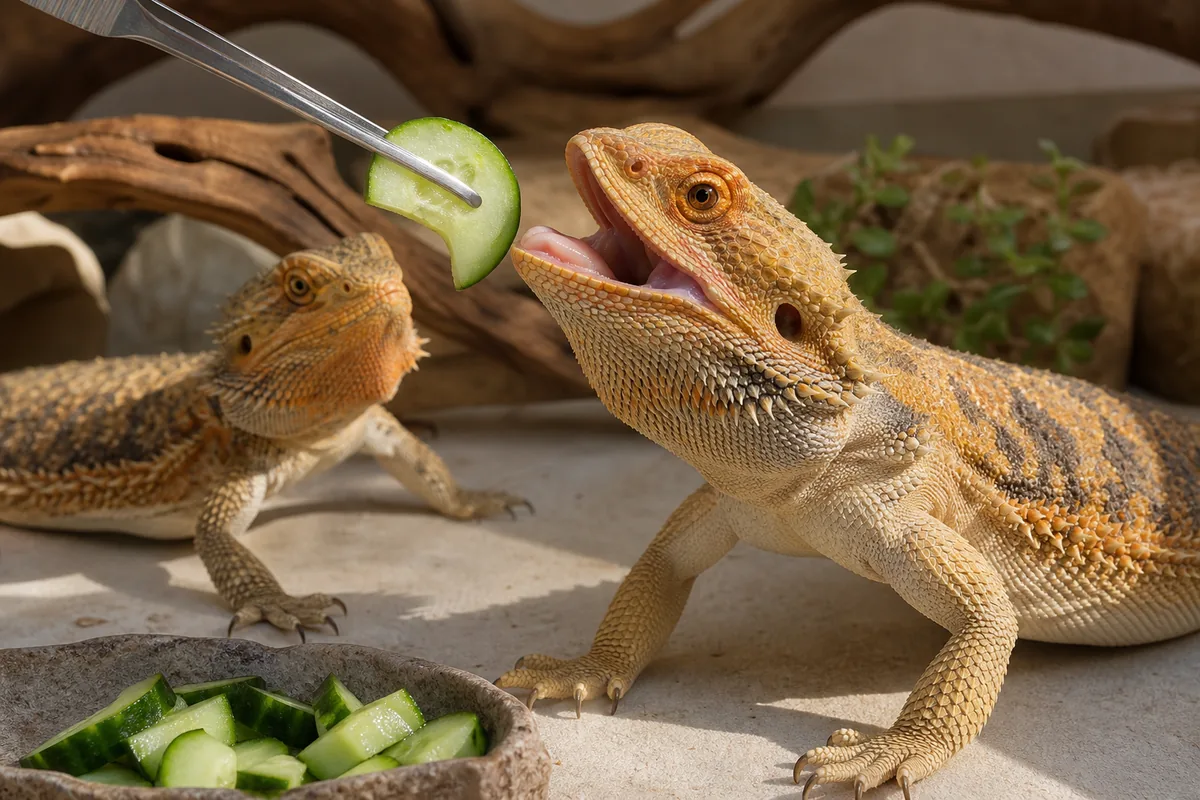
Slice cucumber into rounds about 5mm thick, then quarter each round. The quarter-round shape is easier for bearded dragons to bite and chew than long strips, which can be swallowed without proper chewing and cause impaction in juveniles.
When you want a treat with genuine nutritional payoff at the same frequency, strawberries give your dragon meaningful vitamins without bumping the water-loading risk. For a crunchy option that earns its place in the salad bowl, carrots contribute calcium and vitamin A that cucumber cannot match.
Sources and references
- Feeding the Captive Bearded Dragon: Nutritional Assessmentof Herpetological Medicine and Surgery, 2019
- Vegetable Nutritional Data for Reptile DietsUSDA FoodData Central, 2023
- Reptile Nutrition and Husbandry Guidelinesof California Davis School of Veterinary Medicine, 2021