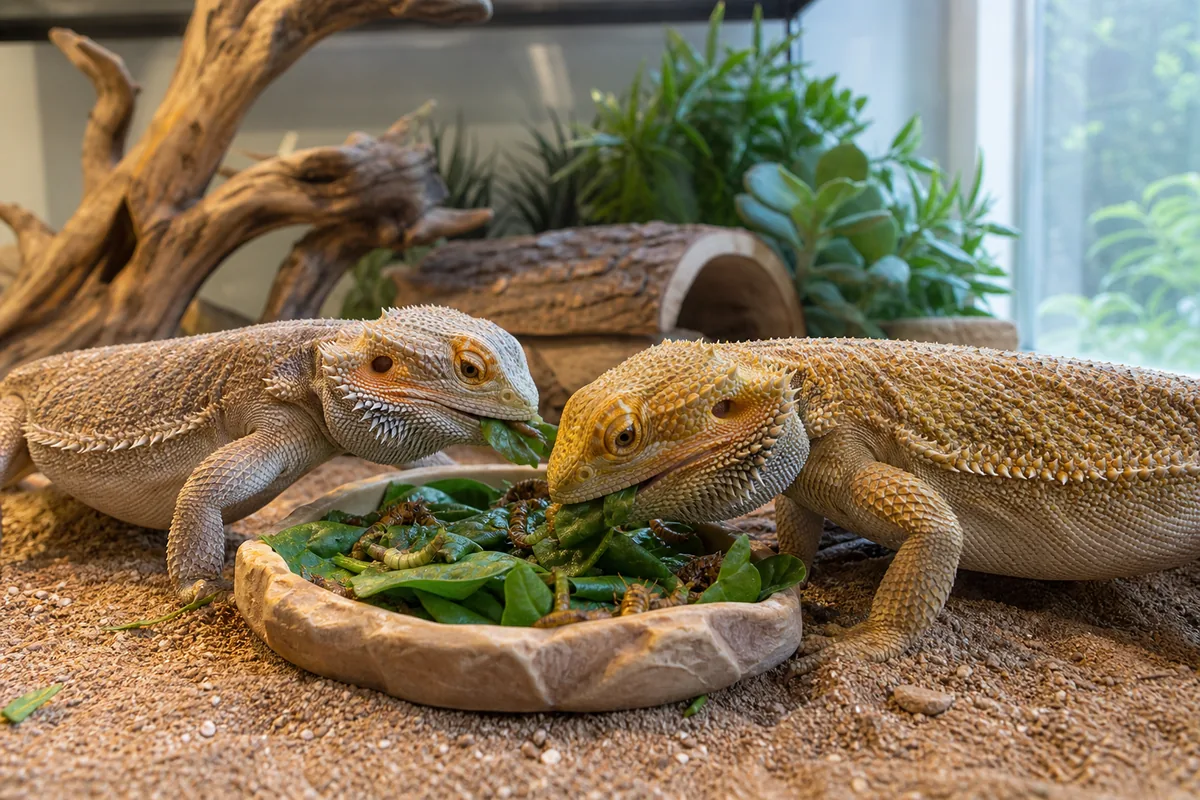
Spinach looks like an ideal bearded dragon green: dark, leafy, widely available. The reality is that reptile nutrition research consistently flags spinach as one of the riskier greens for bearded dragons due to its oxalate content.
The issue is not immediate toxicity.
A small amount of spinach will not harm your dragon today.
The problem is cumulative, and the damage shows up weeks or months later as metabolic bone disease.
Spinach for Bearded Dragons
- fresh leaves in very small amountsSafe
- none acutely toxicUnsafe
- but oxalates cause long-term calcium depletionUnsafe
Prep: Wash thoroughly. Chop or tear into small pieces. Mix with low-oxalate greens like collard greens or mustard greens. Freq: Once per month at most, as a minor mix-in only Amount: A few leaves mixed into a larger salad of safer greens
Spinach Has 970mg of Oxalates per 100g: Why That Number Matters
Oxalic acid binds to calcium in the gut to form calcium oxalate crystals. These crystals cannot be absorbed by the body and pass out as waste.
The calcium that binds to oxalate is permanently lost before it reaches the bloodstream.
Spinach contains roughly 970mg of oxalates per 100g, making it one of the highest-oxalate vegetables commonly available. For context, collard greens contain around 74mg per 100g.
| Green | Oxalates | Feeding Suitability |
|---|---|---|
| Collard greens | 74mg | Excellent staple |
| Mustard greens | 128mg | Good staple |
| Turnip greens | 50mg | Excellent staple |
| Dandelion greens | 20mg | Excellent staple |
| Spinach | 970mg | Avoid or limit strictly |
Spinach also has poor calcium-to-phosphorus ratio. It contains 99mg calcium per 100g, which sounds decent until you factor in that most of it binds to oxalates before absorption.
Is Any Amount of Spinach Safe for Bearded Dragons?
Very small amounts, very rarely, are unlikely to cause measurable harm. The concern is the keeper who feeds spinach daily or weekly because it is cheap and available.
A few leaves mixed into a salad of low-oxalate staple greens once a month will not put a healthy adult dragon at risk. The key word is "mixed in," not served as the primary green.
- Once per month, small amount: acceptable risk level for healthy adults
- Weekly feeding: cumulative oxalate load begins to affect calcium absorption
- Daily staple: high risk of metabolic bone disease within months
- Juveniles under 18 months: avoid entirely, calcium demand is too high
Better Greens to Feed Instead of Spinach
The good news is that bearded dragons have many excellent staple greens to choose from. Variety is important since different greens provide different micronutrients.
Rotating through three or four low-oxalate greens week to week gives your dragon better nutrition than spinach provides.
Romaine and green leaf lettuce are acceptable as minor salad additions.
For fruit variety on the same feeding day, safe options with low oxalate interaction include strawberries, blueberries, apples, watermelon, grapes, and bananas in their respective limited amounts.
Vegetables like carrots, tomatoes, and broccoli are far better daily options than spinach.
- Collard greens: high calcium, low oxalates, excellent staple 3-4 times per week
- Mustard greens: good calcium, low oxalates, slightly spicy flavor dragons often enjoy
- Dandelion greens: high calcium, very low oxalates, often available wild-harvested
- Turnip greens: low oxalates, good vitamin A, rotate with collards
- Endive/escarole: low oxalates, mild flavor, good variety option
Signs That High-Oxalate Diet Is Harming Your Dragon
The effects of chronic calcium depletion from oxalate-rich diets develop slowly. By the time visible symptoms appear, the damage is already significant.
Early intervention at the first signs prevents the most serious outcomes. Soft bones and limb tremors are the clearest indicators that calcium metabolism is compromised.
- Soft or rubbery jaw: one of the first MBD signs keepers notice
- Tremors or twitching: calcium deficiency affecting nerve function
- Difficulty walking or climbing: weakened bones reducing limb strength
- Swollen limbs: bone deformation from calcium resorption
- Reduced activity: chronic pain from soft bones makes movement uncomfortable
1.
Oxalate content of selected vegetables, fruits, nuts, seeds and starches
Journal of Food Composition and Analysis, 2021
Journal
2.
Metabolic bone disease in reptiles: pathophysiology and nutritional management
Veterinary Clinics of North America: Exotic Animal Practice, 2014
Journal
3.
Bearded dragon nutrition and diet
VCA Animal Hospitals
Expert