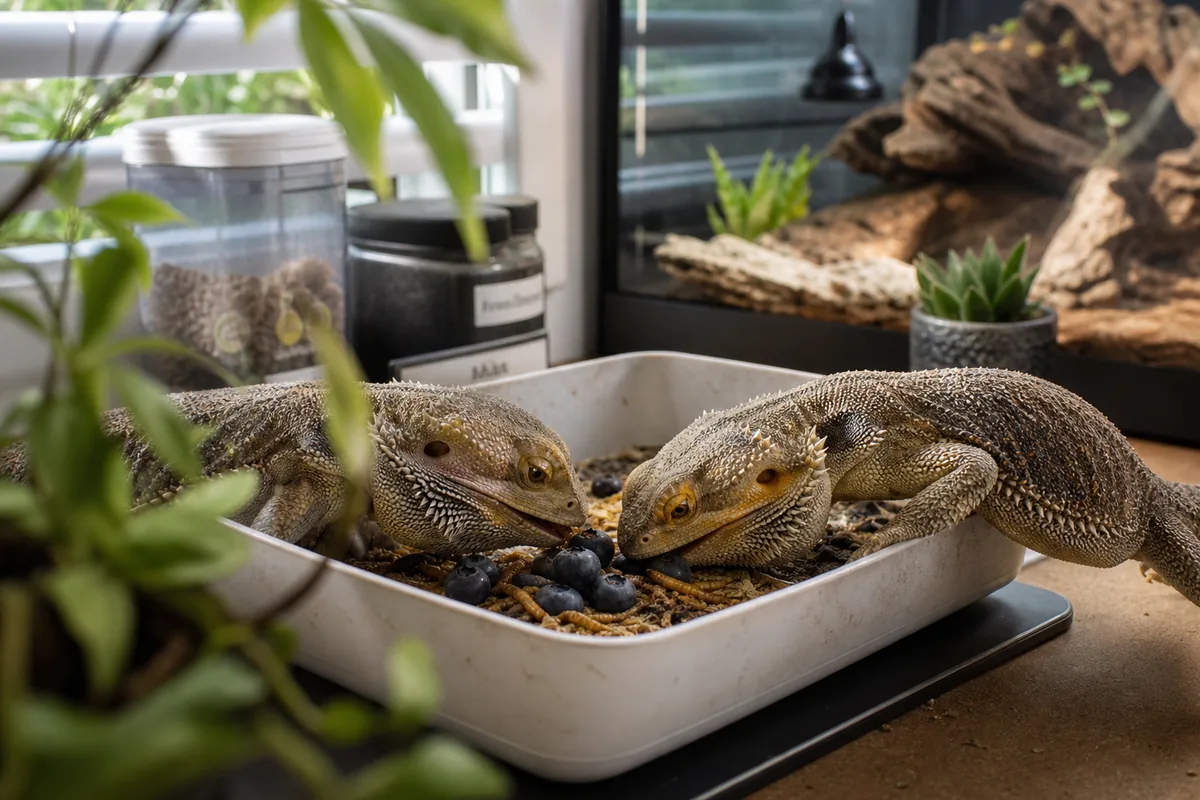
Blueberries are among the better fruit choices for bearded dragons when ranked against other common options. The reptile feeding community generally considers them a lower-risk treat because oxalate levels are low and the antioxidant content is truly useful.
The limiting factor is sugar and calcium balance, not toxicity. Offer them rarely and your dragon benefits.
Offer them freely and the sugar accumulates.
Blueberries for Bearded Dragons
- whole flesh and skinSafe
- noneUnsafe
Prep: Wash thoroughly. Halve or quarter berries for juveniles and smaller adults. Full-grown adults may eat small blueberries whole. Freq: Once or twice per month Amount: 3-5 blueberries per feeding
Blueberry Nutrition: Antioxidants That Actually Help Bearded Dragons
Blueberries contain anthocyanins, the dark blue pigments that act as antioxidants in the body. In reptiles, antioxidants support immune function and reduce oxidative stress from UV exposure, which is relevant since bearded dragons live under intense basking lighting.
The sugar content of 10g per 100g sits in the middle of the fruit range: lower than grapes (16g) and bananas (12g) but higher than strawberries (4.9g).
| Nutrient | Amount | Relevance to Beardies |
|---|---|---|
| Sugar | 10g | Moderate. limit frequency |
| Calcium | 6mg | Low |
| Phosphorus | 12mg | Low, Ca:P ratio 0.5:1 |
| Vitamin C | 9.7mg | Moderate benefit |
| Vitamin K | 19.3mcg | Good for bone metabolism |
| Anthocyanins | 163mg | Antioxidant support |
| Oxalates | ~4mg | Very low. not a concern |
The low oxalate content is one of blueberries' genuine advantages. Unlike spinach or beet greens, blueberries will not interfere significantly with calcium absorption even when eaten occasionally.
Comparing blueberries to grapes on this measure: grapes contain roughly 5mg oxalates per 100g and 16g sugar, whereas blueberries have 4mg oxalates and only 10g sugar. Our grapes for bearded dragons guide explains why blueberries are the better frequent-treat choice.
How to Prepare Blueberries for Bearded Dragons
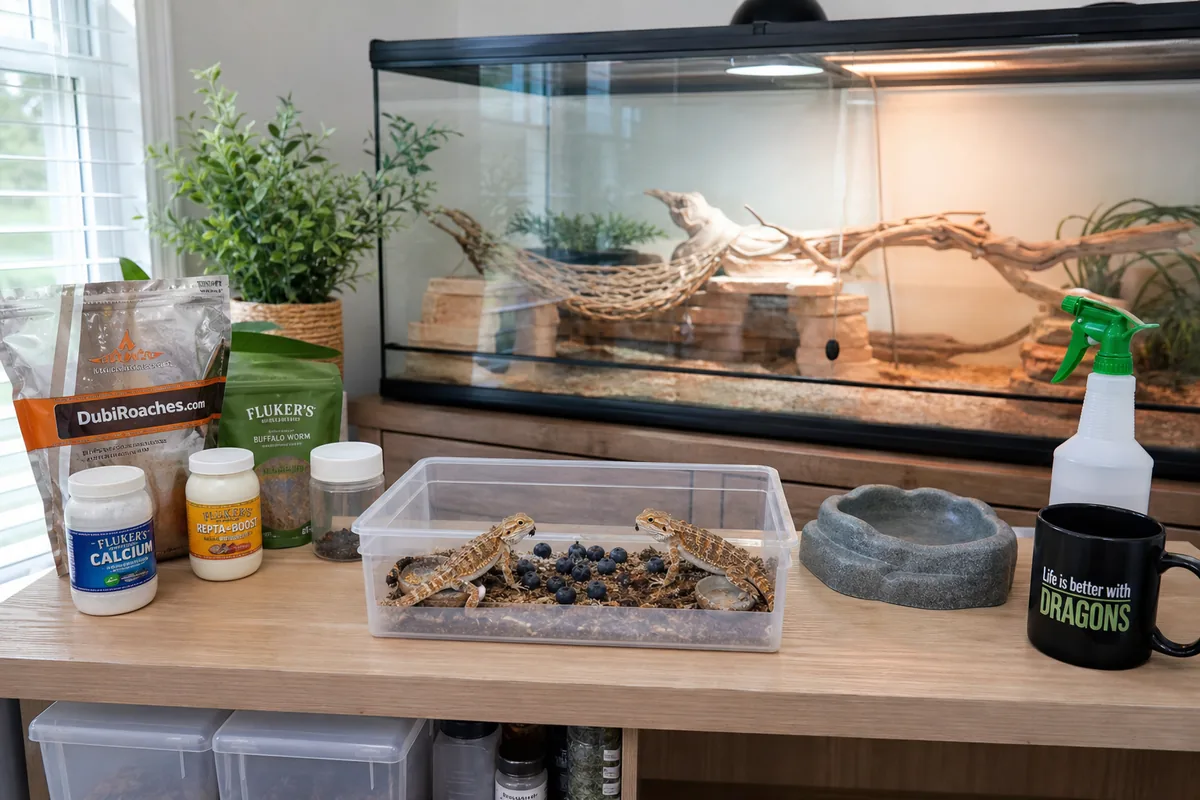
Most blueberries are small enough that adult bearded dragons can handle them whole. The concern is more about size relative to the dragon than the berry itself.
For juvenile dragons or dragons with a history of impaction, halve or quarter berries to be safe. The standard sizing rule applies: no wider than the gap between the eyes.
A proper enclosure environment also supports how well your dragon metabolizes treats. The bearded dragon tank setup guide covers the basking temperatures needed for proper digestion, which affects how well any food, including fruit, is processed.
How Often Should Bearded Dragons Eat Blueberries?
Once or twice per month is the right ceiling. Despite being a lower-risk fruit, the calcium-to-phosphorus ratio of 0.5:1 still means phosphorus exceeds calcium.
Regular fruit feeding at any frequency risks developing a sugar preference that leads dragons to refuse their staple greens. Treats work best when they stay truly rare.
- Adults (18+ months): 3-5 blueberries, once or twice per month
- Juveniles (under 18 months): very occasionally, 1-2 halved berries at most
- Dragons refusing greens: eliminate all fruit for 3-4 weeks before reintroducing
- Overweight dragons: skip fruit treats until healthy weight is restored
Strawberries are the other lower-risk fruit worth comparing to blueberries. Our strawberries for bearded dragons guide shows that strawberries have slightly less sugar (4.9g vs 10g) but a similar phosphorus surplus, making both acceptable on a rotating monthly schedule.
Blueberries vs. Other Common Bearded Dragon Fruits
Comparing blueberries to other common fruit options shows why they rank as the safer choice when a fruit treat is wanted.
- Blueberries: 10g sugar, very low oxalates, vitamin K present
- Strawberries: 4.9g sugar (lower), but slightly higher oxalates
- Grapes: 16g sugar (much higher), moderate oxalates
- Bananas: 12g sugar, very poor Ca:P ratio (0.3:1)
- Watermelon: 6g sugar (lower), but 92% water causes loose stools
Mango is worth adding to this comparison: our mango for bearded dragons guide shows it delivers real vitamin A (1262 IU per 100g) that blueberries lack, making mango a more nutritionally purposeful treat when offered twice weekly.
Signs of Blueberry Overfeeding
Blueberries leave visible evidence in the enclosure when overfed. The dark juice stains surfaces and produces distinctly colored stools.
Dark or purple-tinged stools after a blueberry feeding are normal and not a health concern. Loose, frequent, or strong-smelling stools indicate excess sugar intake.
- Purple-tinged stools: normal after blueberries, no action needed
- Loose or watery stools: too many berries, reduce portion
- Refusal to eat greens next day: sugar preference developing, hold off on all fruit
- Visible bloating: fermentation from excess fruit sugar, eliminate fruit for 2-3 weeks
Keepers new to reptile care can find a solid starting point in the best reptiles for beginners guide, which explains why bearded dragons reward keepers who take time to learn their dietary needs before the first feeding. The full bearded dragon care guide puts blueberries into the broader treat framework within the complete weekly feeding schedule.
Sources and references
- Anthocyanins and their role in oxidative stress management in reptilesComparative Biochemistry and Physiology, 2018
- USDA FoodData Central: Blueberries, rawUSDA Agricultural Research Service, 2024
- Nutritional management of omnivorous reptilesVCA Animal Hospitals