Bearded Dragon Tank Setup: What You Need Before Day One
The bearded dragon tank setup process has a specific order, and skipping steps costs animals their lives.
Before your bearded dragon arrives, the enclosure must be running at stable temps for at least 48 hours.
Bearded dragons sit at the more demanding end of the reptile keeper spectrum, and an untested enclosure is the most common reason first-time setups fail.
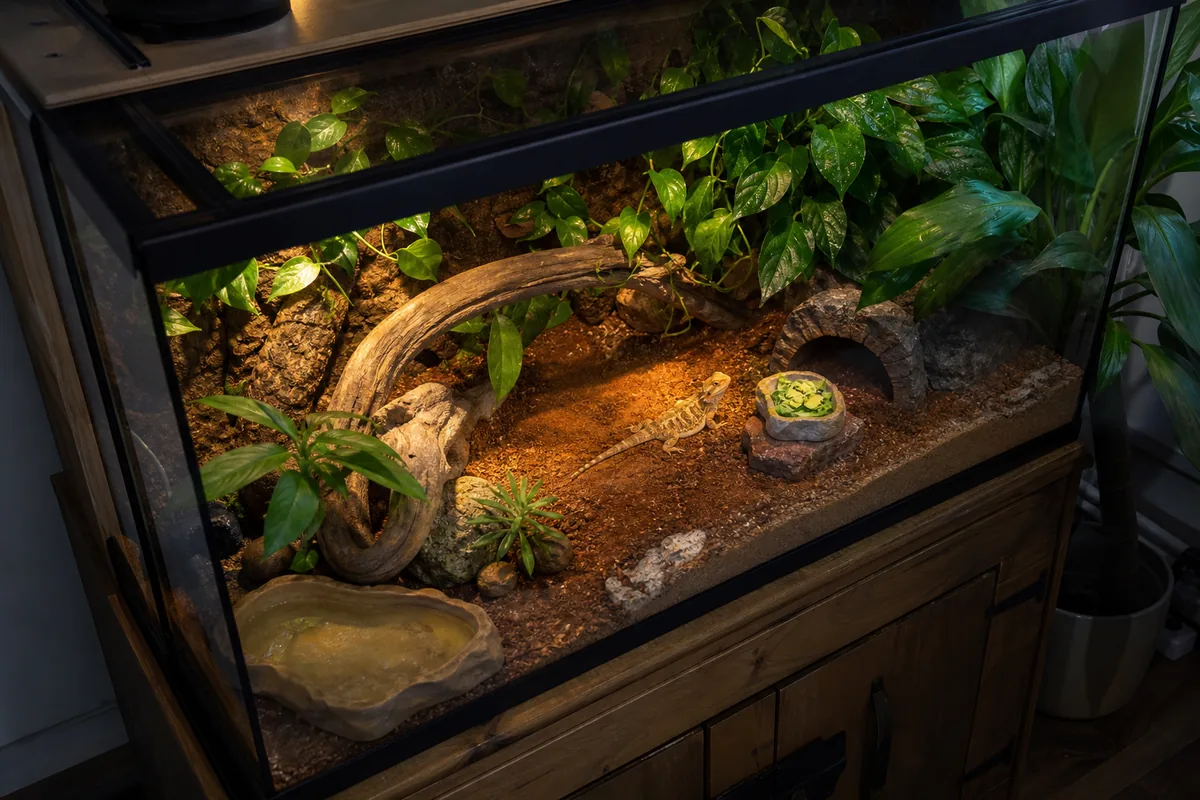
Adult beardies need a minimum 4x2x2 foot enclosure, which works out to roughly 120 gallons of space. Juveniles can start in a 40-gallon breeder, but they outgrow it within 6-8 months.
Temperature Requirements: 105°F Basking Spot Is Non-Negotiable
Bearded dragons are from the arid scrublands of Australia, where surface temps regularly exceed 130°F. They thermoregulate by moving between zones, so your enclosure must give them real choices.
The full species care profile covers diet, handling, and health signs in depth, but inside the enclosure, the temperature gradient is the single most critical variable to nail first.
The basking spot surface needs to read 105-115°F measured with an infrared temperature gun aimed at the exact spot the dragon sits. The ambient warm side stays at 90-95°F, and the cool side drops to 80-85°F.
- Basking surface: 105-115°F (measure with IR gun, not ambient probe)
- Warm ambient: 90-95°F at mid-enclosure height
- Cool side: 80-85°F floor level
- Nighttime low: 65-75°F minimum (no red or blue "night" bulbs needed above 65°F)
UVB Lighting for Bearded Dragons: The T5 HO 12% Rule
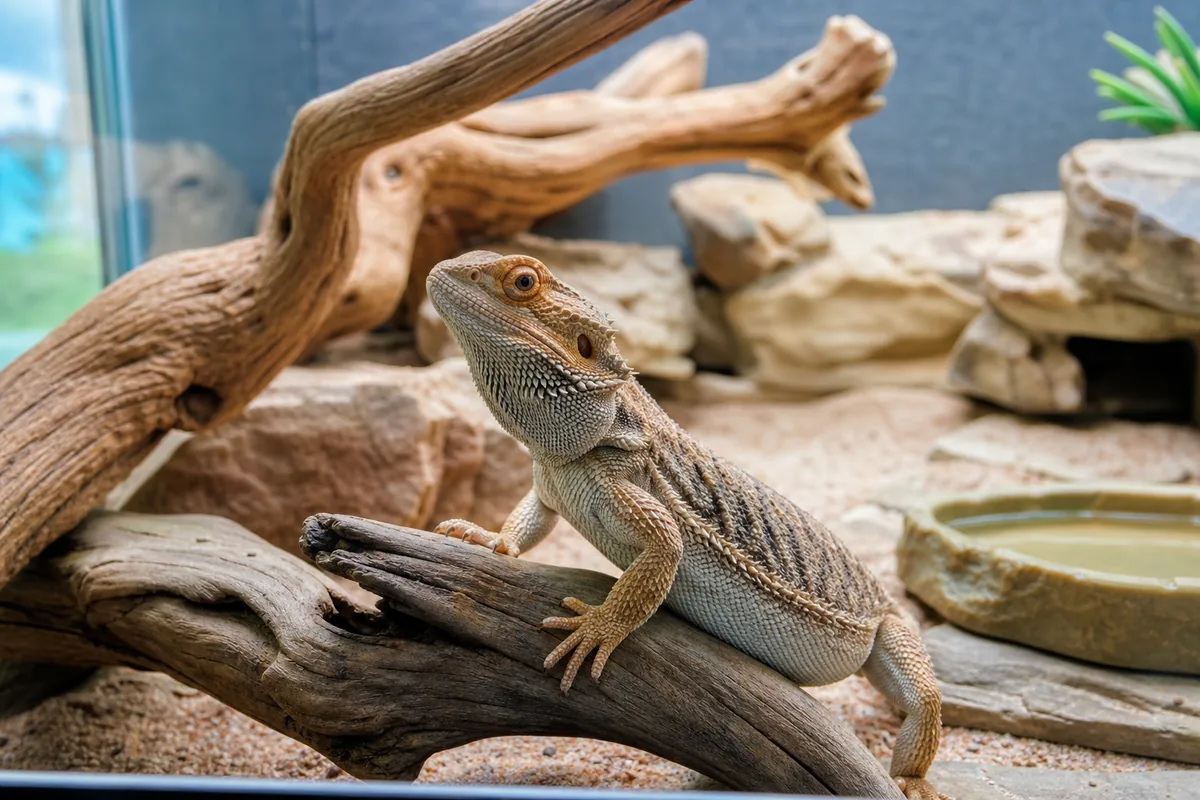
Bearded dragons are diurnal baskers that require intense UVB exposure for D3 synthesis and calcium metabolism. A T5 HO 12% bulb mounted inside the enclosure with a reflector hood is the current gold standard, and the best UVB bulbs for bearded dragons have been tested with published UVI data so you can verify output before buying.
- Position the EnclosurePlace the enclosure away from windows (temperature swings) and HVAC vents. A stable room temperature of 68-75°F makes maintaining gradients much easier.
- Install the UVB HoodMount the T5 HO fixture inside the screen top or remove the screen section beneath it. Screen mesh blocks up to 40% of UVB output. The bulb sits 8-12 inches above the basking platform.
- Set Up the Basking ZonePosition a flat rock or cork bark platform directly under the basking lamp. The platform height should put the dragon 10-14 inches below the basking bulb for adult-sized animals.
- Install the ThermostatConnect the basking lamp to a dimmer thermostat. Set the probe on the basking surface. Run the enclosure empty for 24 hours and confirm surface temp with an IR gun.
- Add Substrate and HidesLay ceramic tile or natural slate across the floor. Tile holds heat, wears down nails, and is easy to sanitize. Add one hide on the warm side and one on the cool side.
- Set the Light CycleProgram lights on a timer: 12-14 hours on in summer, 10-12 hours in winter. Consistent photoperiod regulates appetite and breeding cycles.
- Run a 48-Hour Test CycleRecord temps at basking spot, warm ambient, and cool side at morning, midday, and evening. Confirm all three zones hold within spec before adding your animal.
Substrate for Bearded Dragons: Skip the Loose Stuff for Juveniles
Loose substrates like sand, walnut shell, and reptile "bark" cause impaction when ingested, which is a digestive blockage that kills juveniles quickly. Stick to solid surfaces until the dragon is at least 12 inches long.
Ceramic tile in a warm sandstone or terracotta tone is our top recommendation. It conducts ambient warmth, files down nails naturally, and cleans with diluted F10 disinfectant in under five minutes.
- Ceramic tile: Best overall, easy to clean, files nails, holds warmth
- Natural slate: Excellent heat retention, aesthetically natural, heavy
- Textured reptile mat: Lightweight, washable, good for hospital tanks
- Excavator clay (adults only): Allows burrowing, hardens when dry, zero impaction risk
Bearded Dragon Setup Cost Breakdown
Budget for the setup before you buy the animal.
Cutting corners on enclosure size or lighting causes chronic health problems that cost far more in vet bills.
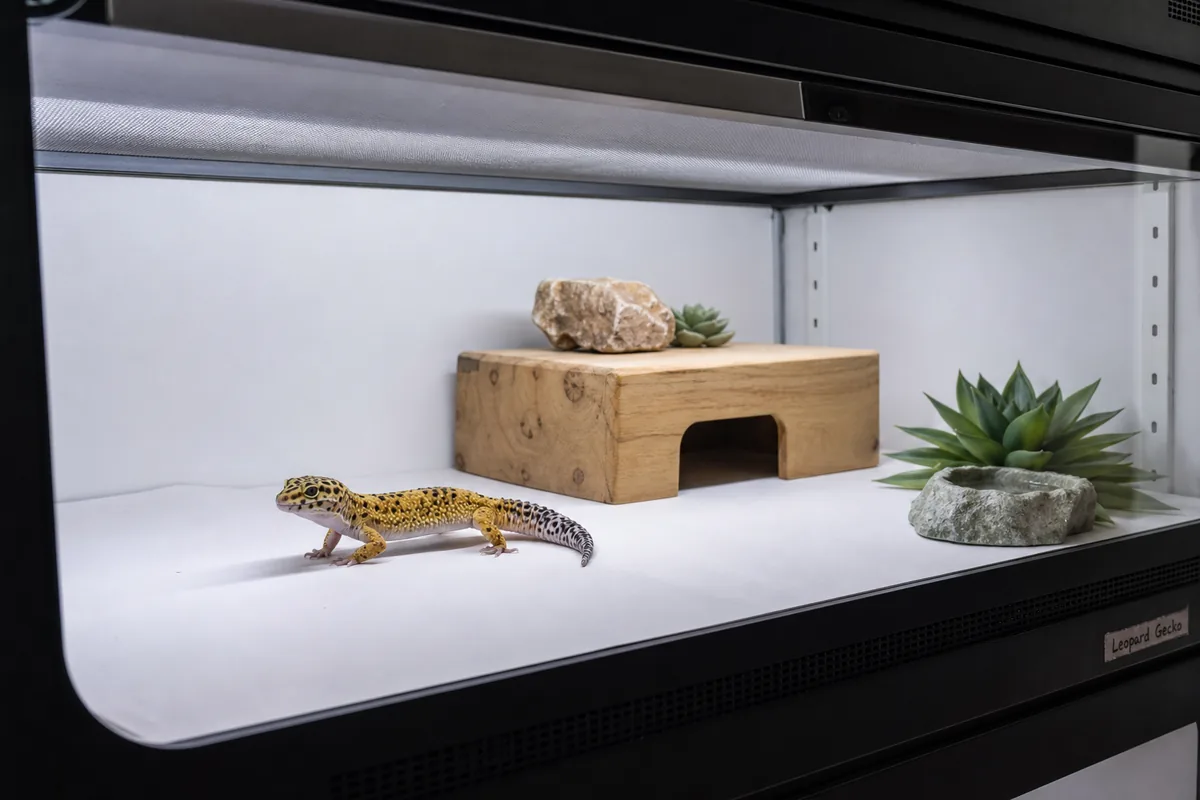
The bearded dragon vs leopard gecko cost comparison puts that $230-$830 range in context, since leopard gecko setups run $80-$200 less and require no overhead basking lamp.
| Item | Budget Option | Recommended Option | Cost Range |
|---|---|---|---|
| Enclosure (120 gal) | Used Craigslist tank | Zen Habitats 4x2x2 PVC | $80-$350 |
| UVB Fixture + Bulb | Zoo Med Reptisun 10.0 T8 | Arcadia 12% T5 HO 36" | $40-$120 |
| Basking Lamp | Hardware store halogen PAR38 | Halogen flood with dimmer | $10-$30 |
| Thermostat | Inkbird ITC-306A | Herpstat 1 | $25-$120 |
| Thermometers (x2) | Digital probe thermometers | Etekcity infrared gun | $15-$40 |
| Substrate (tile) | Home Depot ceramic tile | Natural slate tiles | $20-$60 |
| Hides + Decor | DIY cork bark rounds | Cork bark flats + rock stack | $30-$80 |
| Dishes + Accessories | Reptile food/water bowls | Slate feeding ledge | $10-$30 |
| Total | $230-$830 |
Common Bearded Dragon Setup Mistakes That Kill Animals
Most beardie deaths in the first year trace back to three setup errors: inadequate UVB, a basking spot that's too cool, and keeping juveniles on loose substrate. All three are preventable.
Unlike the overhead basking lamp system required here, a leopard gecko tank setup relies on under-tank heat mats, which illustrates why basking temperature requirements are species-specific and cannot be transferred between lizard enclosures.
Monthly Maintenance Schedule
Daily: Remove uneaten feeders and feces, refresh water dish Weekly: Wipe down glass and hides with diluted F10, spot-clean substrate Monthly: Deep clean enclosure, check thermostat probe placement, verify UVB output with Solarmeter 6.5R if available Annually: Replace UVB bulb, inspect all wiring and fixtures
Sources and references
- Metabolic Bone Disease in Reptiles: Causes and Preventionof Herpetological Medicine and Surgery, 2019
- Ultraviolet-B and Vitamin D3 Synthesis in ReptilesHerpetological , 2020
- Pogona vitticeps Husbandry Guidelinesof Melbourne Veterinary School, 2021